Facebook Open Graph Tags
SEOptimer’s Facebook Open Graph Tags checks your webpage for Facebook Open Graph tags, ensuring you control how your content appears when shared on Facebook.
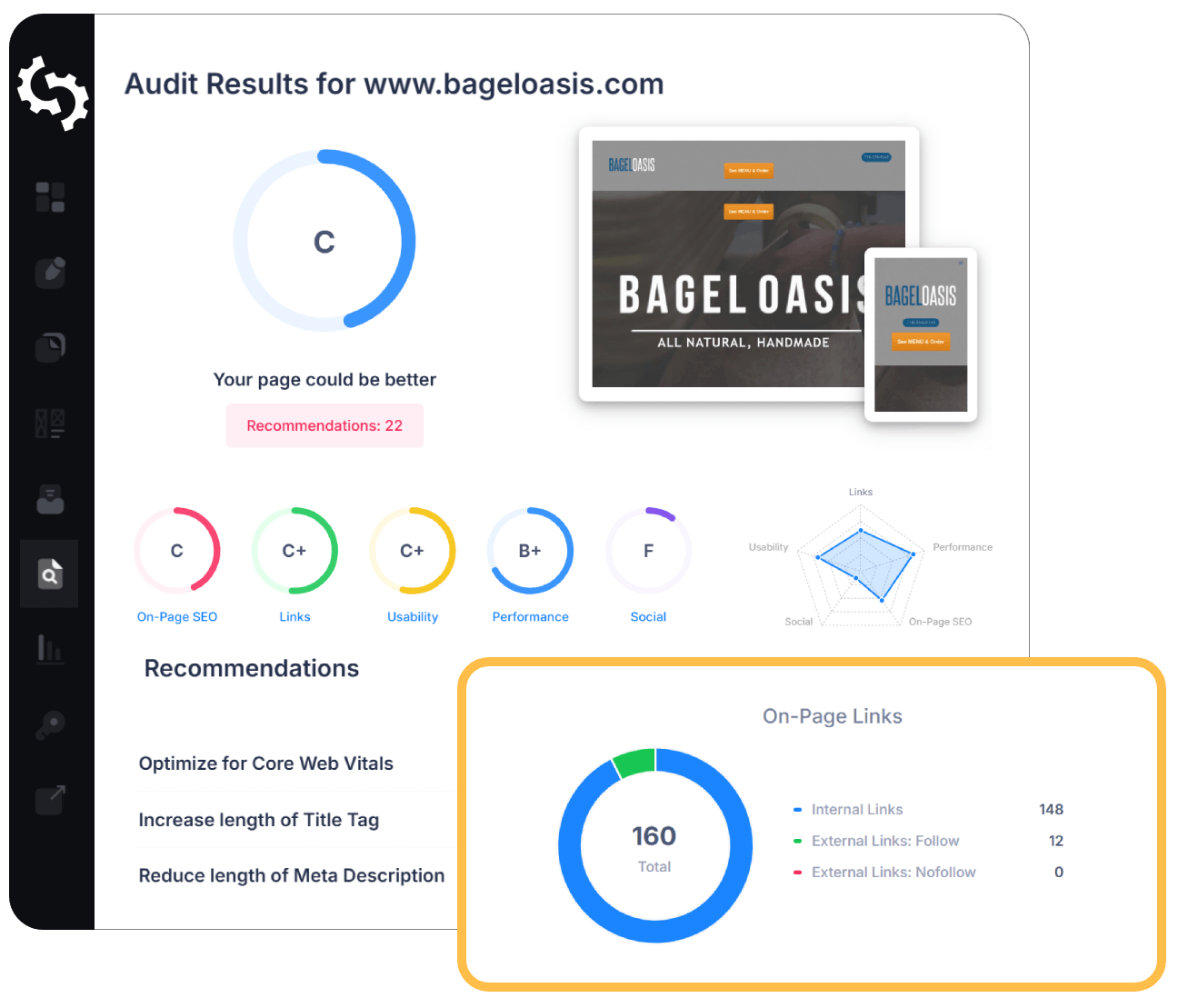
SEO Audit Any Site in Seconds
+ Comprehensive SEO / GEO Tools for Every Function
Run over 100 checks on your website across On-Page SEO, Usability, Performance, Social and Links. Now with GEO in every report. SEOptimer also offers keyword research, rank tracking, backlinks and a full site crawler.

About Facebook Open Graph Tags
What are Open Graph tags?
Open Graph tags tell social platforms how to present a link: which title to use, which description, and which image. Without them the platform guesses, and its guesses are frequently poor, picking a logo, a navigation heading or nothing at all.
They were created by Facebook but are now read by most platforms and messaging apps, which makes them the closest thing to a universal standard for link previews rather than a Facebook-specific concern.
An Open Graph tester matters because you cannot see the result from your own site. The preview is assembled somewhere else, and the first time most people discover it is wrong is when a colleague shares the link.
Do Open Graph tags still matter in 2026?
They matter wherever links get shared, which now includes a great deal of private space: messaging apps, group chats, internal tools. That sharing is invisible in analytics but represents a large share of how links actually travel.
A link that unfurls with a clear image and headline is dramatically more likely to be clicked than a bare URL, and the difference costs nothing to capture once the tags are set.
Caching is the practical complication. Platforms hold onto what they fetched the first time, so fixing the tags after a link has circulated does not fix the previews already out there.
How Open Graph tags relate to AI search
They are not a citation signal, but they are a clean, explicit statement of a page title, summary and representative image, sitting in a predictable place in the head.
Keeping them accurate and consistent with the page itself avoids contradicting the other signals a system reads. A page whose Open Graph title disagrees with its title tag is sending two different answers to the same question.
Treat them as part of the same set of descriptive metadata rather than as a separate social concern.
Open Graph best practices
- Set title, description, image, URL and type on every shareable page.
- Supply an image around 1200 by 630 pixels, using an absolute URL.
- Match the tags to the page content rather than leaving site-wide defaults.
- Use the canonical URL so shares consolidate on one address.
- Keep them consistent with your title tag and meta description.
- Preview a real share before publishing, since platforms cache aggressively.
What this tool checks
The tool reads the page HTML and reports whether Open Graph tags are present.
It checks for presence rather than completeness, so a page carrying only an og:title passes while still previewing badly for want of an image. A pass is a starting point rather than a confirmation that shares will look right.
Where to go next
Open Graph tags describe the same page as the rest of your metadata. Check the title tag and meta description they should agree with, and review your Twitter Card tags if you want a different presentation on X.
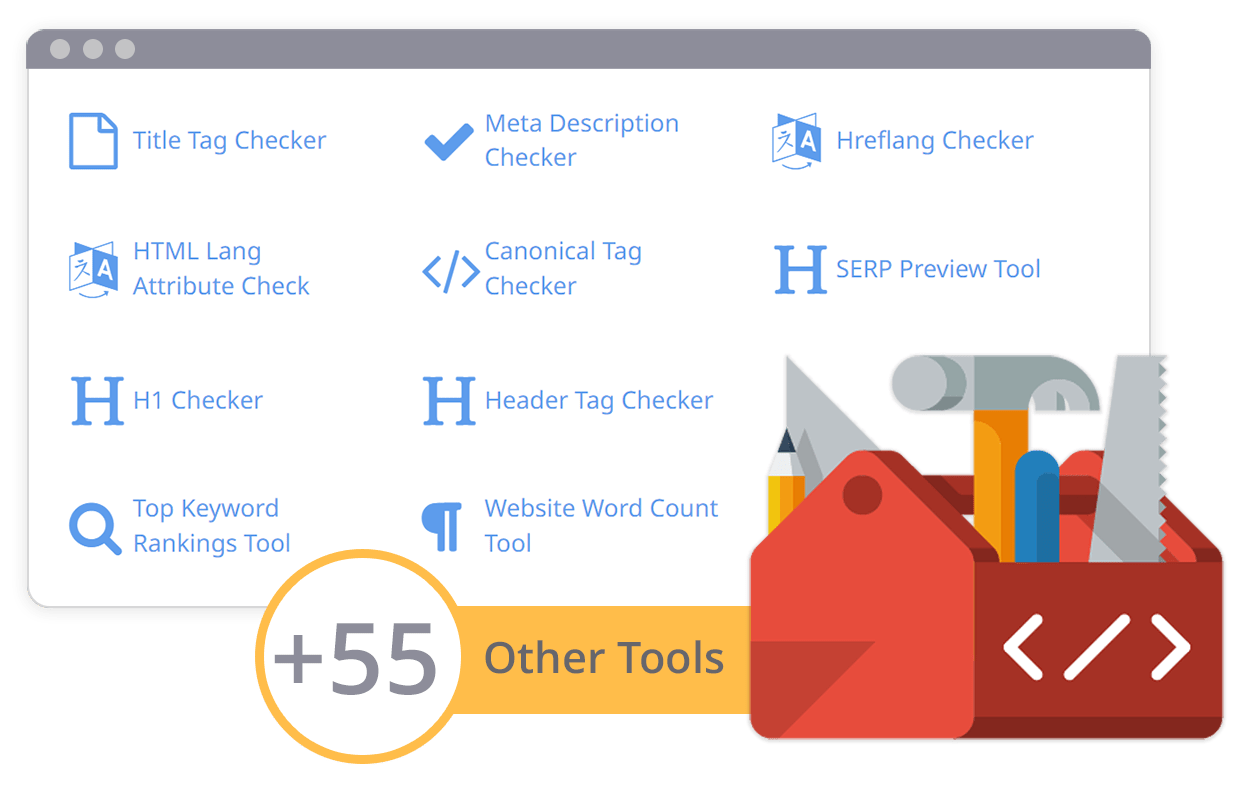
Comprehensive SEO Toolbox with over 55 Tools
Check Titles, Meta Descriptions, Headings, Schema, Core Web Vitals, SSL and Robots.txt. Generate Meta Tags, Sitemaps and .htaccess Rules, minify CSS, JS and HTML, and draft copy with our AI Writing Tools - instantly and for free.