



While it’s not necessarily easy to rank for this post’s topic “what is keyword competition,” it’s not the hardest topic to rank for either.
According to SEOptimer's Keyword Research Tool, the keyword competition for this topic is "Low", which means it's actually fairly easy to rank for.
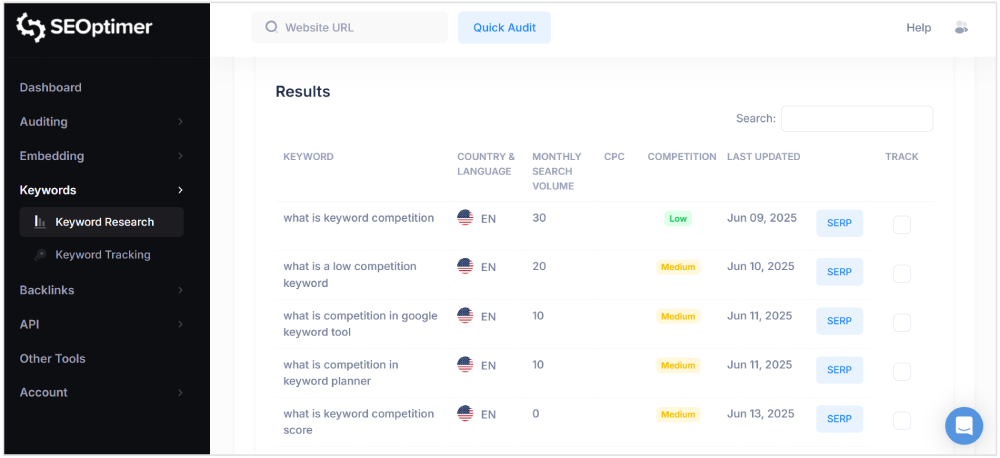
How is this keyword difficulty calculated? What do these scores have to do with SEO, and what makes a “good” SEO difficulty?
In this blog post, we will answer all of these questions and how you can use keyword competition scores in your content marketing and SEO efforts.
What is Keyword Competition in SEO?
Keyword competition (also known as keyword difficulty) scores are the measure of how difficult it is to rank on the first page for a given keyword via organic search.
The score is calculated using a variety of factors, including how many websites are currently targeting the keyword, the authority of those websites, and the search volume for the keyword.
A higher score indicates a higher difficulty, and a lower difficulty indicates a lower difficulty.
Some keyword research tools assign different numerical competition scores to keywords. The ranges are usually:
- 0-30: Easy
- 30-50: Medium
- 50-70: Hard
- 70+: Very challenging
And within those ranges there is variability. A keyword or phrase with a score of 10 is going to be much easier to rank for than that with a score of 29, though both are “easier” to rank for than a score of 55.
What is Keyword Competition in PPC?
Competition score, SEO difficulty, ranking difficulty, etc. are often all refer to the metric of how difficult it will be to rank for a given keyword.
However, keyword competition can refer not only to organic traffic, but also the bidding involved in pay-per-click advertising.
The higher a competition score, the more bids there are for a specific keyword or phrase.
You can check the CPC for any keyword using our Keyword Research Tool.
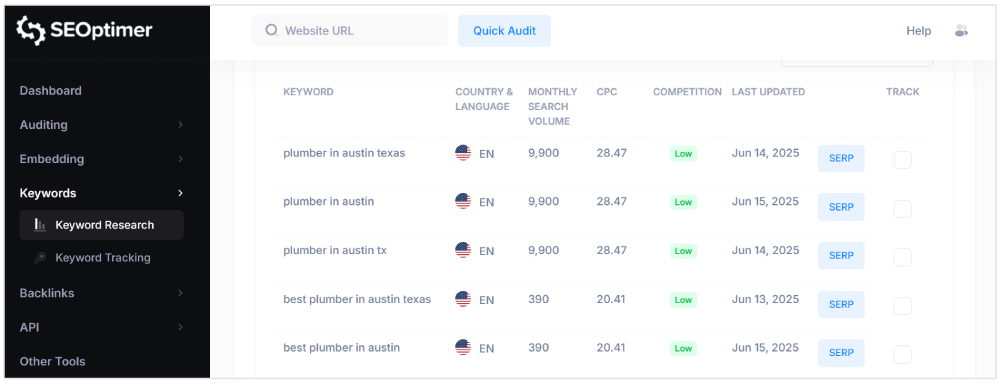
As you can see from the above sceenshot, the CPC for the keyword "plumber in austin" is about $28.47. Our tool also shows the CPC data for other semantically relevant keywords that you can also add to your PPC campaigns.
Note: Be aware of the context of when you see “competition score,” because the competitiveness for advertising is very different than the competitiveness of organic ranking.
Just because something has low keyword competition doesn’t mean it’s easy to rank for organically, and vice versa.
For example, Google’s Keyword Planner shows that there is high competition for the phrase “in ground basketball hoop.”
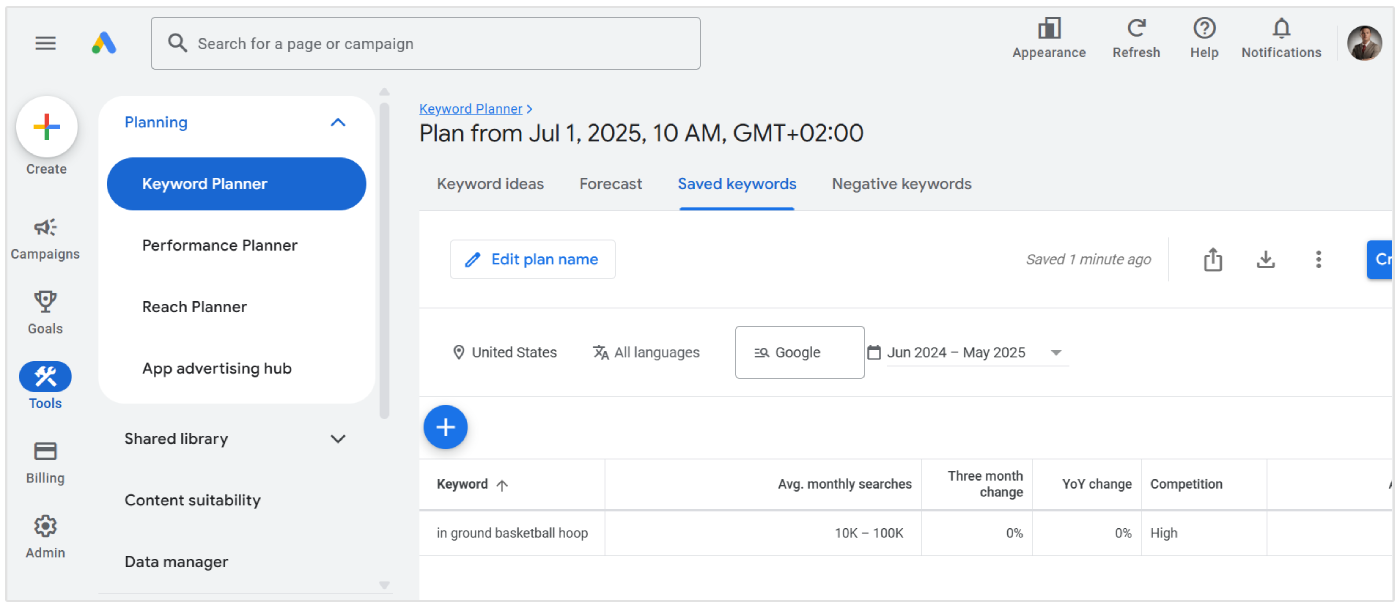
But, it’s important to know that that doesn’t mean it’s hard to rank for organically. It just means that there might just be a lot of businesses bidding on this keyword for ads.
Now let’s check the keyword competition score on SEOptimer.
SEOptimer is showing that the keyword competition is "Low" meaning, this phrase is relatively easy to rank for.
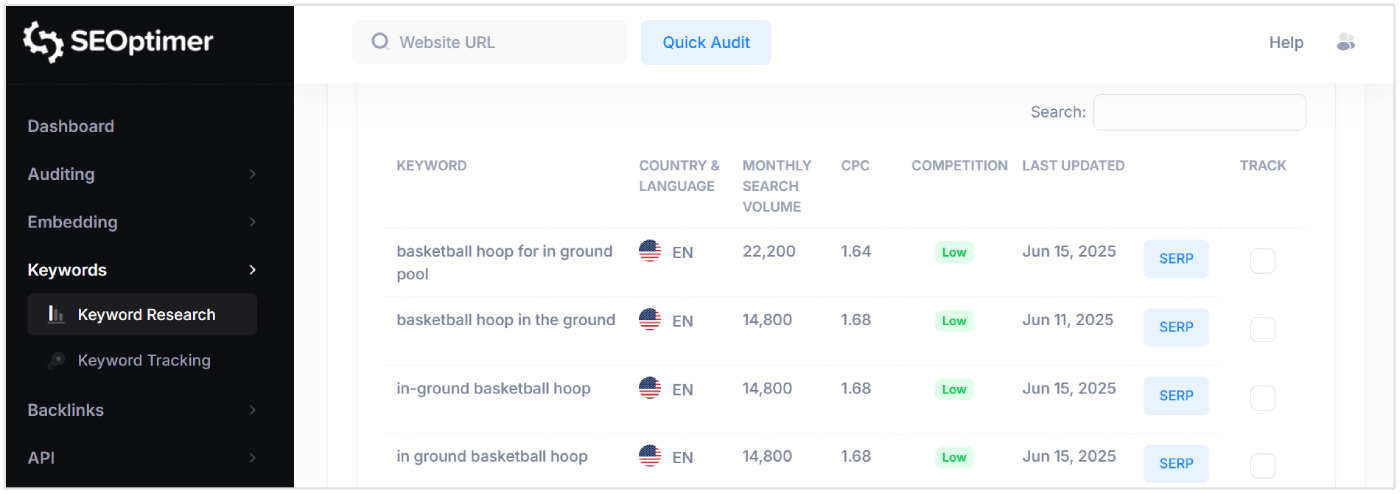
And with a ton of monthly search volume, this is an SEO's dream content to create.
You’re not competing with that many people in order to get over 14,000 search views a month.
That means if you rank organically for this keyword–instead of having to pay for the high cost-per-clicks and compete with all the other bids–you’ll get the value of position one for free minus whatever time or effort it took you to write your post.
I could go on and on about the value of SEO.
I won’t right now, but if you happen to sell in ground basketball hoops, please write a great optimized blog about them to get all the benefits! (If you do it on SEOptimer, it can take you just minutes.)
Why are Keyword Competition Scores Important?
The premise behind search optimization is to write articles that rank high on Google’s search engine results pages.
You can have the most optimized post of all time, but and if it has a very high keyword competition score, you might not see yourself on Google’s first page.
That’s why it’s so important to understand how easy or hard it is to rank for a keyword you want to rank for.
You don’t want to put in hours of effort in research, writing, editing, and publishing and have nothing to show for it.
How is the Keyword Competition Score Calculated?
Keyword competition scores are based on a variety of factors, including how many other websites are targeting the same keyword, how strong the competition is, how much authority your website has, and how much authority the sites have that are already ranking for the keyword.
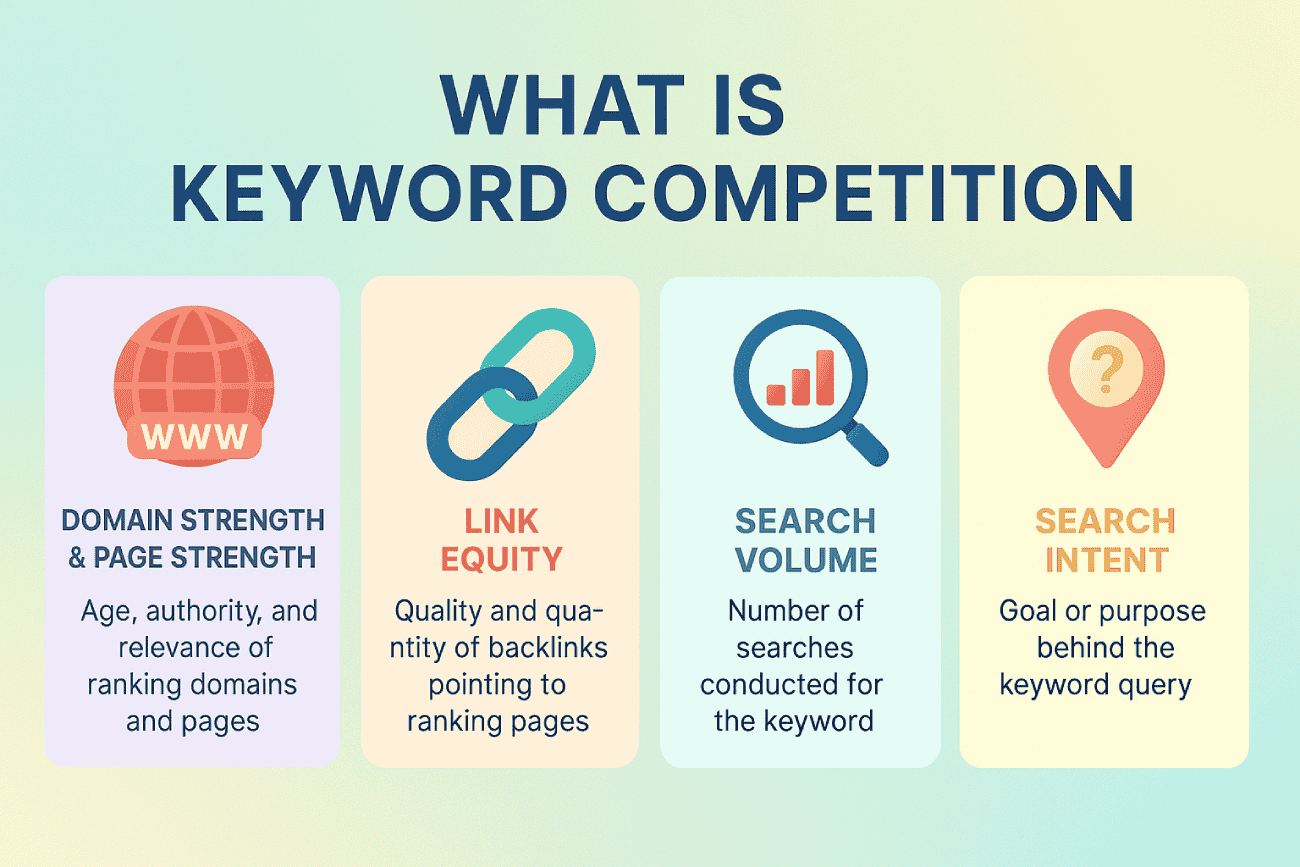
Domain Strength & Page Strength
Domain Strength and Page Strength are two very important factors when it comes to keyword difficulty scores.
Domain Strength, also known as Domain Authority (DA), is the ranking strength of an entire website or domain.
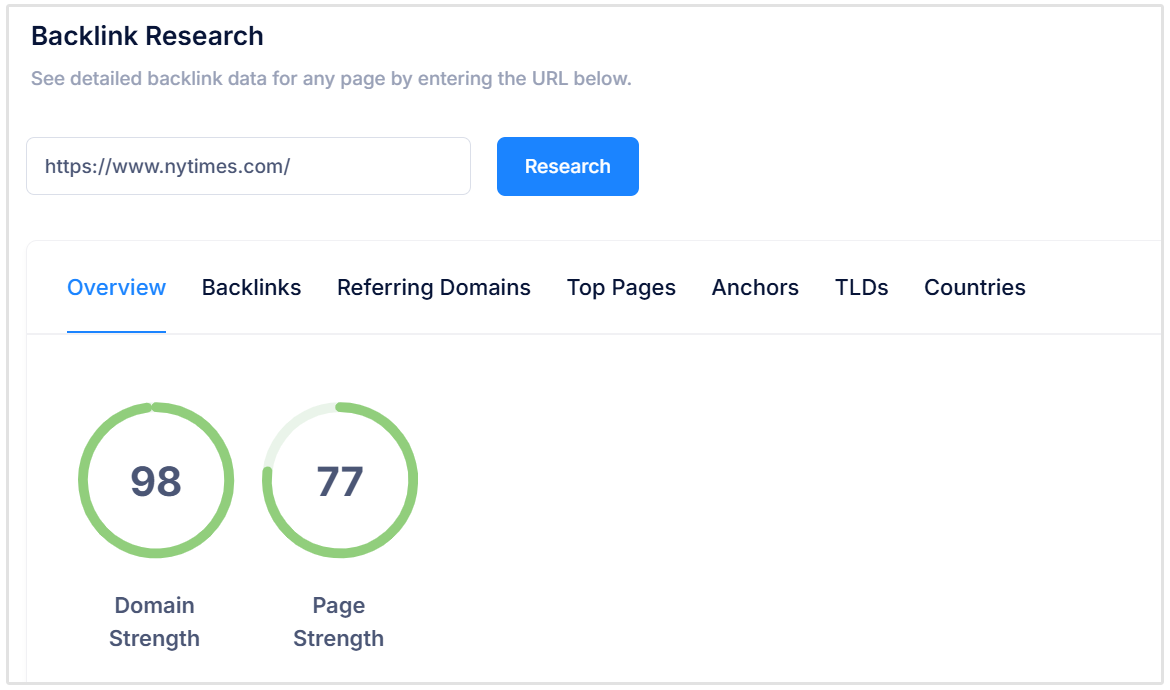
So for example, New York Times has a Domain Strength of 98, which means:
- It will most likely rank very high for post topics it writes
- Backlinks from them will improve the DA of the site they’re linking to
- Linking back to them can show Google your post is well-researched
Page Strength is similar, but it’s about the authority of a single webpage.
Higher Page Strength can:
- Improve the DA of the entire site
- Boost Page Strength of other pages on its site through internal links
If there are multiple sites with high Domain Strength that are already ranking for a keyword on page one, keyword competition will be high.
If there are multiple sites that don’t necessarily have the highest Domain Strength–but they have high Page Strength on the topic–then it will also be harder to rank for.
And of course, vice versa!
Link Equity
How do pages and websites boost authority through links?
Link equity, also sometimes called “link juice,” is the concept that certain links pass value and authority from one page to another.
Links are signals that the page’s content is trusted by whoever is linking to them. Depending on link relevancy, how authoritative the site is, and even where links are located on the page.
Search Volume
Higher search volume can also lead to a more challenging keyword. But that’s not always bad.
You need at least some search volume to make a post worth it. Even if it’s the easier keyword to rank for, if only 10 people are searching for it a month, it might not be worth the time it takes to research, write, and publish it.
Search Intent
While this doesn’t impact keyword competition scores, you should also consider search intent when comparing difficulty and search volume.
For example, if there is a topic central to your offerings, but there’s just not too much search volume yet, if it’s easy to rank for you might want to create a thought leadership piece on the topic.
This will help establish expertise in the field you’re in (another SEO ranking factor Google considers) and often the people searching for this more specific keyword will have higher search intent.
This means they’re already further down the marketing funnel than those searching for a keyword with less intent but much more search volume.
What is a “Good” SEO Keyword Competition Score?
There isn’t really a “good” SEO keyword difficulty score, because what you should try to rank for depends on more than just how hard a keyword is to rank for.
Generally of course, the higher the score, the more difficult it will be to rank for.
But the difficulty also depends on your own Domain Strength. If you have a very high Domain Strength, like let’s say, the New York Times, you can probably rank for just about anything you want to write about.
If you are a new blog with a Domain Strength in the single digits, it’s going to be a lot more challenging to rank for “wordle” than it will be for the New York Times.
And, even if it’s easy to rank for, that doesn’t mean you should necessarily try to rank for it. If there isn’t a high search volume for the keyword, you can just waste time and effort writing a post that no one will see.
How to Know what Keyword Competition is Too High or Too Low
Know Your Own Domain Strength
Your Domain Strength matters most here. If you have a very high Domain Strength (85 and above) you can probably rank for almost anything, so you won’t have to check keyword difficulty scores as often.
Check the Score
If you’re still building up your Domain Strength, it’s important to check the keyword competition score and then compare it to your Domain Strength.
Ideally, the keyword difficulty (if ranked from 1–100) should be around where your DA is, or lower.
Check the Search Volume
If the keyword difficulty seems a little high and the keyword only gets about 100 searches a month, it probably isn’t worth the time and effort to write a post on.
But, if it has a really high search volume and it’s focal to your business, it might be worth it.
Find Alternative Keywords
Keyword competition too high? Try working with some longer tail keywords that have slightly less search traffic, but are still about the keyword you’re trying to rank for.
For example, let’s say you’re starting a marketing company just for NFT and cryptocurrency websites.
You’ve decided you want to rank for “marketing for NFTs” and you see with SEOptimer's Keyword Research tool that it’s not very easy to rank for, and it doesn’t have a high search volume.
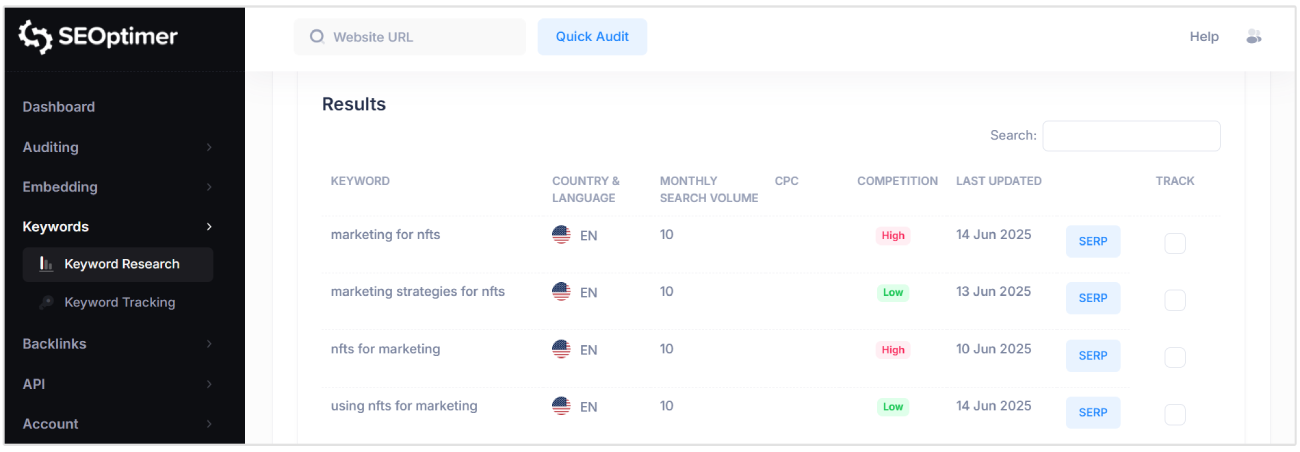
You can use our keyword research tool to find some new keyword ideas and check their difficulty scores, from SEO for NFTS to crypto marketing strategies.
What do you know: you find that “crypto marketing strategies” has a low difficulty, and a monthly search volume of 170. Much, much better!
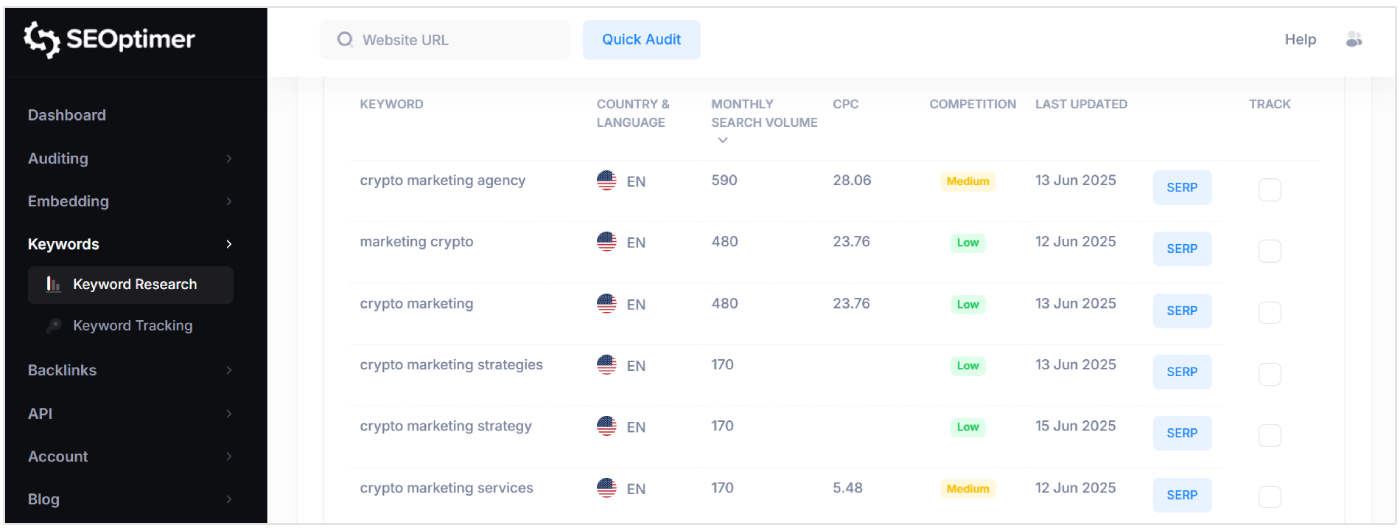
Then, you can use SEOptimer's AI content generator to basically write the entire post for you.
How to do Competitor Keyword Analysis
Competitor keyword analysis can take some time. If you’re doing it manually, you’ll want to review your competitor’s blog post topics and website pages to see what they’re trying to rank for.
But, that only gives you a general overview of their keyword focus.
The easiest way to do competitor keyword analysis is by using a competitor research tool. It works pretty similarly for a lot of SEO tools, so let me explain it through SEOptimer.
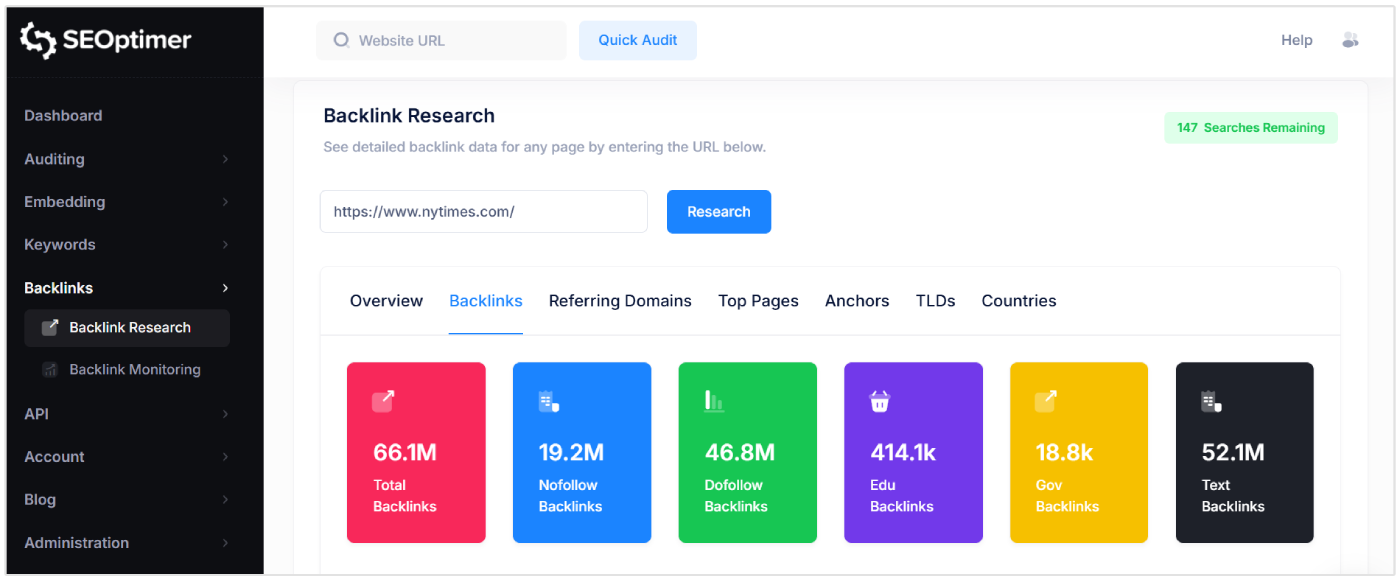
On the SEOptimer dashboard, head to the Backlink Research module to view any site's Domain Strength and the backlinks pointing to their site.
Here you can see the total number of individual backlinks as well as the Referring Domains, Dofollow Backlinks, Nofollow Backlinks, and more.
You can then use our Keyword Research tool to check the keywords your competirors are ranking for and the organic traffic they receive and how many monthly searches those get.
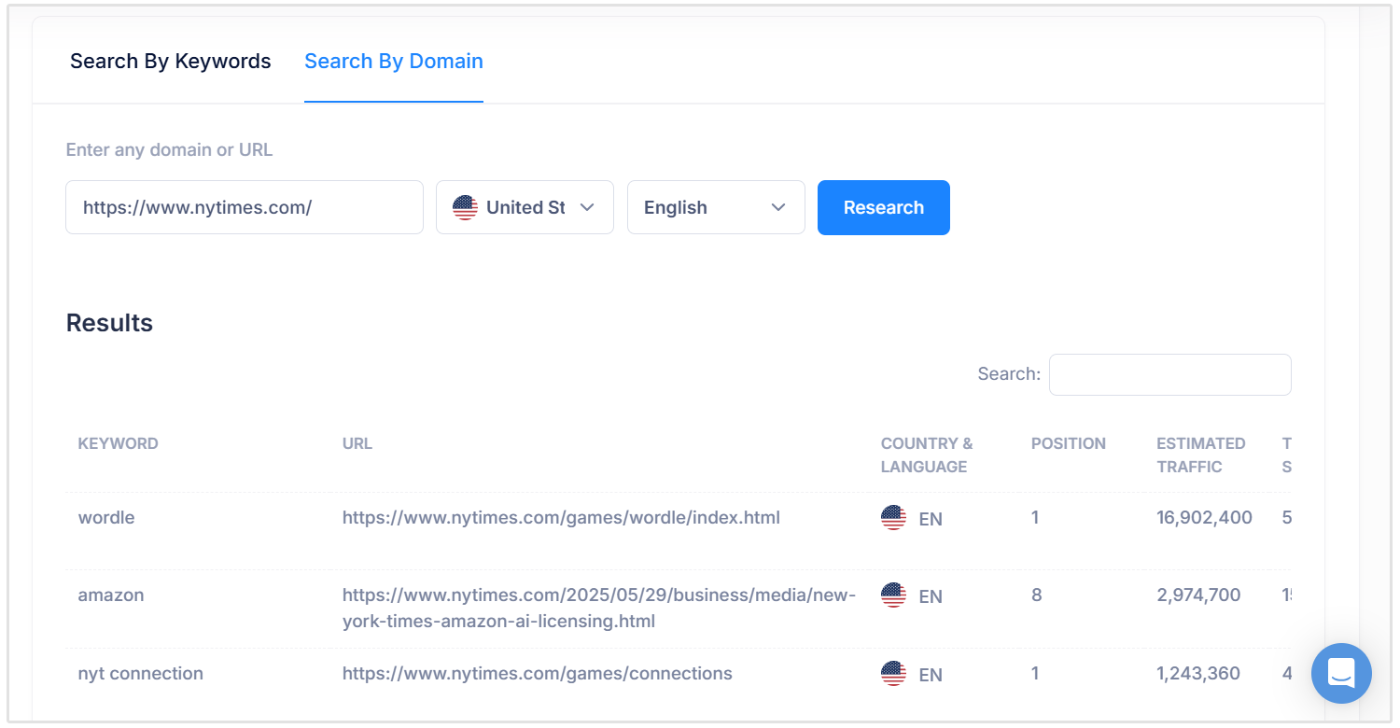
So basically, everything you need to know to make a decision about what keywords to include in your SEO strategy.
Keyword Difficulty Checker Tools
It’s really challenging and time consuming to figure out the keyword difficulty for all the different keywords you’re trying to rank for.
SEOptimer
In addition to a competitive analysis tool, SEOptimer is the #1 SEO tool for digital agencies and marketing teams.
It combines AI and SEO to help you rank your content on Google.
It features not only content generation–for blog outlines, paragraphs, headlines, ideas and more–but also keyword research, backlinks, competitive metrics, and keyword rank tracking.
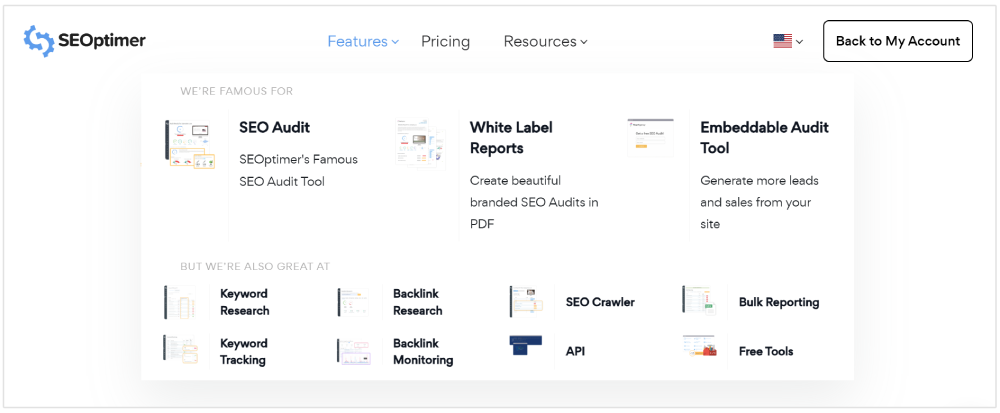
Key features:
- Keyword research (difficulty checker, monthly search volume, and competitive insights)
- Competitor analysis
- Meta description generator
- AI content creation
- Backlink analysis
- Blog topic idea generator
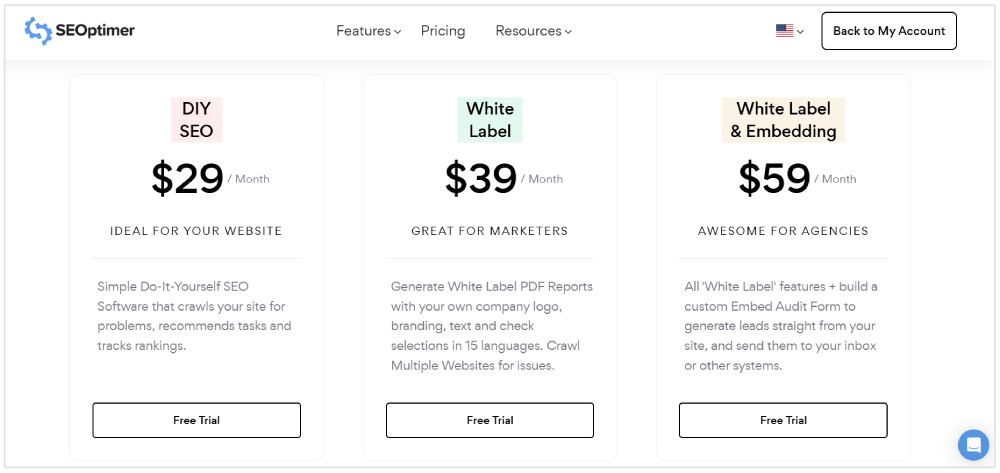
Pricing: Monthly pricing starts at $29 for DIY SEO, $39 for White Label, and $59 for White Label & Embedding.
Ahrefs
Ahrefs offers a free keyword difficulty checker that evaluates the chances of getting into top 10 of search results.
To calculate their Keyword Difficulty scores, they analyze the search results for a keyword and look at the number of referring domains the top 10 ranking pages have. That is, how many backlinks they have. The more referring domains within the top ranking pages, the higher the Keyword Difficulty.
Key features:
- Keyword difficulty ranking
- How many backlinks you’ll need to get into the top 10 search results
- SERP overview for your search time
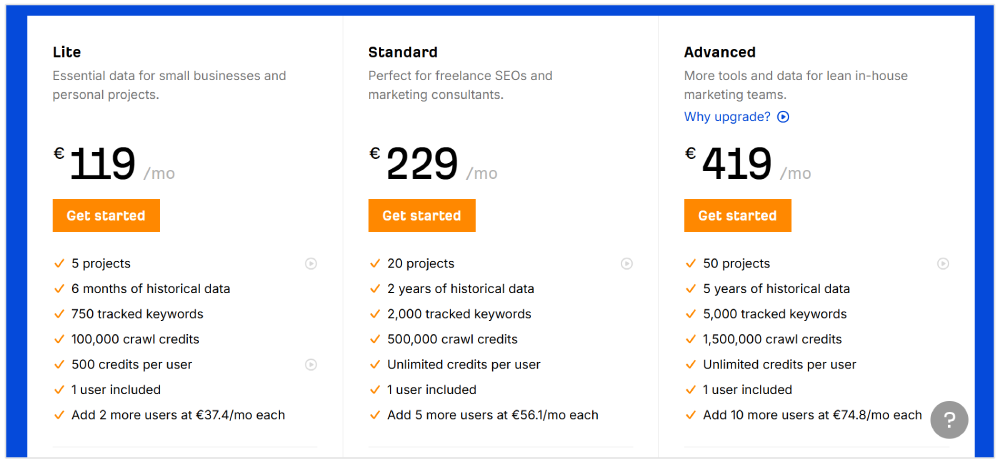
Pricing: While the keyword difficulty checker is free, to get all of the SERP insights and to use the rest of Ahrefs tools, the cheapest plan starts at €119/month or $140/month.
Moz
Moz’s Keyword Difficulty score takes into account the Page Authority (PA) and Domain Authority (DA) scores of results ranking on the first page of Google for a given query. It then modifies for the projected click-through-rate (CTR) of a given page, putting more weight on high-ranking, more visible pages.
Key features:
- Keyword difficulty ranking
- Keyword analysis
- Priority sorting
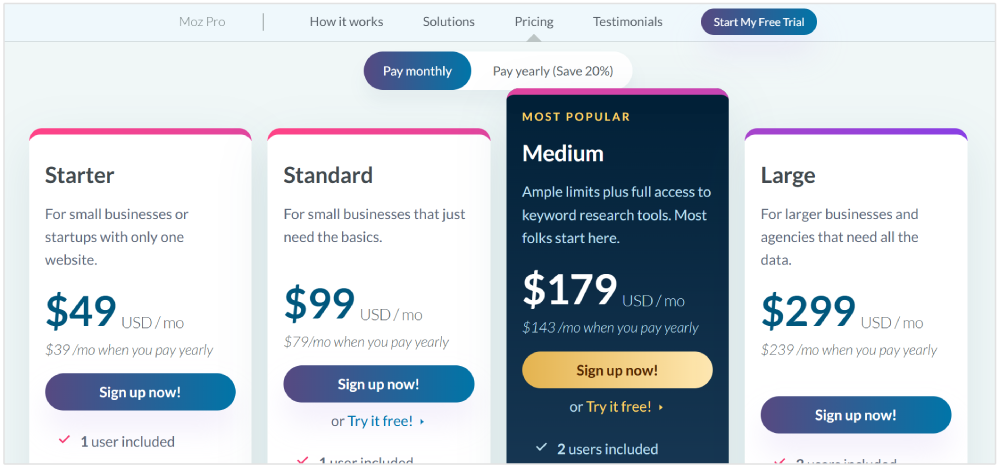
Pricing: Moz provides you with a free keyword difficulty ranking in exchange for your email address. To use the rest of Moz’s tools, plans start at $49/month.
Find the Perfect Keyword Competition Level for Your SEO Goals
Time to sum it up: for SEO success, find a keyword competition score that matches your current Domain Strength.
Then check its search volume to make sure there are people looking for the term. You can always do a little extra keyword research to see if you can find something a little easier to rank for with just as much (or more search volume).
It’s time for you to get started with your keyword ranking difficulty research!
Try SEOptimer's Keyword Research Tool free for 14 days to see all the insights you can uncover. You’ll be well on your way to creating some quality SEO content in no time!