


UGC links are Google’s way of distinguishing editorial links from links added by users such as those found in blog comments, forum posts, reviews, and other community-driven content.
As user-generated content has become a core part of the modern web, search engines have needed clearer signals to understand where backlinks come from and how much trust they deserve.
In this guide, we will break down exactly what a UGC link is, how the rel=ugc attribute works, and how to effectively manage these links for better SEO performance.
What are UGC Links in SEO?
UGC stands for User-Generated Content. A UGC link is any hyperlink that is created by users of a website rather than the website's administrators or content creators.
Think about the last time you read a popular blog post.
At the bottom, you might have seen a lively discussion in the comments.
Often, commenters will leave links to their own blogs or relevant resources. This can also be called “comment link building.”
Because a user placed this link and not the website owner, these are classified as UGC links.
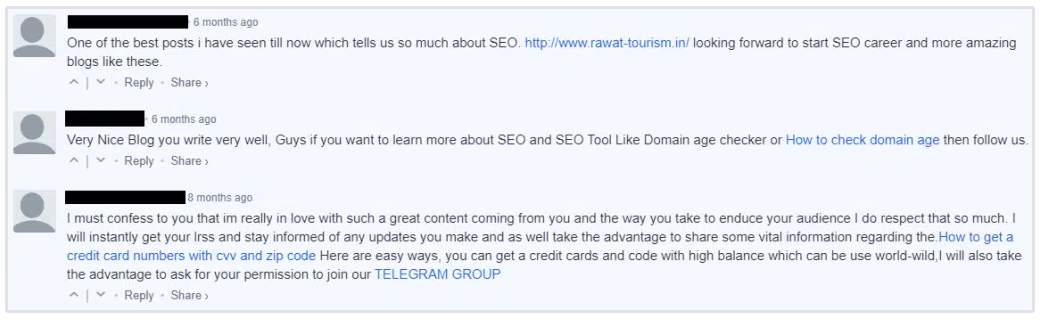
UGC links help search engines distinguish between a link that was editorially placed and a link that appeared because a user posted it in a comment section or a forum discussion.
What is the UGC Link Attribute (rel=”ugc”)?
To technically identify these links, webmasters use the rel=”ugc” attribute inside the HTML code of a hyperlink.
When a search engine crawler like Googlebot scans a webpage, it looks at the HTML tags associated with links to understand the relationship between the two pages.
Here is what a standard, "dofollow" link looks like in HTML:
<a href="https://mywebsite.com">Visit My Website</a>
Here is what a link looks like with the UGC link attribute applied:
<a href="https://mywebsite.com" rel="ugc">Visit My Website</a>
The rel=”ugc” attribute is important because it protects the hosting website.
If your website allows users to post content freely, you don't want Google to think you are endorsing every single link they post.
If spammers flood a forum with links to low-quality sites, and they aren’t tagged correctly, Google might think the forum is participating in a link scheme. The rel=ugc tag is a shield against this.
Do UGC Links Impact SEO?
A UGC link generally won't pass the same level of authority as a standard editorial backlink, but it still holds some value.
Crawlability
UGC links are still crawlable, and Google indexes UGC-heavy pages like Reddit and Quora, which have seen significant visibility growth in SERPs over the last few months.
Context
Frequent mentions and links in active communities can help Google understand how your content or products fits into real conversations, which can subtly support rankings and topical authority.
According to Dominik Poppe, CEO of the Swiss-based digital agency The New View, UGC links should be seen as a supporting signal rather than a ranking lever.
Their real value lies in credibility, brand exposure, and trust-building—especially when they come from relevant forums or communities where real users engage with the content.
Traffic
The biggest indirect SEO benefit is referral traffic. A well-placed link in a Reddit thread or a popular blog comment can drive significant visitors to your site. User behavior signals (like traffic) can indirectly support your SEO efforts.
Forums like Reddit and Quora have grown massively in Google Search visibility, often ranking their own threads for queries.
For instance, when you search for the "best saas seo tools", Google shows a dedicated "Discussions and forums" section with links to relevant Reddit threads on this topic.
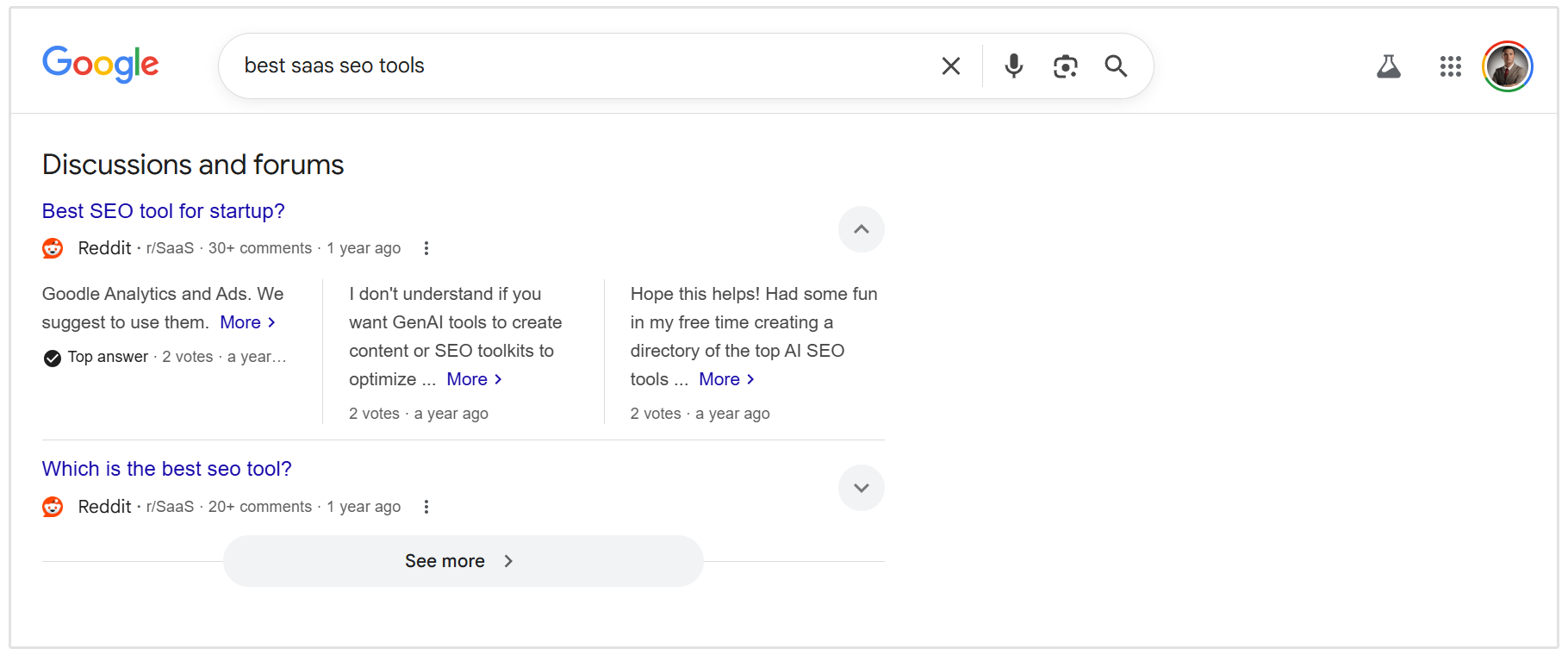
Likewise, if you search for something like "how to build a sales funnel," you'll also see a section with links to different Reddit threads.
According to data from Search Engine Land, Reddit shows up 97.5% of the time in Google Search product review queries. Other data shows that nearly 50% of Google's AI Overviews now include Reddit content as a source.
There's no denying the fact that Reddit and other forums have become a big part of the web.
Many marketers now see participation in these communities as a way to get brand presence where users already search and engage, even if the UGC links themselves don’t pass link juice or carry as much SEO value as link placements.
Marketers like Andy Zenkevich from Get A Copywriter believes that all SEOs and marketers should have an action plan for participating in forums and discussion boards with the goal of buiding brand visibility and mentions:
Acquiring relevant non-spammy links (nofollow or UGC-attributed) from high-volume, trustworthy community content and threads will now help increase a target URL's visibility and citation among organic SERPs and AI search output panels.
Examples of UGC Links
You likely encounter UGC links every day without realizing it. Here are the three most common sources of UGC links.
Blog Comments
This is the classic example. You write a fantastic article, and a reader comments, "Great blog post, I wrote something similar here..." followed by a link.
This tends to be a spammy tactic used by some SEOs and marketers to gain backlinks.
In the past, comment spam was a popular tactic.
Bots would post millions of generic comments just to get backlinks.
Today, most modern Content Management Systems (like WordPress, Medium, Substack, etc.) automatically apply the rel="ugc" attribute to links in the comment section.
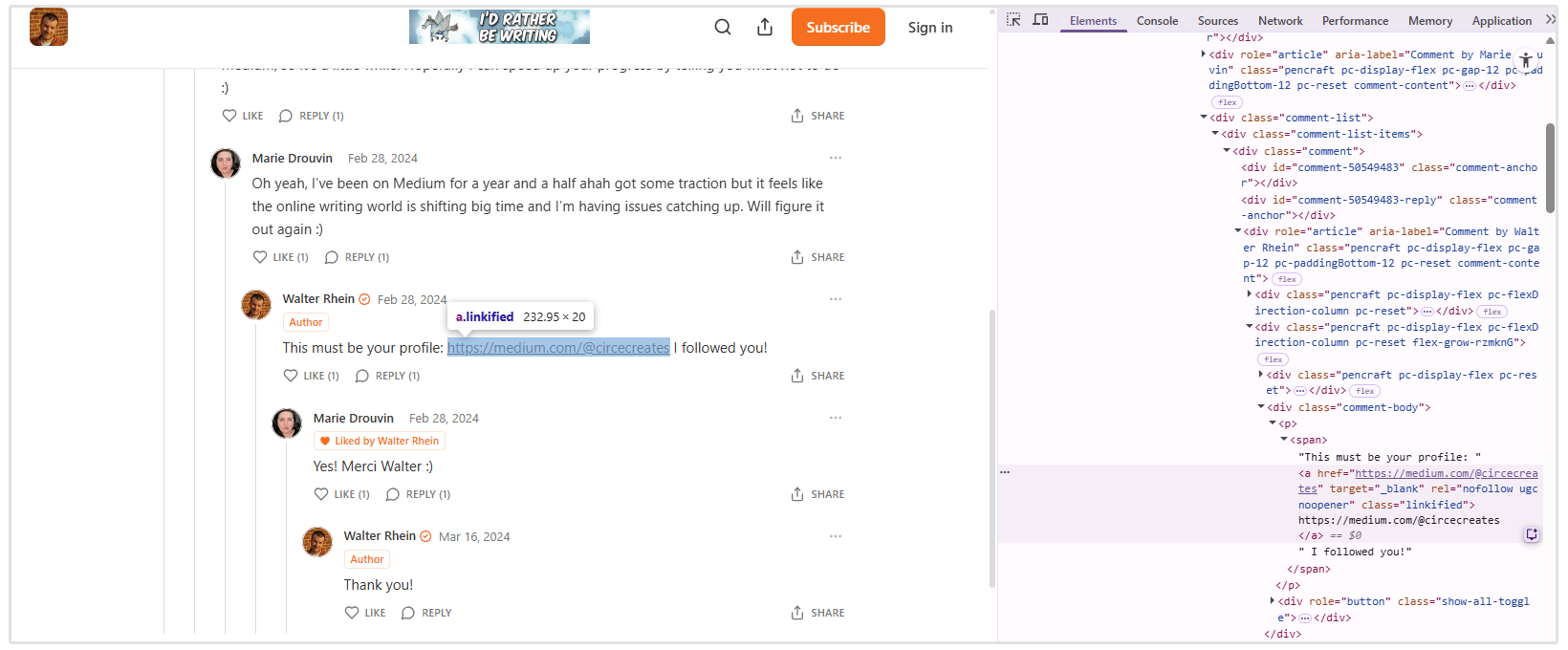
This tells Google that the link wasn't placed by the author.
Reddit, Quora, and Other Forums
Forums and discussion boards like Reddit, Quora, or specialized niche communities are built entirely on user-generated content.
When a user starts a thread or replies to a question with a link, that is a UGC link.
For example, if you ask for a recommendation for hiking boots on a forum, and a user links to a specific store, that link should technically carry the UGC attribute.
Check the below screenshot of a link that a user placed in the Hiking South Africa community forum. If you inspect the link, you'll see that it's got the rel="ugc" link attribute used.
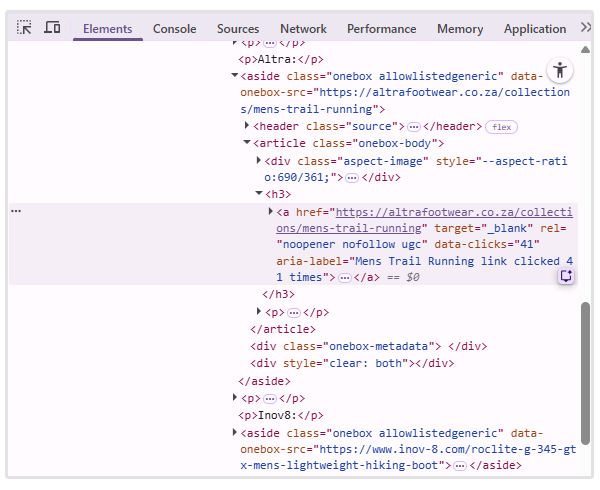
Because forums can be massive, they rely heavily on these attributes to ensure they aren't penalized for the links their thousands of members post daily.
User Reviews
Sometimes, users will upload photos or include links to comparison products in product reviews.
Since the website owner cannot vet every single review for SEO quality, these sections are prime candidates for the UGC link attribute. It allows honest reviews to exist without the website owner risking their domain authority by linking out to unknown corners of the web.
Rel=UGC vs Other Link Attributes
Here is a breakdown of how rel ugc compares to the other major attributes.
| Link Attribute | What It Is | What It Signals to Google | When to Use | SEO Impact |
|---|---|---|---|---|
| Dofollow | The default state of a link (e.g., <a href="...">) | I trust this link and endorse the destination page. | Editorial links, trusted external resources, and internal links. | Passes PageRank and authority. |
| Nofollow (rel="nofollow") | The original “don’t count this” link attribute. | I’m linking to this page, but I’m not endorsing it. | When you don’t want to pass credit. | Generally does not pass authority. |
| Sponsored (rel="sponsored") | A dedicated attribute for paid or compensated links. | This link exists because of payment, sponsorship, or compensation. | Affiliate links, paid ads, sponsored placements, sponsored guest posts. | Does not pass authority; helps avoid link-related penalties. |
| UGC (rel="ugc") | A specific attribute for user-generated content. | This link was placed by a user, not the site owner. | Blog comments, forum posts, reviews, community submissions. | Generally does not pass authority and helps protect against spam. |
How to Find UGC Links Pointing to Your Site
As a website owner, it is smart to monitor your backlink profile. You want to know who is linking to you and how they are doing it.
Are your backlinks mostly editorial (dofollow)? Or is your site being spammed on forum threads (UGC)?
If you see a sudden spike in UGC links, it could mean your content has gone viral on a forum which is great publicity.
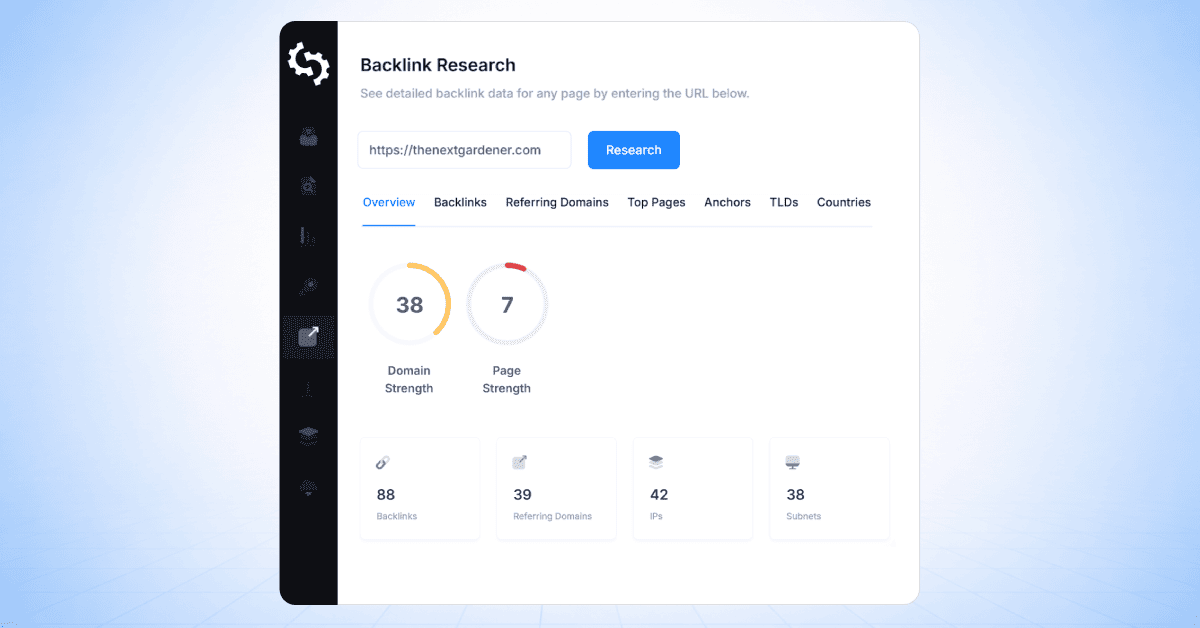
To find UGC links pointing to your site, use SEOptimer’s Backlink Checker tool.
Here is how you can use it to find UGC links:
- Navigate to the SEOptimer Backlink Checker.
- Enter your domain name (or a competitor's domain) into the search bar.
- Run the analysis.
- The tool will generate a list of backlinks pointing to the site. Look for the link attributes associated with each backlink.
The tool provides a clear view of which links are "Follow" and which are "Nofollow" (which often encompasses UGC depending on how the linking site implements it).
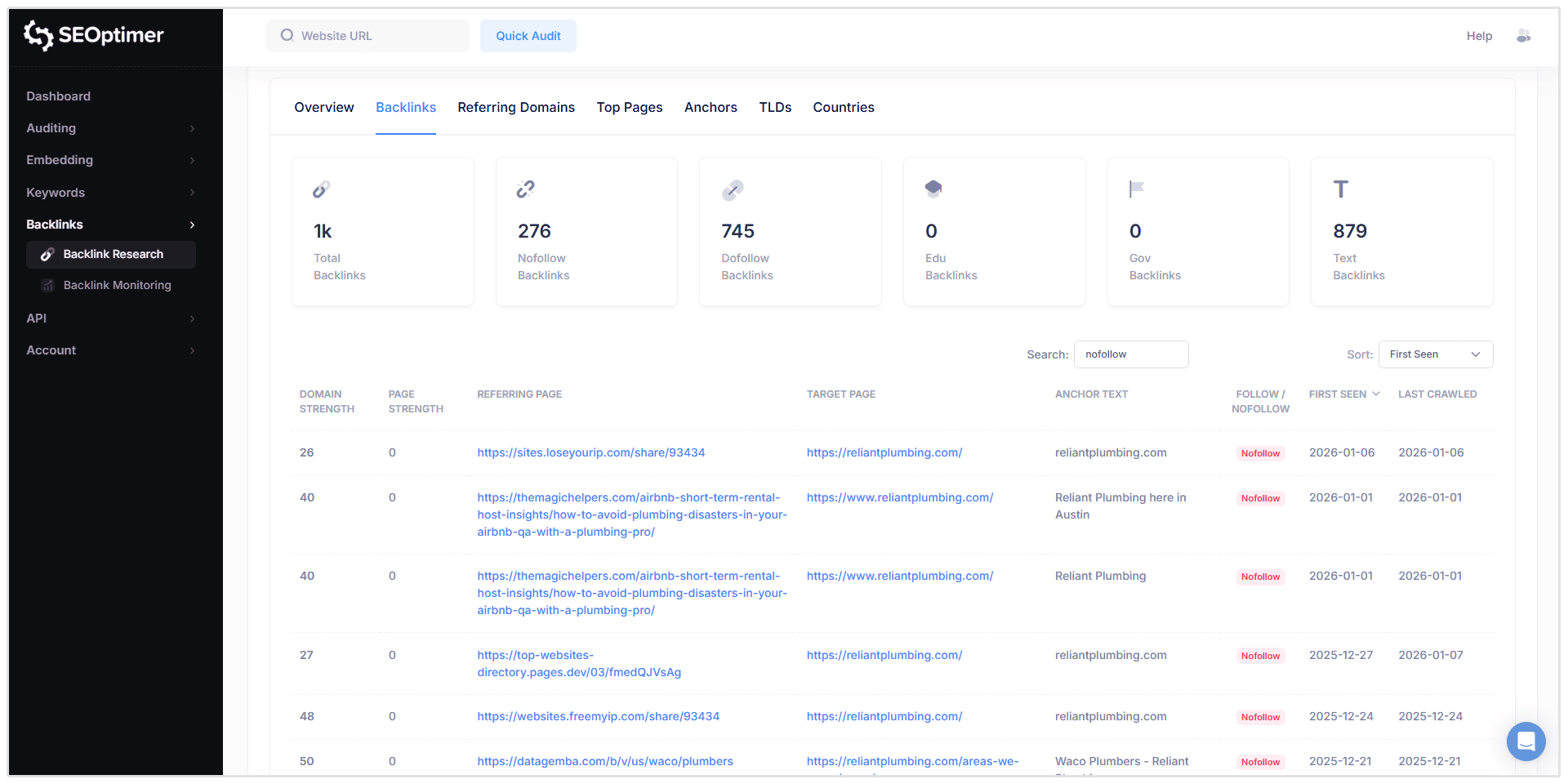
By reviewing the source URL—for example, seeing a link coming from a Reddit thread or a WordPress comment section—you can identify your UGC links.
Monitoring Changes Over Time
Building a link profile isn't a one-time task. You need to keep an eye on it.
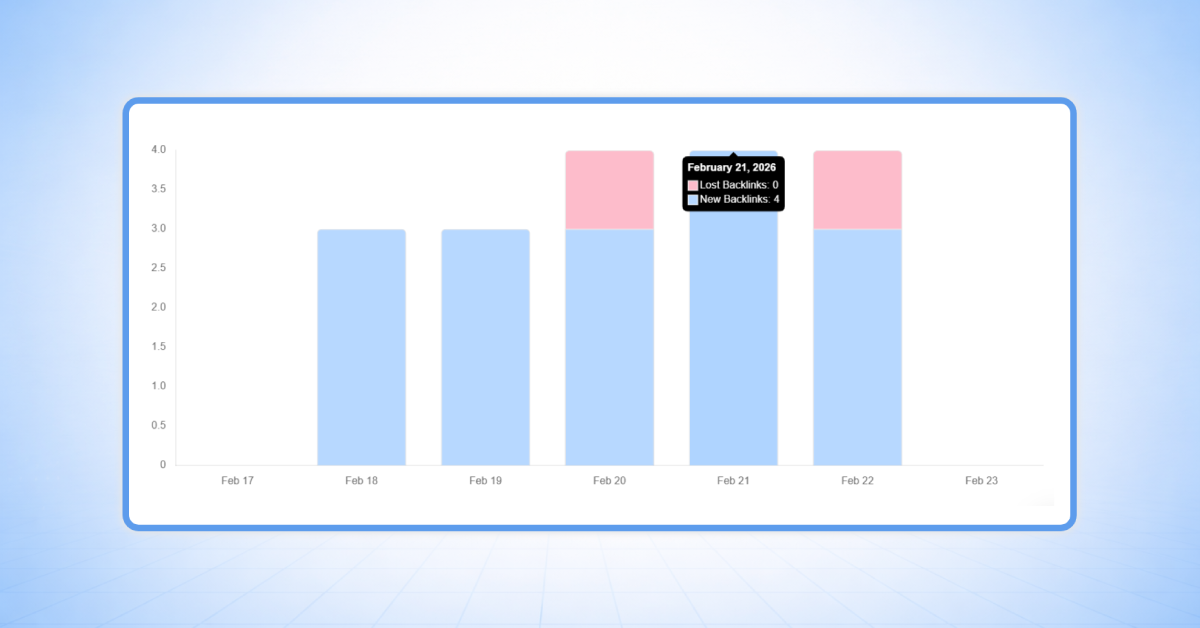
Using the SEOptimer Backlink Monitoring tool, you can track new links as they appear. This is incredibly useful for spotting UGC links.
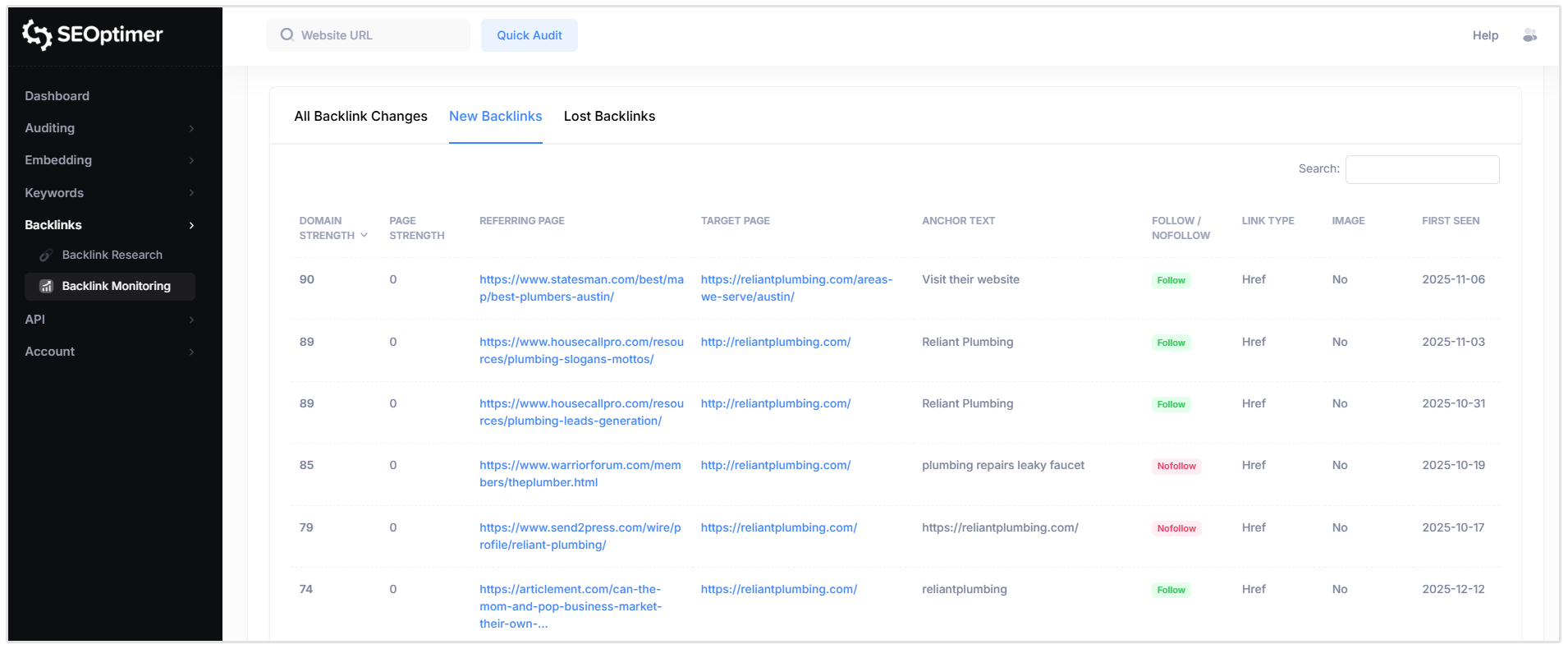
For example, if you see a new link appear from a high-traffic community discussion, you might want to jump into that discussion to engage with the users which could drive more traffic.
Conversely, if you see 500 new UGC links from a spammy comment section, you will know to investigate potentially disavowing them.
When to Use UGC Link Attributes
If you run a website where users can contribute content, you must have a strategy for these links.
Here is a checklist of when to ensure the UGC link attribute is active:
- Comments Sections: If you allow comments on your articles, all links inside the comment body and the "website" field of the commenter's profile should be marked as UGC.
- Forum Threads: Every link in a post, reply, or user signature should be UGC.
- Q&A Sections: If you have a "Ask a Question" feature where users can answer each other.
- Review Profiles: If users have public profiles that link out to their personal sites.
Note: You can combine attributes. For example, rel="ugc nofollow" is perfectly valid HTML.
It tells Google that a user made this (UGC) and you definitely do not endorse it (Nofollow).
This is often the safest bet for heavily spammed areas.
How to Add UGC Attribute to Links
Implementing the rel=ugc attribute is straightforward, whether you are coding by hand or using a CMS like WordPress.
Method 1: Manually Editing HTML
If you are writing raw HTML or editing a specific link in your content, you simply add the attribute inside the anchor tag.
Original Code:
<a href="https://externalsite.com">External Link</a>
Code with UGC:
<a href="https://externalsite.com" rel="ugc">External Link</a>
Code with UGC and Nofollow combined:
<a href="https://externalsite.com" rel="ugc nofollow">External Link</a>
Method 2: WordPress and CMS Defaults
The good news for most website owners is that you might not need to do anything.
Since WordPress version 5.3, the platform automatically adds rel="ugc" to links within the comment section. If you are keeping your WordPress site updated, your comment section is likely already compliant.
However, if you are using a forum plugin or a custom-built review system, you may need to check the plugin settings.
Look for "SEO settings" or "Link settings" within the plugin configuration to ensure that external links are set to "UGC" or "Nofollow."
If you accept guest posts, you will usually need to add these tags manually (or use the "Sponsored" tag if the guest post was a paid placement) via the WordPress editor link options.
Conclusion
The introduction of the UGC link was a necessary evolution in how search engines understand the web. It moves us away from a black-and-white world of "follow vs. nofollow" into a nuanced environment where user contributions are recognized for what they are.
For website owners, using the rel=ugc attribute is a best practice that maintains the integrity of your site.
It allows you to host vibrant communities and active comment sections without fear of being penalized for the links your users share.
For SEOs, understanding the difference between these attributes is key to analyzing backlink profiles accurately. Remember, while they may not pass massive authority, UGC links are a natural part of a healthy link profile and a significant driver of referral traffic.