


Some websites rank well in search engines organically, while others struggle to rank even after producing lots of content. What helps some domains build trust, credibility, and brand authority? One key strategy is SEO outreach.
A well-structured SEO outreach strategy consists of finding and emailing bloggers, influencers, and content creators in your niche for a backlink.
Relevant and organically-acquired inbound links from trusted domains via link building outreach boosts your website reputation. They act like votes of confidence and show search engines that your content is valuable and deserves to rank higher.
In this article, you will learn what is SEO outreach, why it matters for building brand authority, and how to do it the right way by targeting niche-relevant and authoritative websites.
What is SEO Outreach?
SEO outreach is a proactive link acquisition tactic to improve your website's ranking and authority by acquiring organic incoming links from relevant publishers.
In backlink outreach, you reach out to site owners, bloggers, and editors with a personalized email that persuades the website owner to link back to your content. It becomes easier to do SEO outreach with useful content.
Hence, first, you should create something valuable, such as:
- A detailed guide
- New industry findings
- Unique infographics
- Insightful statistics
Thereafter, you should present your content with a personal touch to website owners with the intention of obtaining a natural backlink.
Automated personalization helps you scale your outreach while keeping it relevant. When you send a one-to-one personal pitch to the right publishers, you can drastically increase your chances of earning trusted external links.
Why SEO Outreach Matters for Your SEO Strategy
SEO outreach is important because it lets you build a natural and high-authority link profile.
When you perform off-page SEO emailing by sending link insertion or content publishing requests to relevant websites, you are able to grow your domain reputation.
With higher link equity, your website’s SEO rankings improve.
Hence, it becomes easier for you to beat your organic competitors and start attracting quality inbound leads.
Here are the top benefits of SEO outreach:
Better Rankings in Search Engines for More Qualified Traffic
The volume and quality of editorial inbound links are used as a ranking factor by search engines.
When you raise the number of external links to your domain, while maintaining link diversity, it leads to higher organic rankings.
By following an intelligent SEO outreach strategy that targets your primary landing pages using natural anchors, you can improve their page reputation and help them rank at the top in Google.
With higher rankings comes qualified search traffic that converts to customers.
Higher Referral Traffic from Relevant Sites
SEO outreach lets you acquire relevant traffic from websites in your niche. It puts your content in front of audiences that match your buyer persona.
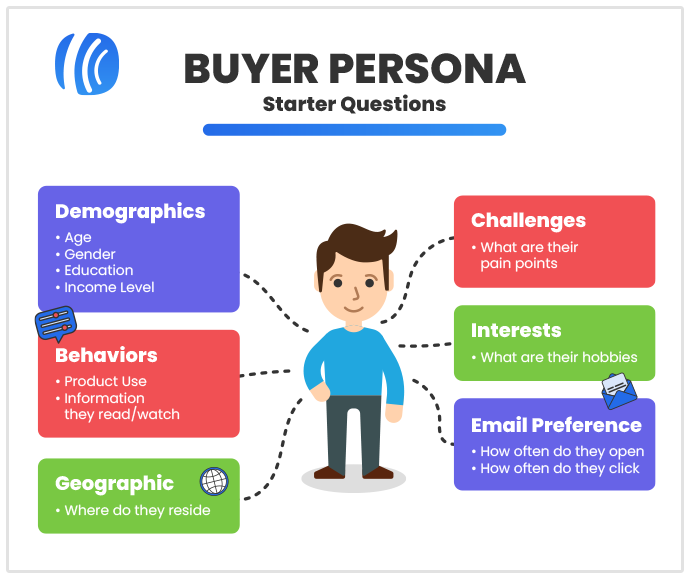
When your SEO outreach team reaches out to websites in your niche, you can earn backlinks that bring real traffic from people who are interested in your business.
Niche-specific incoming links send qualified visitors that stay on your site and engage with your content.
Higher Brand Authority and Credibility
By leveraging link building outreach, you can acquire solid incoming links that are hard to replicate.
Niche-specific inbound links using natural anchors containing a mix of exact-match, long-tail, and semantic variations, along with naked URLs, help to build your link profile.
An organic and reputable link profile grows your brand reputation. With enhanced domain and brand authority, your pages rank higher faster, leading to more inbound leads and conversions.
Build Industry Relationships That Last
Outreach is not just about links. It is also about building long-term connections with other professionals in your space.
As Pilar Lewis from Marketri puts it:
At the end of the day, SEO outreach done well isn’t just about building links, rather it’s about building relationships. When you approach it with that mindset, you create opportunities that are beneficial all around.
- Pilar Lewis, Public Relations Associate at Marketri
Collaborating with bloggers, influencers, and publishers can open doors to guest posts, interviews, and co-marketing opportunities.
Blogger relationships help expand your reach and improve your future content strategies. Trusted industry contacts can also give feedback, share insights, and refer new audiences your way. A strong network strengthens every part of your SEO strategy.
Types of SEO Outreach
Here are the most popular techniques for SEO outreach:
- Guest posting
- Broken link building
- Link reclamation
- Resource page outreach
- Skyscraper technique
- Blogger outreach
Let's take a closer look at each:
Guest Posting
Guest blogging is a well-known SEO outreach tactic used by most link builders.
In guest blogging, you identify niche blogs looking for guest contributors and pitch them with high-quality content containing contextual links to your website.
However, not all websites are available or appropriate for guest posting. You should only reach out to the most qualified sites. You can include 1–2 contextual links inside the content itself.
Make sure they feel natural and relevant. Also, don’t rely on links in the author bio, as they carry less SEO weight.
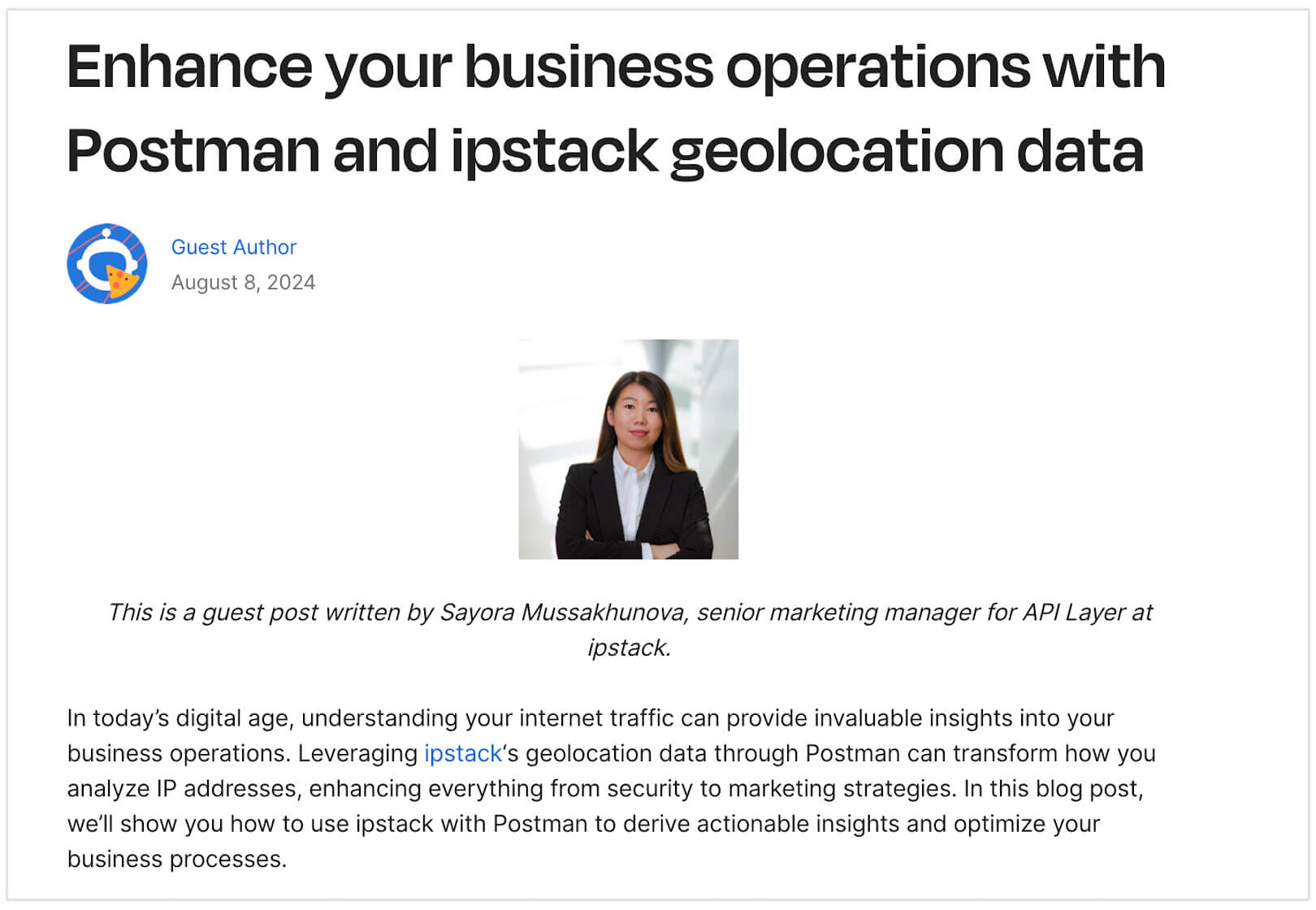
Here is an example of a guest post published on the Postman blog containing a link to ipstack with a branded anchor:
Broken Link Building
Broken link acquisition is another widely used SEO outreach tactic where you find dead or broken links on relevant websites and suggest your content as a replacement.
To identify pages in your niche that have outdated or 404 links, you can use some SEO tools, such as the Dead Links Checker.
Enter any domain, and the tool will show all the broken links that the website has.
You can identify different pages from different domains containing broken links. These could be from resource pages, blog posts, or old directories. Then, you check if you have a similar (or better) piece of content that could replace the broken one. If not, you should create it.
Once ready, you should reach out to the site owner.
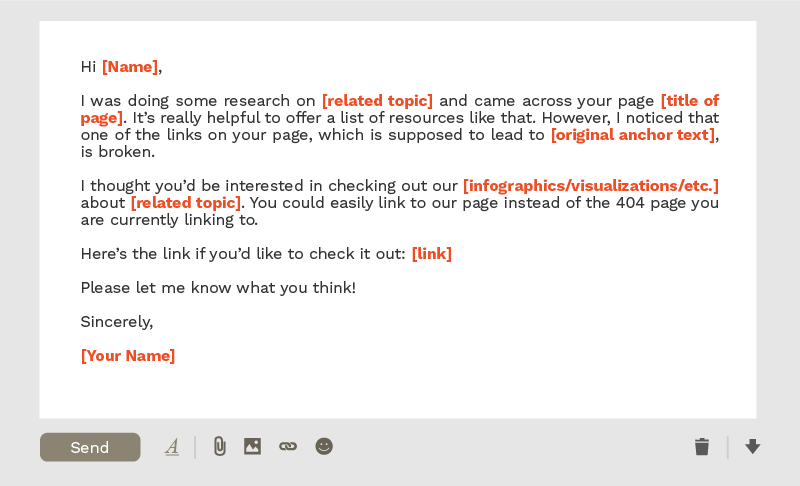
Your email should politely point out the broken link and recommend your content as a relevant replacement. The tone should be helpful, not salesy.
Here is an example of a broken link building email:
Broken link building benefits both sides.
The website gets to clean up its user experience and SEO, and you gain a high-quality backlink. It’s also more effective than cold outreach because you are offering real value from the start.
Link Reclamation
Link reclamation is a form of SEO outreach used to recover backlinks that once pointed to your website but no longer do.
The advantage is that you are not trying to build new links. Instead, you are restoring the organic external links you already earned. Therefore, this tactic has a faster link acceptance rate.
You can use SEOptimer’s Backlink Monitoring tool to reclaim lost links.
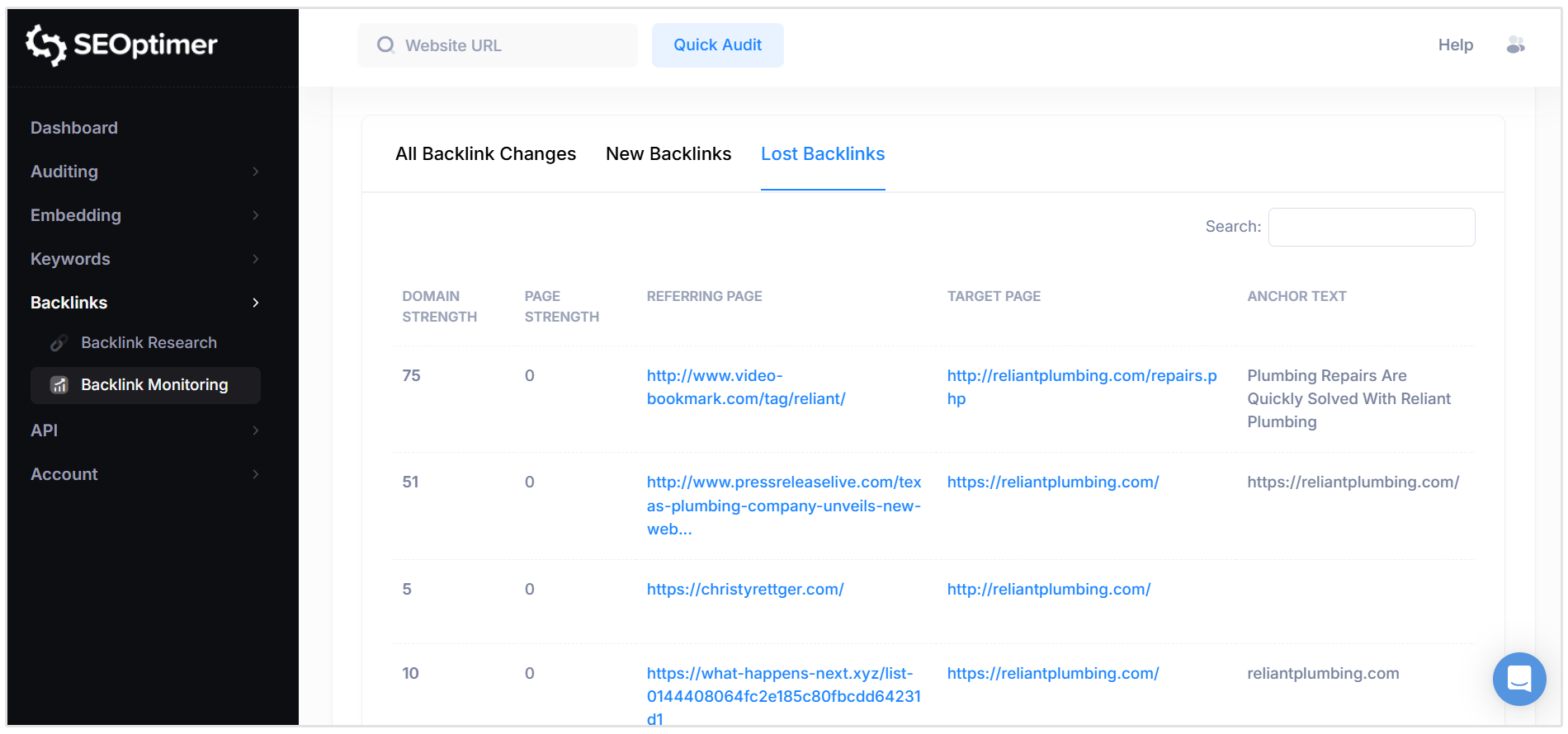
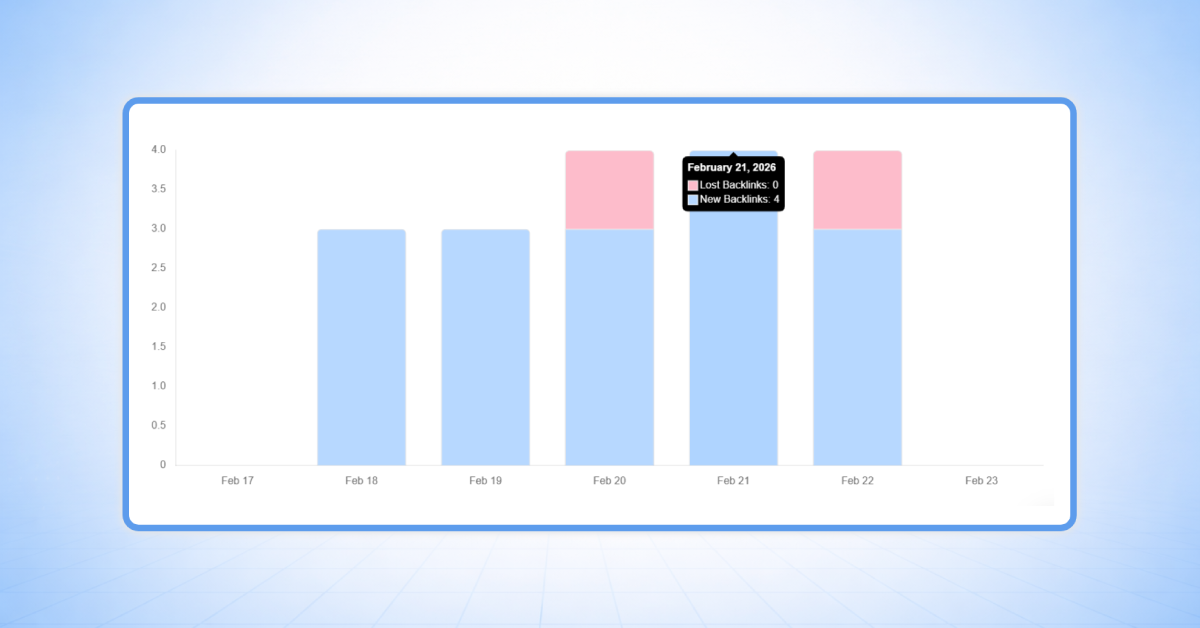
Add your website for tracking. Once added, SEOptimer starts tracking your backlinks automatically and updates the data regularly.
You get a full list of both new and lost backlinks, along with options to receive email alerts summarizing recent changes.
To find lost backlinks, open your Backlink Monitoring dashboard and switch to the Lost Backlinks view.
Here, you will see a complete list showing where the link came from, which page it pointed to, and when it was lost. You also see useful data such as domain strength, page authority, anchor text, and link type.
Review the list and filter for backlinks that are valuable to your SEO. Prioritize links from high-authority domains or links that previously sent strong signals to your pages.
For links lost due to technical reasons like broken URLs or deleted pages, fix the issue by restoring the content or setting up redirects. If the link was manually removed, contact the site owner directly.
Politely remind them of the previous link, reference the original page, and explain how the link added value to their content. Keep your message short and helpful.
Resource Page Outreach
Resource page link building helps you earn quality external backlinks by getting your content listed on curated pages that recommend useful resources.
Website owners create such pages to link to useful resources on a particular topic.
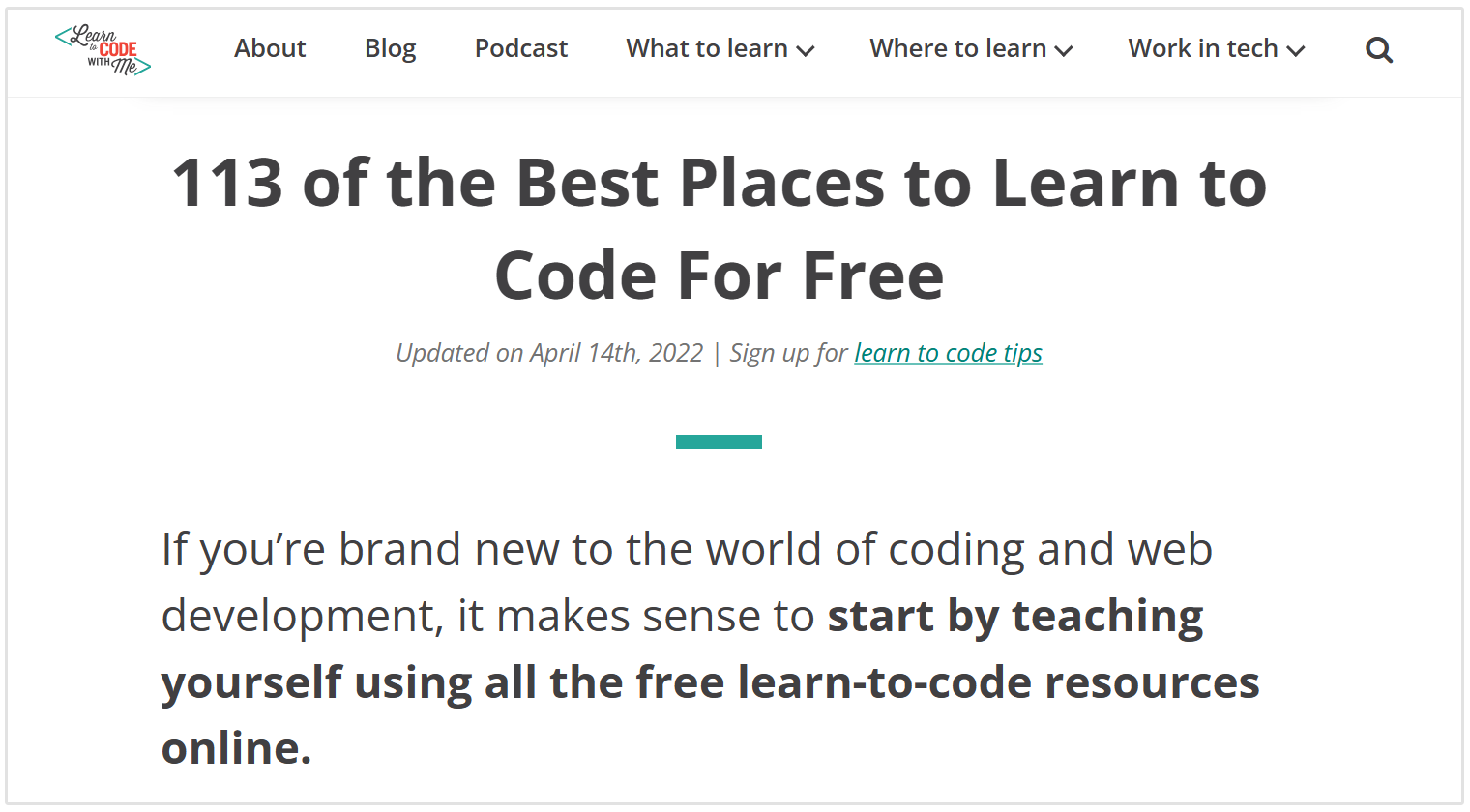
For instance, this resource page from Learn to Code with Me features sites like Codecademy, Coursera, etc. where readers can learn to code.
You can find resource pages in your niche by using Google search operators like:
- keyword intitle:"resources"
- keyword inurl:resources
- keyword "useful links"
- keyword "helpful resources"
- keyword "recommended websites"
- keyword "top tools"
- keyword "curated list"
- keyword "best sites"
- site:.edu keyword "resources"
- site:.org keyword "useful links"
For example, if I am looking for a list of resources related to CRM, I can search with the below query to find a list of resource pages linking to CRM websites:
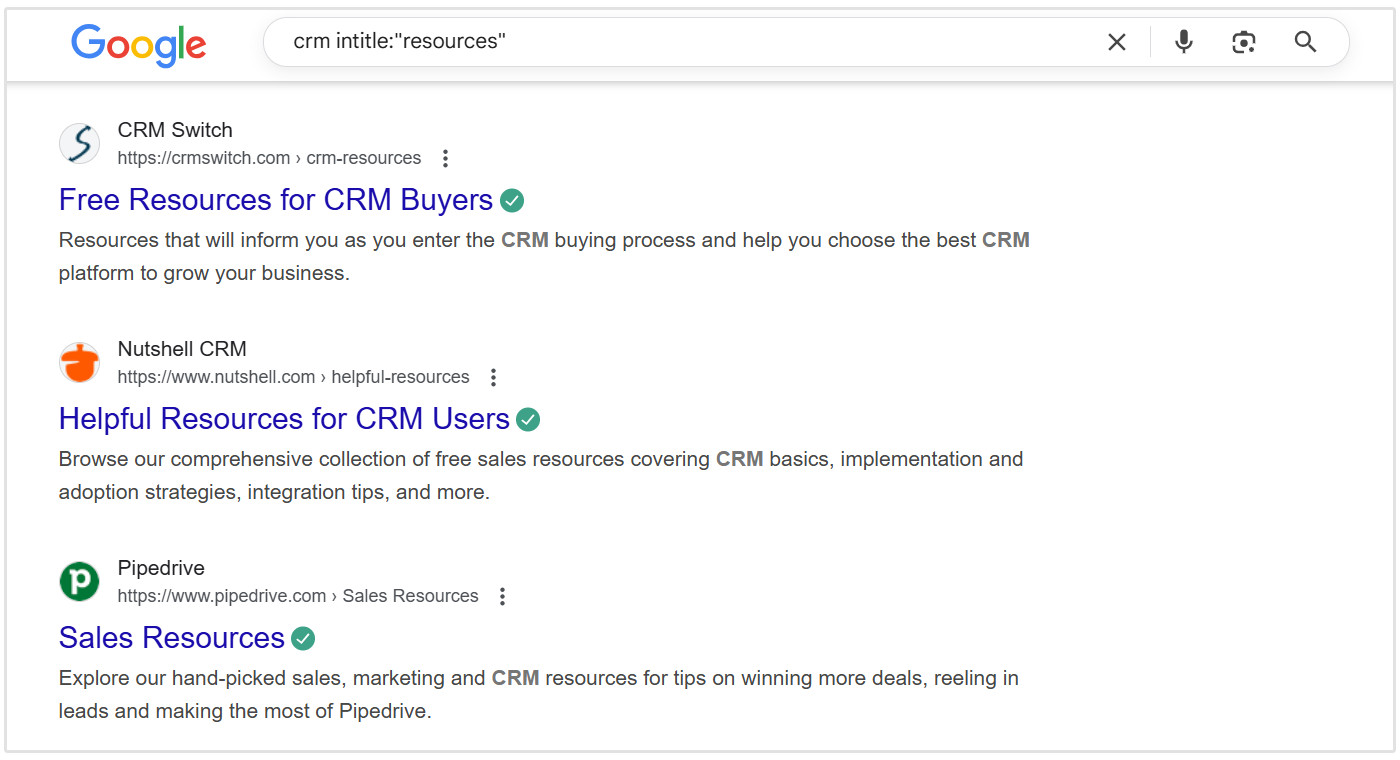
Please note that not all pages are useful or relevant. Some might be your business competitors, so you should pick only the most relevant ones.
Once you have a list, check if the pages are still active, maintained, and linking to external sites.
Review the existing resources carefully. Look for areas where your content adds something new or updates information that may be outdated.
Aaron Whittaker, VP of Demand Generation at Thrive Internet Marketing Agency, shared some interesting insights with us on how they used educational resource pages during the pandemic:
During the pandemic, we saw an increase in updates to university resource hubs as many were restructured for remote learning. That presented a particular opportunity: these pages were actively seeking credible, useful content for their students and faculty.
As an example, we developed mental health content tailored to a student audience, then used targeted search prompts like site:.edu "mental health resources" or "student wellness resources" then add "inurl:resources" to find matching opportunities.
The results were awesome. We got some backlinks from high-authority sources like Purdue, Virginia Tech, and UC San Diego. In 3-4 months, we experienced a significant increase in organic traffic and a chain reaction of secondary backlinks, with over 80% of them being organic.
Aaron believes that if you are in a niche like mental health, education, sustainability, management, or public health, this approach is not only smart, it’s definitely scalable.
Your goal is to show that your content fits naturally and improves the page’s value.
When you reach out, reference the exact resource page and explain why your content deserves a spot. Keep your email short, polite, and focused on how their readers benefit from adding your link.
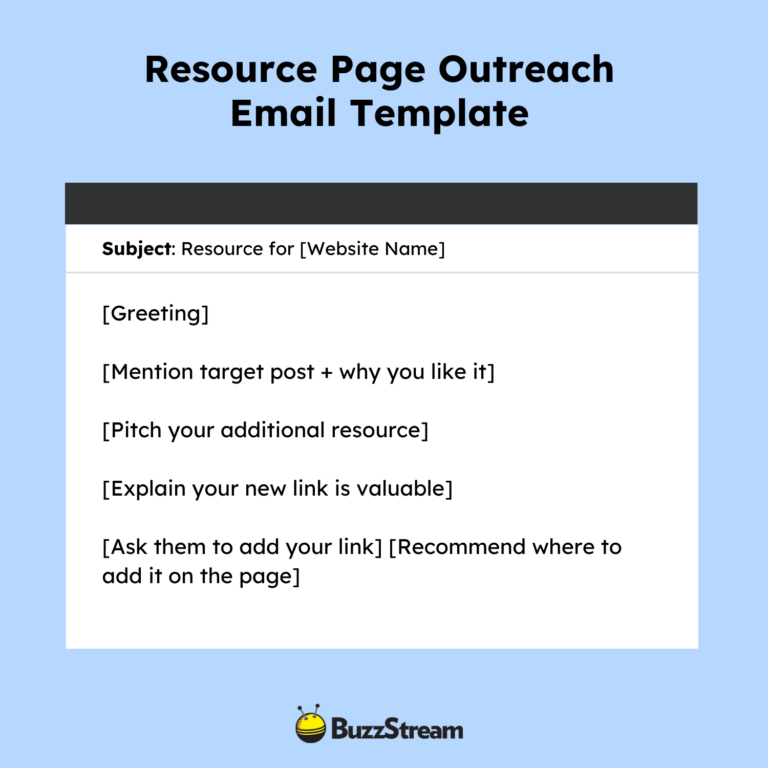
Here is an example of the things to include in your outreach email:
Skyscraper Technique Outreach
Skyscraper technique is another SEO outreach strategy where you find content in your niche that already ranks well and has earned multiple backlinks.
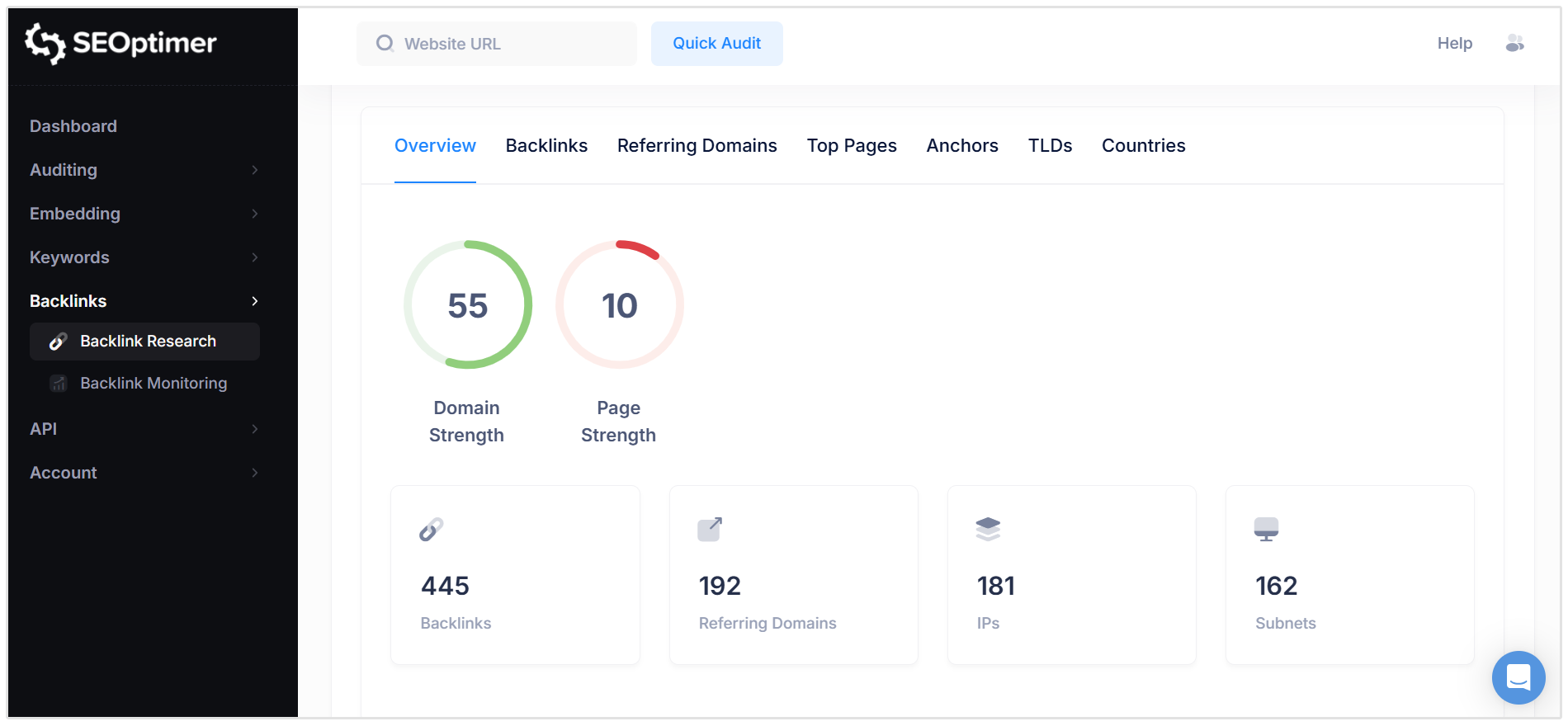
Use SEO tools like the SEOptimer backlink checker to locate pages with strong link profiles.
Once you find a topic that performs well, analyze what makes it link-worthy. Then, look for content gaps; maybe it lacks updated insights, detailed steps, case studies, or useful visuals.
Now, create a version that clearly improves on the original.
Emma Vaughan, Outreach Manager at Equator, a Glasgow-based digital agency, says that creating linkable content is still the best way to get a link.
While guest posting and broken link building are effective, the best way to get links is to create high-quality content. This means sharing valuable insights, unique data and creating useful tools.
The best way to get a link is to make linkable content first and foremost.
- Emma Vaughan, Outreach and Content Manager at Equator
Your content should be longer, more insightful, and better organized. Include fresh data, unique perspectives, and enhanced formatting that improves readability and user experience.
After publishing, identify the websites linking to the older piece.
These are your outreach targets. Send emails to each one of them, mentioning the resource they linked to, then introduce your improved version.
Explain how your content offers more value and would benefit their readers. Do not demand a link; instead, offer a better alternative.
Blogger/Influencer Outreach
Blogger or influencer outreach is the process of establishing mutually beneficial relationships with niche bloggers and social media influencers.
Partnerships with influential bloggers and successful influencers via social outreach help you earn backlinks to your website from niche-specific content creators.
You should discover and follow popular bloggers and influencers by looking at their social profiles, websites, audience size, interaction, and content type.
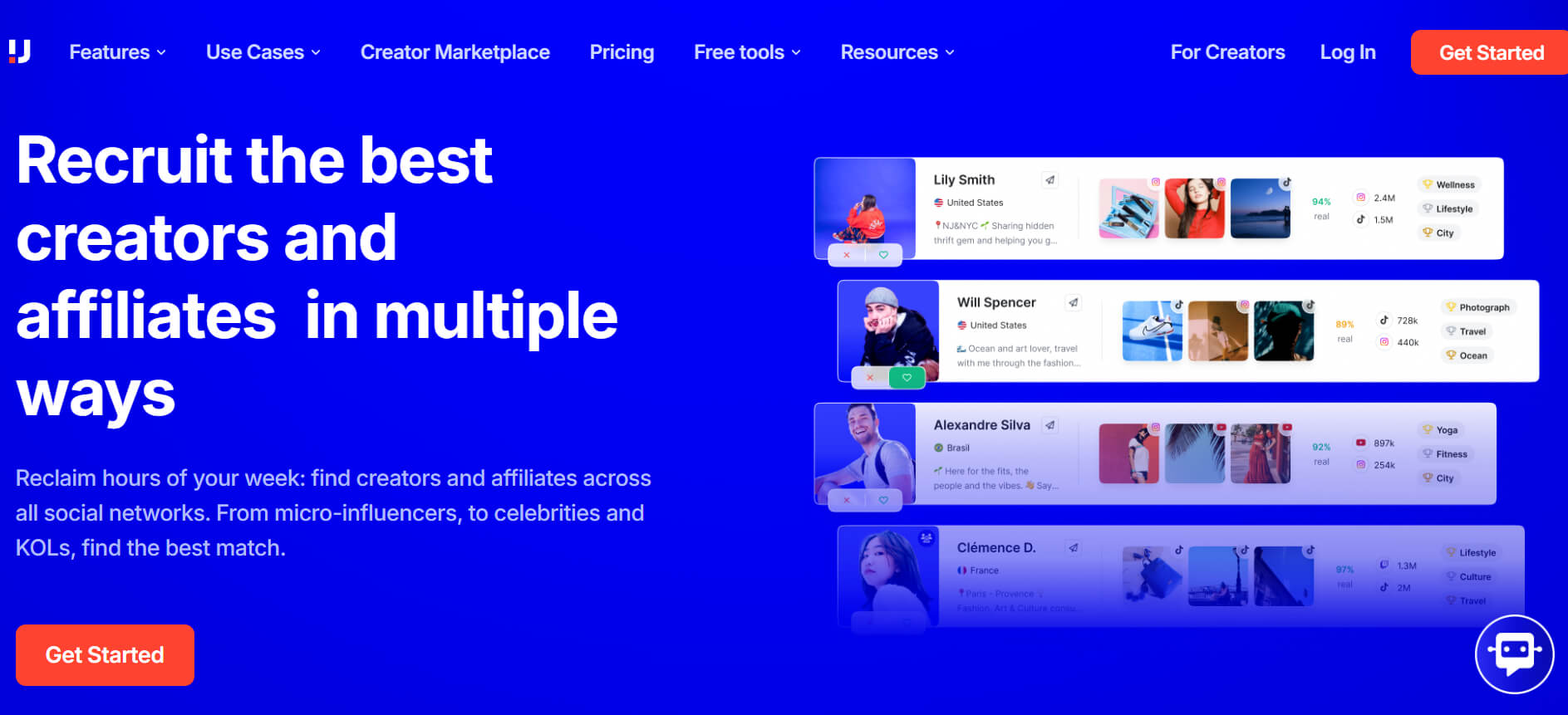
See if their followers match your ideal customer profile. You can easily find influencers on platforms like Upfluence.
Before reaching out to them, comment on their post and mention their work in your posts so that they notice your participation.
Genuine engagement builds familiarity and improves your chances of receiving a positive reply when you contact them.
Personalize your emails when sending them your link insertion request. Link to specific articles or posts that let them know you understand their work.
Use an easy-to-understand language as to how your content or collaboration benefits their audience.
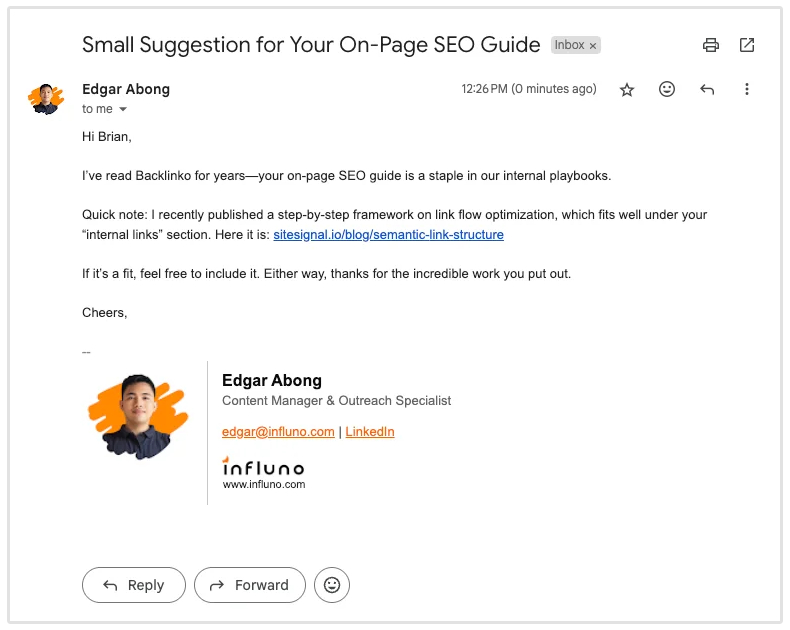
Here is an example of an influencer outreach email:
Steps to do SEO Outreach Successfully
Here are the steps to perform SEO outreach:
Step 1: Find Websites that will Accept Your Link
The first step is to find websites for SEO outreach. Depending on your strategy, you can find sites for guest posting, broken link building, resource page link acquisition, or other techniques.
Here are the different ways to identify sites for SEO outreach:
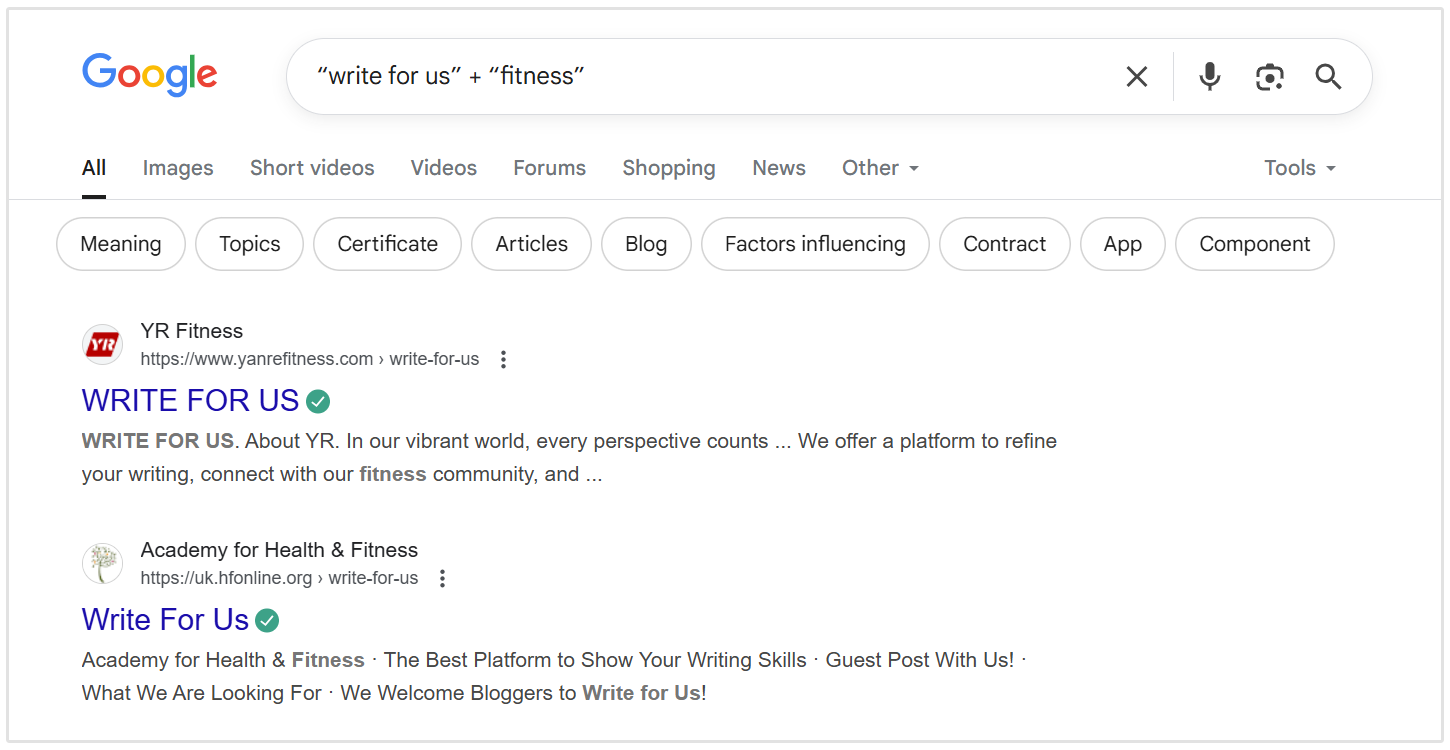
To find guest blogging opportunities via search engines, you can use the below search operators:
- “write for us” + “niche”
- “guest post guidelines” + “niche”
- “submit an article” + “niche”
- “contribute” + “niche” website
- “guest contributor” + “niche keyword”
- “niche” + “accepting guest posts”
- “submit a guest post” + “niche”
Similarly, to find listicles, resource pages, and other relevant websites to request links, you can use the below search operators:
- "keyword" intitle:resources
- "keyword" inurl:links
- "keyword" + "top sites"
- "keyword" + "best tools"
- "keyword" + "helpful websites"
- "keyword" + "useful resources"
- inurl:resources.html "keyword"
- "keyword" + "top 10"
Moreover, you can also find direct link acquisition opportunities from social media sites.
Website owners, link builders, and content managers post open calls for contributors on social channels like LinkedIn, Facebook, Twitter, and many others.
Another method is to identify your closest competitor’s link acquisition tactics and find websites where they have acquired external links from.
Again, you can use our backlink checker tool to check your competitor’s link profile and shortlist the websites.
Step 2: Analyze the Website Metrics and Content Quality
Once you have found potential sites, shortlist the ones that actually make sense for your brand.
You should review their content quality, check the type of content they are publishing, and make sure they are active and relevant.
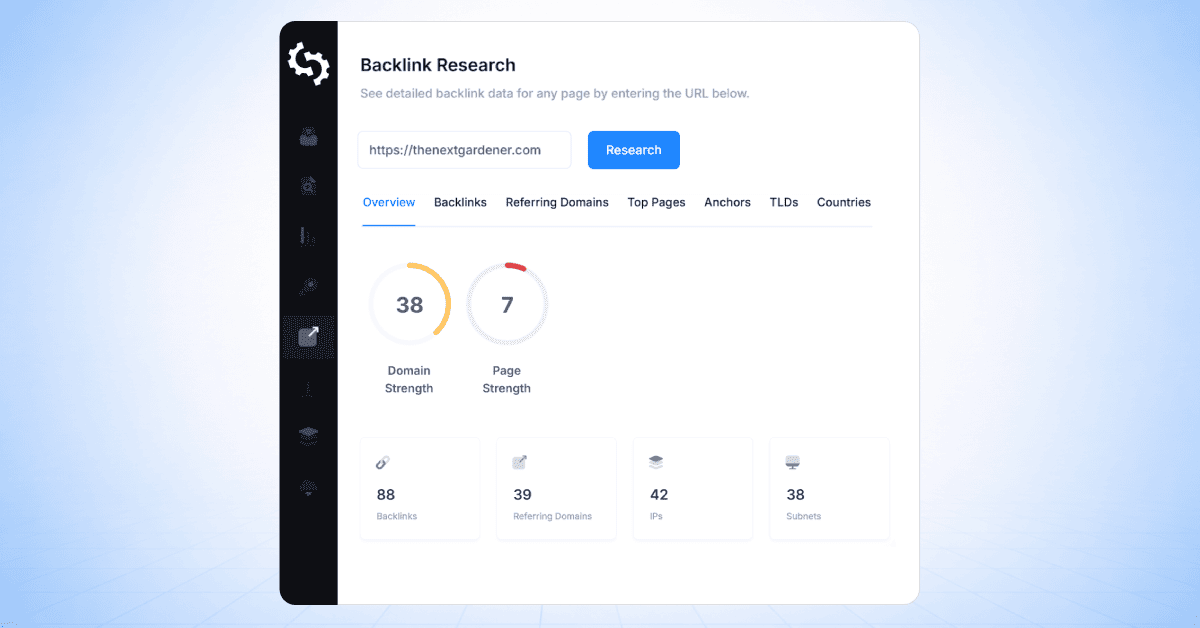
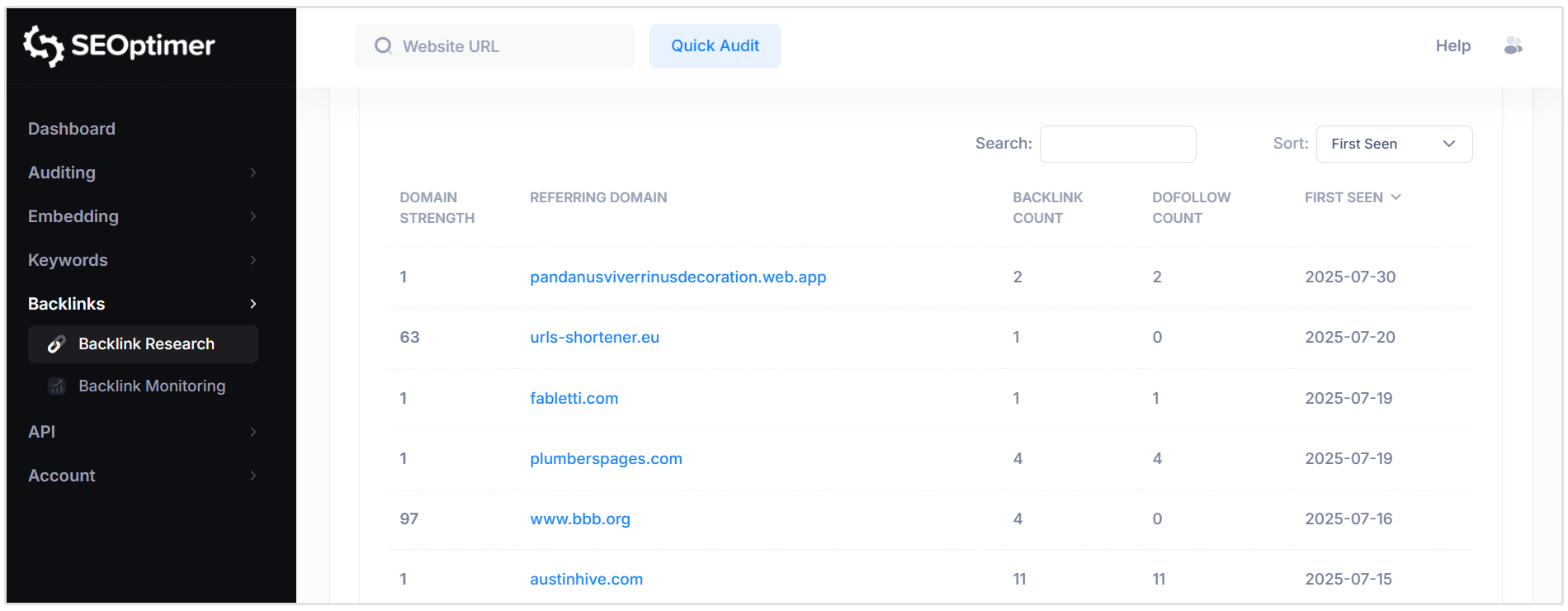
I'd use SEOptimer’s Backlink Research Tool to check the domain strength, total backlinks, follow vs nofollow links, and other relevant metrics.
You should pick sites with high domain strength and offering dofollow links.
Avoid sites that feel spammy or publish low-effort content just for links. If they have guest blogging guidelines, read them carefully. It will save time and help you tailor your pitch the right way.
Step 3: Send a Personalized Email
Not all outreach emails get replies. To send an email that gets one, you need to know the right ways.
Don’t send a generic pitch with self-centered messaging.
If you are pitching for a guest post, mention a specific article you like, and suggest a topic that fits their audience. Keep your message short, address pain points, and avoid filler stuff.
Nikola Baldikov, Founder and CEO at SERPs Grow, says that his top piece of advice for effective outreach is personalization.
Over the years, I've tested dozens of campaigns, and the ones that did manage to generate high-quality backlinks all shared the trait of feeling as though they were composed specifically for one individual.
- Nikola Baldikov, Founder and CEO at SERPs Grow
Once your pitch gets accepted, write an audience-centric guest post with original ideas, latest statistics, and nice visuals.
If you are sending an outreach email for link insertion, you need to ditch the spray-and-pray approach. Instead, prepare a personalized email that shows value.
Use a subject line that hints at mutual benefit and address the recipient by name to avoid sounding like an automated bot.
In the body, reference a specific sentence or outdated stat from their page and suggest how your content refreshes it. Back it up with proof of your content quality (e.g., traffic, original research, or a free tool), and clarify that the link will improve their UX or ranking potential.
Similarly, if you are reporting a broken link, let the website owner know exactly which link is broken and on which page. Present your content as a relevant replacement. Make sure the replaced URL matches the context of the 404 link. Be straightforward, polite, and helpful. Your email should feel like you are helping the site owner fix an issue.
If you are getting your brand mentioned in top-tier publications, but without a backlink, then link outreach for turning unlinked brand mentions into high-authority inbound links can be useful.
For unlinked brand mentions, you should first thank the website owner for mentioning your brand. Then, tell them how linking to your website can be beneficial for them. This should look like an opportunity and not a request. Be cordial and avoid being pushy.
Common Mistakes to Avoid in SEO Outreach
You should avoid these common mistakes when doing SEO outreach:
Sending Generic Outreach Emails
One of the most common SEO outreach mistakes is sending the same email to every website.
You should always take time to personalize your message based on the site you are contacting.
Mention the website name, a specific post you liked, and how your content adds value. Editors recognize template emails instantly and usually delete them without reading them.
Pitching Irrelevant Topics
You should not pitch topics without first understanding what kind of content the website publishes.
Many outreach attempts fail because the proposed ideas are unrelated to the site audience.
Always review a few recent posts to understand their tone, topic focus, and style. Suggesting something that does not match shows a lack of preparation and leads to time wastage.
Mary Sahagun, Founder & Communications Strategist at TargetLink has an interesting perspective when it comes to relevance in SEO outreach.
Instead of pitching based on what’s already live, she spends more time studying which content is being updated, rewritten, or refreshed.
A lot of link builders treat outreach like a static game: find a page, pitch a link. But online content is constantly evolving. What worked two months ago might be outdated today. That’s where the real opportunity is. In my opinion, editors are far more likely to consider a backlink, quote, or guest contribution when it aligns with the direction they’re already moving in.
- Mary Sahagun, Founder at TargetLink
Ignoring Guest Blogging Guidelines
If a site has guest blogging guidelines, you should follow them carefully. These rules help maintain quality and ensure that submitted content fits their expectations.
Make sure your article follows all their instructions on word count, formatting, and linking. Ignoring guidelines is seen as careless and leads to instant rejection.
Adding Unnatural or Promotional Links
Adding links just for the sake of SEO is a mistake. You should include links that are contextual and offer genuine value to readers.
Avoid stuffing links into the author’s bio or using exact-match anchor text. Editors prefer the natural integration of links within the content body.
Neglecting to Follow Up
Sometimes, editors miss or forget to respond to your email. You should follow up politely after a few days if you do not receive a reply.
A follow up email a few days later after your initial email will demonstrate that you are serious and professional without being pushy at all.
- Caleb Johnstone, SEO Director at Paperstack
A short and respectful reminder can bring your pitch back to their attention. Do not send repeated messages or come off as pushy.
Focusing Only on High Domain Rating Sites
Relying only on high Domain Rating sites can limit your outreach success.
You should also consider niche websites with engaged audiences and relevant content. Industry-specific websites that are not your direct competitors are one of the easiest link outreach opportunities.
In fact, Steve Morris, Founder and CEO at NEWMEDIA.COM, says that link-builders should stop obsessing over Domain Rating and go after “microscopic relevance” instead.
According to Steve, they've found massive success focusing more on building links from relevant sites within their clients' niche.
Our best-performing link-building effort last quarter didn’t rely on getting links from huge, high-DR (Domain Rating) sites. Instead, we secured 27 links from sites with DRs between 18 and 38, but the crucial factor was that these sites were laser-focused on our client’s specific niche.
While we didn’t see a flood of referral traffic, organic sessions for our client’s main keyword jumped from 3,200 to 4,450 per month in just two months. We also saw rankings increase on 8 out of 11 target pages, all without making any technical or on-page changes.
- Steve Morris, Founder and CEO at NEWMEDIA.COM
Steve explains the process they follow:
- First you should create what I call “micro-maps” of relevance.
- Break down your main topic into 10–15 sub-problems your target customer faces.
- Only go after sites where at least 70% of their recent posts are about those specific sub-problems.
- Next you'll qualify sites based on how well their audience lines up with yours, and not just their DR.
- Look through their five most recent posts, their About page, and their outgoing links.
- If it seems like their readers would truly care about what you’re offering, add them to your list and forget about vanity metrics.
Forgetting to Track Outreach Efforts
You should keep a proper record of your outreach activity. Track the websites you contact, the topics you pitch, and the status of each conversation.
Having a documented SEO outreach process helps you manage follow-ups and avoid duplicate emails. Organized tracking also helps to enhance the deliverability and performance of your outreach strategy over time.
SEO Outreach FAQs
Who is an SEO outreach specialist?
A link building or SEO outreach specialist is a marketer who helps identify niche-specific bloggers, content creators, journalists, and influencers.
They have an excellent knowledge of different metrics related to a website that impact the value of a backlink.
They thoroughly check and review each website before sending emails to them.
An SEO outreach expert prepares different performance reports that let you understand the ROI of link acquisition.
Who should you reach out to?
You should target websites that are relevant to your industry and publish high-quality content. You can reach out to niche blogs, legal or technical resource sites, industry publications, or content hubs in your vertical.
How many follow-ups should you send?
Not all emails are answered promptly. Sometimes, you need to wait for weeks before the website owner responds to your link insertion or content publishing request. You should send a follow-up email after a week or two, and it is appropriate to send 2-3 follow-ups at the max.
But remember, bombarding someone with multiple follow-ups will only damage your credibility and may lead to being flagged as spam.
What should you include in an outreach email?
Your outreach email should be short, with a personalized introduction and a professional signature. Include points that make the website owners believe that you are a regular reader and have done your research before pitching them.
Tell them how your request will benefit their followers. Mimic their tone and talk about the advantages. They should feel like they should not miss this opportunity. You should also include your writing samples when pitching for a guest post.
Conclusion
SEO outreach is one of the most effective ways to gain high-quality backlinks by promoting original, actionable, EEAT-friendly content to the right websites your target audience already reads.
For a successful SEO outreach process, you should follow the tips suggested in this article and identify relevant sites using different search operators. Always review the content quality and website metrics before emailing.