


The search landscape is changing fast. AI-powered search tools like ChatGPT, Perplexity, and Google's AI Overviews are reshaping how people find information.
For digital marketing agencies, this presents a massive opportunity to offer a new, high-value service: Generative Engine Optimization (GEO).
But here's the challenge, most clients don't even know what GEO is yet. That means agencies that want to sell GEO services now will have a significant first-mover advantage.
Agencies that act now will set the standards for GEO and position themselves as leaders, rather than trying to catch up later.
- Lee Dobson, Head of Client Services at Bulldog Digital Media
This guide will show you exactly how to position and sell GEO services to your clients. Plus, you'll learn how to overcome common objections and avoid common mistakes when pitching to clients.
But before you can sell GEO services, you need to understand what you're selling.
What is Generative Engine Optimization (GEO)?
Generative Engine Optimization is the practice of optimizing content so it appears in AI-generated answers across platforms like ChatGPT, Google AI Overviews, Perplexity, and Microsoft Copilot.
Unlike traditional SEO that focuses on ranking in search results, GEO ensures your client's brand gets mentioned and cited when AI tools answer specific user questions.
Why Agencies and Marketers Should Offer GEO Services
The numbers tell the story.
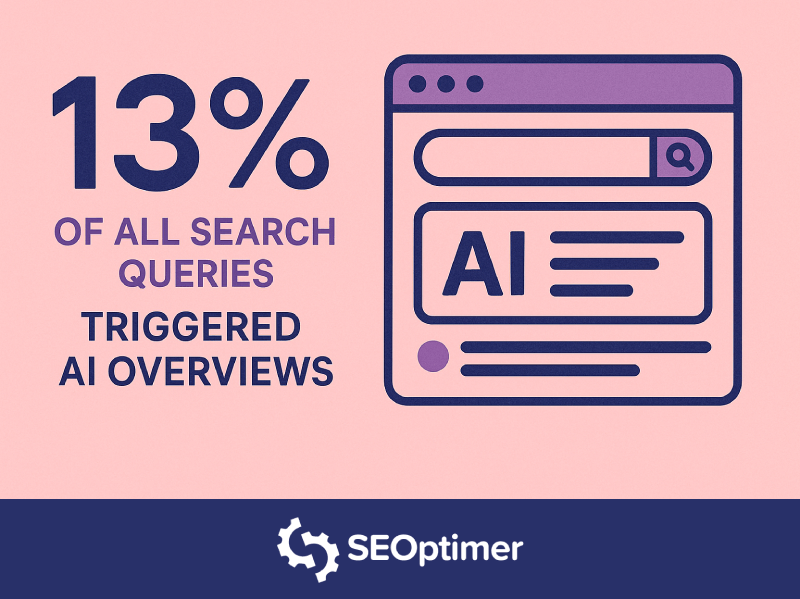
According to research from Semrush, 13.14% of all search queries triggered AI Overviews in March 2025. Which according to them, is up from 6.49% in January 2025.
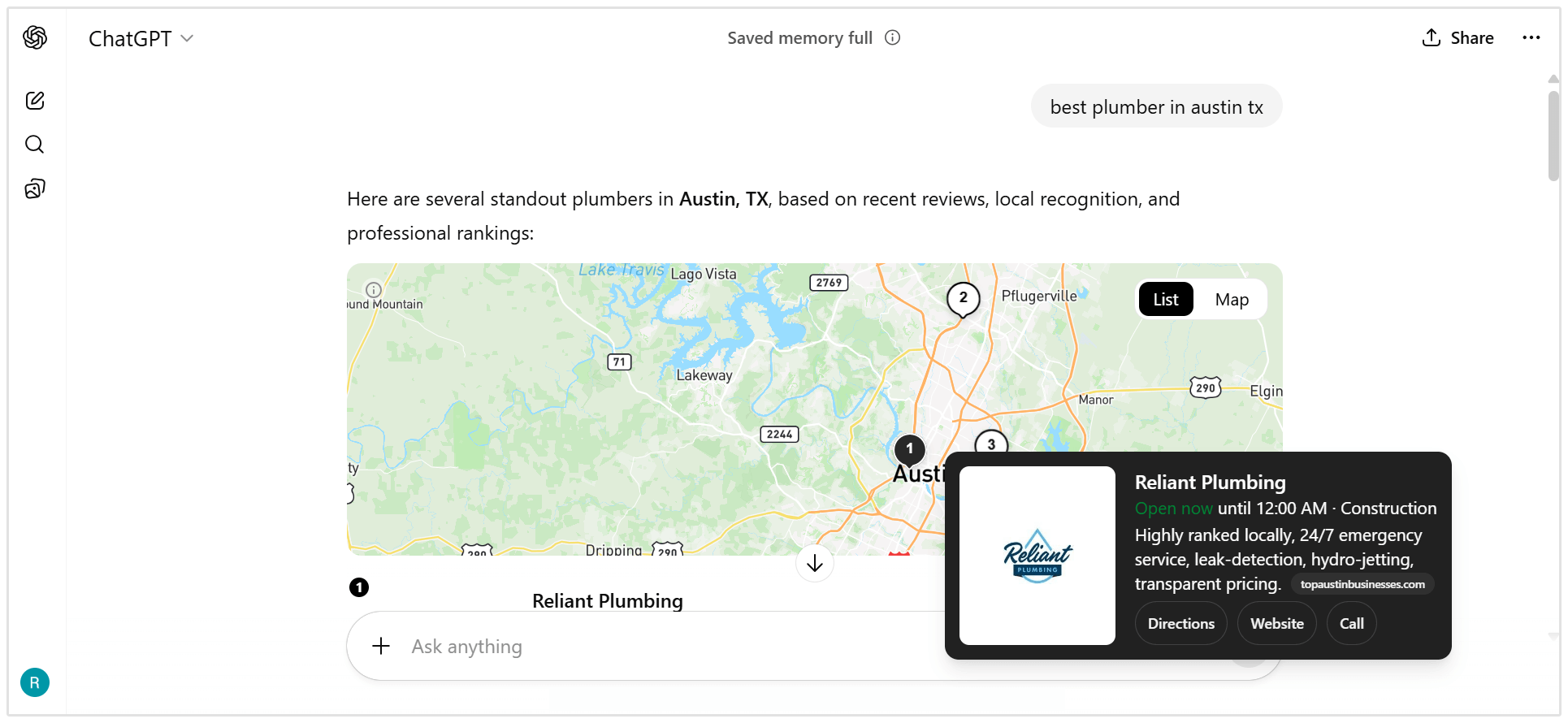
And Local Falcon reported that Google AI Overviews appear in more than 40% of local business queries like ‘plumber in austin.’
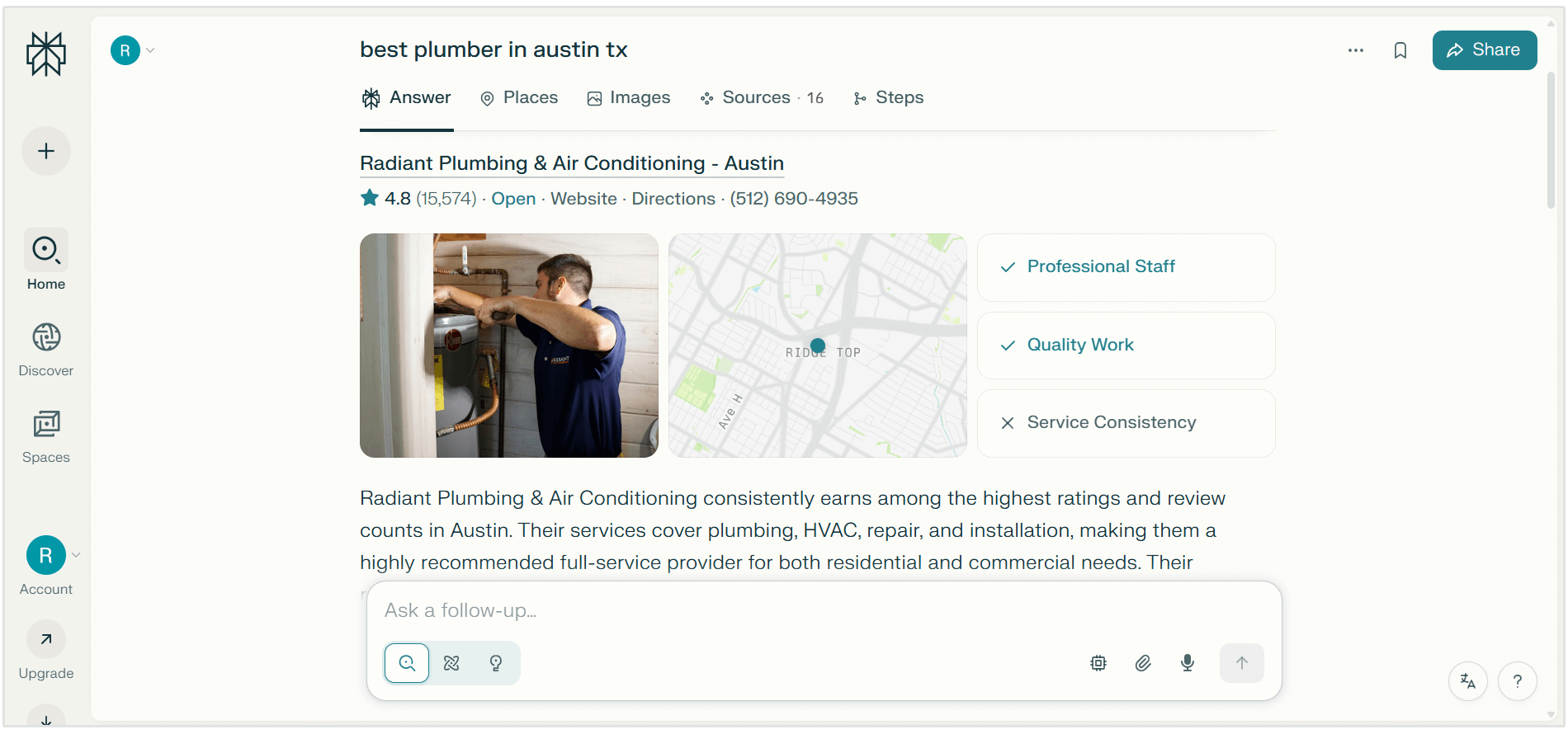
Additionally, searchers are using other tools such as ChatGPT, Claude, and Perplexity to find information, products, and businesses online.
Your clients' customers are already using these tools. If your clients aren't optimized for AI search, they're becoming invisible to their audience.
Here are the key benefits of adding GEO to your agency’s service offerings:
- High demand, low competition: Most agencies aren't offering GEO services yet.
- Premium pricing: New, specialized services command higher rates.
- Client retention: GEO requires ongoing optimization, creating recurring revenue.
- Future-proofing: Position your agency as innovative and forward-thinking.
- Upsell opportunities: GEO complements existing SEO and content marketing services.
What GEO Services can You Offer?
When selling GEO services, clients want to know exactly what they'll receive.
Here are the core deliverables that successful GEO agencies provide:
Generative Search Visibility Audits
A typical Generative Engine Optimization (GEO) engagement begins with a generative search visibility audit.
This audits how often your client’s brand appears in AI-generated answers and highlights which competitors are being mentioned instead.
It also examines the sentiment used when AI tools reference your client’s brand, providing insight into whether the perception is positive, neutral, or negative.
Finally, the audit documents any visibility gaps for relevant queries, offering a clear picture of where opportunities exist to strengthen the brand’s presence in generative search results.
Content Optimization for AI Answers
Since AI tools favor well-structured information, the focus is on creating content with clear headings and concise paragraphs that are easy to interpret.
High-performing content also incorporates specific facts, statistics, and quotes, which provide credibility and context that AI systems can draw from.
To maximize visibility, content should be written to answer questions directly and comprehensively, leaving little room for ambiguity.
For instance, let's examine the results that are referenced in an AI Overview for the query "typical lead time for kitchen cabinets."
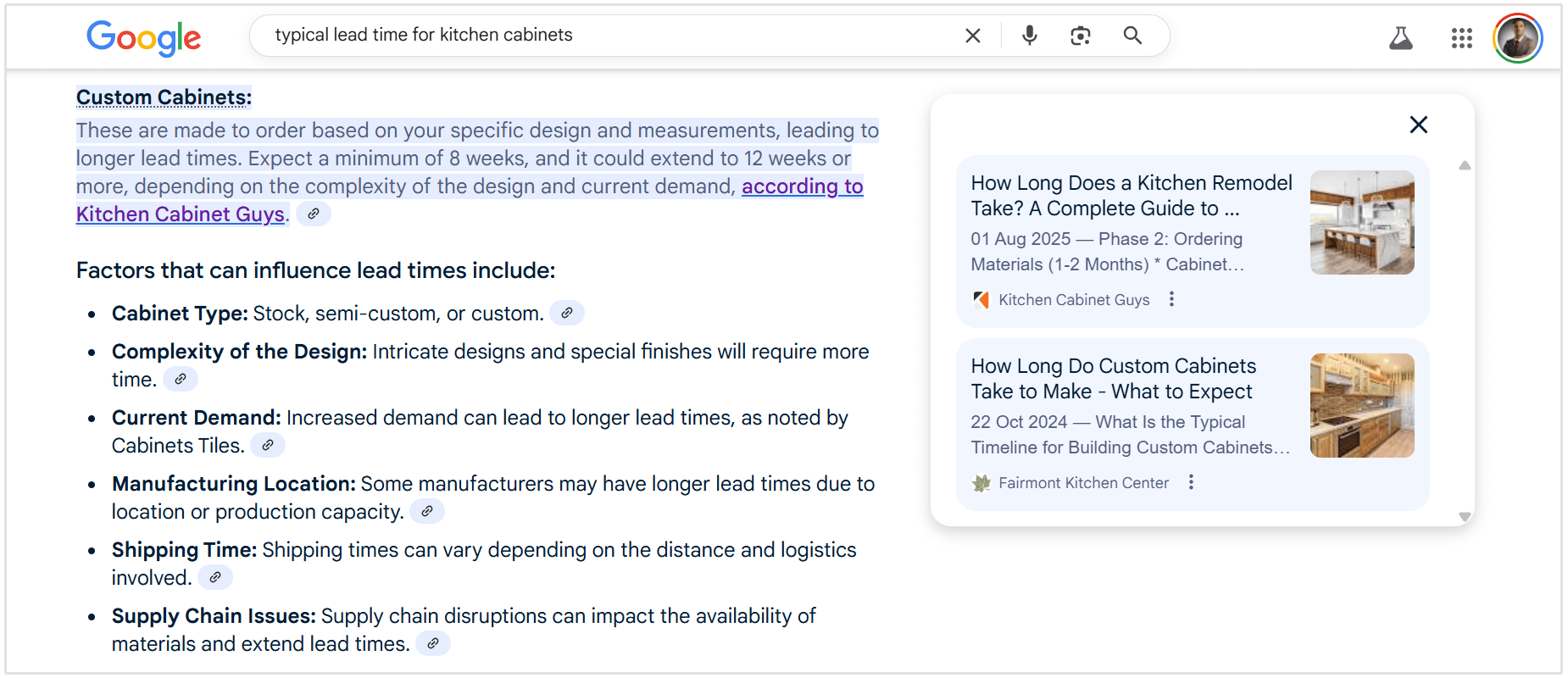
As you can see, The Kitchen Cabinet Guys is referenced saying that the lead time is about 8 to 12 weeks. Looking at the actual website with the information on it, we can see that this specific topic is answered in a concise quote:

Structured Data and Entity SEO
Structured data and entity optimization helps AI tools clearly identify and interpret your client’s business.
This includes using FAQ schema, business entity markup, and knowledge graph connections, while also building associations with trusted industry sources. These signals improve the chances of a brand being featured in generative search results.
If you want to learn more about optimizing for entities, check out our guide on entity SEO here.
Monitoring AI Snapshots & Citations
Ongoing tracking involves regular monitoring across multiple AI platforms, assessing the frequency and context of mentions, and staying alert to new opportunities as AI tools evolve.
Additionally, it includes keeping a close eye on competitor activity within AI-generated results to inform your strategy and maintain a competitive edge.
People Also Ask (PAA) Optimization
AI tools frequently rely on FAQ-style content, making it essential to identify common questions within your client's industry.
By creating comprehensive FAQ pages, optimizing existing content to address specific queries, and structuring information for easy AI extraction, you can enhance visibility and relevance in AI-driven search results.
For instance, FVF Law's website has a nice and comprehensive FAQ section at the bottom of their homepage. These questions and answers are structured in a simple, easy-to-extract manner.

How to Sell GEO Services: Practical Steps
Educating Prospects on Why GEO Matters
Most prospects won't understand GEO immediately.
The best strategy is education. Most clients don’t know what GEO is, so agencies need to demonstrate how tools like ChatGPT, Perplexity, and Google’s AI Overviews are reshaping brand discovery.
- Gabriel Bertolo, Founder and Creative Director at Radiant Elephant
If you want to offer GEO services in your agency, use this framework:
- The Problem: Start with data they can relate to. So something like, "Did you know that 13% of all Google searches now show AI-generated answers? That percentage is growing every month."
- The Opportunity: Connect it to their business so that they can relate. "When someone asks ChatGPT for the best dentist company in Brisbane, is your business mentioned? Your competitors might be getting that visibility instead."
- The Solution: Position GEO as the answer. "GEO ensures your brand appears in AI-generated recommendations, not just traditional search results."
Using Case Studies and Examples
Nothing sells like proof. Document your results with:
- Before and after screenshots of AI mentions
- Specific examples of improved visibility
- Traffic and conversion data when available
- Client testimonials about GEO results
Show, don’t tell. We run test queries on Gemini or ChatGPT for relevant searches, then ask the client: “Why isn’t your name showing up here?” That’s the ‘aha’ moment.
From there, we walk them through what AI is actually citing — Reddit threads, Yelp pages, FAQ content. Then we explain how we can make their site more “AI-citable” and improve their brand’s visibility in zero-click AI searches.
- Ivan Vislavskiy, CEO and Co-founder at Comrade Digital Marketing Agency
Even if you're just starting with GEO, you can create compelling examples by:
- Showing how competitors appear in AI results
- Demonstrating the potential reach of AI platforms
- Providing industry research on AI search growth
Overcoming Common Objections
When pitching SEO services, you’ll also likely get some objections from prospects. Here are some of the most common objections and quick responses on how to overcome them.
Objection: "Is this just SEO rebranded?"
Response: "GEO builds on SEO foundations but requires different tactics. Traditional SEO gets you ranked in search results. GEO gets your brand mentioned in AI-generated answers. Both are important, but they require different approaches."
Objection: "How do we know AI search will stick around?"
Response: "ChatGPT reached 400 million users faster than any app in history. Google's AI Overviews appear on billions of searches monthly. Major tech companies are investing billions in AI search. The question isn't if AI search will grow, but how fast."
Objection: "Can't we just do this ourselves?"
Response: "You could, but GEO requires specialized knowledge of how AI systems work, ongoing monitoring across multiple platforms, and constant adaptation as algorithms change. Most marketing teams don't have the bandwidth to stay current with these rapidly evolving technologies."
Tips for Marketing GEO Services
Use Thought Leadership
One of the most effective ways to market GEO services is through thought leadership. By positioning your agency as a trusted GEO expert, you can build credibility and attract clients who are eager to stay ahead of AI-driven search.
An example of someone building thought leadership in the AI and GEO space is Blake Davis from Royal Reef Media. He constantly published insightful posts on LinkedIn on how to rank your business in ChatGPT, the evolution of search, and other relevant topics.
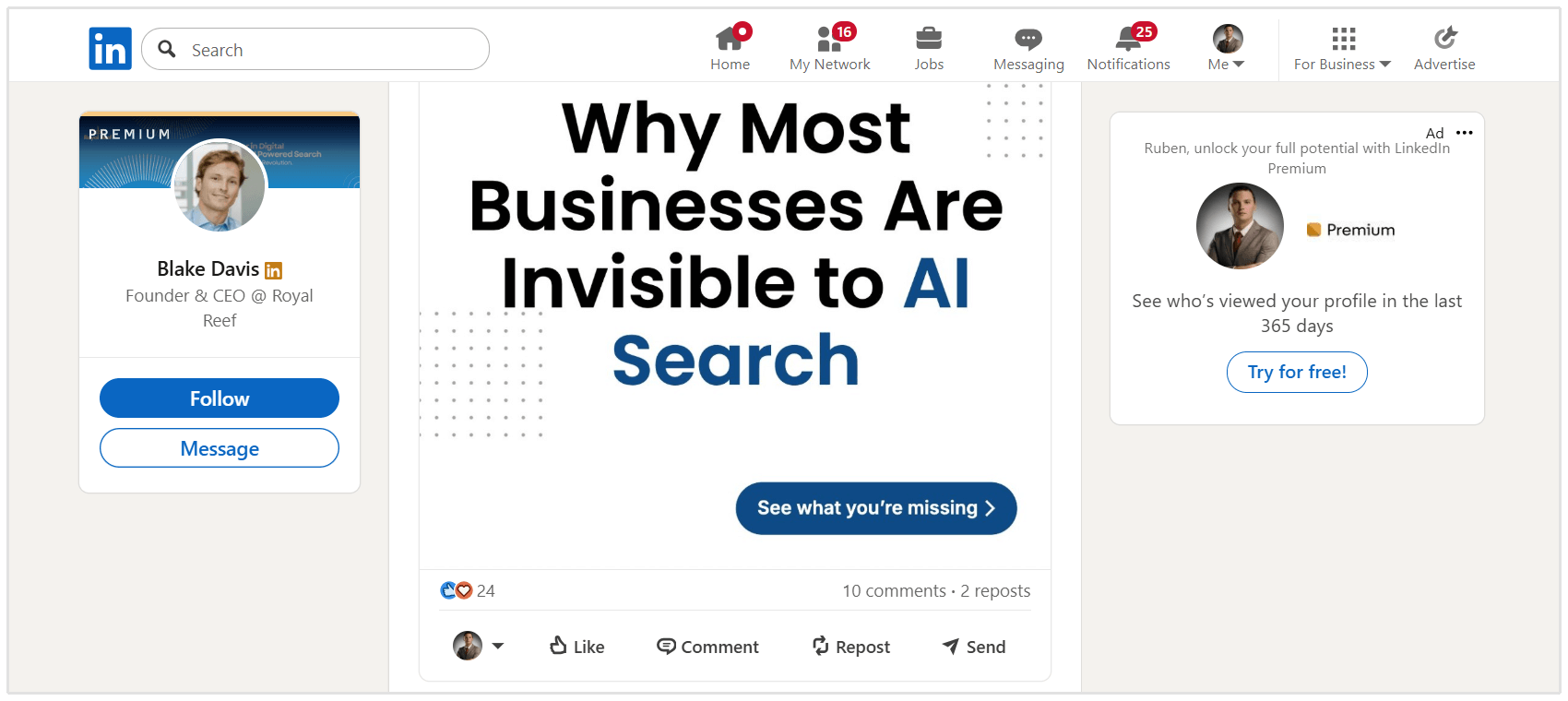
This can be achieved by publishing educational content on AI search trends, speaking at industry conferences, and creating free resources such as GEO checklists.
Hosting webinars on AI search optimization is another powerful way to demonstrate expertise while engaging directly with potential clients.
Offer Free GEO Audits
Another effective strategy is to offer free GEO audits.
Providing upfront value is a great way to start conversations with potential clients and showcase the importance of generative search optimization.
A simple audit process, combined with a 30-minute consultation to review the findings, can quickly demonstrate both the opportunity and the gaps in a client’s current visibility.
These free audits often serve as a natural lead-in to paid services, converting interested prospects into long-term clients.
Highlight ROI
When marketing GEO services, it’s important to highlight ROI and the benefits that the service can have.
Clients respond best when the focus is on business outcomes rather than just technical details.
Emphasize how GEO ensures their brand stays visible as search evolves, helps them get ahead of competitors who aren’t yet optimizing for AI, and protects their market share in an era where generative search is rapidly gaining ground.
Framing GEO as a way to future-proof their digital marketing strategy makes the value proposition clear and compelling.
Position as "Don't Get Left Behind"
Another effective angle is to position GEO as a “don’t get left behind” opportunity. Creating urgency helps clients understand the importance of acting now rather than later.
You can do this by sharing data on the rapid growth of AI-driven search, showing examples of competitors already appearing in generative results, and emphasizing the first-mover advantage.
At the same time, highlight the risks and potential costs of waiting too long, making it clear that delaying could mean losing visibility to faster-moving competitors.
Mike Khorev, MD and Founder at Nine Peaks Media gave us some great insights on how agencies can approach clients with this message:
Selling GEO is about storytelling, not technical jargon. Most clients don’t care about AI algorithms, they care about visibility. Show them concrete examples: competitors are already appearing in AI-generated answers on ChatGPT, Perplexity, or Gemini.
Use simple, relatable framing: “Do you want your brand to show up when customers ask AI for recommendations?” That question alone sparks attention.
- Mike Khorev, MD and Founder at Nine Peaks Media
Common Mistakes to Avoid When Selling GEO Services
Overcomplicating Explanations to Clients
Keep your pitch simple.
It would be best to avoid technical jargon about large language models and machine learning.
Most small to medium sized business owners don’t really care about the technical details anyway.
Instead, focus on business outcomes like: "We help ensure your brand gets mentioned when potential customers ask AI tools for recommendations."
Selling GEO as a One-Time Fix
Like traditional SEO, GEO requires ongoing optimization.
AI algorithms change frequently, new platforms emerge, and competitor activity shifts the landscape.
Position GEO as an ongoing service, not a one-time project.
Ignoring Measurement & Reporting
One common mistake when offering GEO services is ignoring measurement and reporting.
Like with other SEO services, monthly client reporting is essential for building a good relationship and for communicating results to clients.
Monthly GEO reports should include:
- How often the brand is being mentioned across all AI platforms
- Visibility comparison against competitors
- Outline new opportunities
Including strategic recommendations for continued growth not only proves value but also strengthens long-term client relationships.
Tools & Resources to Support GEO Services
Next, let’s take a closer look at some of the tools that you can use to offer GEO services.
AI Search Monitoring Tools
Most traditional keyword tracking platforms aren’t yet equipped to monitor AI-generated mentions, which leaves a big gap for agencies trying to prove GEO results.
AI search monitoring tools fill this gap by tracking how often a brand is cited in generative answers across platforms like Google’s AI Overviews, ChatGPT, Claude, and Perplexity.
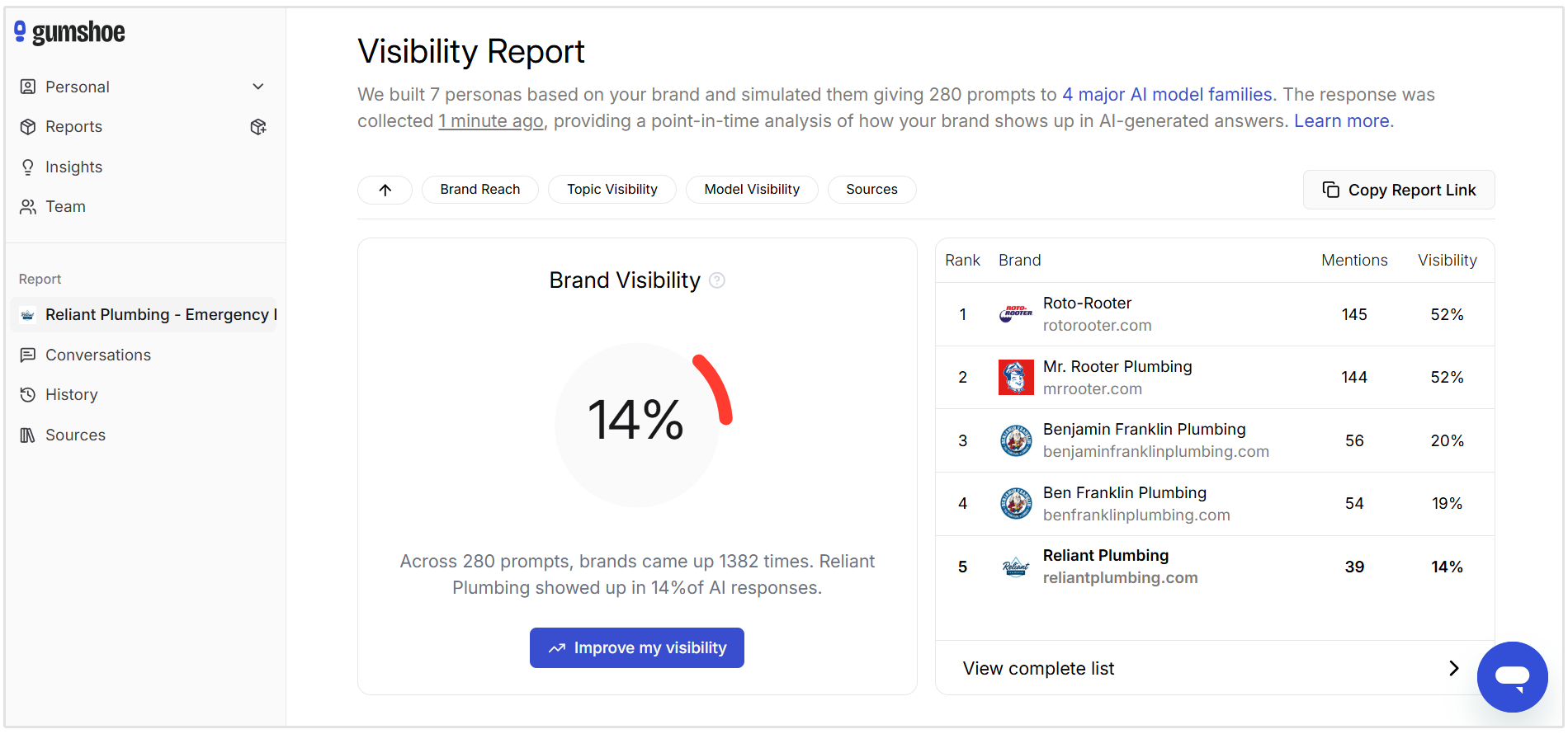
There are some tools that have recently been released that can be used to track AI mentions, these include:
- Ziptie.dev
- Profound
- Peec AI
- Gumshoe.ai
Keyword/Intent Research Tools
While traditional keyword research tools may not track AI mentions, they’re still extremely valuable for understanding searcher intent. They reveal the kinds of questions and topics people are actively seeking, which remains a foundation for GEO strategy.
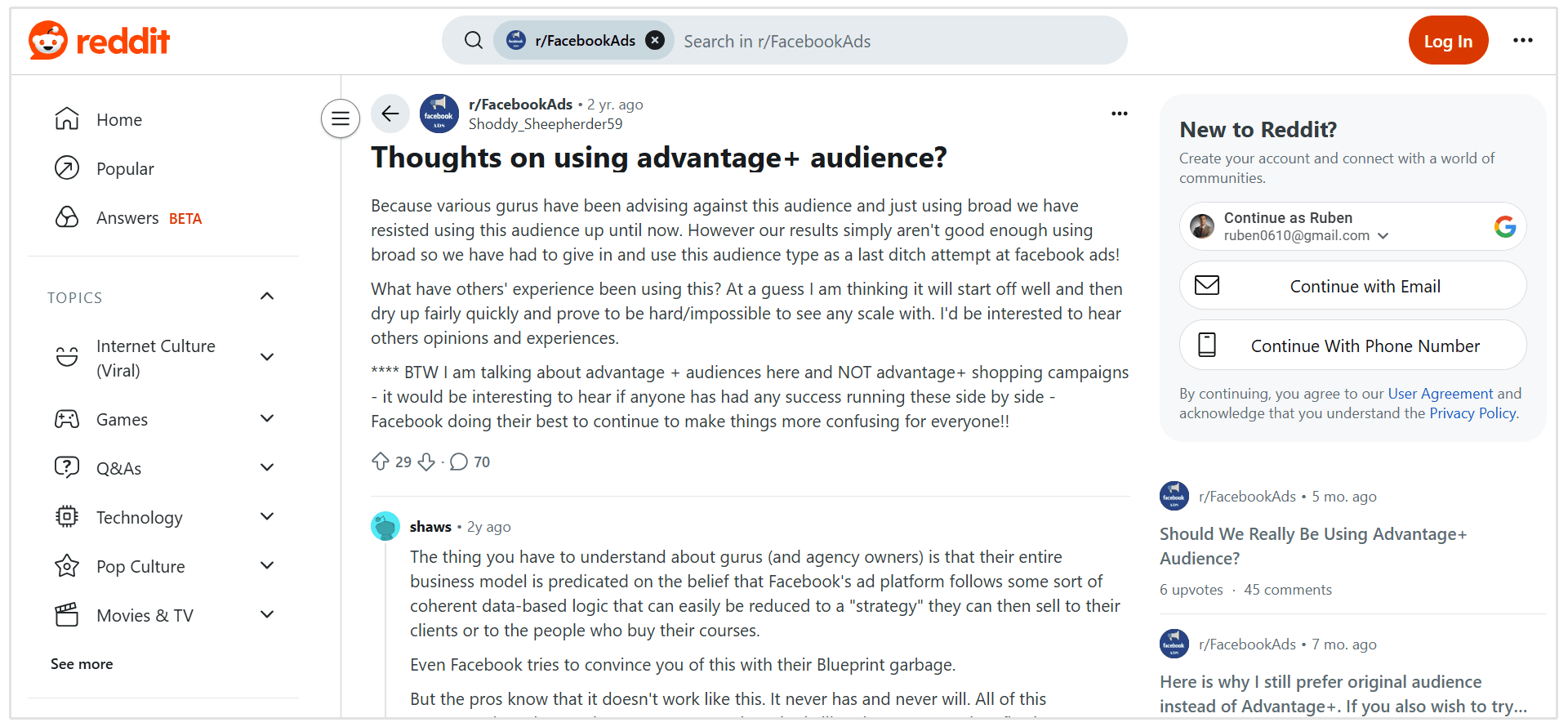
Beyond that, platforms like Reddit and online forums are goldmines for conversational queries that AI tools are likely to surface.
Customer support tickets can also provide authentic, real-world questions that make for strong content topics.
Finally, social listening tools help identify trending questions and discussions in your industry, ensuring your content aligns with what audiences care about most.
The Future of GEO Services
The GEO services market is still in its early stages, but growth predictions are strong. As AI search adoption accelerates, demand for GEO services will increase dramatically.
Here's what we expect:
- Growing Demand: More businesses will recognize the need for AI search optimization
- Service Evolution: GEO tactics will become more sophisticated as AI tools mature
- Integration with SEO: GEO will become a standard component of comprehensive SEO services
- Specialization Opportunities: Agencies may specialize in specific AI platforms or industries
- Higher Competition: More agencies will enter the market, making early adoption valuable
The agencies that start offering GEO services now will have the experience and case studies needed to dominate this growing market.
Our GEO services have accounted for 25% of our new client’s acquisitions for the last eight months since companies understand the strategic significance of showing up in AI search as the customer’s behavior changes.”
And agencies that provide GEO services today will develop expertise and case studies that can be leveraged later on when search optimization with AI becomes ubiquitous throughout all industries.
- Aaron Whittaker, VP of Demand Generation at Thrive
Start Selling GEO Services Today
The AI search revolution is happening whether we're ready or not. Forward-thinking agencies are already adding GEO to their service offerings and seeing strong client interest.
Your clients need this service, even if they don't know it yet. By positioning your agency as the GEO expert in your market, you'll attract new clients, increase retention, and future-proof your business.