

Key Takeaways
- Search Everywhere Optimization helps brands stay visible across all search platforms.
- Consumers use on average 6 touchpoints to do product research, and 50% rely on 4+ channels.
- 61% of Instagram users turn to Instagram for product discovery and 43% of Gen Z use TikTok as their primary search tool.
- Google still leads, driving 63% of referral traffic, but the search journey is now multi-platform.
- SEO and SEO-Everywhere work together to boost visibility across search, social, reviews, and AI tools.
Fifteen years ago, if you needed an answer or looked for a product, you went straight to Google. Today, that journey is far more complex and involves several different digital touchpoints.
The way people search for information, products, and businesses has fundamentally changed.
This is primarily because of the rise of different digital platforms like social media sites, user forums, video streaming sites, and AI tools (ChatGPT, Gemini, etc.)
For instance, imagine you are in the market for a set of new Caraway ceramic pots and pans.
You might begin your product search on TikTok to see a short review of the set you have in mind or you might use YouTube to see a more in-depth reviews.
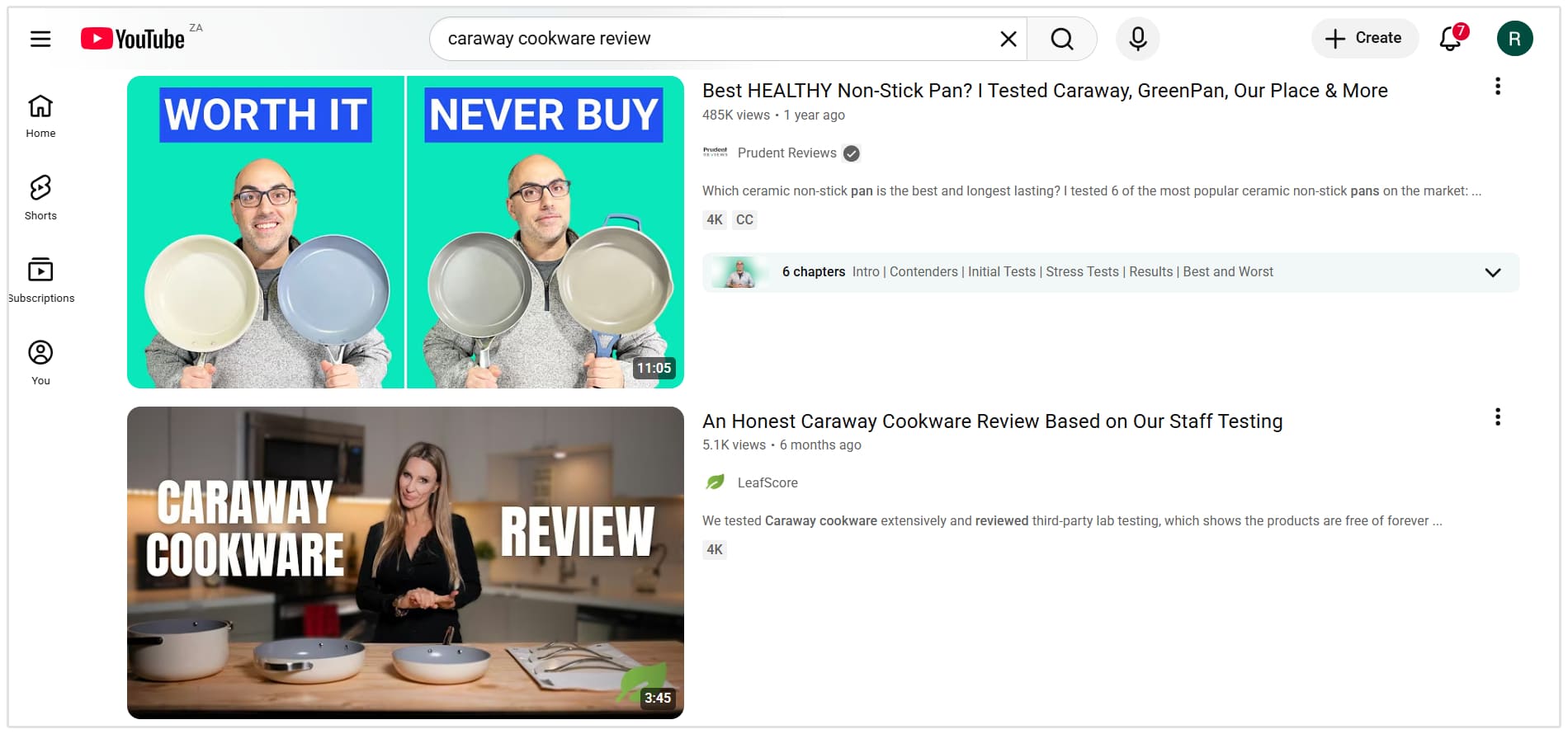
Then you might jump to Reddit for even more unfiltered opinions, and finally land on a traditional search engine like Google or an AI tool like ChatGPT to compare options with other brands.
As the search landscape changes, our marketing strategies must evolve.
Brands need to be visible across every platform their customers use to discover, compare, and make decisions.
This is the thinking behind a new approach to search marketing called Search Everywhere Optimization.
This guide will explain what Search Everywhere Optimization is, how it builds upon traditional SEO, and provide a step-by-step framework to implement it in your business.
By understanding and applying these principles, you can ensure your brand shows up not just on search engines, but everywhere your customers are looking these days.
What is Search Everywhere Optimization?
Search Everywhere Optimization (also referred to as SEvO) is the process of optimizing a brand's visibility across all the platforms and channels where potential customers might search for information.
This includes traditional search engines, social media networks, eCommerce sites, review platforms, and generative AI tools.
The goal is to create a seamless and consistent brand presence throughout the entire buyer journey.
But why is this important? And why should brands and businesses have a Search Everywhere Optimization strategy?
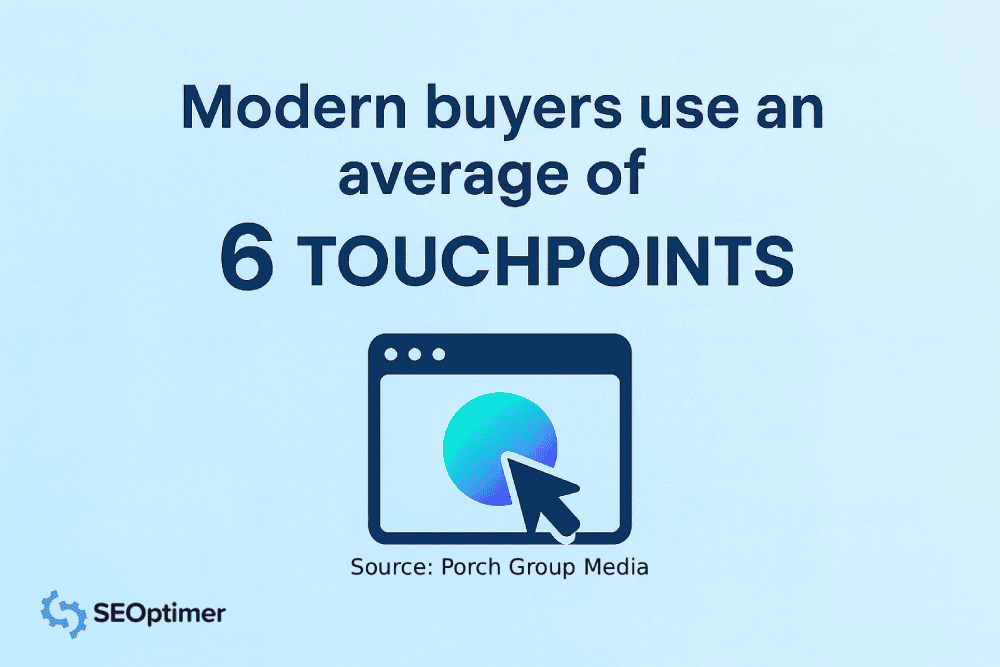
Well, according to Porch Group Media, fifteen years ago, consumers used an average of 2 touchpoints, and only 7% relied on more than four. Today, the average has climbed to 6 touchpoints, with 50% of consumers using more than four channels during their purchase journey.
The advantage of Search Everywhere Optimization is that it aims to build trust and influence wherever search happens, instead of focusing only on driving traffic from Google.
This strategy acknowledges that modern consumers use multiple touchpoints before converting, and each one presents an opportunity to engage and communicate with a prospect.
What makes Search Everywhere Optimization challenging is the required resources to optimize for differnet channels, this is espcially true for small businesses.
And no, a "shotgun approach" of using the same material on each platform won't work.
To ensure higher ranking within these platforms, it’s important to deploy content curated specifically for that platform, and not just whitewash everything with the same material. Users will interact differently, depending on which platform they are using, and the strategy should be tailored to reflect that.
- Odi Caspi, Digital Marketing Expert and Founder at Happy PPC
2 Pillars of Search Everywhere Optimization
To effectively implement Search Everywhere Optimization, it's helpful to categorize the digital touchpoints into two main types: managed experiences and earned experiences.
Understanding this distinction allows you to prioritize your efforts and allocate resources more effectively.
Managed Experiences
Managed experiences are the online properties where you have direct control over the content and its presentation.
This is where you can craft your brand's narrative without outside interference.
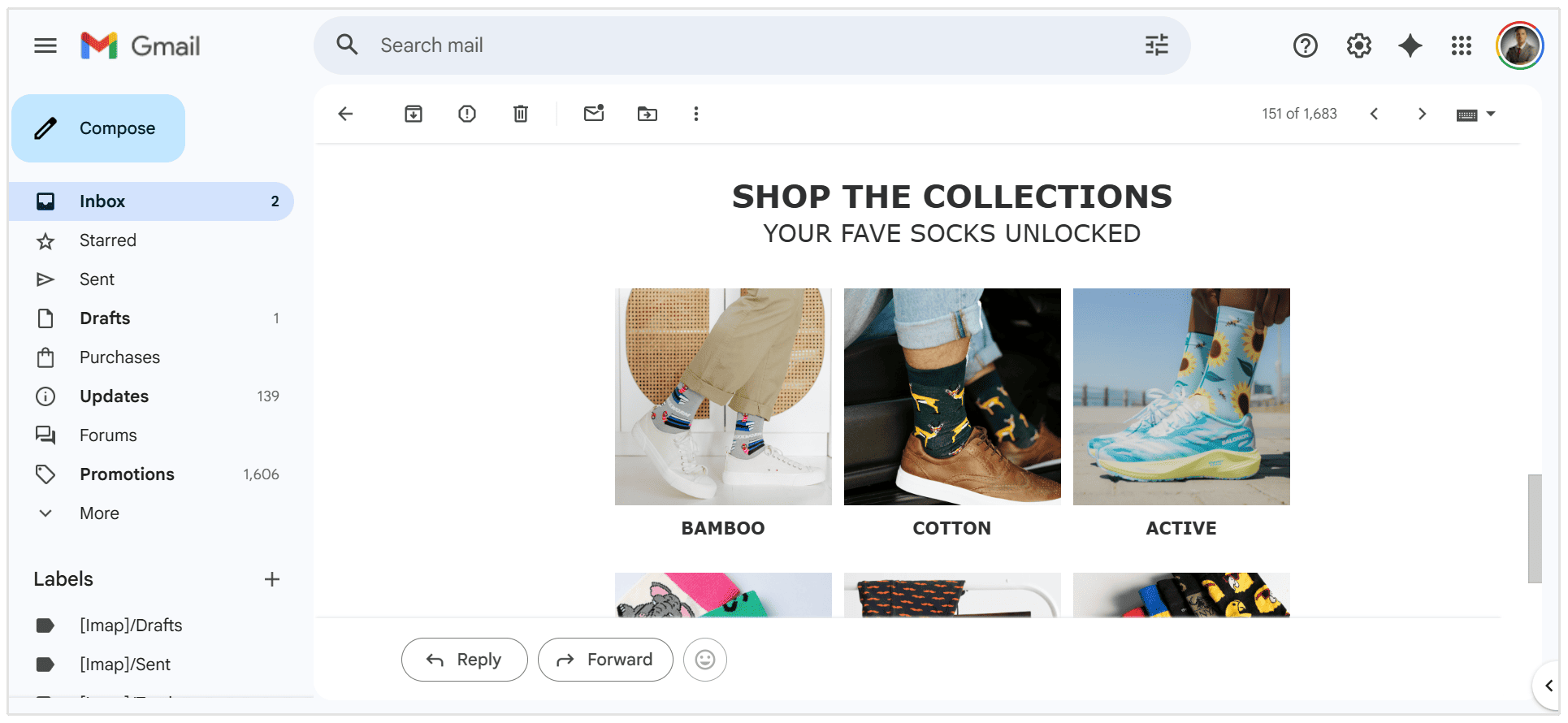
For instance, email newsletters are a great way to build your brand's messaging. And if you're not currently using email, you're missing out on a huge opportunity to engage with potential clients and customers.
Your own managed experiences are also where you should be placing the bulk of your focus and time.
Examples of managed experiences include:
- Your official website and blog
- Company social media profiles (Facebook, Instagram, LinkedIn, TikTok)
- Product listings on eCommerce platforms like Amazon
- App store pages for your mobile applications
- Email newsletters
On these platforms, you are responsible for everything from the visual design and messaging to the user experience and calls to action.
Earned Experiences
Earned experiences, sometimes called influenced experiences, are the touchpoints where your brand is discussed by others.
You don't have direct control over these conversations, but they are incredibly influential in shaping public perception and building trust.
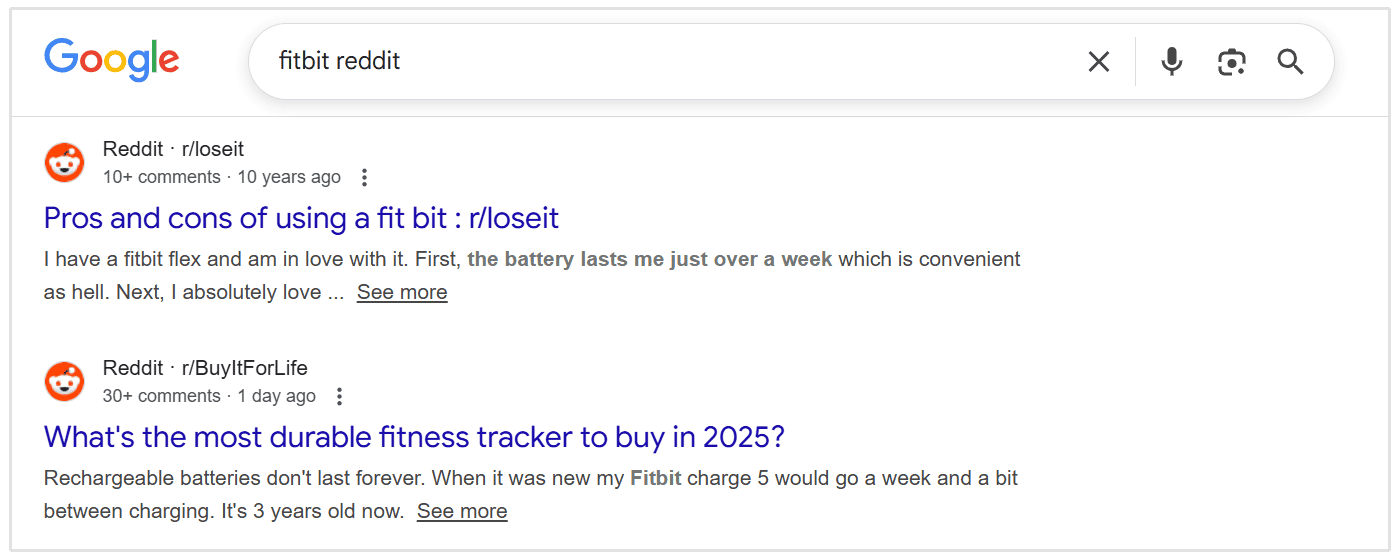
For instance, if you really want to check users' perception of your brand or products, simply type in "(your business) reddit" and click on the results in the SERP. You'll quickly see the public's opinion of your product or business.
Examples of other earned experiences include:
- Customer reviews on sites like Yelp, G2, or Amazon
- Discussions in online forums like Quora
- Mentions and reviews by people on YouTube or TikTok
- Third-party articles and comparison guides
- AI-generated summaries in tools like ChatGPT or Google's AI Overviews
While you can't dictate what is said in these spaces, you can certainly influence the narrative.
By encouraging positive reviews, engaging in relevant conversations, and creating valuable content that others cite, you can build a strong reputation in the channels your audience trusts most.
Another form of earned placement is PR mentions. Although this isn't 100% in your control, you can still dictate what is being said about your brand when setting up a PR campaign.
When an expert quote shows up in a high-authority outlet, it cycles through multiple touchpoints (traditional SERPs, AI Overviews, news outlets, social feeds, and even LLM datasets). That means PR mentions no longer boost brand presence, but they’re becoming part of the broader strategy.
- Pilar Lewis, Public Relations Associate at Marketri
Search Everywhere Optimization Channels
The modern search ecosystem is vast.
A successful strategy requires optimizing for a variety of channels where your audience is active.
Traditional SEO
Traditional search engines like Google and Bing are still foundational to any digital strategy.
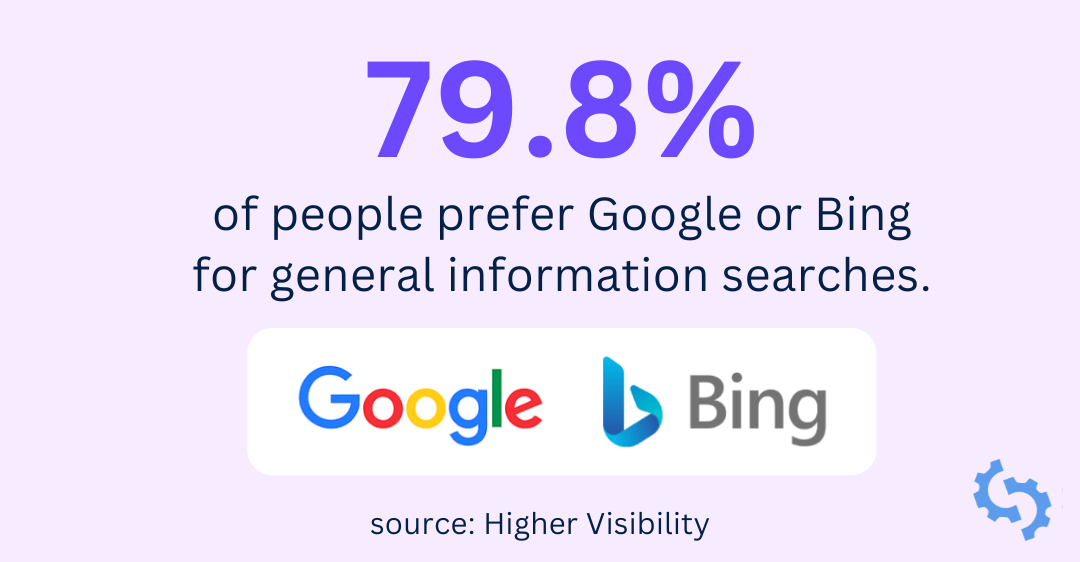
Rand Fishkin from Moz and SparkToro stated in one of his blog posts, that Google alone refers 63% of all web traffic. And we also previously found some insights from Higher Visibility that 79.8% of people still prefer Google or Bing for general informational searches.
So yes, there might be 5 other platforms that are the "new shiny object" but nothing beats good old traditional SEO when it comes to driving organic traffic.
Core SEO practices like building high-quality backlinks, ensuring your site is technically sound, and creating helpful content are important for optimizing for traditional search engines.
We're not going to discuss how to optimize for search engines in this post, because check out these helpful resources to learn more:
- On-Page SEO: What is It and How To Improve Ranking Factors?
- What are Backlinks and How Do You Get Them?
- How Long Should a Blog Post Be?
- How to Create a Complete Topic Map for SEO
Social Media
Research from SproutSocial shows nearly 61% of Instagram's nearly 2 billion monthly users utilize the platform to find their next purchase, making it a great channel for product discovery.
Additionally, SQ Magazine found that 43% of Gen Z in the US identify TikTok as their primary search tool, overtaking Google and Instagram.
Social platforms have evolved into powerful search and discovery tools.
Each social platform requires a different approach based on user behaviour and the platform's own algorithm.
For example, even though YouTube is technically a social platform, it's also the world's second-largest search engine.
Some of the primary ways to optimize for YouTube SEO include optimizing video titles, descriptions, and transcripts with relevant keywords is essential.
Also, don't forget to translate video and create closed captions - it will help you reach a wider audience.
And on Pinterest, you need high-quality images, keyword-rich pin descriptions, and consistent pinning to drive significant traffic.
While we can't discuss exact strategies for each social media platform in this blog post, feel free to check out these useful resources to optimize for each of the main social channels:
- YouTube SEO 101: How to Get Found on YouTube
- The Ultimate Guide to TikTok SEO
- Pinterest Marketing: How to 5X Your Organic Reach
- How to Build an Organic Instagram Marketing Strategy
AI Platforms
Generative AI tools like ChatGPT, Perplexity AI, and Microsoft Copilot are rapidly becoming go-to sources for answers.
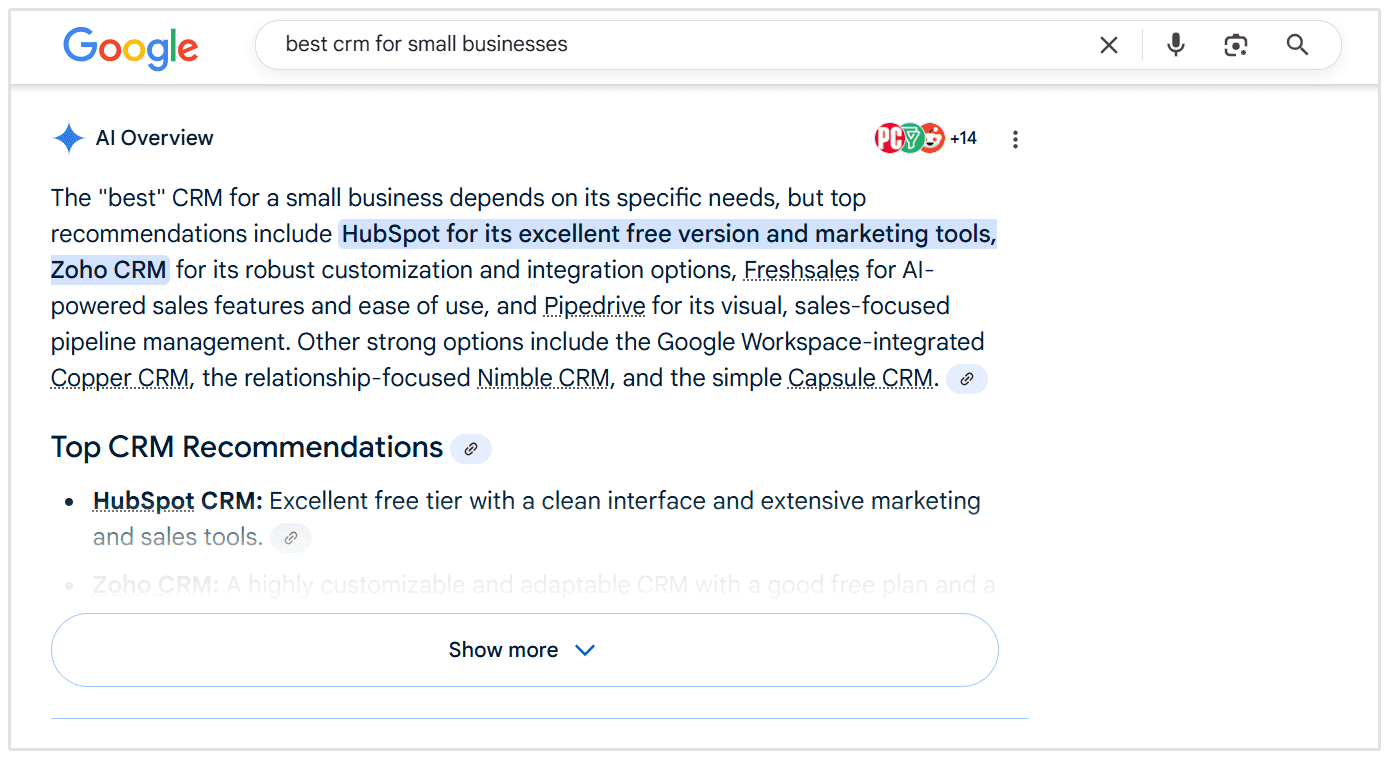
For instance, a small business owner in the market for a CRM tool might use Google AI Overviews to shortlist a few potential software vendors.
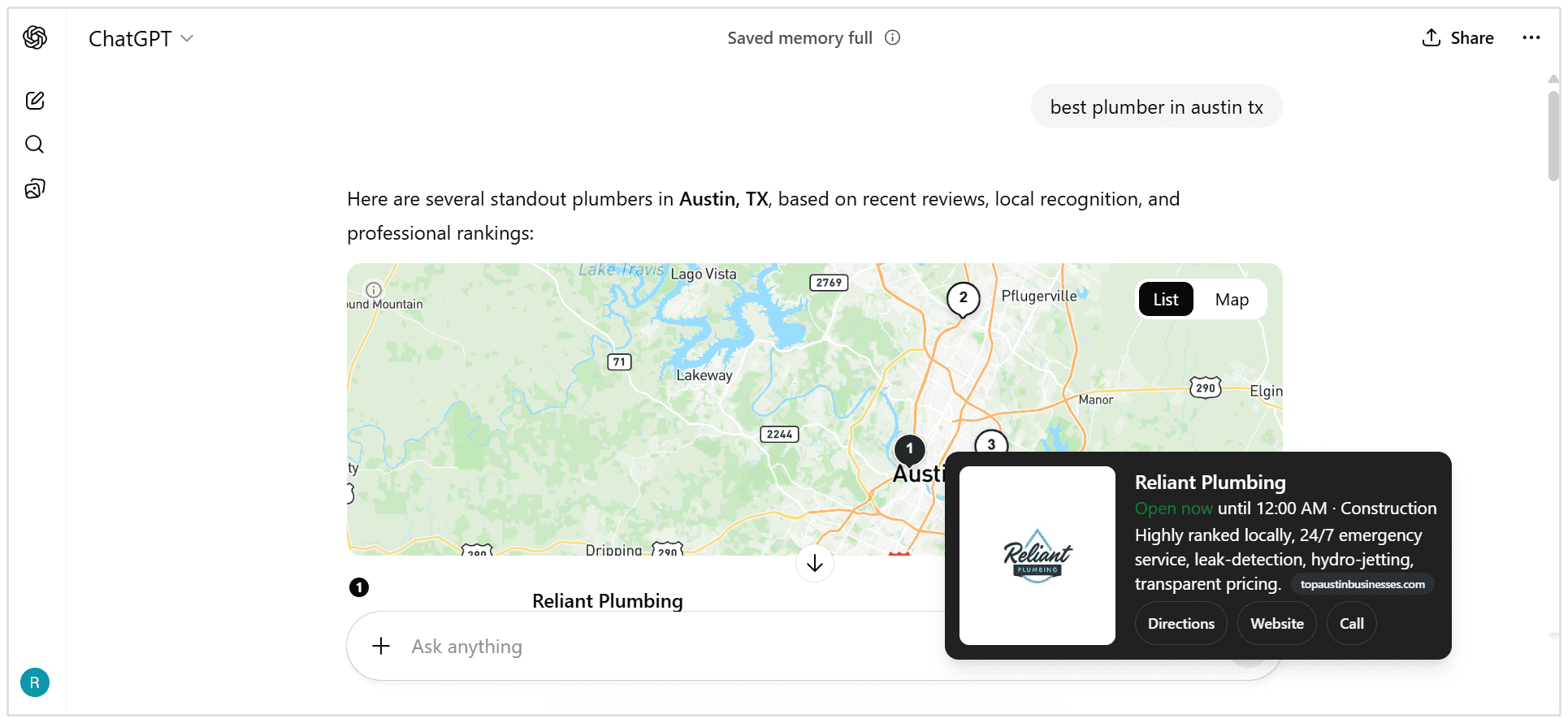
Likewise, someone looking for the best plumber in Austin might use ChatGPT to get some recommendations.
While these platforms may not always drive direct traffic, they are powerful for building brand awareness.
So how do you optimize for these AI answer engines?
Well, we recently wrote an entire article on how to rank in AI Overviews, feel free to check it out.
But the main takeways are as follows:
- Build a strong brand reputation through high-quality, authoritative content (E-E-A-T).
- Create structured content with natural language keywords and FAQ sections.
- Use schema markup to make your content more easily interpretable by large language models (LLMs).
Dhawal Shah from 2Stallions Digital Marketing Agency, also summed it up neatly:
Generative Engine Optimisation (GEO) will be the standard. This means clear, structured, and authoritative content that AI models can easily parse, trust, and cite in conversational answers. Content will not just serve readers, but also serve Search Engines and LLMs.
- Dhawal Shah, Co-Founder and Managing Director of 2Stallions Digital Marketing Agency
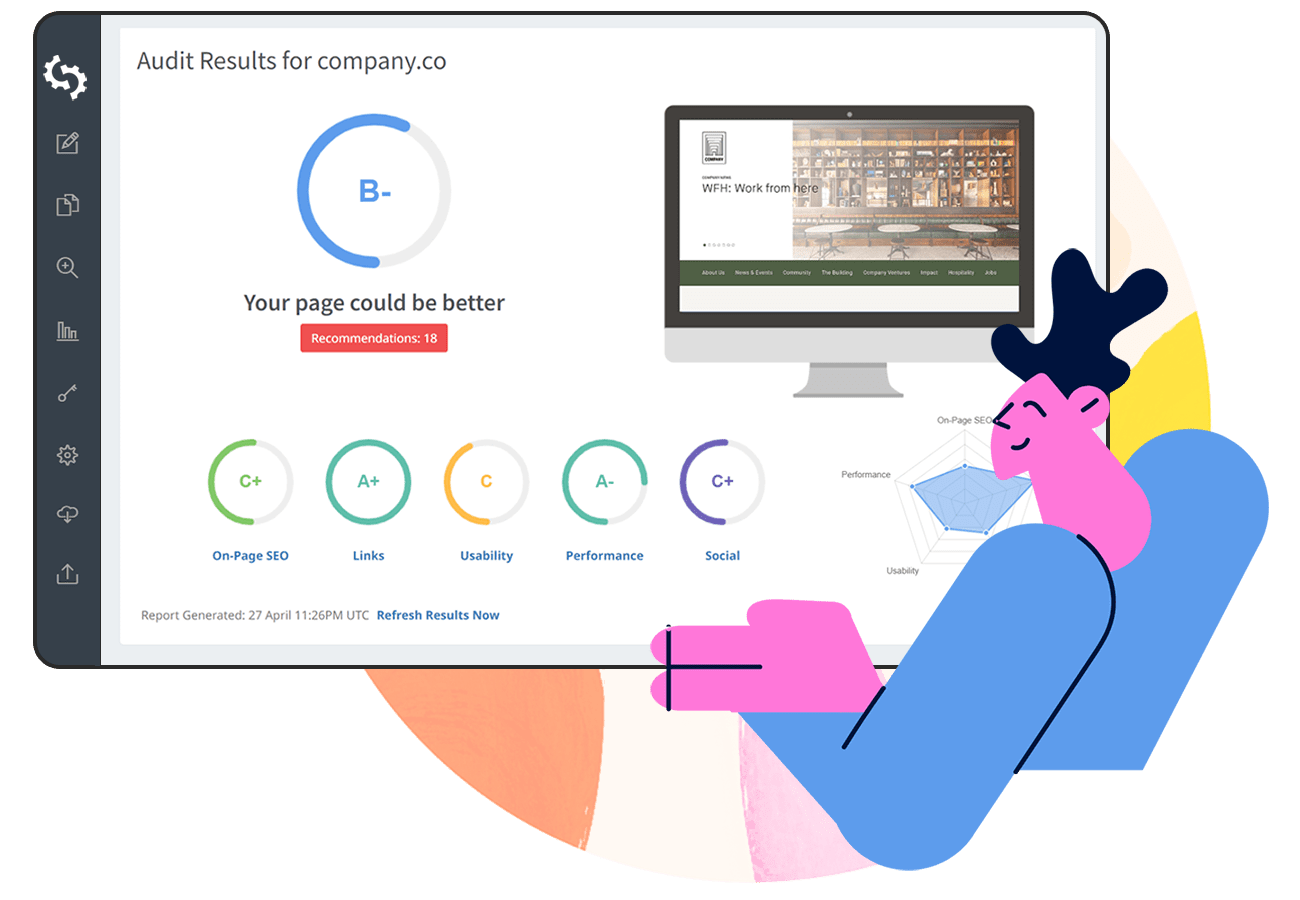
Not sure if your site is optimized for Google AI Overviews, ChatGPT, Gemini, or Claude?
Run a free audit with SEOptimer to see your website's LLM readability.
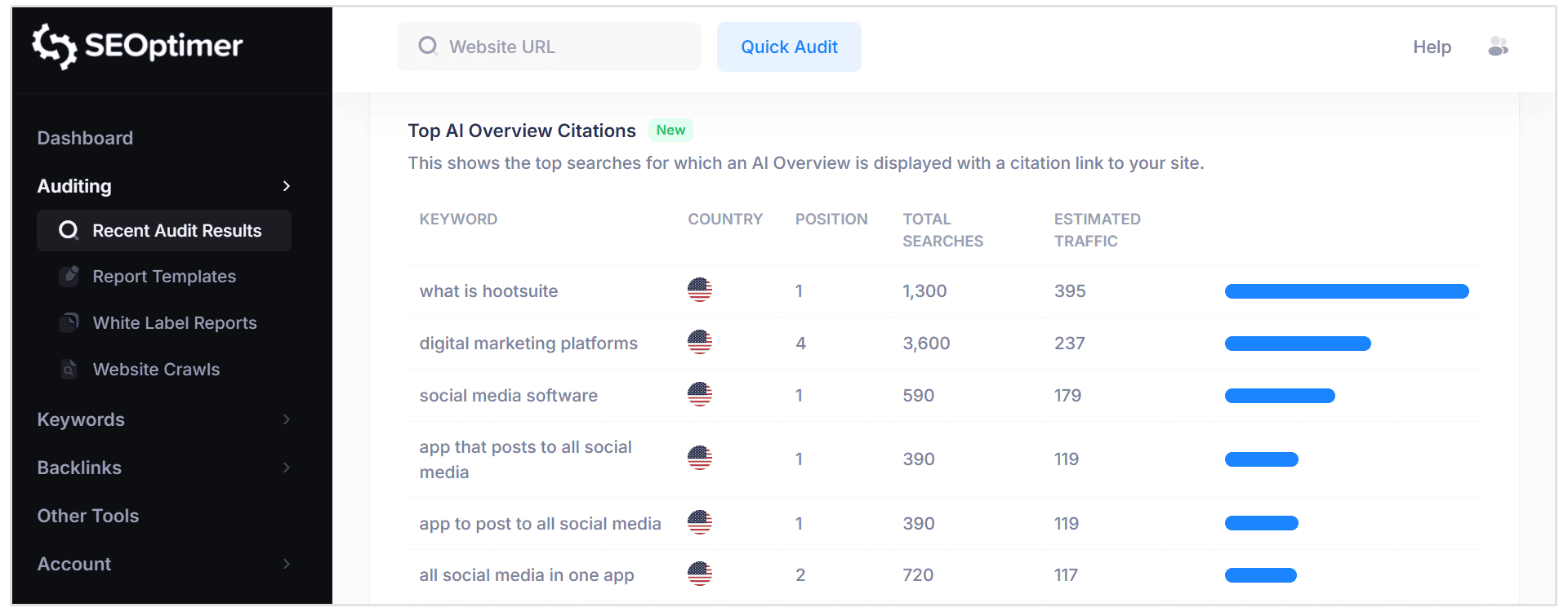
We recently launched a bunch of GEO checks including:
- LLMs.txt
- Javascript Rendering (LLM Readability)
- Identity Schema
- AI Overview Citations and Traffic
Review and Shopping Sites
For eCommerce and local businesses, review and shopping sites are crucial search channels.
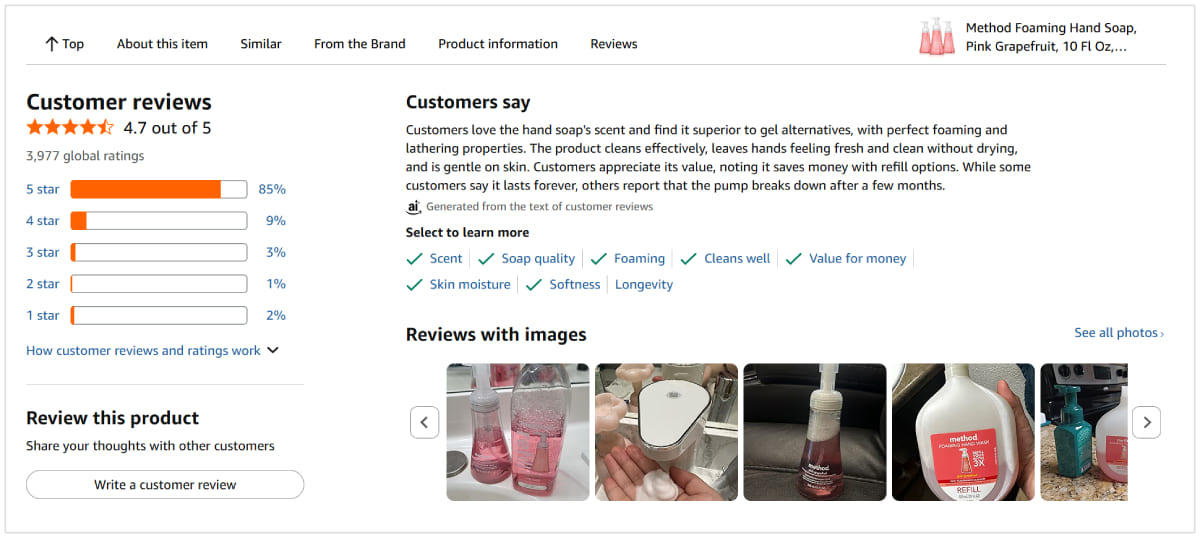
For product-based businesses, especially DTC-type of brands, Amazon can be an essential touchpoint for people to learn about your products. Keyword-rich product titles, detailed descriptions, and a high volume of positive reviews are critical for visibility.
For instance, someone intrested in learning more about your product might use Amazon reviews to decide whether to buy your product or not.
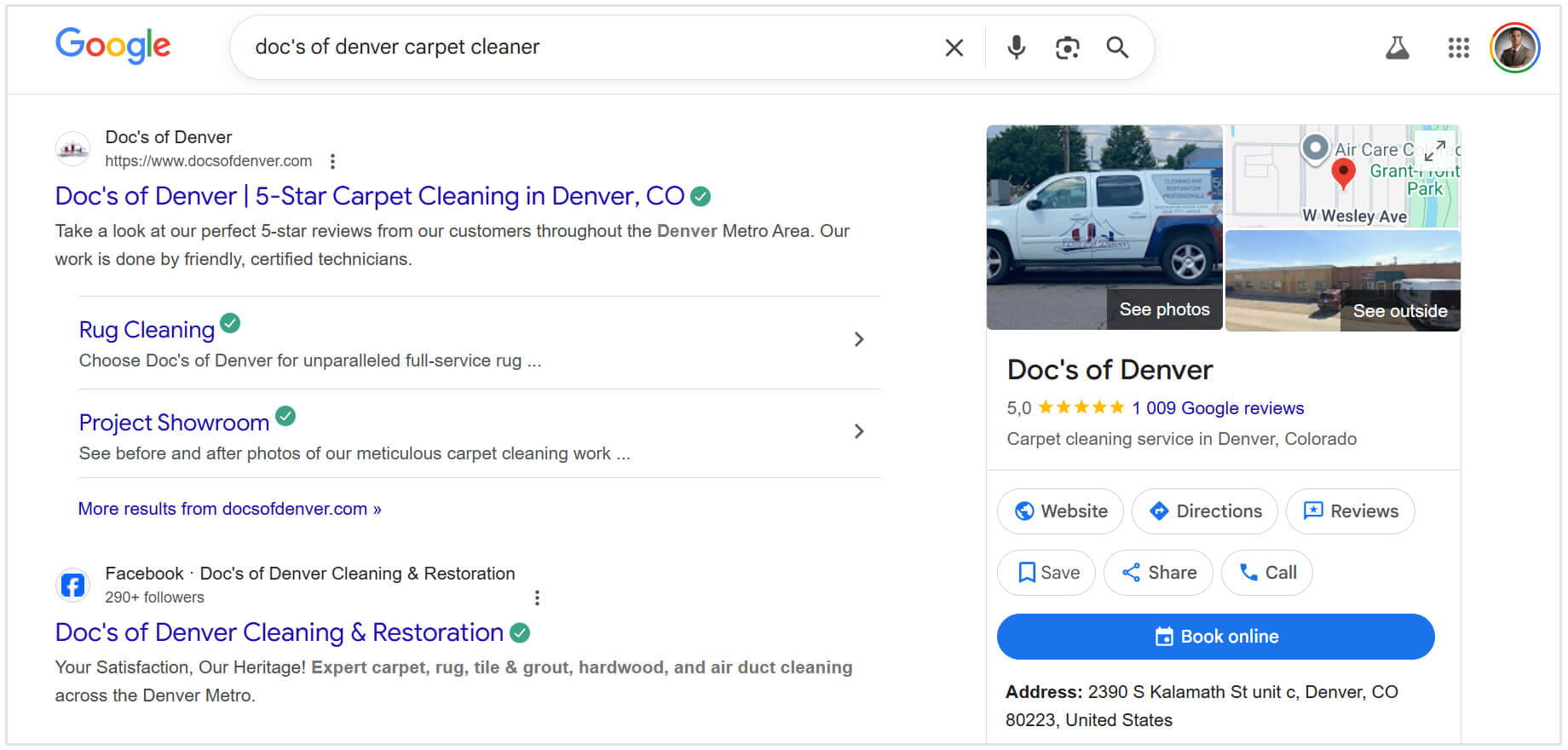
For local businesses, platforms like Google Business Profile and Yelp are essential for local search. Ensuring your business information is accurate and encouraging customer reviews can significantly impact local visibility that these platforms provide.
Will Search Everywhere Optimization Replace SEO?
No, Search Everywhere Optimization will not replace traditional SEO. Instead, it builds upon it.
You can think of traditional SEO as just a subset of Search Everywhere Optimization.
So no, SEO is not dead and Search Everywhere Optimization certainly won't take it's place.
The core principles of SEO are more important than ever. These practices are what enable your content to be discovered and trusted by both search engine algorithms and generative AI models.
The key difference between these two marketing terms is the scope.
Traditional SEO has historically focused on ranking on Google. Search Everywhere Optimization acknowledges that the customer journey is no longer linear and that visibility is required across dozens of different search surfaces.
By combining both, you create a resilient and comprehensive strategy that meets your audience wherever they are.
How Search Everywhere Optimization and SEO Work Together
SEO and Search Everywhere Optimization are complementary strategies that create a powerful flywheel effect.
A strong foundation in traditional SEO makes your brand more likely to appear in earned and influenced channels.
For example:
- A well-optimized, authoritative blog post is more likely to be cited by AI platforms like ChatGPT in their responses.
- High-ranking content on Google can be repurposed into engaging videos for YouTube or TikTok, expanding its reach.
- A strong brand presence built through social media and review sites sends positive signals to Google, potentially boosting your rankings.
With that said, let's take a look at a framework that you can use to implement for Search Everywhere Optimization.
Search Everywhere Optimization Tips
1. Create an Ideal Buyer Persona
Before you can optimize for your audience, you need to understand them.
Begin by developing detailed buyer personas that outline their goals, challenges, and search behaviors.
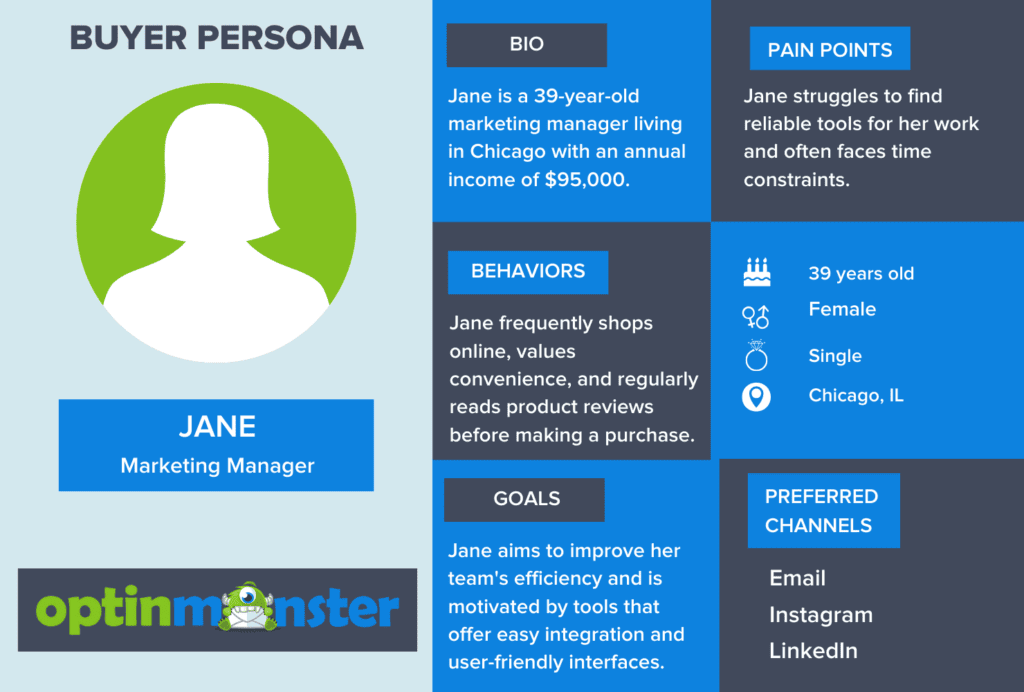
For this you should go beyond the traditional demographics and dig into how they use different platforms to find information.
If you have sales and customer support teams, talk to them because they have invaluable, firsthand insights into the questions and pain points of your customers.
2. Map the Buyer Journey
Map out how your personas move from discovery to making a purchase decision.
Here are three questions you can ask yourself for each stage of the journey (e.g., awareness, consideration, decision):
- What questions are they asking?
- Which platforms are they using to find answers?
- What content formats do they prefer (e.g., articles, videos, reviews)?
This map will reveal where your brand needs to be present and what kind of content you need to create to meet users at each touchpoint.
3. Create Content to Meet Buyers Where They Search
Use your journey map to guide your content strategy.
If your audience uses YouTube to compare products, create detailed video reviews.
If they turn to Reddit for honest feedback, participate authentically in relevant subreddits.
You can also repurpose your core content into different formats for each platform.
So if you're already producing YouTube videos, you can easily repurpose these using AI tools like Klap or SendShort to create short videos for Shorts, Instagram Reels, and TikTok videos.
We repurpose the main content into shorter, platform-native formats (carousels, shorts, stories), but keep the same message, hooks and keywords so people can “recognize” us across channels.
The biggest wins came from aligning all channels on the same intent instead of treating SEO, local and social as separate projects.
- Dominik Poppe, CEO at The New View
And a long-form blog post can become an email newsletter, a Pinterest infographic, or a series of TikTok videos.
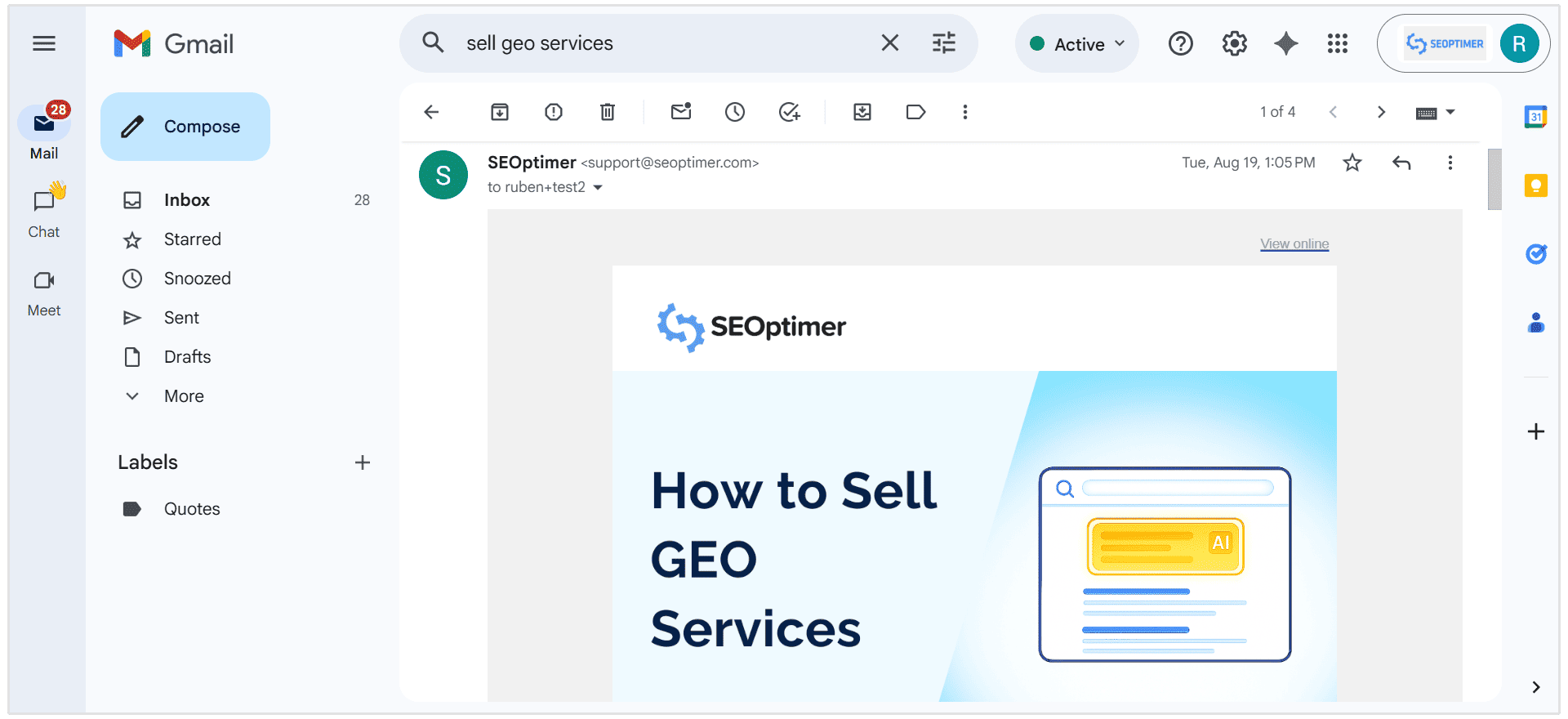
At SEOptimer, we frequently send email newsletters sharing insights from specific blog posts. Like this email we sent out a couple of weeks ago on how agencies can sell GEO services:
4. Optimize Your Primary “Owned” Channel
Your website is still your most important managed asset.
If you want to win online, you need to ensure it provides an excellent user experience.
This means it should load quickly, be easy to navigate, and be trustworthy.
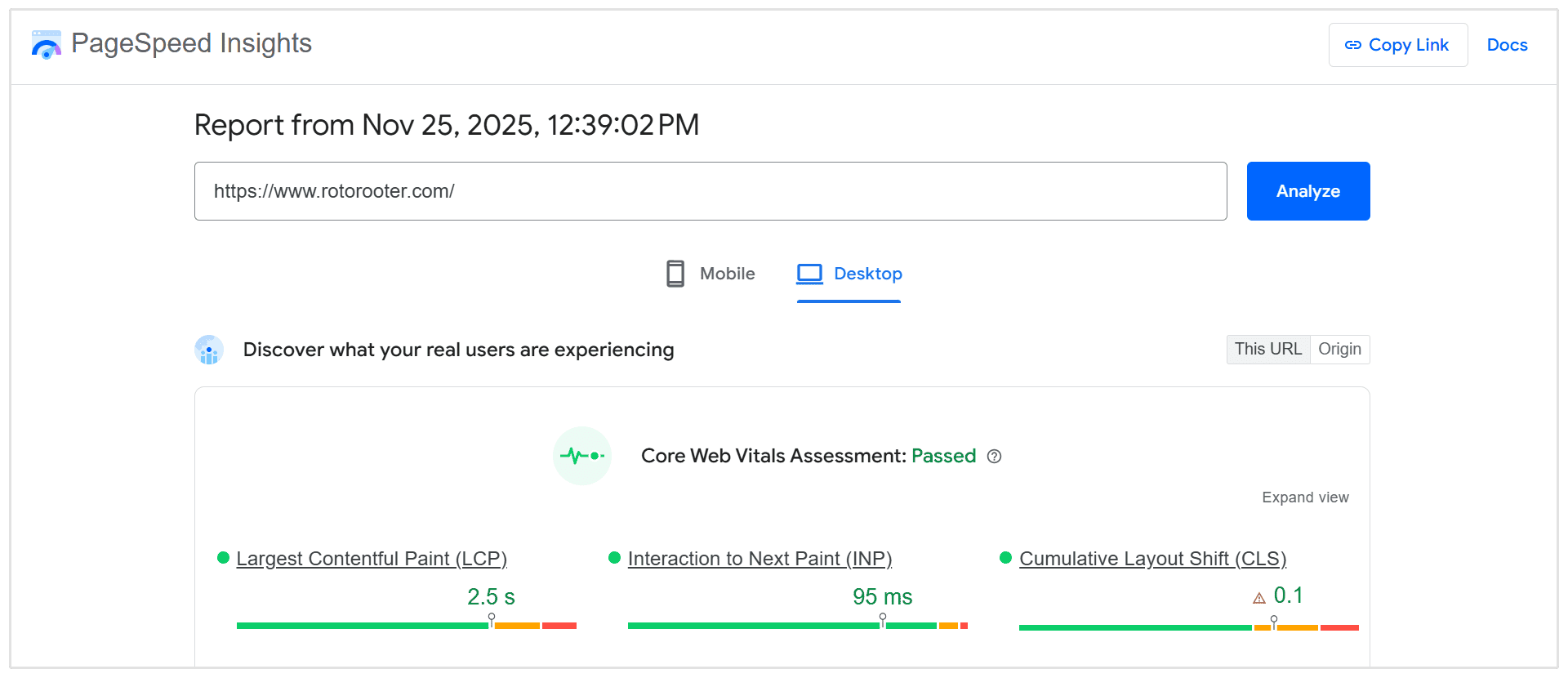
You can start by using Google's PageSpeed Insights to check your Core Web Vitals and identify performance issues.
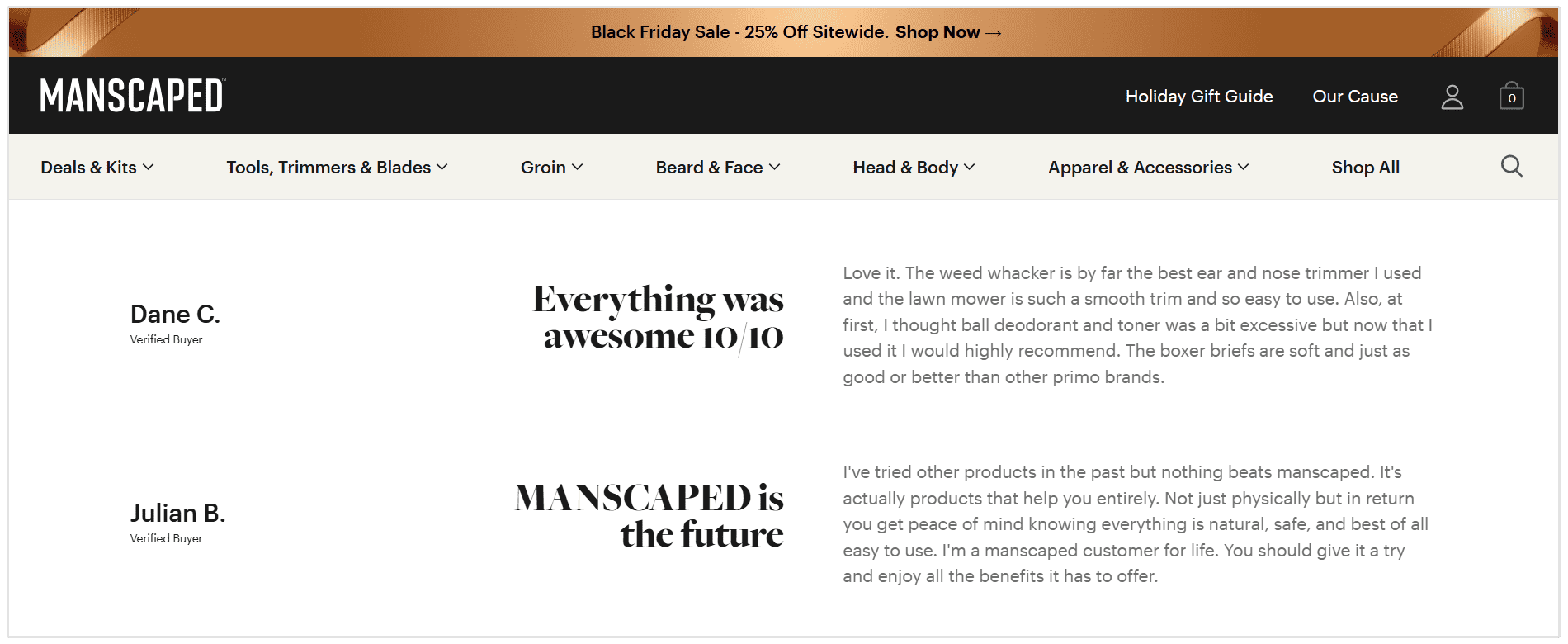
Another thing that you can do is incorporate trust signals like customer testimonials and security badges to verify your business and site's credibility.
A company that does this really well is Manscaped, they prominently showcase user reviews on their site.
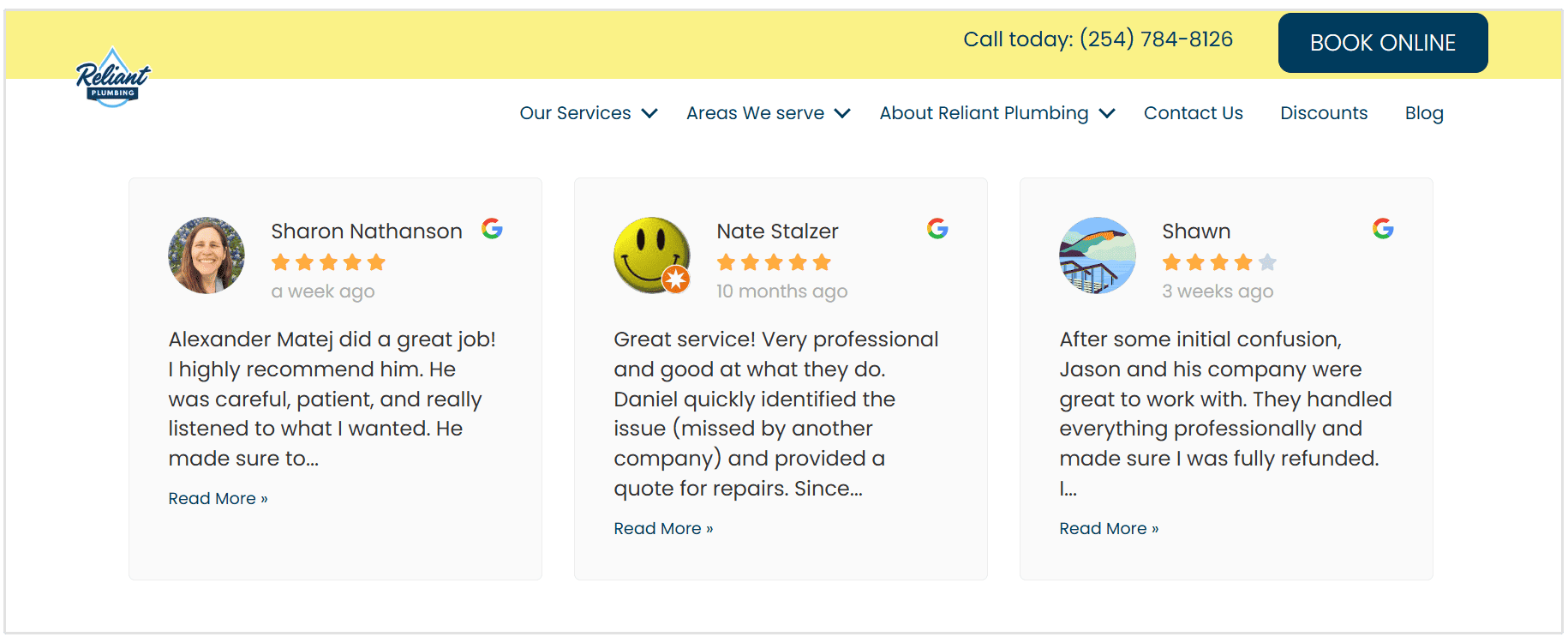
And it's not just internet brands that can benefit from this.
Local businesses like plumbers, lawyers, doctors, etc. can easily repurpose their Google review and embed them on their site.
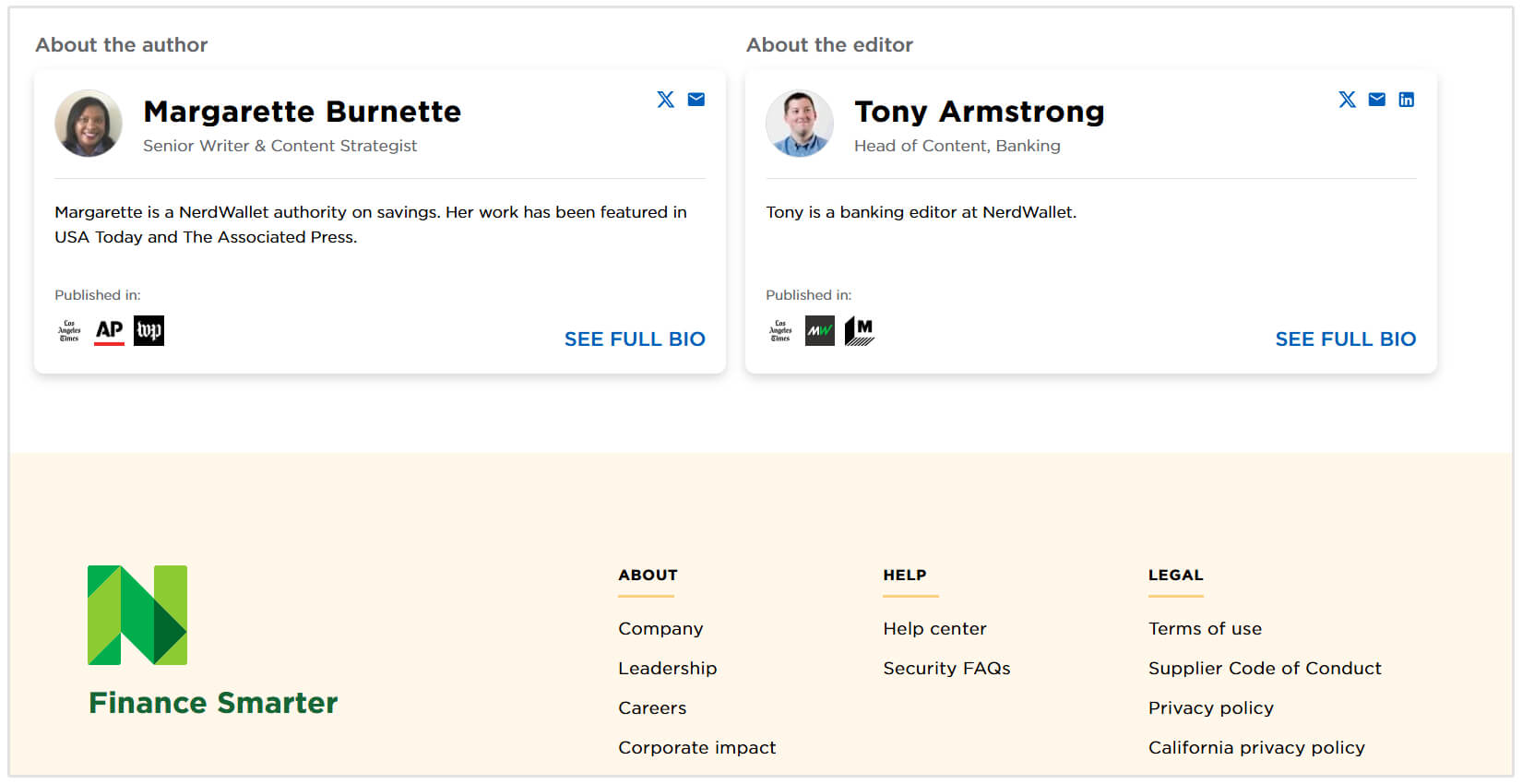
If you're writing blog posts (and you should if you're not doing so already), you can add clear author information to build credibility and improve E-E-A-T scores.
A company doing this really well is NerdWallet. Each of their blog posts is written by an expert in the field of personal finance.
And each post includes the author's bio, credentials, and links to their social profiles.
5. Optimize Other Channels
The last tip is to strengthen your presence on the other channels your audience uses.
This entails the following:
- Ensure your bio clearly communicates who you are and what you do. Use consistent branding and link to your most important pages.
- Respond to comments and questions on social media and in forums.
- Actively ask satisfied customers to leave reviews on platforms like Google, Yelp, or industry-specific sites. Positive reviews are powerful social proof.
Search Everywhere Optimization FAQ
What are the main challenges of implementing Search Everywhere Optimization?
The biggest challenges include limited resources (time, budget, talent) and the difficulty of tracking performance across multiple platforms.
If you lack the resources to focus on all your channels, start by focusing on the 2-3 where your audience is most active and where you have the most success/reach.
For instance, if your not driving more traffic from Instagram than Pinterest, focus on Instagram instead.
How do you measure the success of Search Everywhere Optimization?
The best way to measure the success of Search Everywhere Optimization is through Google Analytics. This is simply because you can get a good idea of the success of your marketing efforts across all your channels.
Platform-specific analytics tools like YouTube Studio or TikTok Insights are only useful for measuing a specific platforms results, so it won't provide a cohesive picture of results.
Is SEO dead and is Search Everywhere Optimization replacing it?
No, SEO is not dead and Search Everywhere Optimization isn't replacing it.
The fundamental principles of creating high-quality, authoritative content and building a reputable online presence are more crucial than ever.
Conclusion: The Future of Search is Everywhere
The digital landscape will continue to change, but one thing is certain: the customer journey is no longer one singular straight line.
To succeed, brands must move beyond a Google-centric mindset and embrace a strategy built for how people actually search today.
By building a strong presence across every platform your audience uses, you create a resilient strategy that not only drives traffic but also builds lasting trust and loyalty.
The brands that win in the future will be the ones that show up consistently, with the right message, in the right place, at the right time.