

What are Referring Pages in SEO
A referring page is the exact webpage where a link to your site appears. In other words, it’s the specific page that contains a backlink pointing to your website.
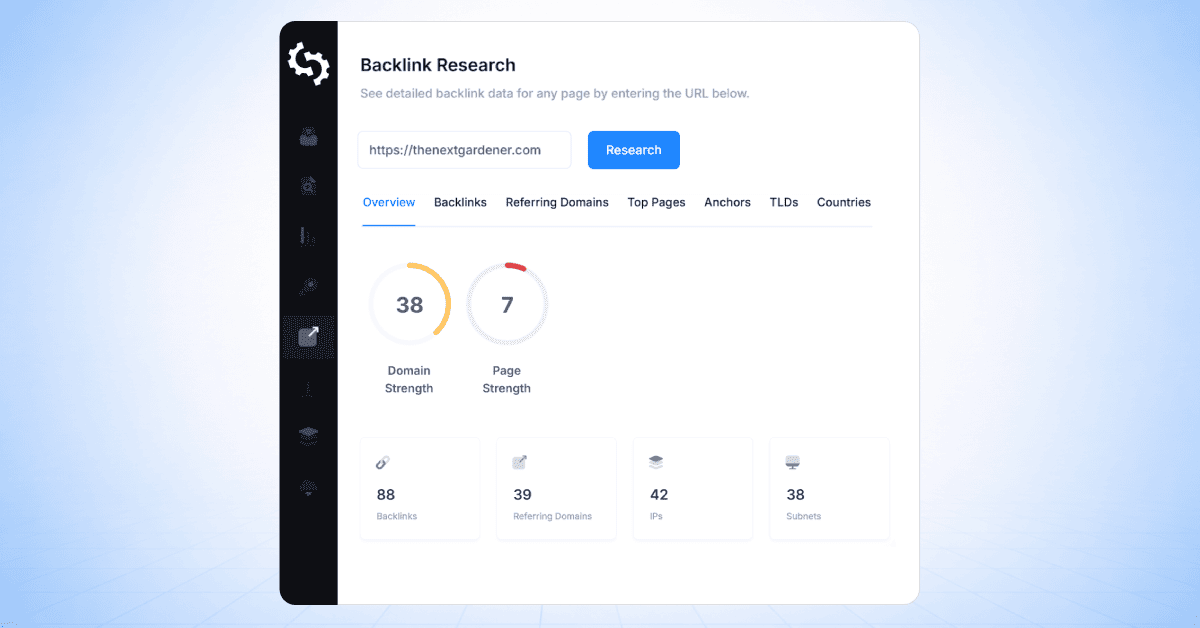
To give you a real-life example, let us take a look at SEOptimer’s backlink profile using our Backlink Checker tool.
In the screenshot below, Zapier links to our homepage in their blog post about “The 9 Best SEO Audit Tools.”
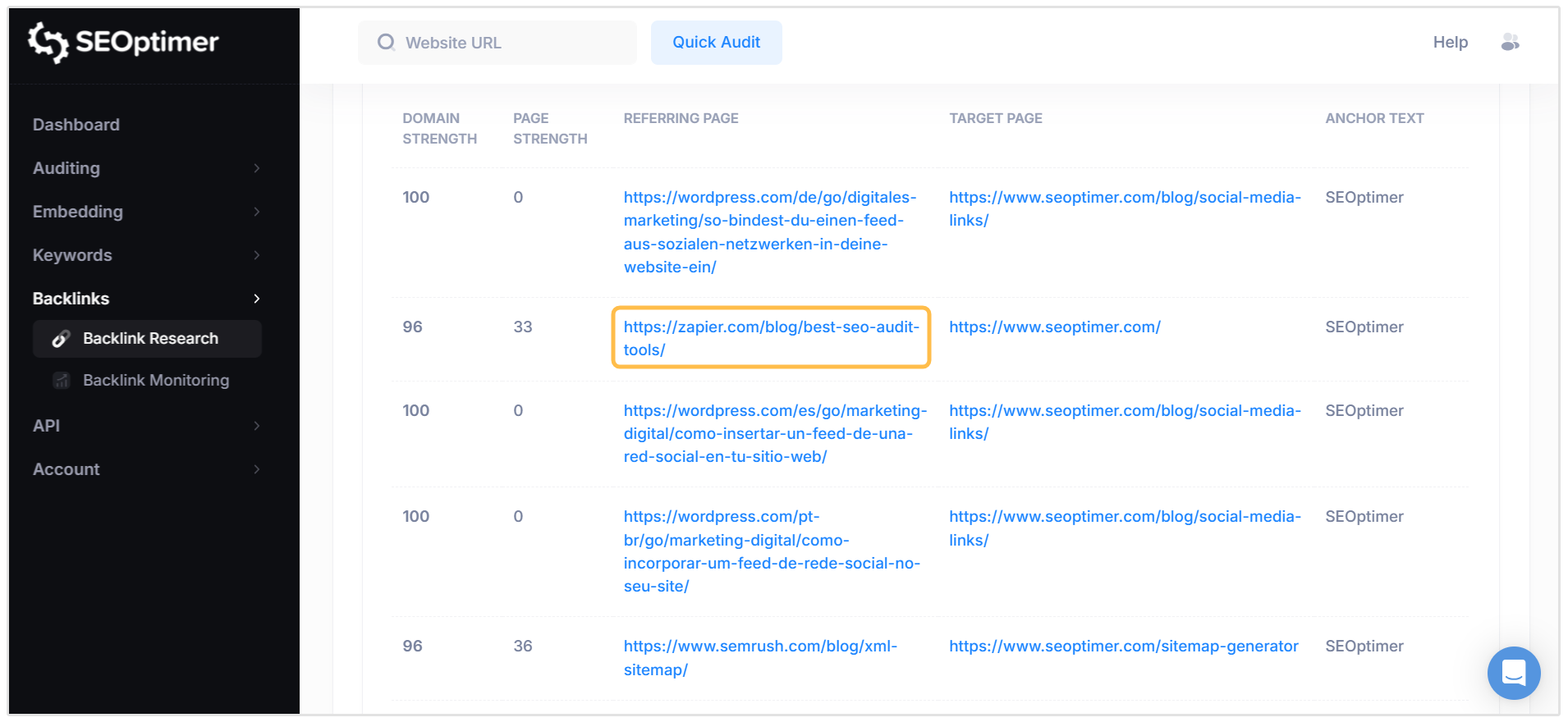
The specific URL of that article is https://zapier.com/blog/best-seo-audit-tools/. This is the referring page because it’s the specific page where the backlink appears.
Marketers and SEO professionals care about referring pages because they help pass authority and drive referral traffic to your site.
High-quality referring pages can strengthen your site’s credibility and improve its ability to rank in search results.
Search engines crawl these referring URLs to discover new content and assess your site's authority.
The better the pages linking to you, the higher your chances of ranking well in search engine results.
Understanding your referring URLs gives you a massive advantage when building a successful search engine optimization strategy.
Let us explore exactly how these referring pages work, why they matter, and how you can track them using free and paid tools.
Difference between Referring Pages and Referring Domains
A referring domain is the entire website that links to you, while a referring page is the specific URL on that website where the link lives.
If a major news outlet like The New York Times links to your website, nytimes.com is the referring domain.
However, they might mention your business in three different news articles over the course of a year. Each of those individual articles is a separate referring page.
This distinction is incredibly important for SEO.
Getting a link from a brand new referring domain is usually more valuable for your website's overall authority than getting a second or third link from the exact same domain.
A diverse profile with many unique referring domains shows search engines that a wide variety of independent sources trust your content.
Difference between Referring Pages and Backlinks
A referring page is the webpage hosting the link, whereas a backlink is the actual clickable hyperlink itself.
While people often use these terms interchangeably, they measure two different things. A single referring page can contain multiple backlinks pointing to your website.
For example, a publication might write a feature story about your online store.
Within that same article, they might include one backlink to your homepage and a second backlink to one of your product pages.
In this scenario, you have gained two backlinks, but you only have one referring page.
Search engines generally assign the most SEO value to the first backlink that appears on the referring page.
Any subsequent links on that same URL might drive helpful referral traffic, but they will not pass the same amount of link equity.
Why Referring Pages Matter for SEO
Securing links from external websites is one of the most effective ways to grow your organic traffic and improving keyword positions.
Analyzing the specific URLs that link to you provides incredible insights into your marketing performance.
1. Link Authority Signals
Google uses links as a primary signal to determine the relevancy and authority of a webpage.
When a high-quality referring page links to your content, it passes along a portion of its own authority, often referred to as link equity.
If your website accumulates links from trusted, authoritative referring URLs, search engines will begin to view your site as an authority in your niche.
This directly translates to higher keyword rankings and increased organic visibility.
Conversely, if your referring pages are mostly spammy, low-quality directories, search engines may ignore those signals.
2. Referral Traffic
Beyond search engine rankings, referring pages send real human visitors to your website. This is known as referral traffic.
When a user reads a helpful article and clicks a link to learn more about your product or services, they arrive on your site highly motivated and may potentially be interested in what you have to offer.
Traffic coming from a highly relevant referring page often boasts higher conversion rates, longer session durations, and lower bounce rates than cold traffic from paid ads.
3. Link Profile Analysis
Regularly monitoring your referring pages allows you to maintain a healthy link profile.
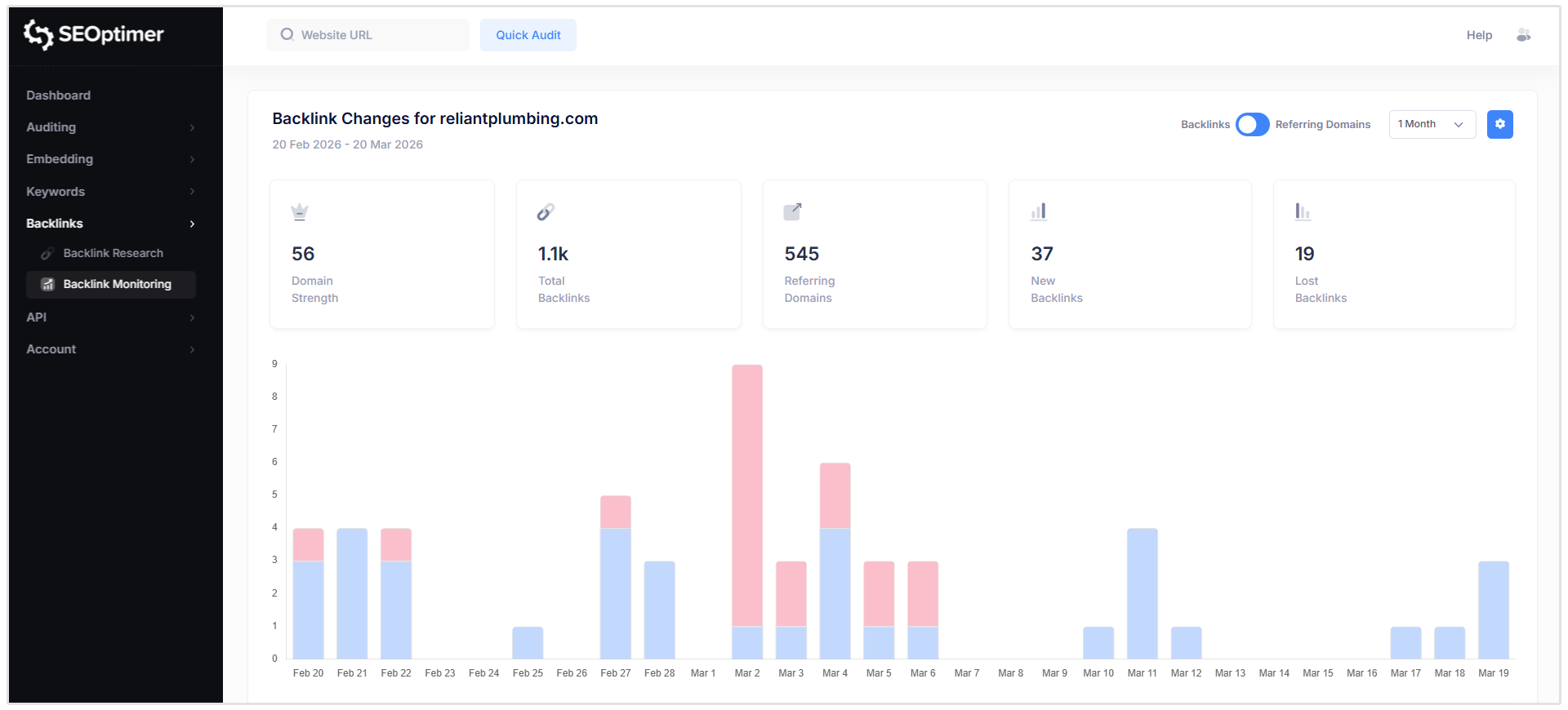
You can easily monitor your link profile using SEOptimer's Backlink Monitoring tool.
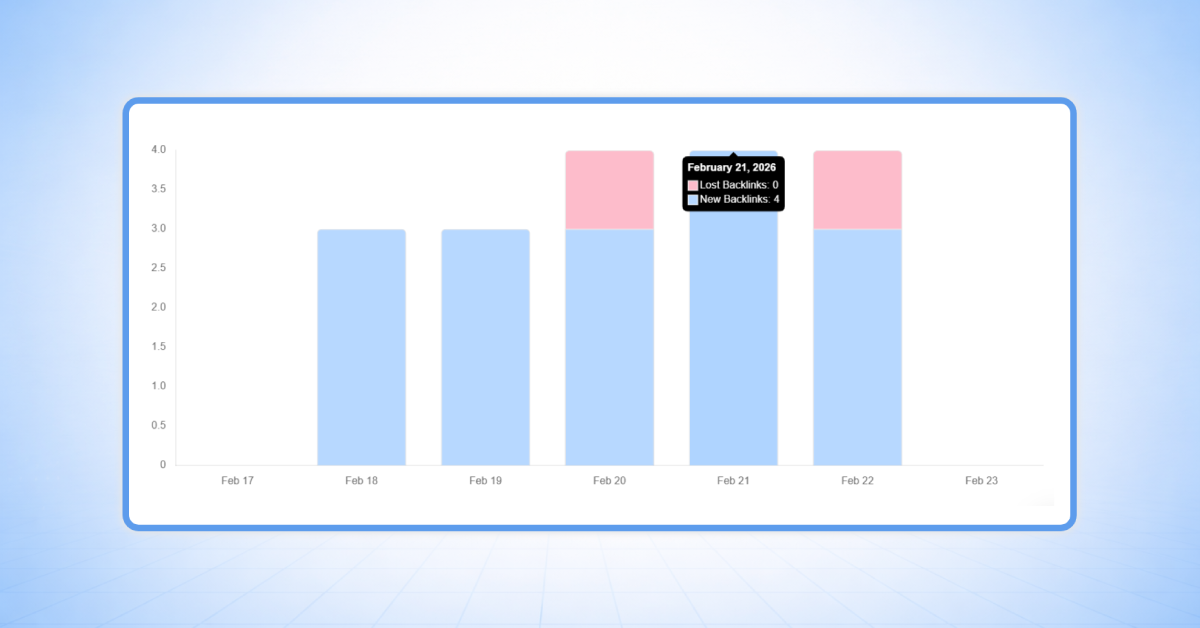
It notifies you via email of any new or lost links on a weekly or monthly basis. We also show you a chart of how your link profile grows over time.
By auditing these URLs, you can identify which of your link outreach campaigns are successfully generating links.
You can see exactly what type of content naturally attracts the most attention from other creators.
Additionally, checking your referring URLs helps you spot negative SEO attacks.
If you suddenly see hundreds of toxic, irrelevant referring pages pointing to your site, you can take action to disavow those links before they harm your search rankings.
How to See Your Referring Pages
Tracking down the exact URLs that point to your website is easier than you might think. Here are three highly effective methods for finding your referring pages.
Google Search Console
Google Search Console (GSC) is a free tool that provides direct insights into how Google views your website.
Google Search Console is important because it shows what Google is actually picking up. I tend to check regularly for new links but also keep an eye on anything that drops off, as that can highlight issues like broken pages or content that’s no longer relevant.
- Ciara Edmondson, SEO and Content Manager at Maxweb Solutions
You can easily use GSC to uncover the pages linking to your content.
To do this, navigate to the Links report in your dashboard. Look under the External links section and click on Top linked pages.
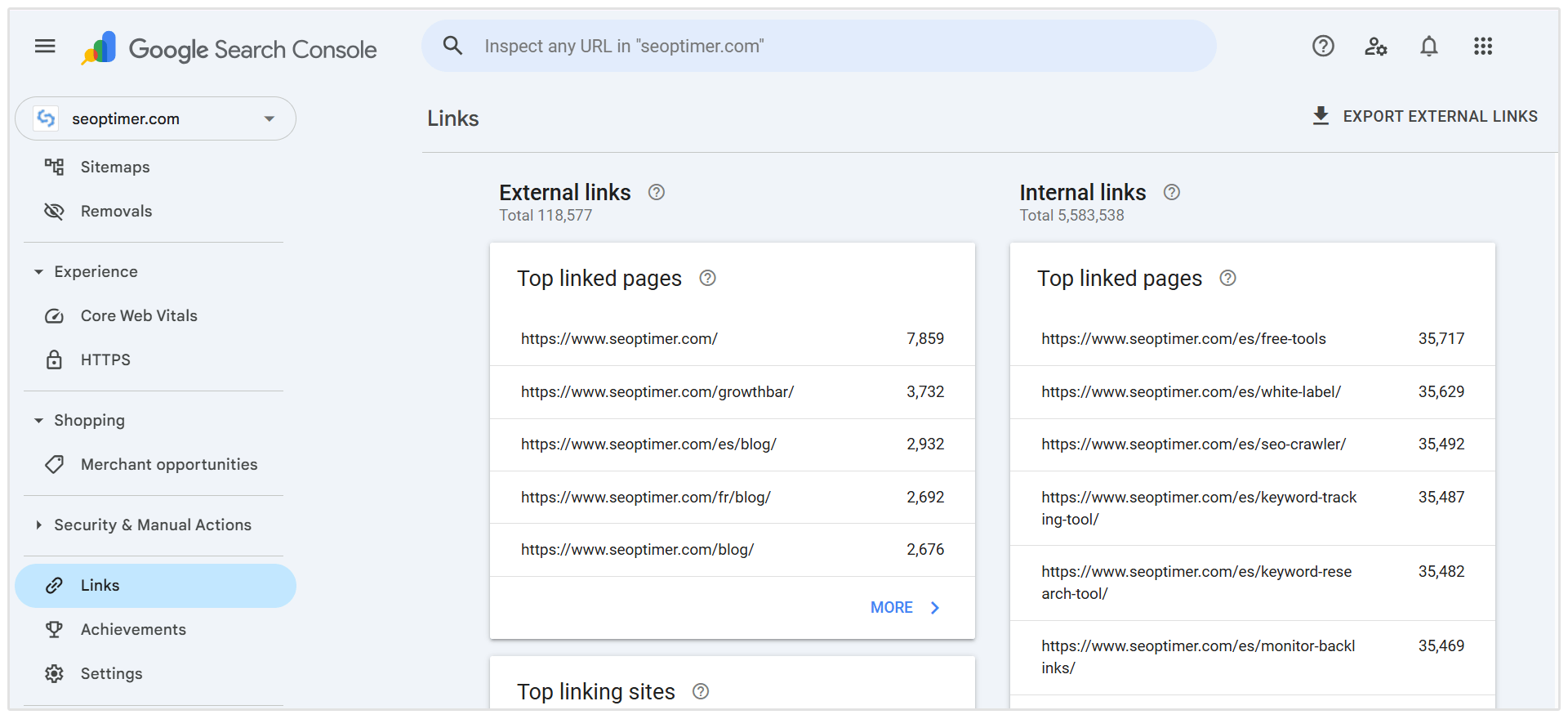
This report shows you which pages on your site receive the most links.
By clicking on any of your specific URLs, you can drill down to see the exact referring pages from other websites that are pointing to you.
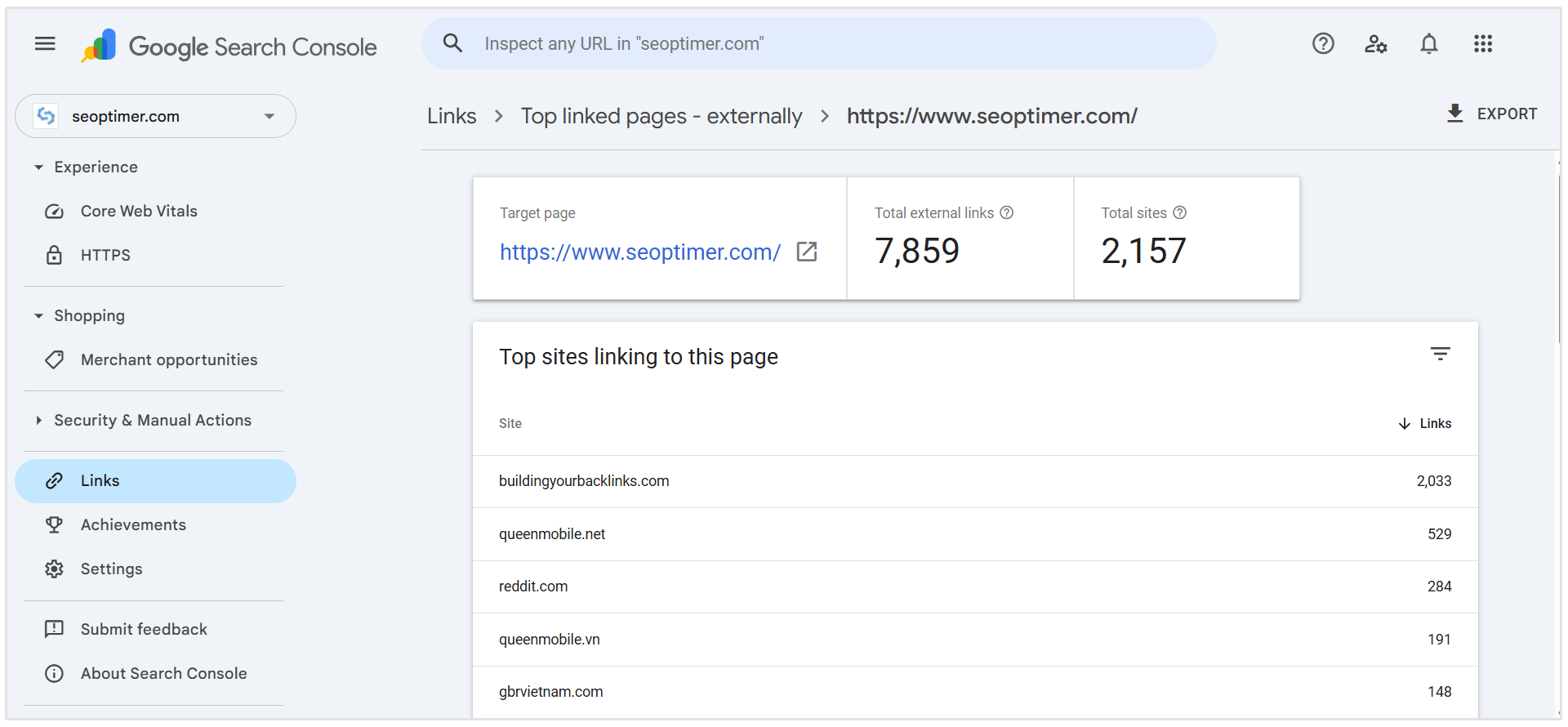
Keep in mind that Google Search Console limits tables to 1,000 rows, so it only provides a sample of your backlink data rather than the full picture.
SEOptimer
For a much more comprehensive and user-friendly view, you can use SEOptimer's Backlink Checker. This tool is the absolute best way to analyze your link profile.
With our Backlink Checker, you can see all your referring pages instantly.
Just enter your domain, and the tool will generate a detailed dashboard showing you the exact referring URLs, the specific pages they link to on your site, the anchor text they used, and whether the link is dofollow or nofollow.
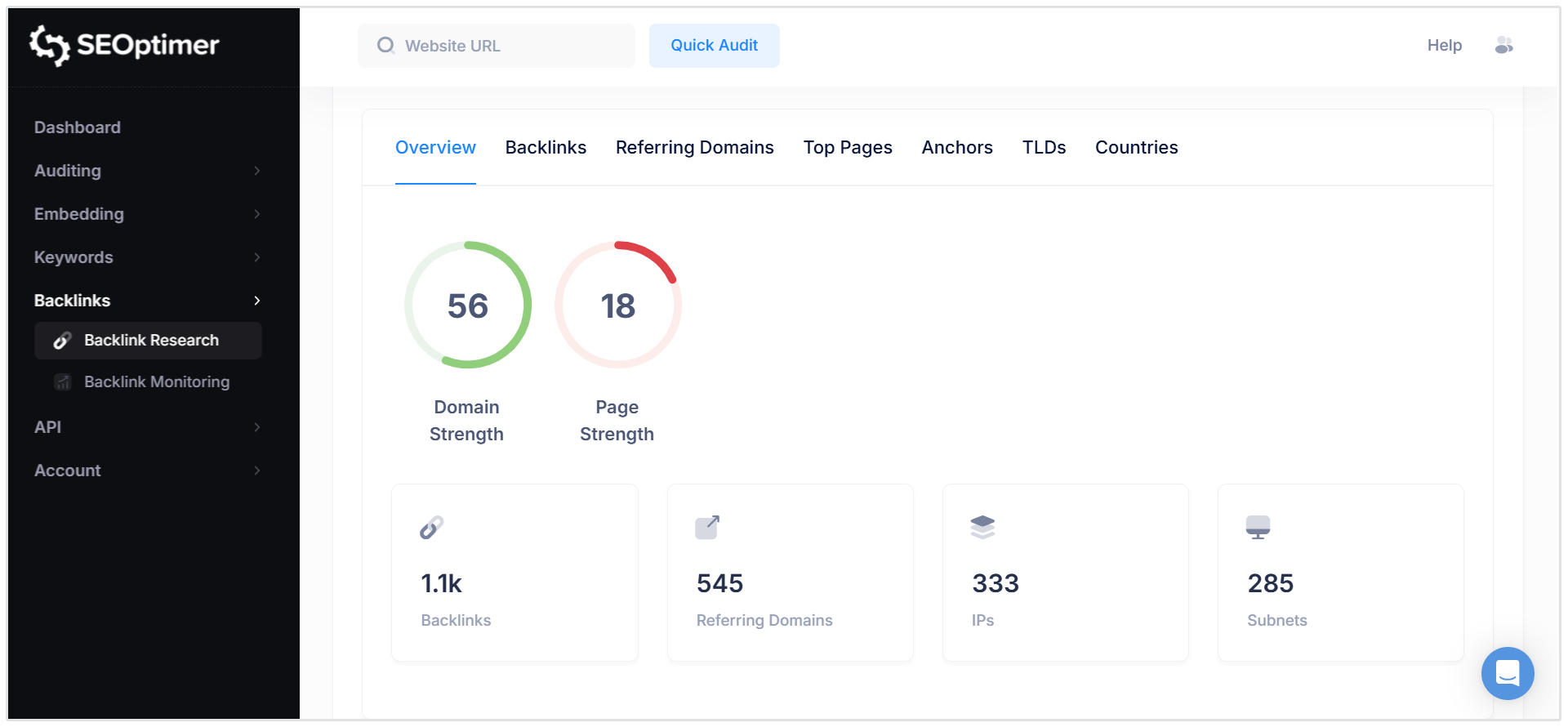
It is an incredibly easy way to monitor your link growth, evaluate your page strength, and spy on your competitors' referring pages without navigating complex, clunky software.
Google Analytics (Referral Traffic)
While Google Search Console and SEOptimer show you the links themselves, Google Analytics can show you the actual traffic coming from those links.
In Google Analytics 4 (GA4), you can view your referral traffic by navigating to Reports, then Acquisition, and opening the Traffic acquisition report.
Here, you will want to look at the Session source / medium dimension and filter for referral.
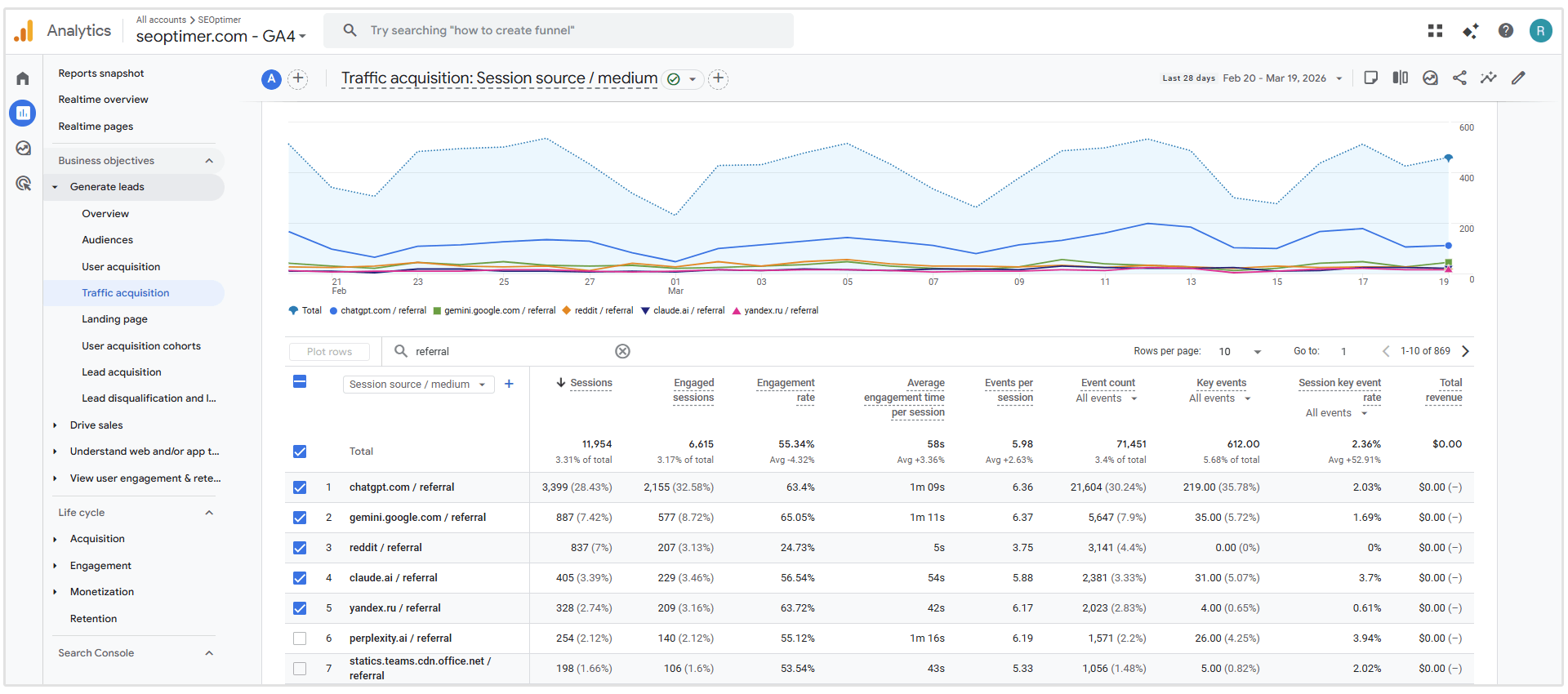
This will show you the specific domains sending traffic to your site.
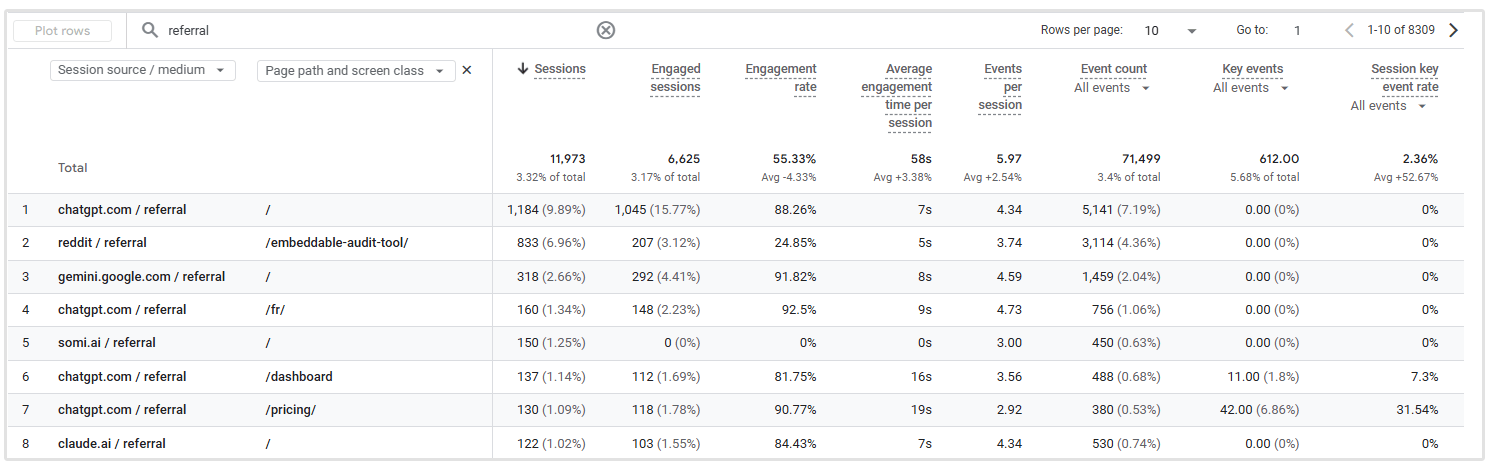
You can then add a secondary dimension like Page path and screen class to see exactly where those visitors are landing, helping you understand which referring URLs are driving the most engaged users.
What Makes a High-Quality Referring Page?
1. Page Authority
A referring page that has its own strong backlink profile will pass significantly more link equity to your website.
If a referring URL has hundreds of other trusted websites linking to it, search engines view it as an important hub of information.
You can see the backlink profile of any referring page in our Backlink Checker tool.
Let's take the example of the Zapier blog post on the best SEO audit tools that we talked about earlier.
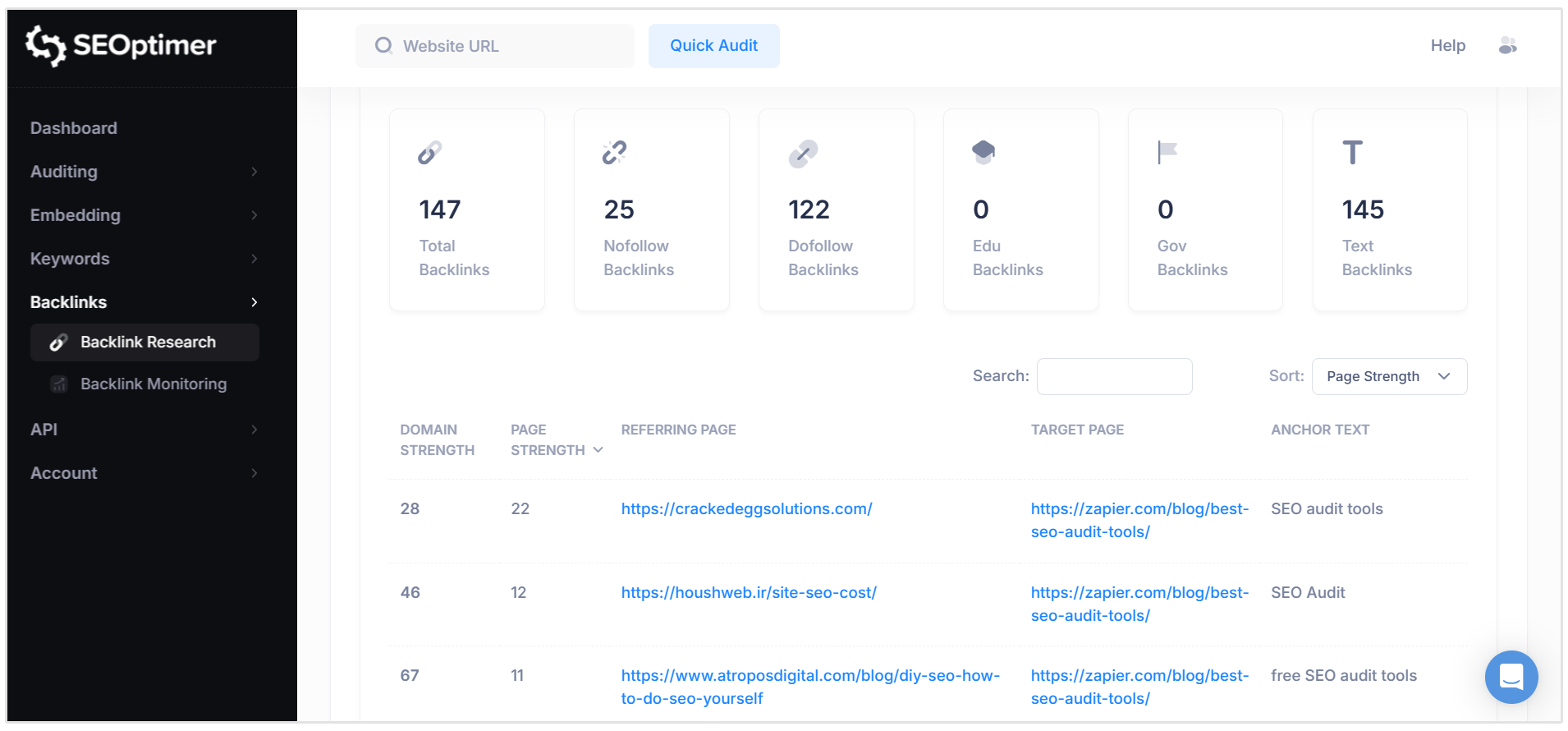
As you can see, it has 147 total backlinks of which 122 are dofollow backlinks.
A link originating from that highly authoritative page like Zapier's blog will give your SEO a massive boost compared to a link from a brand-new page with no authority.
2. Topical Relevance
Topical relevance is another important factor in how search engines weigh links.
The content on the referring page needs to make logical sense in relation to your website.
For example, if you run a financial consulting firm, a link from a referring page discussing "business tax strategies" is highly relevant and incredibly valuable.
However, if you get a link from a referring page reviewing "the best power tools," search engines will view that connection as unnatural and quite random perhaps assigning it very little SEO value.
A high-quality referring domain is one that is highly relevant, authoritative and trustworthy. In 2026, relevance is one of the most important factors. Referring domains which topically align with your industry or content are those which send the strongest signals to search engines.
- Nick Arnold, Senior SEO Account Manager at Marketing Signals
3. Organic Traffic
A great indicator of a high-quality referring page is whether or not it actually receives organic traffic from Google.
If a page ranks well for its own keywords and draws consistent visitors, it is clearly viewed favorably by search engine algorithms.
A good referring page is one located on a site that receives real organic traffic that relates to your niche. If the linking page receives no search visitors, then the link is worth very little regardless of the domain rating.
- Burkan Bur, Managing Director and Head of SEO at The Ad Firm
A link placed on a high-traffic referring page not only passes great SEO value, but it also increases your chances of capturing substantial referral traffic.
4. Follow vs Nofollow
Links contain attributes that give instructions to search engine crawlers.
A follow link (also known as a dofollow link) tells search engines to follow the link and pass authority to the destination site.
A nofollow link tells search engines not to pass any direct link equity.
High-quality referring pages provide follow links.
While nofollow links from social media platforms, blog comments, or sponsored posts can still drive excellent referral traffic, you need dofollow links from editorial referring pages to actually improve your organic rankings.
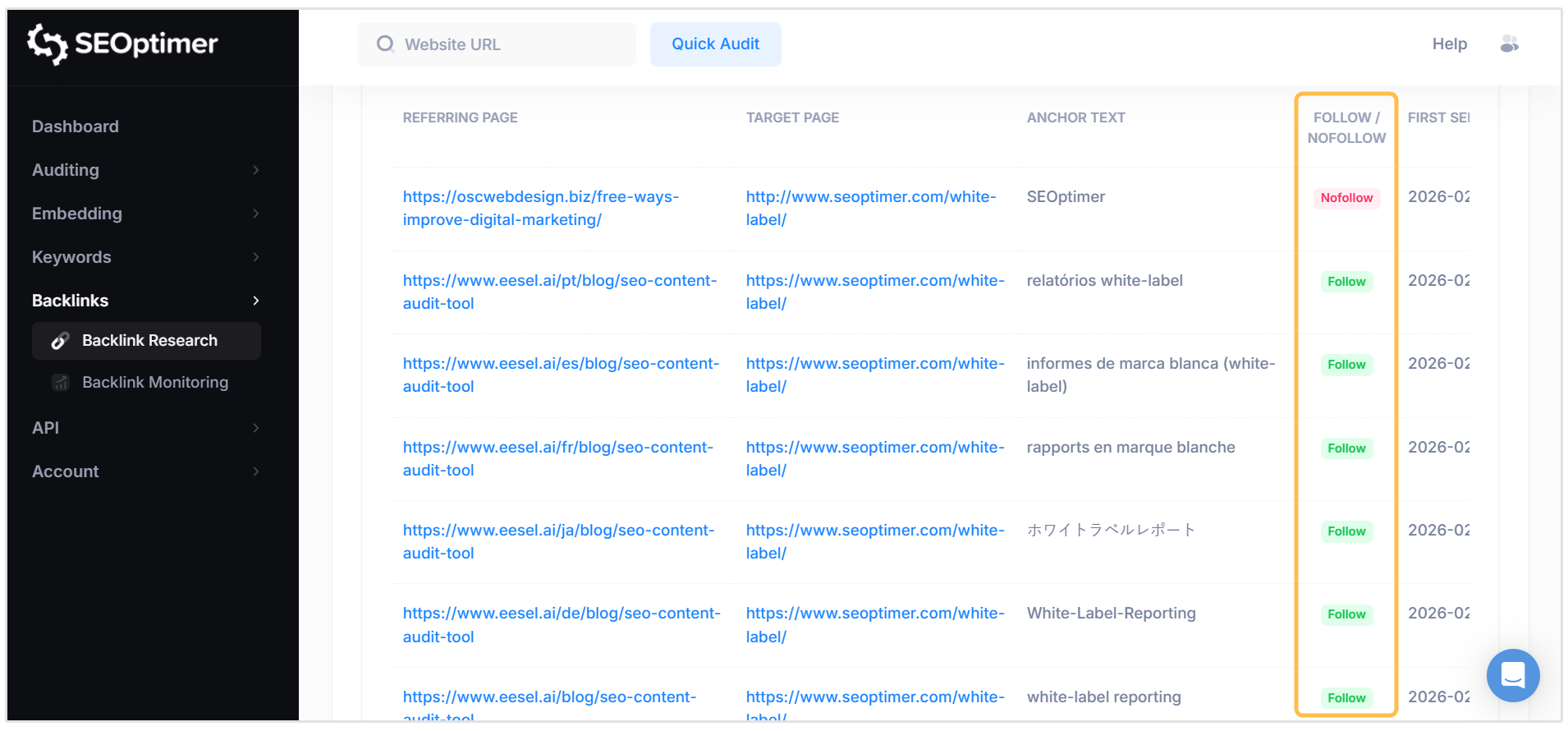
This is where our Backlink Checker tool can help you again.
Simple find the Follow / Nofollow column when checking the backlinks of any page. We will show you if each individual link is either a follow or nofollow link.
5. Link Placement
Where the link is physically located on the referring page drastically changes its value.
Search engines assign the most weight to editorial links. These are links woven naturally into the main body paragraphs of the article.
They provide context and value to the reader.
Links stuffed into a website's footer, sidebar links, or author bio section are given less weight.
Search engines recognize that these links are often promotional or navigational rather than genuine endorsements of your content.
How to Get More Referring Pages
Building a strong collection of referring URLs requires a proactive approach. Here are four proven tactics to secure more links from high-quality pages.
Create High Quality Linkable Assets
One of the most effective ways to earn more referring pages is to create content that people want to link to.
These are often called linkable assets: pages that provide unique value, insights, or resources that others naturally reference in their own content.
Some of the most effective formats include:
- Original data studies: Publish in-house research, surveys, or industry benchmarks that others can cite
- In-depth guides: Create comprehensive resources that cover a topic better than anything else available
- Free tools or templates: Calculators, checklists, or downloadable resources people find useful
- Visual assets: Infographics, charts, or statistics that are easy to reference and share
The key is to offer something original or significantly better than what already exists.
For increasing referring page count, the best tactic we use is producing original research and proprietary data that writers and journalists naturally want to reference. If you become the source, referring pages compound over time without any outreach.
- Thomas Phillips, SEO Expert and Founder at DTC SEO Agency
When your content becomes a reliable source of information, other websites will naturally link to it — increasing your number of referring pages over time.
Guest Blogging
Guest blogging remains one of the most reliable ways to earn targeted referring pages.
This involves reaching out to reputable websites in your industry and offering to write a free, high-quality article for their audience.
In exchange for your hard work, the website will typically allow you to include a contextual link back to your own website within the body of the post.
To succeed here, focus on pitching unique, valuable topics rather than thinly veiled advertisements for your business.
Resource Pages
Many websites create curated lists of helpful tools, guides, and resources for their audience. These are known as resource pages.
You can find these by searching Google for your industry keyword alongside phrases like "helpful resources" or "useful links." So you can use any of these phrases in Google:
- "Keyword" intitle:“helpful links”
- "Keyword" inurl:“helpful links”
- "Keyword" intitle:"useful resources"
- "Keyword" inurl:"useful resources"
- "Keyword" intitle:"resources"
- "Keyword" inurl:"resources"
- "Keyword" intitle:"links"
- "Keyword" inurl:"links"
- "Keyword" intitle:“helpful resources"
- "Keyword" inurl:“helpful resources"
- "Keyword" intitle:“useful links”
- "Keyword" inurl:“useful links”
So if you are in the fitness industry and you want to find resource pages for your niche, this is what it would look like:
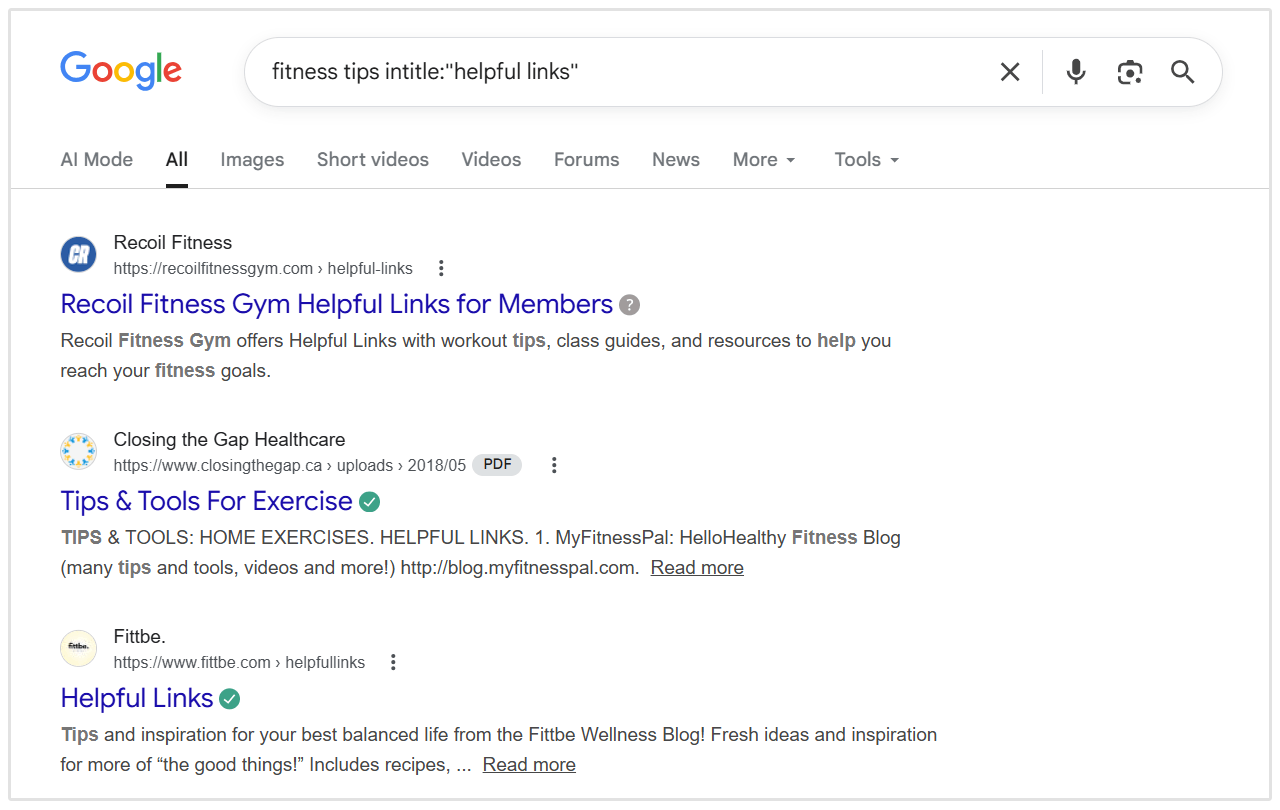
Once you find a relevant resource page, send a polite email to the site owner explaining why your website or specific piece of content would make a valuable addition to their list.
Broken Link Building
Broken link building is a highly effective strategy because it helps the site owner fix an error on their end.
The goal is to find relevant referring pages in your niche that contain dead links pointing to 404 error pages.
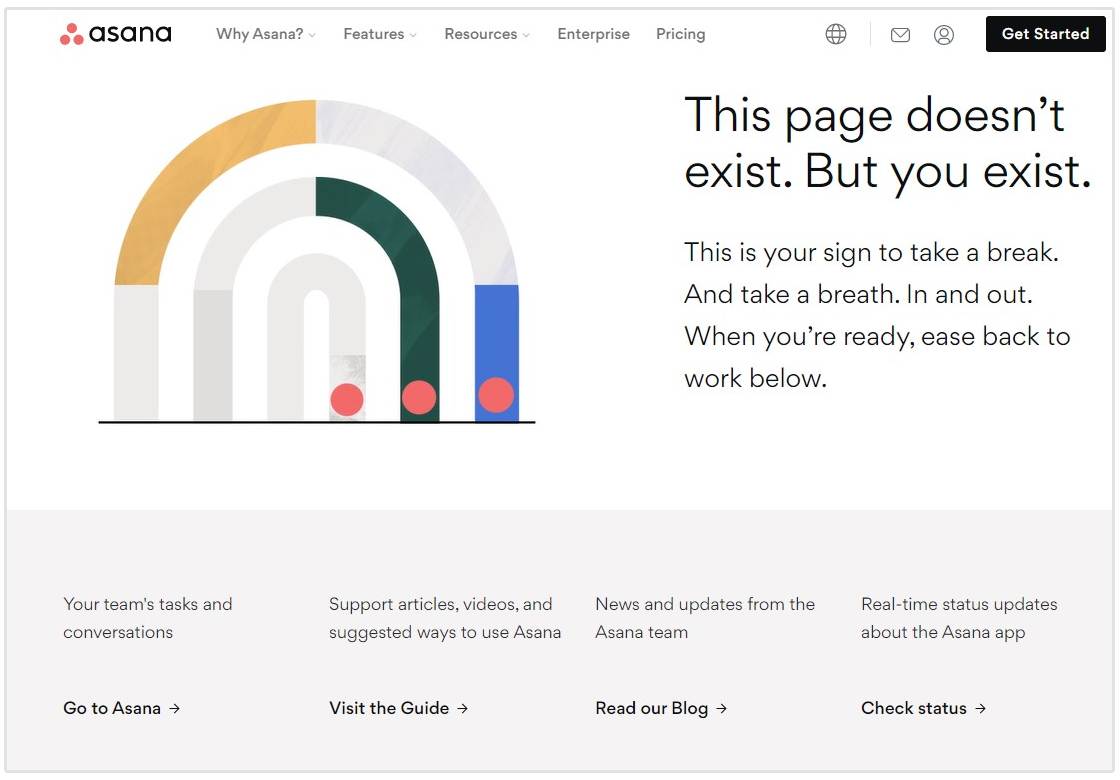
Once you spot a broken link, you reach out to the website owner to inform them of the error. In the same message, you suggest a piece of your own content as a natural replacement for the broken link.
Since you are providing a helpful fix, conversion rates for this outreach method are often quite high.
Listicle Outreach
The internet is filled with listicles like "Top 10 CRM Softwares" or "The 15 Best Coffee Roasters." If your business fits into a specific category, you want to ensure you are included on these existing referring pages.
Identify listicles that currently rank well for your target keywords but do not mention your brand.
Reach out to the author or editor, explain the unique value your product provides, and ask what it would take to be evaluated and added to their list.
This is an excellent way to turn a high-traffic competitor review page into a valuable referring page for your own site.
Next Steps for Optimizing Your Link Strategy
Understanding the role of a referring page is the one of the elements of any successful SEO campaign. These URLs provide the necessary signals that tell search engines your website is trustworthy, relevant, and deserving of high rankings.
Now that you know how referring pages differ from referring domains and standard backlinks, the next step is to take control of your own link profile.
Start by auditing the links you already have. Identify your most authoritative referring URLs to understand what content resonates with your audience, and keep an eye out for any low-quality links that might need removing.
To make this process as smooth as possible, run your website through the SEOptimer Backlink Checker today.