

If you’re seriously invested in elevating your digital marketing game, you’ve probably heard of Google Keyword Planner. This free, formidable tool offered by Google opens endless opportunities for businesses to market the right products to the right audience.
In this blog post, we’ll delve deep into the world of Google Keyword Planner, helping you navigate its functions, understand its potential, and transform the way you strategize your SEO and PPC campaigns.
Buckle up for a comprehensive guide that could revolutionize your online visibility and audience engagement.
What is Google Keyword Planner?
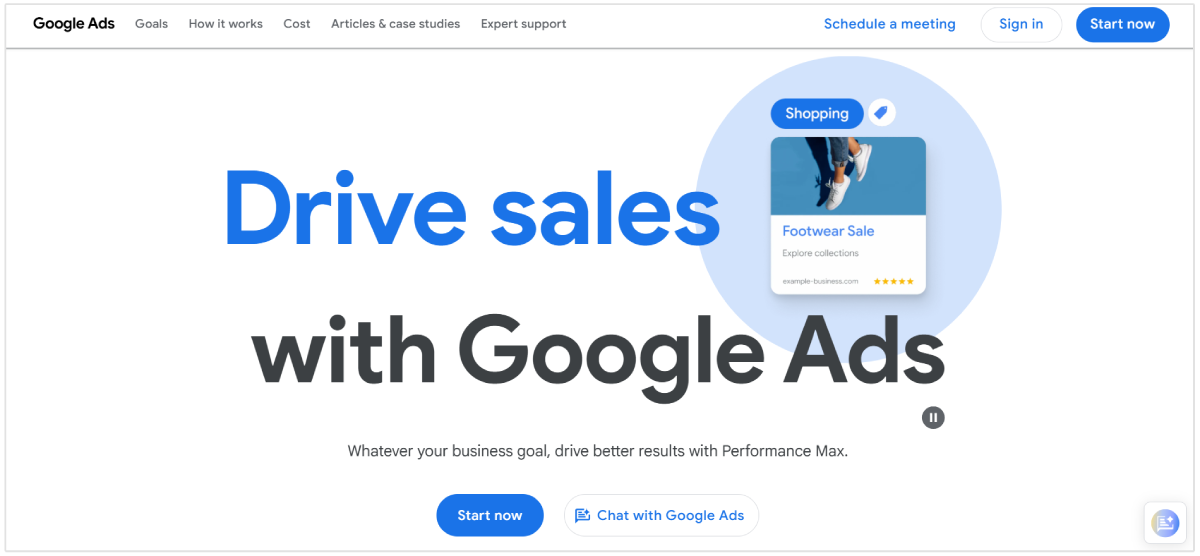
Google Keyword Planner is a free keyword research tool built into the Google Ads platform. It’s designed primarily for advertisers, helping them discover the right keywords to target in their paid search campaigns.
But its utility extends far beyond Google Ads since it’s also widely used by SEO professionals and content creators.
With Google Keyword Planner, you can:
- Discover keyword ideas based on topics, websites, or seed keywords
- View average monthly search volumes for keywords
- Understand competition levels and estimated bid ranges for PPC
- Explore trends and seasonality in keyword performance
- Segment keyword data by location, language, and device
Originally built for PPC, the data from Google Keyword Planner is also incredibly useful for building SEO content strategies, helping you find high-volume, low-competition keywords to target in blog posts, landing pages, and more.
It’s especially helpful for identifying opportunities in different regions or languages, making it a go-to tool for marketers targeting a global audience.
Getting Started with the Keyword Planner
Google Keyword Planner is packed with features designed to help you uncover the most relevant and effective keywords for your marketing campaigns.
To get started, simply enter a seed keyword, website URL, or product category.
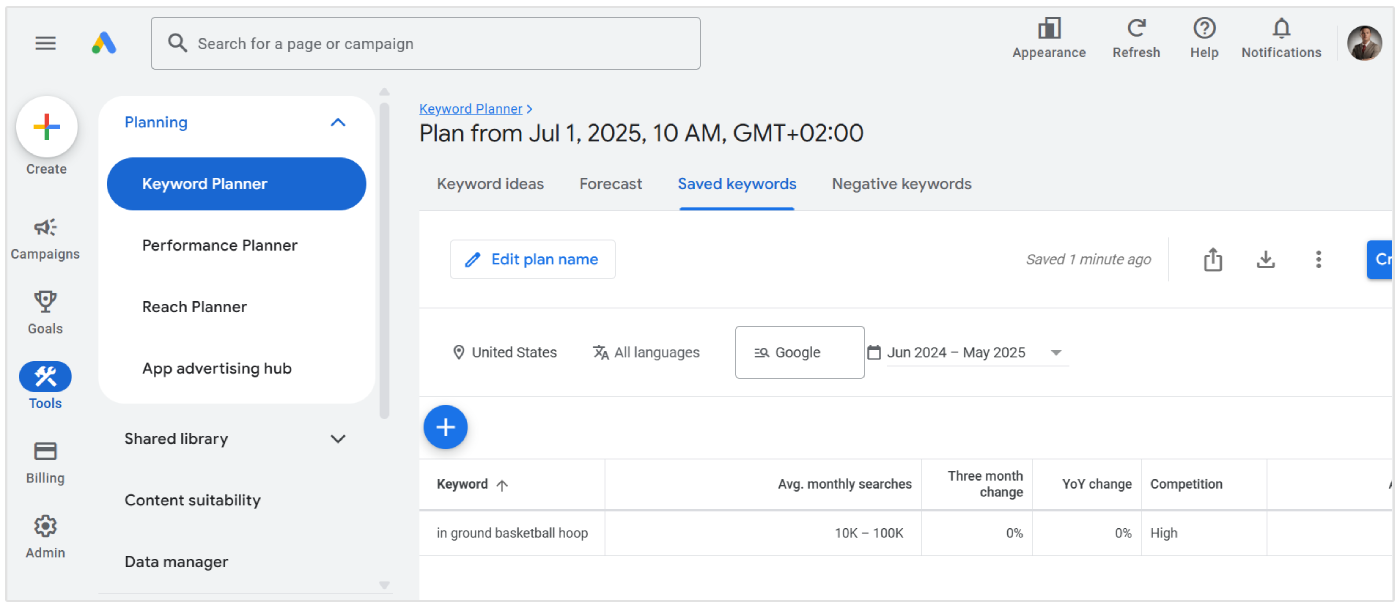
The tool will instantly generate a list of related keyword ideas, along with key metrics like:
- Average monthly search volume
- Competition level (Low, Medium, High)
- Top of page bid estimates (both low and high range)
- Estimated clicks and impressions for paid campaigns
This data helps you understand how often people are searching for specific terms, how competitive those keywords are, and how much you might need to bid if running Google Ads.
Beyond paid search, Google Keyword Planner also offers valuable insights into search trends and seasonality, giving you a sense of when interest in certain topics spikes or dips throughout the year.
By analyzing these metrics, advertisers and marketers can:
- Discover new keyword opportunities
- Understand consumer behavior and intent
- Build campaigns tailored to what their audience is actually searching for
- Track performance over time and adjust strategies accordingly
Create a Keyword Plan
The Google Keyword Planner is a powerful tool for any business looking to optimize their website for search engine rankings.
By understanding the basics of the tool and its importance, businesses can research the right keywords for their blog, identify variations of the keywords, and learn how to use the tool to its fullest potential.
One of the most important parts of using the Google Keyword Planner is identifying keywords with high search volume. This tool allows users to find out how many people are searching for a particular keyword or phrase in a given time frame.
This data is invaluable for business owners, as it allows them to focus their efforts on the keywords that have the highest potential to generate traffic and conversions.
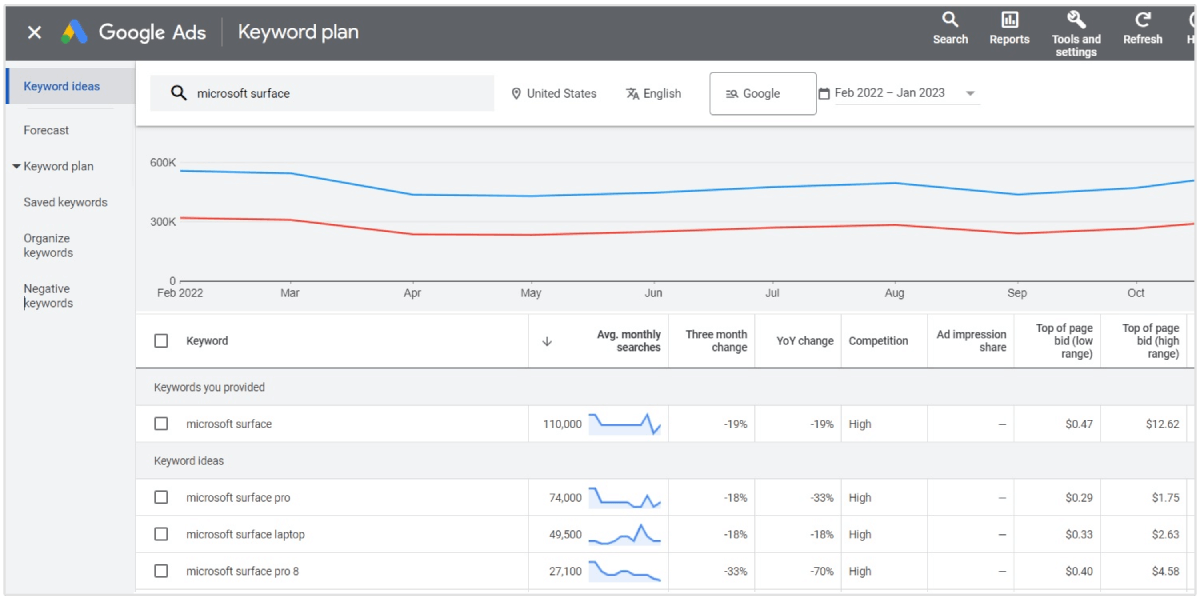
Once the right keywords have been identified, businesses can then analyze the competition around these keywords.
By using the Google Keyword Planner, businesses can determine how competitive the keyword is, and what budget they should allocate to it. This allows businesses to make informed decisions about their marketing and advertising strategies, and ensure they are investing their resources in the most profitable keywords.
Finally, businesses should also monitor the performance of the keywords they are targeting.
The Google Keyword Planner allows users to view the performance of their keywords over time, and adjust their strategies accordingly. This helps businesses optimize their website for search engine rankings, and ensure their efforts are yielding the results they desire.
Discover New Keywords
One of the core use cases of Google Keyword Planner is finding new keywords, analyzing the competition for individual keywords, and getting insights into search trends.
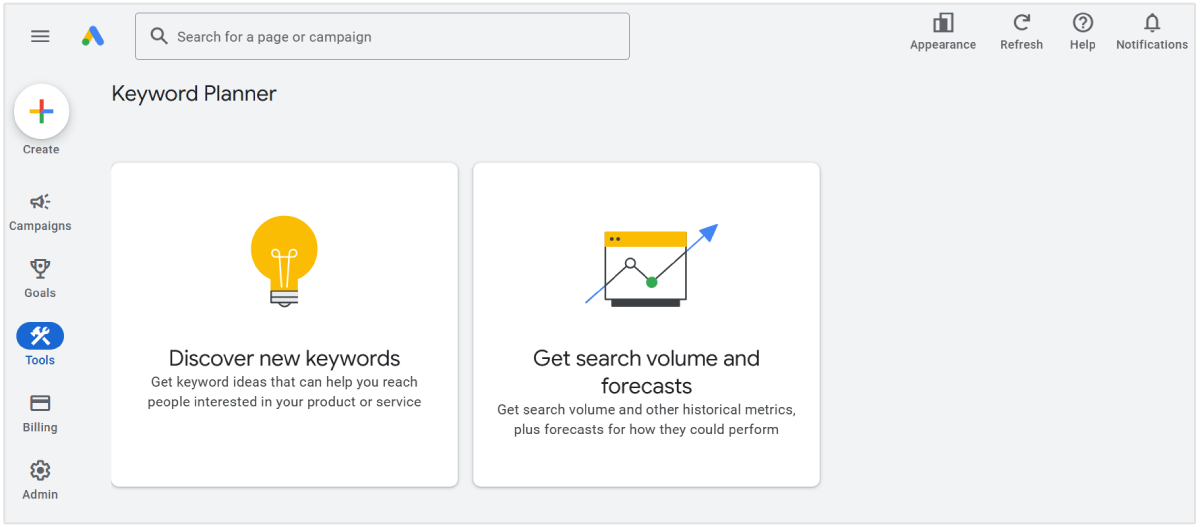
It’s a powerful way to understand what terms people are using to find your offerings online.
Using the Google Keyword Planner, you can quickly determine which keywords are most popular with users of Google search. You can also access historical data to track keyword performance and see search volumes for individual keywords. This allows you to determine which keywords offer the most potential for success and plan your budget accordingly.
Moreover, you can use keyword suggestions to find related terms that could be used to increase your website’s visibility. This feature is especially helpful when you’re trying to establish a presence in a competitive market.
You can also find out which keywords are being used by your competitors and use them to your advantage.
The Google Keyword Planner is an essential tool for any website owner. It gives you access to a wealth of data, including search volume, competition, cost, and related terms. With it, you can make informed decisions about which keywords to target and increase your website’s visibility.
Build a List of Keyword Ideas
The keyword planner allows you to get an idea of the monthly search volume for each keyword and how competitive the keyword is.
You can use the keyword planner to get an estimated cost-per-click (CPC) for each keyword. It can also help you to find long-tail keywords that are less competitive and more specific to your niche.
With the keyword planner, you can get an idea of the monthly search volume for each keyword, how competitive the keyword is, and an estimated cost-per-click (CPC). You can also use the planner to find long-tail keywords that are less competitive and more specific to your niche.
The Google Keyword Planner is a great tool to help you get started with your SEO campaign. It can help you to research relevant keywords to target and create a list of keywords for your blog post or article.
Find Low-Competition Long-Tail Keywords
Google Keyword Planner can be used to help marketers identify long-tail keywords to target.
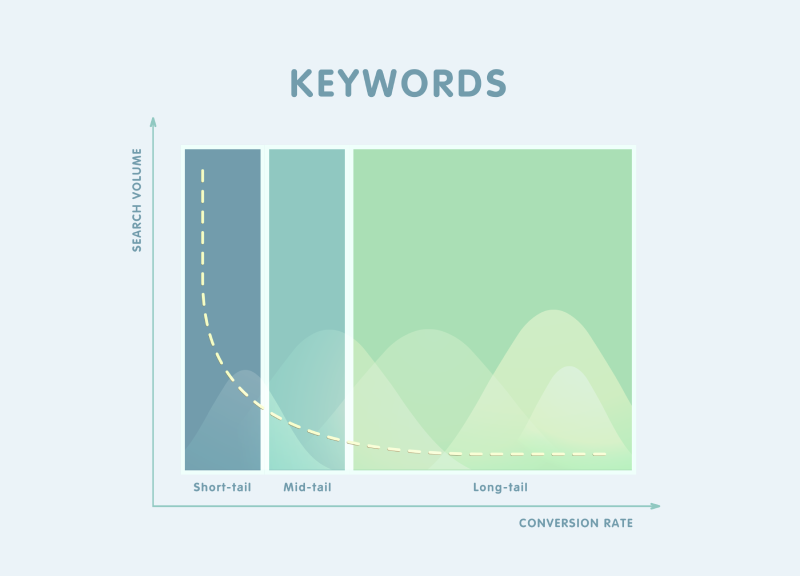
Long-tails are typically longer, more specific keyword phrases than other terms, such as “black leather shoes” instead of just “shoes”. Low-competition long-tails can be beneficial for SEO, as they provide more specific, less popular search terms that may have less competition from other websites.
By using Google Keyword Planner, it is possible to find relevant keywords that are also low-competition, making them easier to rank for.
The tool helps identify the search volume for various keywords, helping to pinpoint low-competition long-tails. Additionally, Google Keyword Planner can help identify related keywords and phrases that can be used in content to further optimize SEO.
By utilizing Google Keyword Planner, website and blog owners can identify low-competition long-tails to target for more targeted SEO. This can help improve SEO rankings, as the content is more likely to appear higher in the search engine results pages.
After identifying low-competition long-tails using Google Keyword Planner, the next step is to integrate them into website content, blog posts, and other online materials. Use these keywords naturally and in the right context to avoid keyword stuffing, which search engines heavily penalize.
Beyond just including the long-tail keywords in the body of written content, also consider adding them to meta descriptions, title tags, alt tags of images, and URL slugs. Moreover, create high-quality, relevant, and useful content around these key phrases.
Remember that content quality trumps keyword usage.
Engaging content with strategically placed, low-competition keywords will increase the likelihood of your page ranking higher. This practice coupled with a solid backlinking strategy, will significantly improve your SEO performance.
Find Trending Keywords
With Google Keyword Planner, you can identify new keywords that are trending in your niche. One of the major advantages of using Google Keyword Planner is that it provides invaluable insights into market trends.
For instance, you might identify that a certain keyword related to your industry is witnessing a sudden surge in searches.
By spotting this trend early, you can modify your SEO strategy to include content around this trending keyword while it is still rising in popularity.
Adding this trending keyword to your website’s content can significantly enhance its visibility on Google search results. However, it’s crucial to organically incorporate this keyword into your content.
Keyword stuffing – the act of shoving keywords into your content without any logical reason – is frowned upon by Google and can negatively impact your website’s SEO ranking.

Instead, create engaging, original content that naturally includes these keywords.
Providing valuable and relevant content to your users will not only improve your SEO but also boost your website’s credibility and user loyalty. By skillfully leveraging the power of Google Keyword Planner, you can effectively drive traffic to your website and stay ahead of market trends.
Find Seasonal Keywords
Google Keyword Planner provides valuable insights into seasonal trends and keywords that can be used to optimize a website for maximum performance.
By utilizing the planner’s “Seasonal Insights” feature, it’s easy to identify which keywords are popular during different times of the year.
This helps marketers to stay ahead of the curve and target the right words and phrases to optimize for.
Additionally, the “Related Keywords” feature can be used to uncover additional seasonal keywords that may be relevant to a particular industry or target audience. It’s important to monitor the “Search Volume” of each keyword to determine the best times to optimize for certain words and phrases.
Content should also be updated to include relevant seasonal keywords as the season approaches to ensure optimal performance.
By taking advantage of the features available in Google Keyword Planner, marketers can research and find seasonal keywords that can be used to optimize their website for increased traffic and better performance.
With the right strategy and the right tools, any website can be optimized for maximum reach and visibility.
Understand Your Keyword Forecast
Google Keyword Planner can also be used to understand the search behavior of your potential customers.
With the Keyword Planner, users can view the average monthly search volume of a keyword, as well as the competition level associated with it.
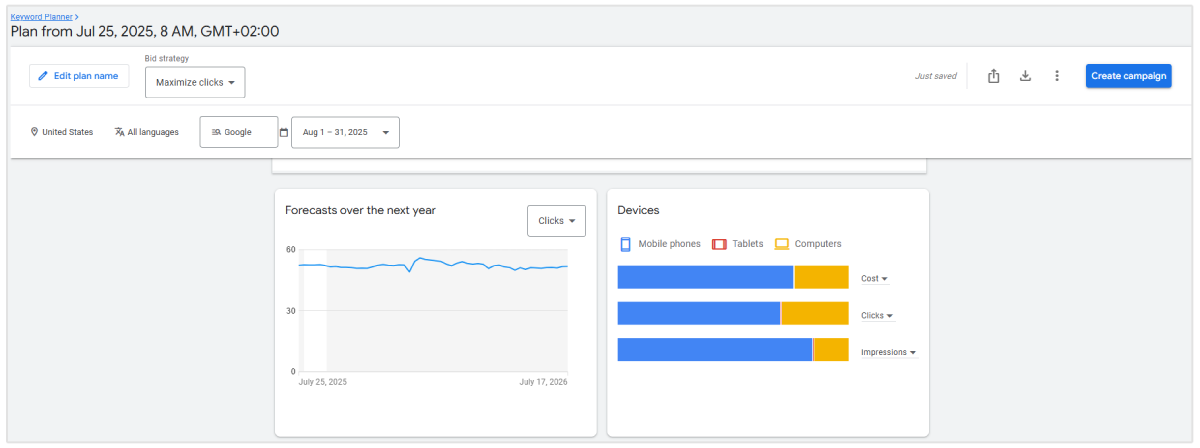
This allows marketers to gauge the potential success of their campaigns, and allocate their budget accordingly.
Moreover, the Keyword Planner can help you find related keywords and phrases for your content, allowing you to create more effective campaigns.
The Keyword Forecast feature in Google Keyword Planner is especially useful for marketers, since it allows them to accurately predict the future trends in search traffic for a keyword.
This feature enables marketers to plan their campaigns ahead of time and budget for the upcoming months accordingly. With the help of this feature, marketers can stay one step ahead of the competition and optimize their campaigns for maximum success.
Bonus: Google Keyword Planner Tips & Tricks
With its numerous features, Google Keyword Planner can be used to uncover new keyword ideas, generate ad group ideas, and uncover keyword trends.
The “Ad Group Ideas” tab in the Keyword Planner is a great place to start when looking for additional keyword ideas. The tool will generate a list of related keywords based on the ones entered.
This is a great way to discover new and relevant keywords to target.
The “Search for new keywords using a phrase, website, or category” option is also useful for finding related keywords. By entering a phrase, website, or category, users can obtain a list of related keywords. This is a great way to expand the keyword list and find relevant terms.
The “Keyword Filters” can be used to narrow down the keyword list based on relevance, location, language, and search volume. This is a great way to ensure that the keywords are as relevant and targeted as possible.
The “Keyword Trends” chart is also a great feature for uncovering seasonal fluctuations in search volume. By analyzing the chart, users can identify which keywords are more popular during certain times of the year.
The “Keyword Opportunities” tab can be used to discover new keyword ideas with high search volume and low competition. This is a great way to ensure that the keywords are both relevant and targeted.
Unlock Exact Search Volumes
Google Keyword Planner offers an array of features and insights on the most popular and effective keywords to target for your campaigns.
One of its most powerful features is the ability to unlock exact search volumes for each keyword. This feature allows you to see the exact number of searches for each keyword, giving you valuable insight into the trends and competition in the keyword market.
With this data, you can identify low competition keywords that are related to your business and can be used to drive more targeted traffic to your website.
You can also create better ad campaigns by better understanding which keywords are most popular and which ones will bring the most conversions.
Unlocking exact search volumes in Google Keyword Planner can also help you to identify new opportunities in the keyword market that you may have previously overlooked. By taking advantage of this powerful feature, you can take your SEO and digital marketing campaigns to the next level.
See Popular Search Locations
Google Keyword Planner can also provide insight into the popular search locations for certain keywords, allowing you to create more targeted campaigns to reach the right people.
With this tool, you can also get an understanding of which areas may be the most lucrative for your product or service.
It can also give you insight into what types of locations are the most popular for certain keyword searches. For example, if you are in the travel industry, you can use this tool to determine which cities are the most competitive for certain keywords.
By doing this, you can better target your campaigns to reach the right people.
Google Keyword Planner can help you understand the landscape of keyword searches and the potential customers that are out there. It can also help you determine which areas are the most lucrative for your product or service.
With this tool, you can better target your campaigns to reach the right people in the right locations.
Conclusion
In conclusion, Google Keyword Planner is an indispensable tool for SEO practitioners aiming to optimize their websites and enhance their visibility online.
The ability to research and analyze keywords, recognize trends, and predict future traffic provides substantial advantages in the ever-changing digital landscape. Utilizing this tool is a gateway to a higher ranking on Google’s search engine results page, increased traffic and ultimately, greater conversion rates.
To fully leverage the power of SEO strategies, it is crucial to embrace and make the most of tools like Google Keyword Planner, as it gives businesses and marketers the edge they need to stay competitive in this digital era.