

If your website traffic felt like a rollercoaster ride this past holiday season, you weren't alone. Google officially closed out last year with its third and final major algorithm change: the December 2025 Core Update.
This update caused some major volatility across search results and verticals. And now that the dust has settled, it’s time to look at the data.
What actually changed? Why did some sites tank while others soared? And most importantly, what steps should you take now to secure your rankings going forward?
What is a Google Core Update?
A core update is a broad adjustment to Google’s main ranking formula. When Google releases these updates, their goal is to improve how they assess content quality, relevance, and helpfulness.
It's important to remember that a drop in rankings after a Core Update doesn’t necessarily mean your site is broken or penalized.
It often just means that Google's systems have found other content that they believe answers the user's query slightly better than yours does.
December 2025 Core Update: Quick Facts
Here is the essential timeline and data for this specific update:
- Launch Date: December 11, 2025
- Completion Date: December 29, 2025
- Duration: 18 days
- Context: This was the third broad core update of 2025, following earlier updates in March and June.
- Primary Impact: The December 2025 Core Update changes how Google judges content quality, real expertise, and whether pages genuinely help users.
According to several search data providers, this was one of the more volatile updates of the year.
The fluctuations were felt more acutely by ecommerce and retail businesses, publishers, and affiliate sites.
A SERP analysis by SE Ranking revealed that nearly 15% of pages that ranked in the Top 10 before the update disappeared entirely from the Top 100 by the time it finished.
This suggests a major reassessment of relevance.
What Changed with the December 2025 Core Update?
By analyzing the winners, losers, and industry reports, several clear patterns have emerged.
1. Quality & E-E-A-T Signals Strengthened
Google’s focus on E-E-A-T (Experience, Expertise, Authoritativeness, and Trustworthiness) is no longer limited to sensitive topics like health, finance, or legal advice.
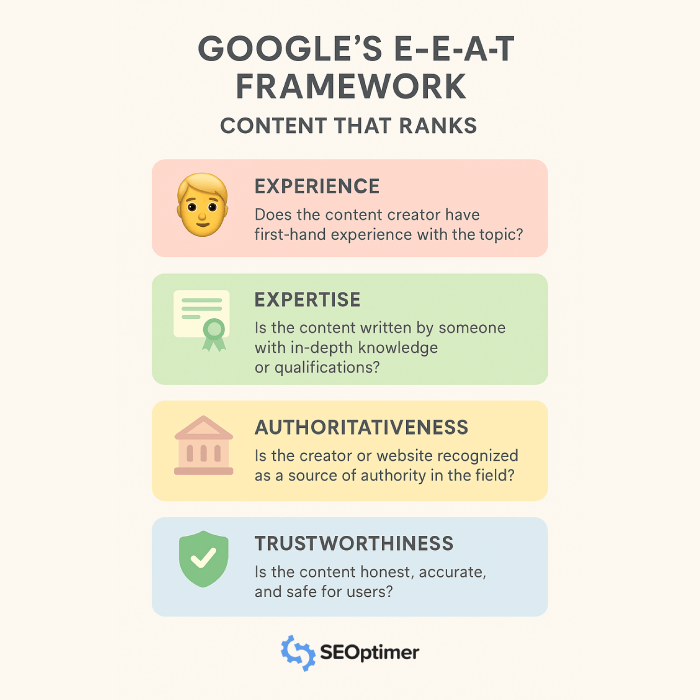
With the December 2025 Core Update, these quality signals are now being applied much more broadly, including to product reviews, tutorials, buying guides, and general informational content.
The biggest shift was in how Google evaluates demonstrated Experience.
It’s no longer enough to say you’ve used a product, visited a place, or tried some method.
Google’s systems now look for more signals that strongly suggest the content creator has actually interacted with the subject matter in a real, hands-on way.
In practice, this means Google is paying closer attention to the kind of details that only genuine experience tends to produce.
For example, a home-improvement guide that says, “We tested several air purifiers and this one works best” is no longer very persuasive on its own.
What now matters more is whether the article explains:
- What room sizes were tested
- How long each purifier was run
- Noise levels at different fan settings
- Real-world issues like filter replacement costs or sensor accuracy
- Performance differences between day-to-day use and “boost mode”
Content that includes specific observations, trade-offs, limitations, and unexpected findings sends much stronger experience signals than generic praise or surface-level summaries.
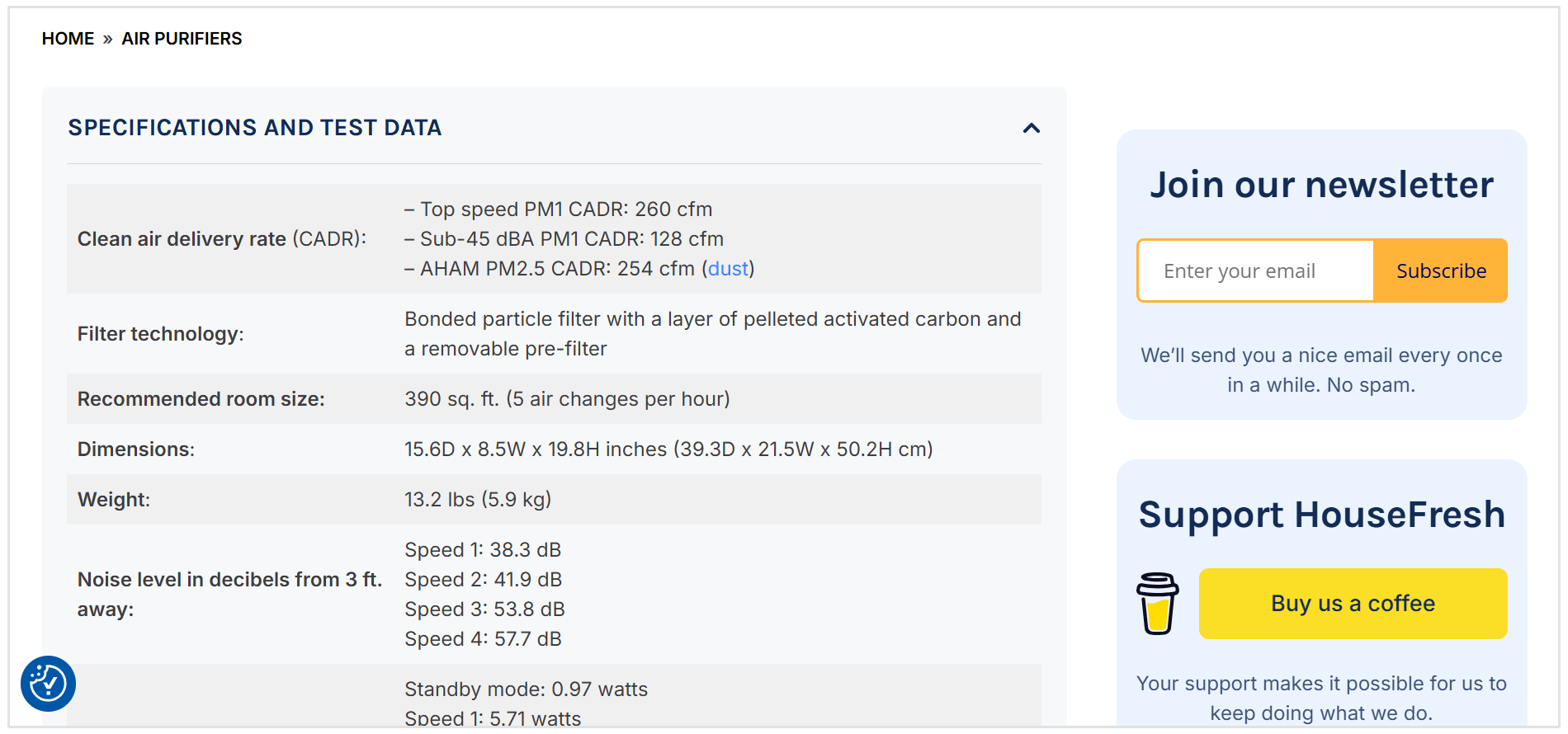
This article from HomeFresh on the Best Air Purifiers is the perfect example of content that includes very specific observations.
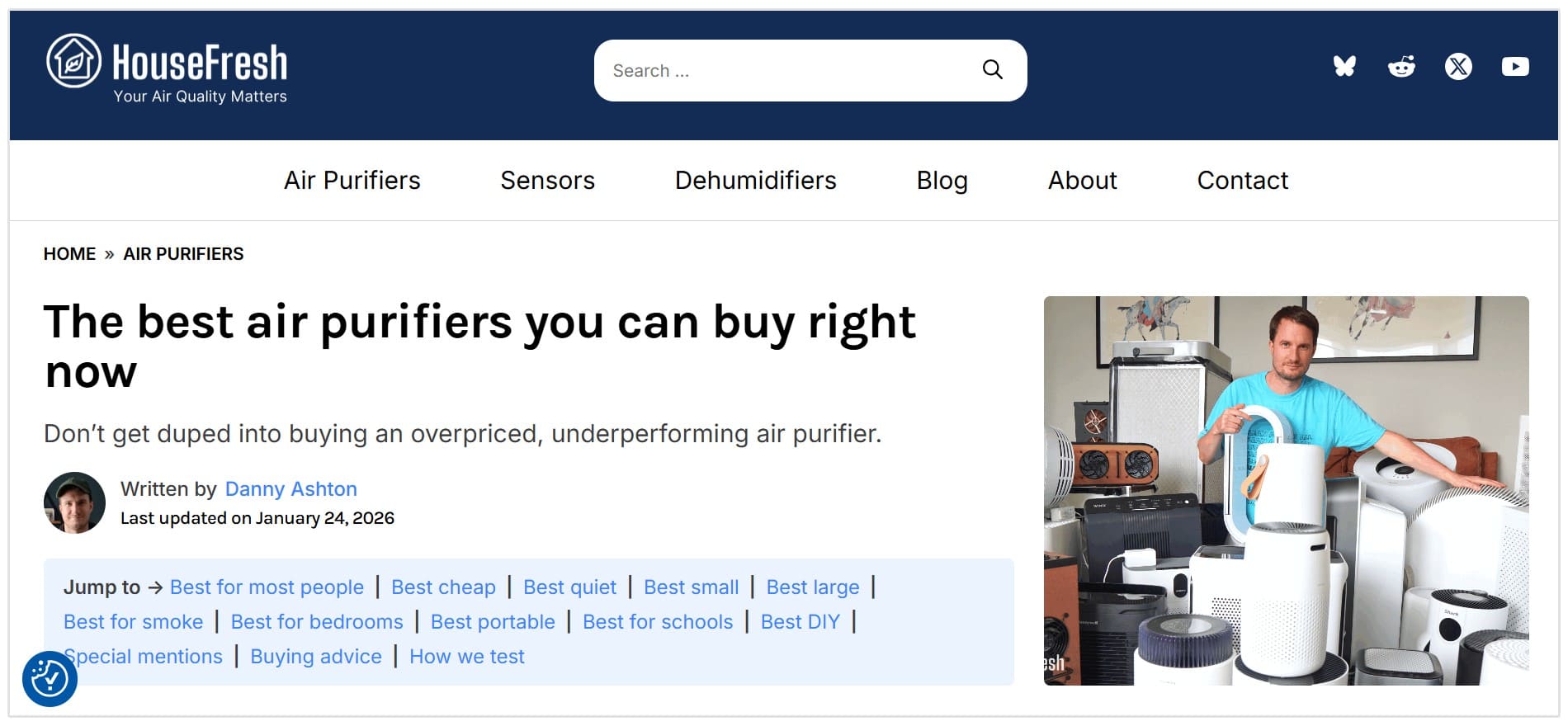
It includes your typical information like price, where to buy, pros and cons, as well as the author's personal opinion.
But then the post also shares much more detailed information on specifications and their test data. This includes data on recommended room size, noise levels, power consumption, clean air delivery rate (CADR), and more.
The same applies to how-to and educational content.
A tutorial that simply repeats widely known steps or rephrases manufacturer instructions is far less competitive than one that includes additional details like:
- Common mistakes beginners make
- Workarounds for edge cases
- Personal troubleshooting insights
- Variations for different scenarios or tools
In other words, Google is getting better at distinguishing between content that sounds helpful and content that comes from someone who has actually done the thing.
2. Older Domains Still Dominate SERPs
If you were hoping for a "new player" revolution, this update might be disappointing. Trust signals remain king.
Analysis shows that domains aged 15+ years continue to dominate the Top 10 results, while new domains (0-2 years old) account for less than 2% of top rankings.
Google is doubling down on known entities with established track records of reliability.
3. Niche-Level Impact
Not all industries felt the effects of the December 2025 Core Update equally.
Volatility varied significantly by niche, and in many cases, the changes followed a clear pattern: specialists gained ground while generalists lost.
4. Core Web Vitals are Getting More Important
Technical performance has always mattered for SEO, but the December 2025 Core Update clearly raised the bar.
Data from ALM Corp suggests that sites with an LCP (Largest Contentful Paint) slower than 3 seconds saw 23% more traffic loss than faster competitors with similar content quality. In other words, even good content struggled to hold rankings if the page experience was poor.
But loading speed wasn’t the only issue.
Sites with weak interaction performance also took a hit.
Pages with INP (Interaction to Next Paint) scores above roughly 300 milliseconds experienced noticeable ranking declines, particularly on mobile devices.
These slower interaction times made pages feel laggy or unresponsive, which likely contributed to lower engagement and higher bounce rates.
This suggests that Google is increasingly treating Core Web Vitals as a serious quality signal that influences how competitive your content can be.
5. Smarter Freshness Signals
Google has cracked the code on fake freshness.
Changing the "Last Updated" date on a blog post without actually adding new value no longer works.
The algorithm now rewards substantive updates like adding new data, current examples, or deeper analysis, while ignoring cosmetic tweaks designed to game the system.
6. How Google Treats AI Content
With this update, Google got much better at detecting low-quality content that happens to be AI-generated.
Mass-produced AI content with minimal human input, generic information, and no real expertise suffered.
While, content created with AI tools plus real human oversight (editing, fact-checking, original insights, and subject-matter expertise) generally held up well.
And Google's John Mueller came out with the following statement in November 2025, just before the rollout of the Core Update:
Our systems don't care if content is created by AI or humans. What matters is whether it's helpful for users.
- John Mueller
Google December 2025 Core Update Winners and Losers
Ecommerce & Retail
According to a LinkedIn post shared by Aleyda Solis, a leading voice in SEO, ecommerce and retail saw some of the most dramatic ranking shifts during the rollout.
Her analysis across retail SERPs showed a high rate of URL replacement in top positions, with a meaningful portion of Top 3 results changing hands. This created real opportunities for sites that matched commercial intent more precisely.
The most consistent trend among retailers and ecommerce stores were as such:
- Broad retailers and marketplace-style sites lost visibility for mid-funnel product queries.
- Brands and specialized retailers with clear category focus gained.
Macy's decreased in rankings for "winter boots women", "winter coats" or "men's cologne", while Columbia, The North Face, or Fragance Market increased.
- Aleyda Solis, International SEO Consultant & Founder at Orainti
These winning pages tended to:
- Focus on a single product category
- Include detailed product information
- Align closely with buyer intent
Google appeared far more confident ranking sites that demonstrated direct product authority, rather than those covering many unrelated categories.
Content & Publications
Publication sites experienced noticeable declines, particularly for “best of” and comparison-style queries.
Historically, Google often treated these searches as informational. After the update, many of these queries shifted toward commercial intent, which changed who ranked.
As a result:
- Media and editorial sites lost positions
- Brand pages, product catalogs, and category landing pages gained
In multiple cases, publisher-written buying guides were replaced by pages from manufacturers or platforms directly associated with the products themselves. This suggests Google is increasingly prioritising first-party expertise over third-party summaries when commercial intent is strong.
Affiliate and Review Sites
Based on data from ALM Corp, affiliate and product-review sites were one of the most affected site types in the December 2025 Core Update, with around 70% experiencing ranking losses.
The reason for this is because of a lack of genuine experience and original value.
Many affiliate pages relied heavily on manufacturer specifications, rewritten descriptions, or summaries pulled from other reviews, without actually testing the products themselves.
Affiliate sites that held their rankings after the Core Update tended to show clear evidence of hands-on testing, including specific observations from real use, original photos or videos, and honest discussion of pros and limitations.
The takeaway is that affiliate SEO now requires real product experience.
SaaS
The same pattern showed up in SaaS results.
Broad platforms and publications dropped rankings for software-related queries, while more specialised SaaS providers gained visibility through:
- Dedicated landing pages
- Use-case-specific content
- Industry-focused messaging
YMYL Niches
YMYL (Your Money, Your Life) niches such as healthcare, finance, and legal content were held to the strictest quality standards in the December 2025 Core Update, with around 67% experiencing ranking declines.
Sites without clear professional credentials were hit hardest.
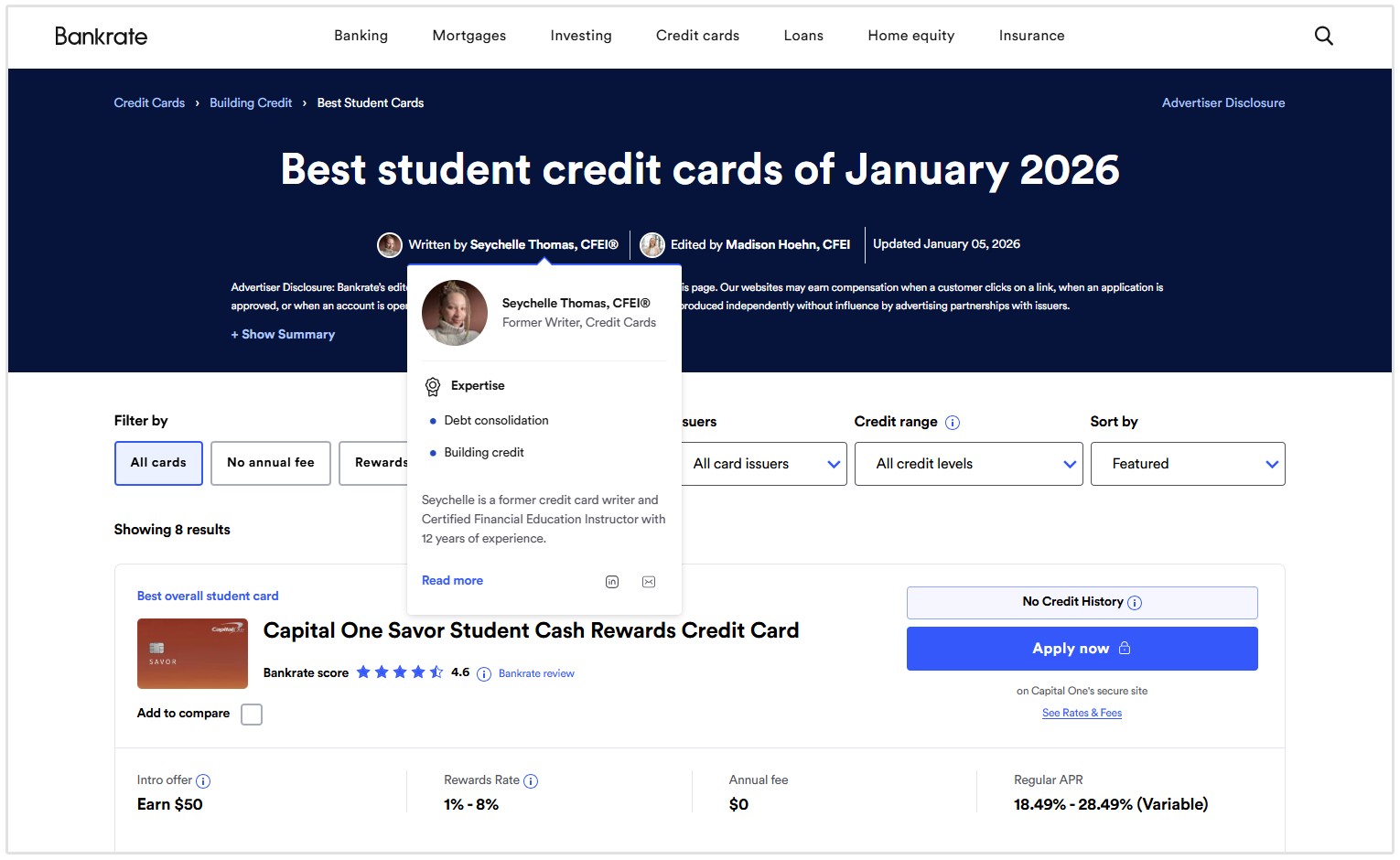
Medical pages lacking physician authorship lost visibility for symptom and treatment queries, while financial and legal sites without certified or licensed contributors saw similar drops.
The update wasn’t universally negative, though.
Well-credentialed sites often gained rankings as weaker competitors fell away. Pages authored or reviewed by qualified professionals, with clear editorial oversight and transparent credential disclosures, performed more strongly.
News Publications
News publishers experienced some of the most visible turbulence, particularly across Google Discover, News, and Top Stories.
There was a ton of volatility with news publishers with the December broad core update.
- Glenn Gabe, President of G-Squared Interactive
Some publishers reported sharp Discover traffic drops during the rollout, while others surged. These movements appear closely tied to Google’s ongoing use of Topic Authority systems, which aim to surface expert sources for specific subject areas.
The takeaway here isn’t that news is being devalued, but that depth and topical authority matter more than ever, especially for ongoing coverage in specialized areas.
What All This Means for Website Owners
The era of set it and forget it SEO is over.
If your site relies on thin content, outdated technical structures, or generic information, you are vulnerable.
Google is prioritizing user satisfaction above all else. They want to send users to websites that load fast, demonstrate real human expertise, and solve problems immediately.
How to Adapt After the December 2025 Core Update
If you were hit by the update, or if you simply want to safeguard your traffic for 2026, here is your action plan.
1. Improve Content Quality
Audit your pages that lost traffic and compare them to the current winners.
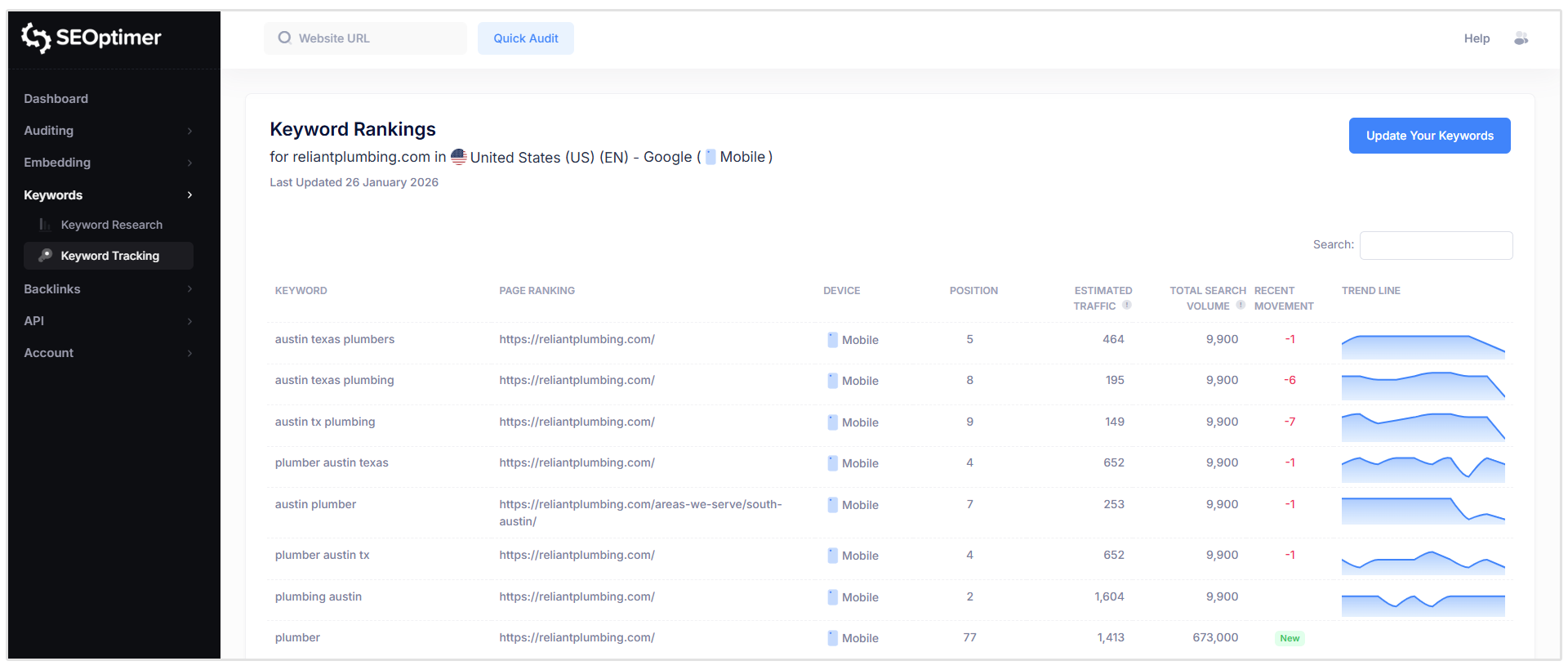
Note: If you set up Keyword Tracking with SEOptimer, you can easily find the pages that have lost traffic after the December 2025 Core Update.
Ask yourself the following questions:
- Do the winners have original photos?
- Do they cite specific data?
- Do they offer a unique perspective or share your personal experience?
If not, you need to add depth and originality to compete.
2. Strengthen E-E-A-T
Make sure Google knows who is writing your content.
- Add detailed author bios with links to LinkedIn, Twitter, or any other social media profiles, as well as the author's personal website.
- Cite credible sources for your statistics.
- If reviewing products, show evidence that you actually touched and used the product.
3. Optimize UX & Engagement
Don't give users a reason to leave.
- Ensure the main question you are answering is visible at the very top of the page (don't bury the lead).
- Use internal linking to keep users on your site longer.
- Remove aggressive pop-ups that block content as this leads to a poor User Experience.
4. Fix Technical & Performance Issues
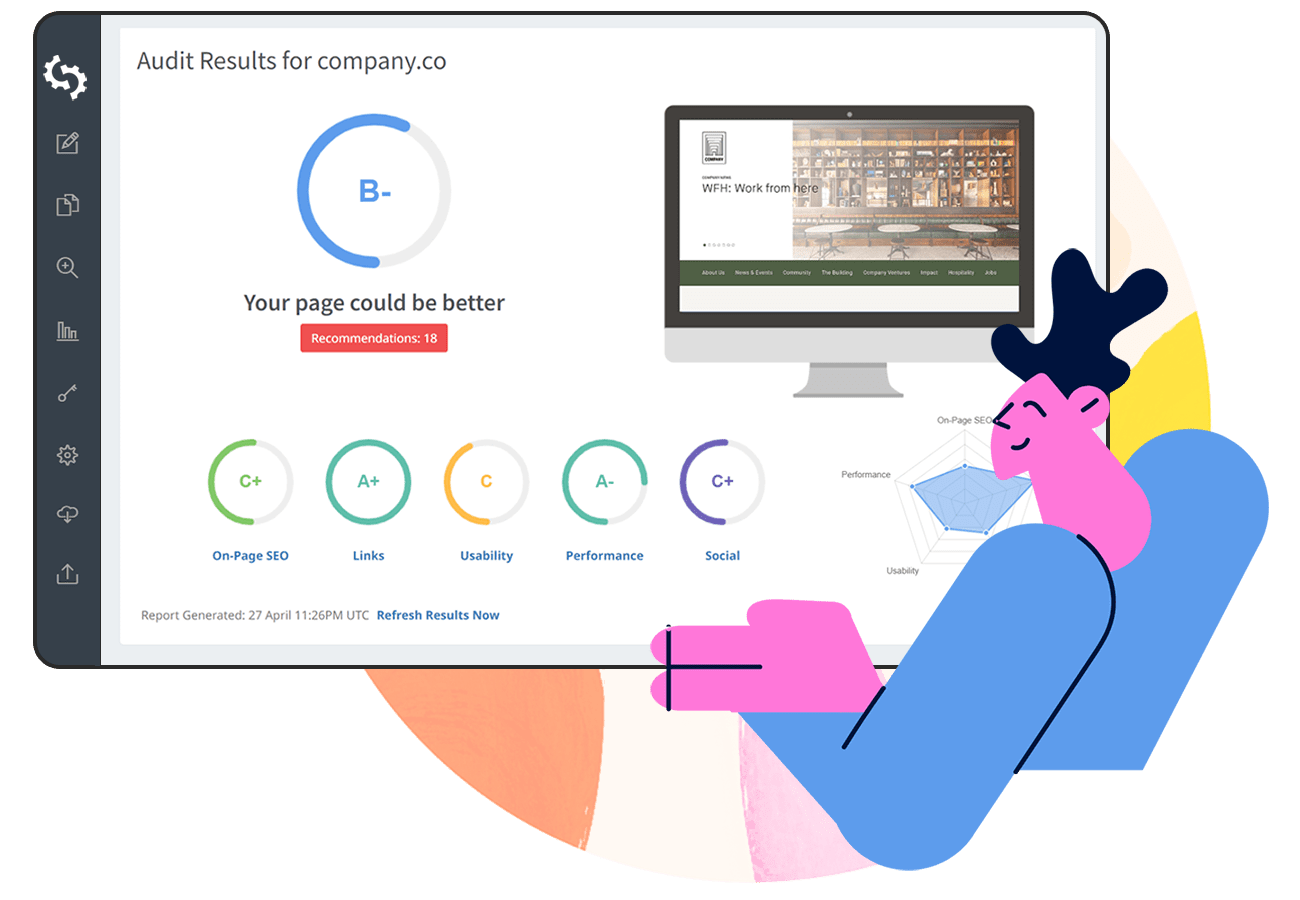
Run a free audit of your website using SEOptimer's powerful SEO Auditing feature.
The audit will reveal if there are any important technical and performance improvements needed.
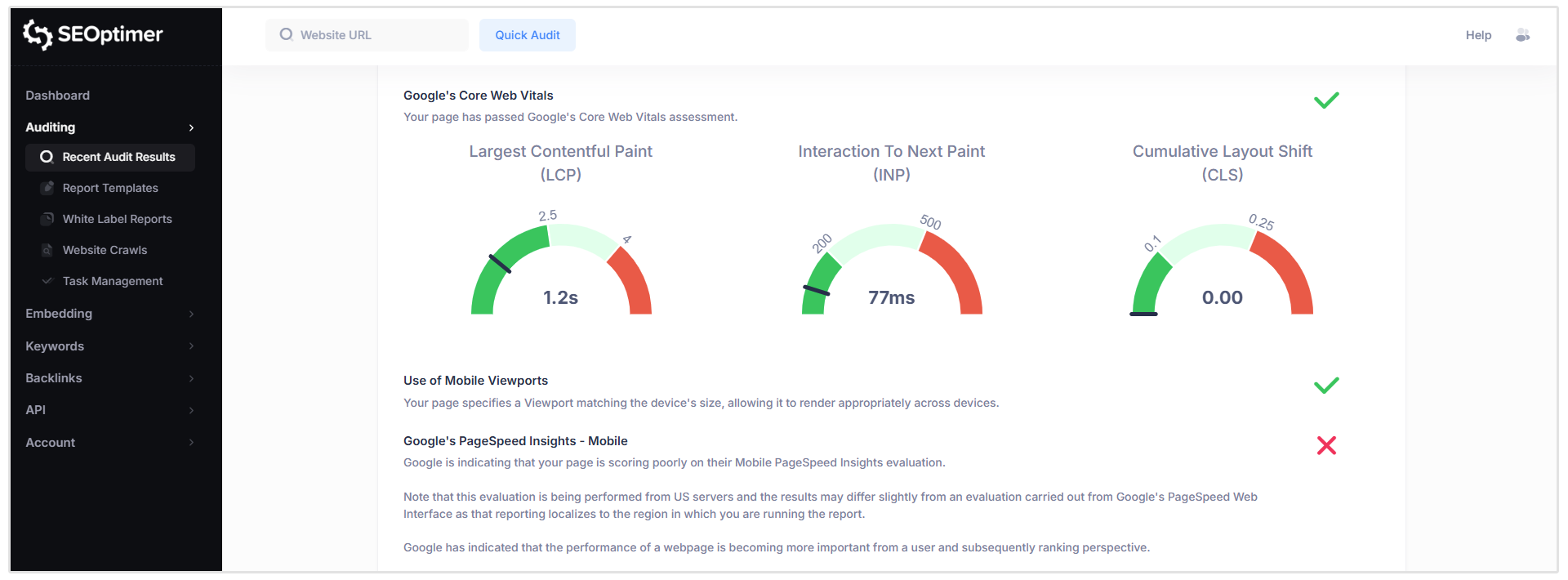
If your LCP is over 2.5 seconds or your CLS (visual stability) is poor, you are handing traffic to your competitors. Fix your image sizing, server response times, and code bloat.
5. Audit Intent on Pages That Lost Rankings
Use Google Search Console to identify exactly which queries and pages dropped.
Often, the drop is due to intent mismatch.
If you wrote an informational guide but Google is now ranking product pages for that keyword, you need to adapt your content type to match what users want.
What This Means Going into 2026
The December 2025 Core Update was a signal of where Google is heading in 2026.
The algorithm is moving toward a more holistic view of quality. It's not just about keywords or backlinks anymore; it's about the total user experience.
The safest strategy for 2026 is simple but difficult: Build a brand that people trust.
Focus on genuine expertise, technical excellence, and user satisfaction. If you prioritize the human on the other side of the screen, the algorithm will eventually follow.