Image Alt Tag Checker
SEOptimer’s Image Alt Tag Checker scans your webpage to ensure all images have properly defined image alt tags.
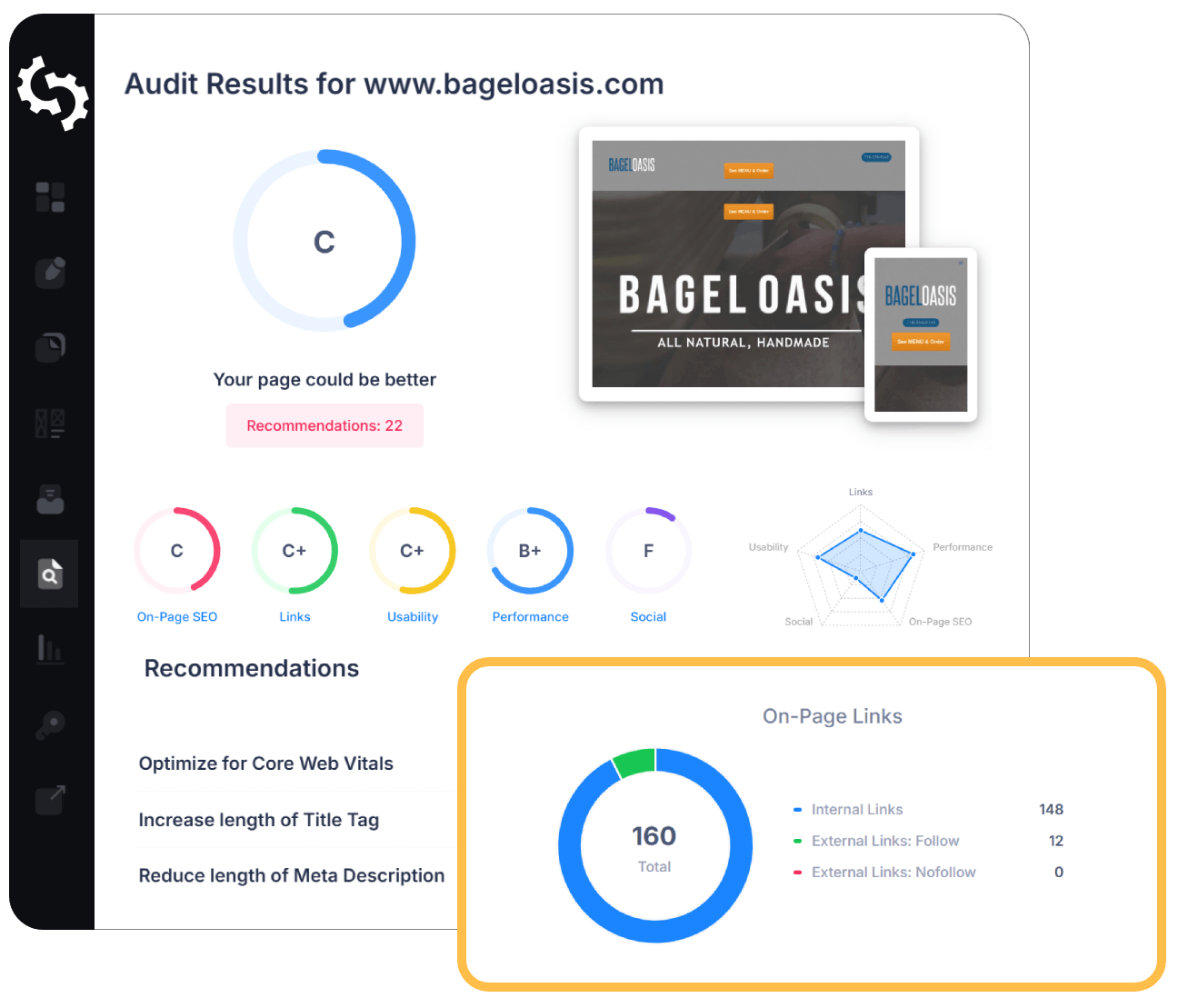
SEO Audit Any Site in Seconds
+ Comprehensive SEO / GEO Tools for Every Function
Run over 100 checks on your website across On-Page SEO, Usability, Performance, Social and Links. Now with GEO in every report. SEOptimer also offers keyword research, rank tracking, backlinks and a full site crawler.

About Image Alt Attributes
What is alt text?
Alt text is a written description of an image, carried in the image tag itself. It is read aloud by screen readers in place of the picture, displayed when an image fails to load, and used by search engines to work out what a picture depicts.
It is a description, not a caption. A caption adds context for someone who can already see the image; alt text replaces the image entirely for someone who cannot. That distinction decides how it should be written: the question is not what the picture looks like, but what a reader would miss without it.
An alt tag checker is worth running because the failure is silent. Nothing on the page indicates a missing attribute, the layout is unaffected, and the people most likely to notice are the ones least likely to tell you.
Does alt text still matter in 2026?
Yes, and for the most durable reason available: accessibility. Alt text is the difference between a page that works with a screen reader and one that presents a series of unexplained gaps, and accessibility requirements are increasingly enforced rather than merely published.
It also remains the primary way image search understands a picture, and image search still sends meaningful traffic to sites publishing original visuals rather than stock photography.
The practical case is broader than compliance. Images fail to load more often than people assume, on slow connections, restrictive networks and email clients, and alt text is what stands in when they do.
How alt text relates to AI search
Models increasingly interpret images directly, but that has not made alt text redundant. Machine interpretation tells a system what is in a picture; alt text tells it why the picture is on this page, which is a different and more useful thing.
For charts, diagrams and screenshots the gap is wider still. Those often carry information that appears nowhere else in the page text, and alt text is the only route by which that information enters an answer at all.
Writing alt text that states the finding rather than the format is the single highest-value habit here. "Bar chart" tells a system nothing; "Organic traffic grew 40 percent after the migration" is quotable.
Alt text best practices
- Describe what the image shows and why it is there, in a sentence rather than a keyword list.
- Leave it empty for purely decorative images, so screen readers skip them instead of announcing a filename.
- For charts and diagrams, state the finding, not just the format.
- Avoid opening with "image of" or "picture of"; assistive technology already says so.
- If an image contains text that matters, repeat that text.
- Keep it specific to this use. The same photograph can warrant different alt text on different pages.
What this tool checks
The alt tag checker scans the images on the page and reports whether any are missing an alt attribute.
The alt tag checker looks for presence only, so an image with unhelpful or keyword-stuffed alt text passes exactly as a well-described one does. A pass means every image has something; whether that something is useful is a judgement worth making yourself, particularly on charts and screenshots.
Where to go next
Images affect more than accessibility. Check how much they are costing you with the image optimization checker and page size check tools, and make sure the surrounding page is structured well enough for their context to be clear using the header tag check.
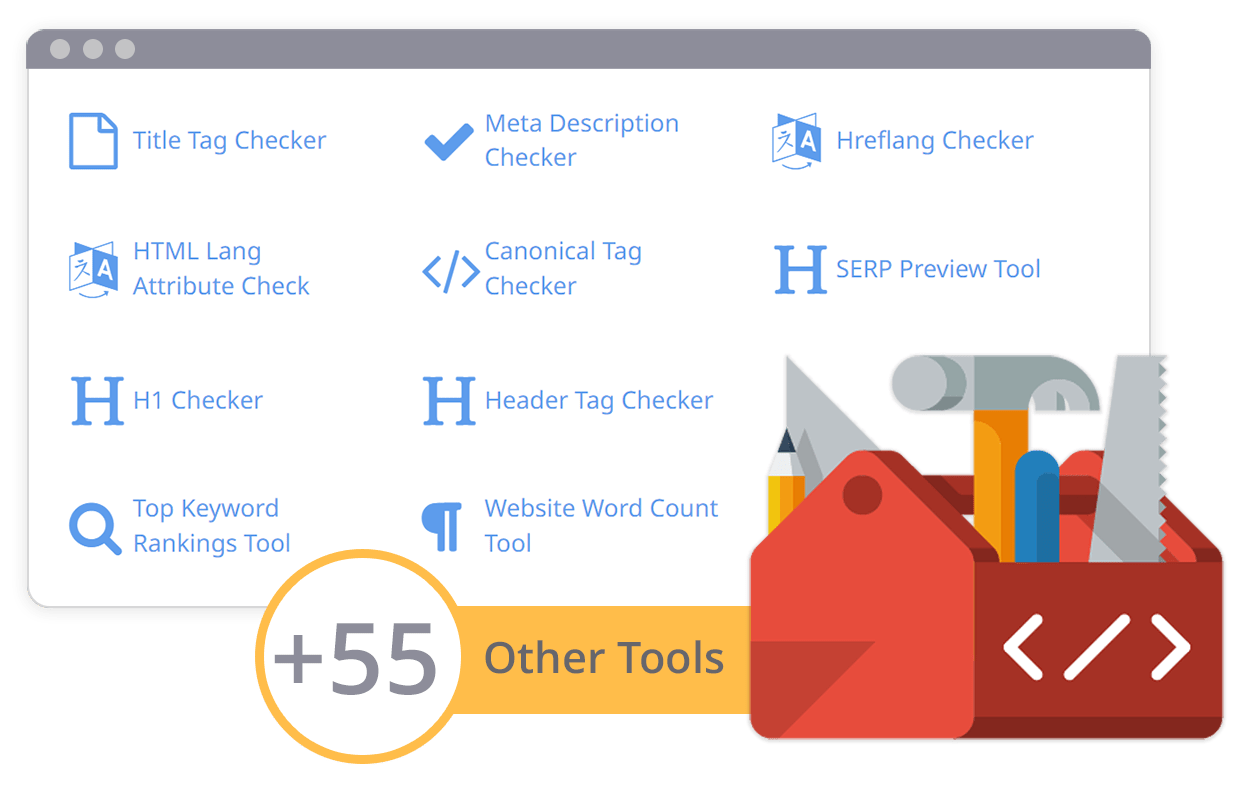
Comprehensive SEO Toolbox with over 55 Tools
Check Titles, Meta Descriptions, Headings, Schema, Core Web Vitals, SSL and Robots.txt. Generate Meta Tags, Sitemaps and .htaccess Rules, minify CSS, JS and HTML, and draft copy with our AI Writing Tools - instantly and for free.
Further Reading
See More
Ultimate Guide to Alt Attribute (or Alt Text)
What is the Alt Attribute?
Alternative text, "alt attribute" or “alt text” is an HTML attribute that describes an image as a text....

On-Page SEO: Complete Guide + Checklist for 2026
What is On-Page SEO?
On-page SEO is the process of optimizing the content and elements on a webpage so that search engines can bette...