Twitter Cards
SEOptimer’s X (Twitter) Cards tool checks if your webpage includes X Cards, allowing you to control the title, description, and imagery displayed when your page is shared on X.

SEO Audit Any Site in Seconds
+ Comprehensive SEO / GEO Tools for Every Function
Run over 100 checks on your website across On-Page SEO, Usability, Performance, Social and Links. Now with GEO in every report. SEOptimer also offers keyword research, rank tracking, backlinks and a full site crawler.

About Twitter Cards
What are Twitter Card tags?
Twitter Card tags are the X and Twitter equivalent of Open Graph: they specify the card type, title, description and image used when a link is posted, so a shared URL expands into a preview rather than sitting as bare text.
The platform falls back to Open Graph tags when card tags are absent, which makes them an override rather than a requirement. A page with good Open Graph markup and no card tags will usually still preview correctly.
A Twitter Card validator is therefore most useful when you want a specific presentation, most often a large image card rather than the compact summary the fallback produces.
Do Twitter Cards still matter in 2026?
Their importance tracks how much traffic the platform sends you, which for many sites has fallen considerably over recent years. For publishers, technology and finance audiences it remains meaningful.
Because of the Open Graph fallback, adding card tags is worthwhile mainly when the default presentation is not what you want. That is a smaller job than it sounds and rarely urgent.
The tags themselves have outlasted several changes of platform name and policy, which is a reasonable argument for setting them once and not revisiting them often.
How Twitter Cards relate to AI search
No direct relationship. Their value is in social distribution, and that distribution can lead to coverage and citations that do matter.
As with Open Graph, the discipline worth keeping is consistency. The card should describe the same page the rest of your markup describes, in the same terms.
Contradictory metadata is the only real risk here, and it is entirely avoidable.
Twitter Card best practices
- Choose a card type that suits the content; summary with large image suits articles.
- Rely on Open Graph for the shared values and use card tags only to override.
- Use an absolute image URL that is publicly reachable, not behind a login.
- Keep titles short enough to survive the platform truncating them.
- Keep the wording consistent with your title tag and meta description.
- Test a real post rather than assuming the tags render as intended.
What this tool checks
The tool reports whether Twitter Card tags are present in the page HTML.
A page without them may still preview perfectly well by falling back to Open Graph, so a failure here is worth interpreting alongside that check rather than treating as a problem on its own.
Where to go next
Card tags sit on top of your other metadata. Check the Open Graph tags they fall back to, and confirm the title tag and meta description they should agree with say the same thing.
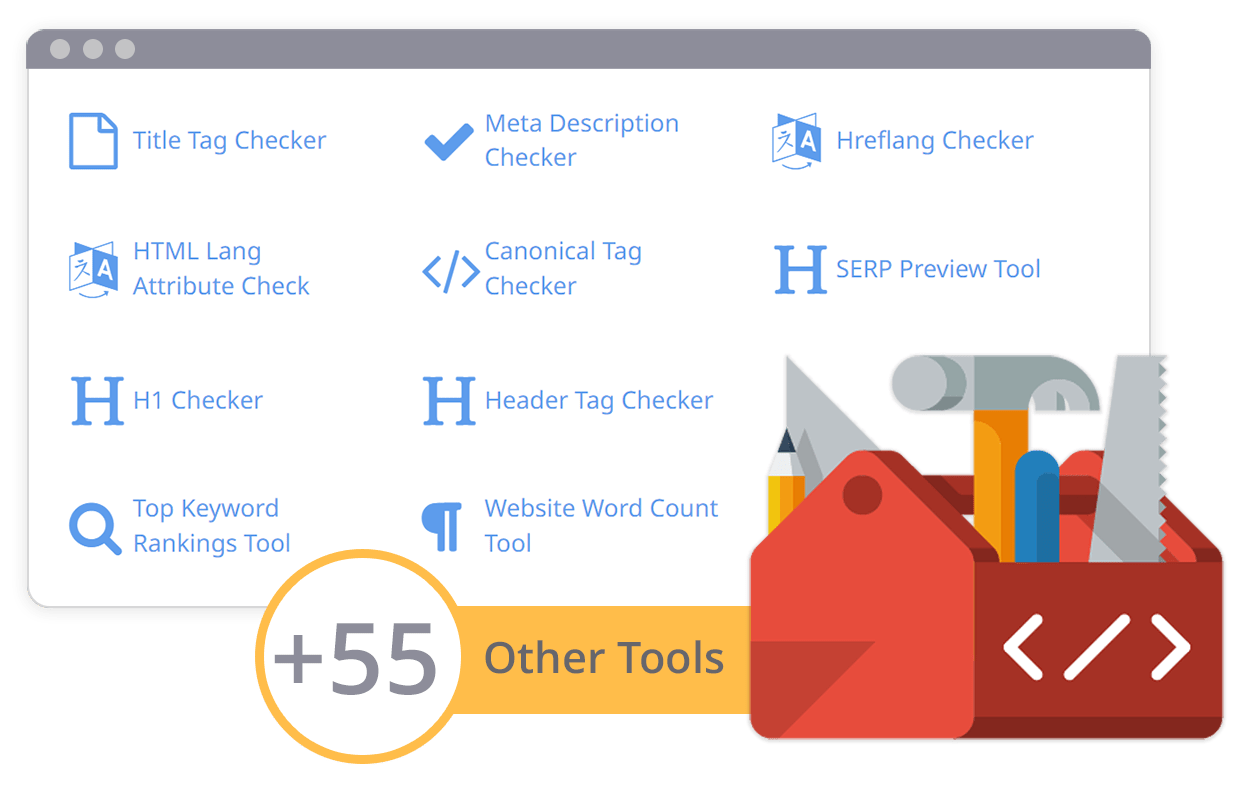
Comprehensive SEO Toolbox with over 55 Tools
Check Titles, Meta Descriptions, Headings, Schema, Core Web Vitals, SSL and Robots.txt. Generate Meta Tags, Sitemaps and .htaccess Rules, minify CSS, JS and HTML, and draft copy with our AI Writing Tools - instantly and for free.
Further Reading
See More
How to use Social Media Marketing to Promote Your Website
In this day and age, you’d be hard-pressed to find a business that doesn’t have a Facebook page. But if you’re simply posting on your social...

Why are Social Media Links Important for Your Website?
If you’ve created a Facebook page or Twitter account for your business, chances are, you would've already linked to your website within yo...

What is a Title Tag? How to Write Better SEO Titles
What is a Title Tag?
A title tag is an HTML element that tells search engines and users what a webpage is about. It appears as the c...