Sitemap Validator
SEOptimer’s Sitemap Validator scans your sitemap for errors and issues, helping you ensure it's properly formatted and free of problems.
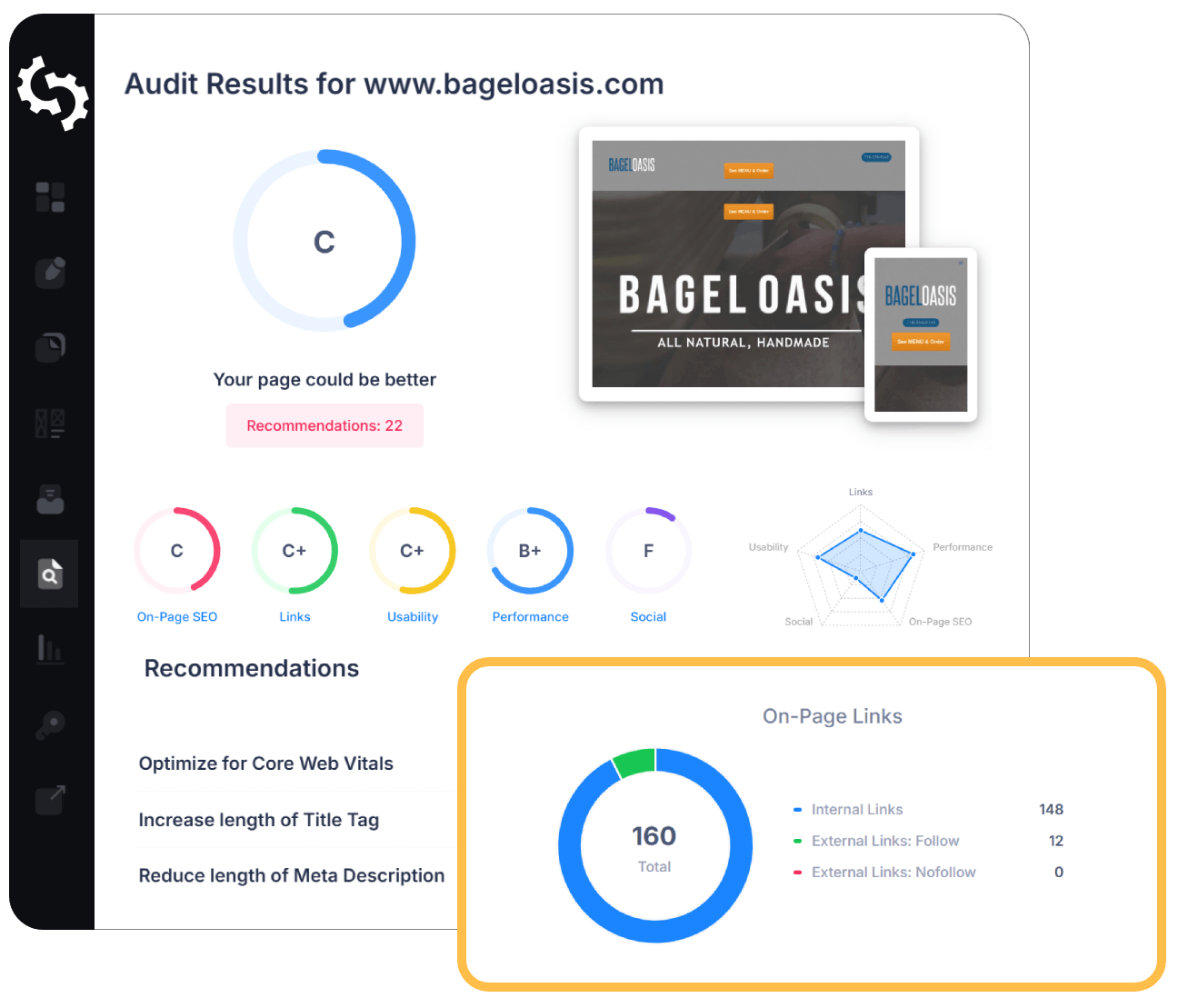
SEO Audit Any Site in Seconds
+ Comprehensive SEO / GEO Tools for Every Function
Run over 100 checks on your website across On-Page SEO, Usability, Performance, Social and Links. Now with GEO in every report. SEOptimer also offers keyword research, rank tracking, backlinks and a full site crawler.

About XML Sitemap Validation
What does it mean to validate a sitemap?
Validating an XML sitemap means checking that the file is well formed and follows the sitemap protocol: correct XML syntax, the expected namespace, properly structured URL entries, and dates in the format the specification requires.
It is a structural check rather than a judgement about the pages listed. A sitemap can validate perfectly while pointing at a hundred URLs that no longer exist, and it can fail on a single unescaped ampersand while every page in it is fine.
An XML sitemap validator matters because the failure mode is silent and total. A malformed file is not partially read; it is rejected, and the sitemap you believe is guiding crawlers is doing nothing at all.
Does sitemap validation still matter in 2026?
It matters most for sites generating sitemaps programmatically, which is now most sites. A plugin, a build step or a custom script produces the file, and nobody reads it again until something goes wrong.
The common causes are mundane and easy to miss: an unescaped character in a URL with query parameters, a date in the wrong format, a file that has grown past the size limit, or a stray byte order mark at the start of the document.
Because generation is automated, a fault introduced once tends to persist. Validating after a platform change or a migration catches the version of this problem that costs the most.
How sitemap validation relates to AI search
AI crawlers use sitemaps for discovery in the same way search crawlers do, so a rejected file removes the shortcut for both at once.
The last-modified dates matter here too, and they are one of the fields most often malformed. A date the parser cannot read is a freshness signal you have effectively not sent, on a subject where freshness increasingly decides which source gets used.
For a large site, a broken sitemap means discovery falls back entirely to following internal links, and whatever is poorly linked is what goes unread.
Common sitemap errors
- Unescaped characters, particularly ampersands in URLs carrying parameters.
- Dates that do not follow the required W3C format.
- A missing or incorrect XML namespace declaration.
- Exceeding 50,000 URLs or 50MB uncompressed in a single file rather than splitting with an index.
- Relative URLs where absolute ones are required.
- A byte order mark or stray whitespace before the opening XML declaration.
Sitemap best practices
- Validate after any change to the platform, template or generation script.
- Include only canonical, indexable URLs that return a 200 status.
- Keep last-modified dates accurate rather than resetting them on every build.
- Reference the sitemap from robots.txt and submit it in Search Console.
- Watch the submitted-versus-indexed figures; a growing gap is usually a content problem rather than a file one.
Using the XML sitemap validator
Enter the address of your sitemap and the XML sitemap validator fetches it, parses it, and reports whether it is well formed along with any errors it finds and the lines they appear on.
A pass means the file will be read. It does not mean the URLs inside it are the right ones, which is worth checking separately, particularly after a migration when a valid sitemap can confidently list an entire set of addresses that no longer resolve.
Where to go next
Validation confirms the file works; the next questions are what is in it and whether crawlers can reach it. Rebuild the file with the XML sitemap generator, confirm one is discoverable for your domain with the XML sitemap checker, and make sure your robots.txt points at it.
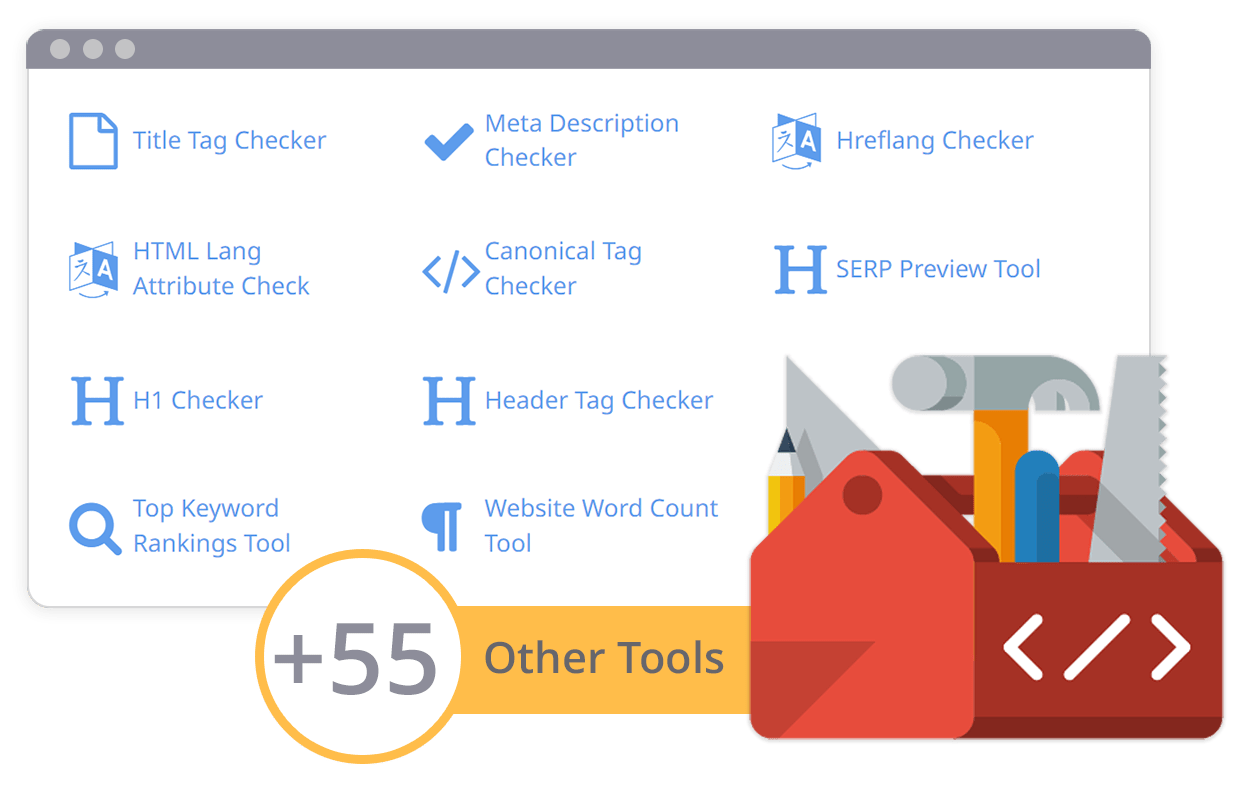
Comprehensive SEO Toolbox with over 55 Tools
Check Titles, Meta Descriptions, Headings, Schema, Core Web Vitals, SSL and Robots.txt. Generate Meta Tags, Sitemaps and .htaccess Rules, minify CSS, JS and HTML, and draft copy with our AI Writing Tools - instantly and for free.
Further Reading
See More
What is an XML Sitemap? How to Create One & Submit to Google
An XML sitemap helps search engines find the most important pages on your website.
In this guide, we’ll show you what an XML sitemap...

Crawl Depth in SEO: What is It & How to Improve It?
Crawl depth influences how efficiently Google can index your content.
Googlebot has limited time and server resources. Therefore, th...

What is a Google Crawler?
You know when you use Google to search for a service, or find information? And once the page loads there is always one website at the very t...

Robots.txt - The Ultimate Guide
What is Robots.txt?
Robots.txt is a file in text form that instructs bot crawlers to index or not index certain pages. It is also know...