Informacje o przeglądach AI
Czym jest przegląd AI?
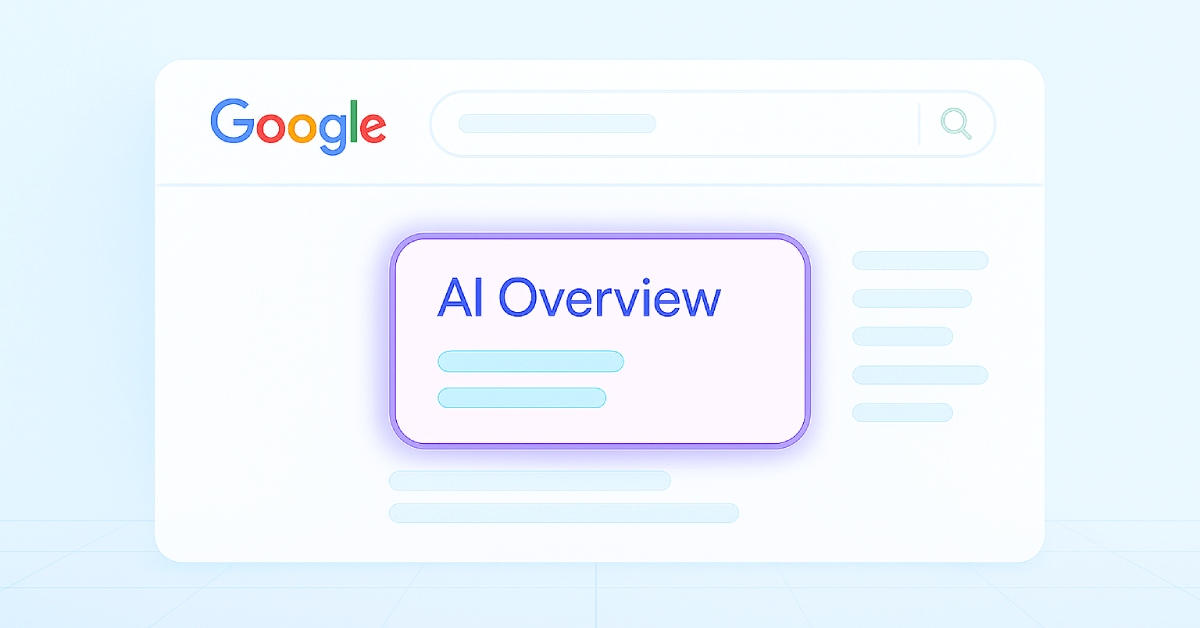
Przegląd AI to blok wygenerowanego tekstu, który Google umieszcza u góry strony wyników, nad dobrze znaną listą linków. Zamiast wskazywać stronę, która może zawierać odpowiedź na pytanie, przedstawia odpowiedź bezpośrednio, korzystając jednocześnie z kilku źródeł.
Nie pojawiają się przy każdym wyszukiwaniu. Google wyświetla je głównie w przypadku zapytań informacyjnych i eksploracyjnych — dotyczących tego, jak coś działa, która opcja pasuje do danej sytuacji lub jakie są różnice — a znacznie rzadziej przy zapytaniach nawigacyjnych lub jednoznacznie transakcyjnych.
Gdy się pojawia, znacząco zmienia układ strony. Dziesięć niebieskich linków nadal tam jest, ale teraz znajdują się pod podsumowaniem, które już podjęło próbę odpowiedzi na pytanie — a to zmienia wartość każdej pozycji na stronie.
Dlaczego Przeglądy AI mają znaczenie w 2026
Najprostszy powód to ograniczona przestrzeń. Przegląd AI może zająć większą część pierwszego ekranu, więc wynik organiczny, na którego zdobycie ciężko pracowałeś, może teraz znajdować się poniżej widocznej części strony w przypadku zapytania, dla którego wcześniej był pierwszą rzeczą widoczną dla użytkownika.
Bardziej subtelny powód jest taki, że niektóre wyszukiwania kończą się teraz w samym przeglądzie. Użytkownik, który otrzymał z podsumowania potrzebne informacje, nie ma powodu, by cokolwiek klikać, dlatego liczba wyświetleń może pozostać na stałym poziomie, podczas gdy liczba kliknięć spada dokładnie w przypadku tych zapytań informacyjnych, które wcześniej zamieniały czytelników w odwiedzających.
To sprawia, że warto mierzyć sam przegląd, a nie tylko pozycję poniżej niego. Dwie witryny zajmujące trzecią pozycję dla tego samego zapytania mogą mieć zupełnie różny tydzień — w zależności od tego, czy Google cytuje którąś z nich w znajdującym się powyżej bloku.
Bycie cytowanym w przeglądzie AI
Pod każdym podsumowaniem Google wymienia źródła, z których korzystało, a to właśnie do tych linków trafia pozostały ruch. Zdobycie miejsca na tej liście to odrębny rezultat od uzyskania pozycji w rankingu — i właśnie to mierzy narzędzie do sprawdzania przeglądów AI.
Te dwa elementy nie są ze sobą tak ściśle powiązane, jak można by się spodziewać. Strona może zajmować wysoką pozycję w wynikach organicznych i nigdy nie zostać przywołana w podsumowaniu wyświetlanym nad nią, podczas gdy strona znajdująca się znacznie niżej na pierwszej stronie może być cytowana wielokrotnie — dlatego sam raport pozycji nie pozwala stwierdzić, jak widoczna jest Twoja strona.
Cytowania mają również większą wagę przy każdym wystąpieniu niż pozycja. Wymienienie marki jako źródła sprawia, że pojawia się ona przed użytkownikiem w chwili, gdy otrzymuje on odpowiedź, a jest to inny rodzaj ekspozycji niż bycie czwartym linkiem na liście, do którego użytkownik może nigdy nie dotrzeć.
Co sprawia, że strona może zostać zacytowana
Nikt spoza Google nie zna zasad wyboru, ale wzorce widoczne na cytowanych stronach są na tyle spójne, że można na ich podstawie działać:
- Bezpośrednie odpowiadanie na konkretne pytanie, możliwie wysoko na stronie, zamiast stopniowego dochodzenia do odpowiedzi.
- Przejrzysta struktura — nagłówki, które zadają pytanie, na które odpowiada dana sekcja.
- Fakty przedstawione wprost, wraz z liczbami i datami, zamiast niejasnych charakterystyk.
- Dowody wiedzy eksperckiej: autorzy wymienieni z imienia i nazwiska, źródła oraz uzasadnienie, dlaczego można im wierzyć.
- Treści, które są rzeczywiście dostępne dla robotów indeksujących, a nie składane po stronie klienta.
- Aktualność tam, gdzie temat dynamicznie się zmienia, ponieważ podsumowania preferują bieżące źródła.
Jak czytać wyniki
Zacznij od porównania tej listy z wynikami organicznymi. Frazy, na które zajmujesz wysokie pozycje, ale które nie są cytowane, stanowią najoczywistsze szanse, ponieważ strona już dowiodła swojej trafności, a jedynie nie jest przywoływana.
Cytowania dotyczące terminów, których się nie spodziewasz, również zasługują na uwagę. Pokazują, którą część treści model uznaje za wartą zacytowania — często nie jest to fragment, w który włożyłeś najwięcej pracy.
Pusty wynik to informacja, a nie porażka. Uruchomienie narzędzia do sprawdzania AI Overviews dla domeny działającej na rynku transakcyjnym lub lokalnym często nie zwraca żadnych wyników — po prostu dlatego, że zapytania, na które domena się pozycjonuje, nie wywołują AI Overview. To fakt dotyczący rynku, a nie ocena witryny.
Jak działa to narzędzie do sprawdzania AI Overview
Narzędzie wyszukuje słowa kluczowe, dla których domena pojawia się jako cytowane źródło w przeglądach AI Google, uporządkowane według ruchu, jaki te słowa kluczowe prawdopodobnie generują.
Wyniki pochodzą z naszego indeksu, a nie z wyszukiwania na żywo. Przeglądy AI są zmienne — to samo zapytanie jednego dnia może wygenerować podsumowanie, a następnego już nie — dlatego należy traktować te dane jako obraz tego, gdzie jesteś cytowany, a nie jako gwarancję tego, co w danym momencie wyświetla dowolne wyszukiwanie.
Co dalej
Uzyskanie cytowania zależy od tego, czy model może dotrzeć do Twoich treści i je zrozumieć, dlatego narzędzie do sprawdzania wyników AI jest najbardziej przydatne wraz z kontrolami wyjaśniającymi jego rezultat. Potwierdź, że roboty AI nie są blokowane, korzystając z kontroli
Crawler AI, sprawdź, jaka część Twojej strony faktycznie renderuje się dla maszyn za pomocą narzędzia
Czytelność dla LLM, i porównaj to wszystko z posiadanymi już
pozycje organiczne.