Free llms.txt Generator

Build an llms.txt file for your website in minutes. Add your site details and the pages worth pointing at, then copy or download a correctly formatted file.

An llms.txt file sits at the root of your site, at /llms.txt, and hands AI assistants a curated map of it - the pages worth reading, with a line on each saying what it covers - rather than leaving them to find your content among the navigation and markup. It is a new standard proposed by Jeremy Howard of Answer.AI, written as simple markdown: your site name as the heading, then sections of annotated links. Fill in the fields below and this generator builds that file for you.

Site Details

These become the opening lines of the file, before any links - what the site is called and, in a sentence, what it is.

Used to turn relative links below into full URLs.
Becomes the blockquote directly under the title.

Secties

Group the pages you want to point at, one section per part of the site - your documentation, your blog, your product pages. Keep it selective: twenty well-described pages are far more useful than every URL you have.

Or add a common one:

Uitvoer

Your Generated llms.txt File:
Download llms.txt

SEO Audit Any Site in Seconds
+ Comprehensive SEO / GEO Tools for Every Function

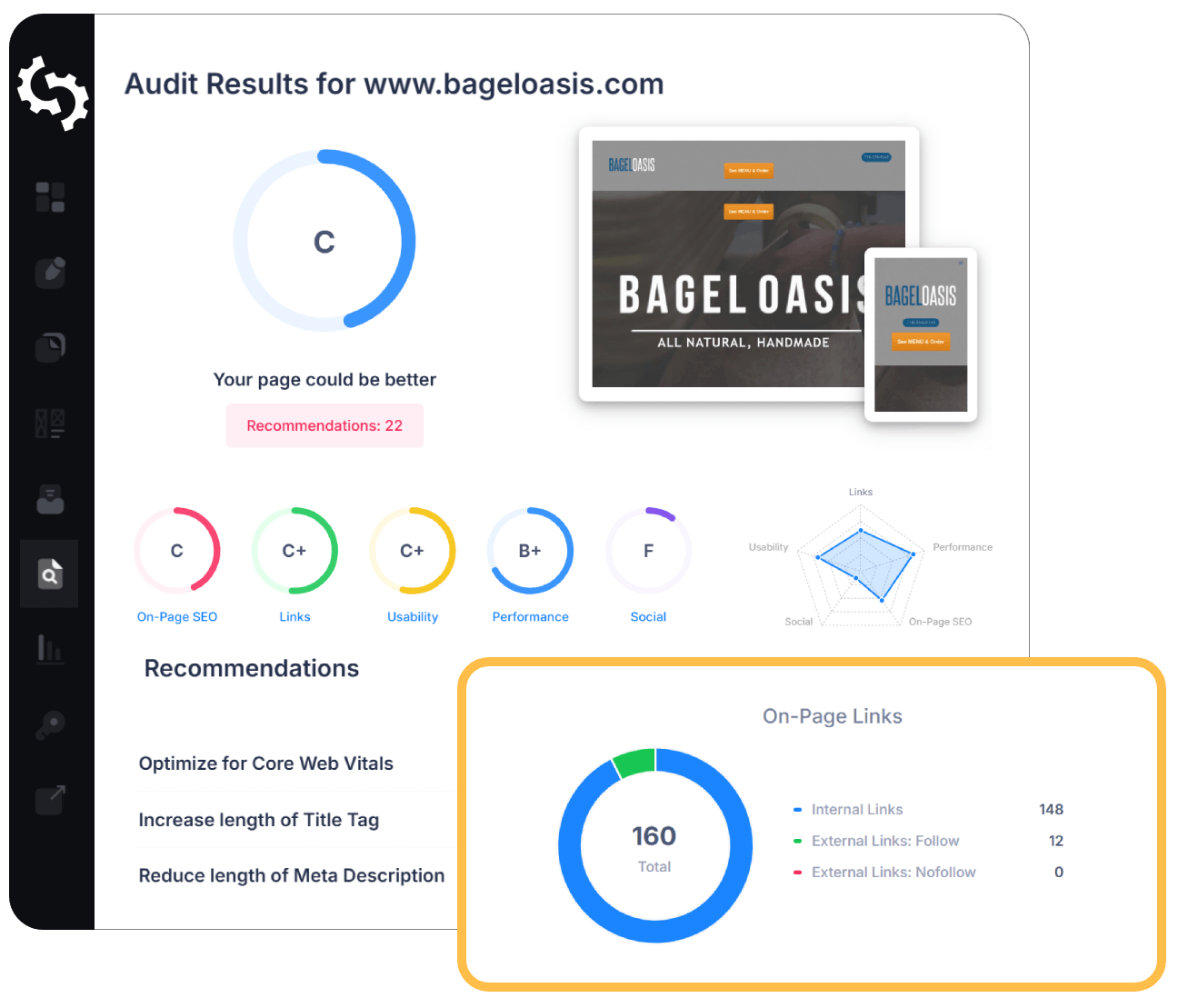
Run over 100 checks on your website across On-Page SEO, Usability, Performance, Social and Links. Now with GEO in every report. SEOptimer also offers keyword research, rank tracking, backlinks and a full site crawler.

About llms.txt

What is llms.txt?

An llms.txt file is a short markdown document at the root of your site, at /llms.txt, that points a language model at the pages worth reading and says in one line what each one covers. It was proposed by Jeremy Howard of Answer.AI in late 2024.
The problem it addresses is real. A model reading a modern web page gets navigation, cookie notices, related-post widgets and markup wrapped around a small amount of actual content, and it has a limited window to work with. A curated list of clean pages with descriptions is a far better starting point than a crawl of the whole site.
The format is deliberately plain: a title, an optional summary, then headed sections of annotated links. That is the whole specification, and the llms.txt generator above produces exactly that shape.

What the file looks like

  • An H1 with the site or project name. This is the only required line.
  • An optional blockquote summarising the site in a sentence.
  • Optional prose giving any context a reader needs first.
  • H2 sections, each a markdown list of links written as name, URL and a short description.
  • An optional section headed "Optional", for links that can be skipped when space is short.
A companion file, llms-full.txt, holds the full text of those pages inlined rather than linked. It is a bigger commitment to maintain and worth leaving until the short version is doing something for you.

A standard in the process of being adopted

llms.txt is new, and it is at the stage where publishers have moved first. Documentation sites took it up early, support has appeared across a growing list of frameworks and tools, and the number of sites publishing one climbs steadily.
The AI providers have not made public commitments about reading it yet, which is normal for a convention at this age - the same was true of XML sitemaps and of structured data before either became routine.
That makes it a sensible early move. It takes an afternoon to write, it costs nothing to keep, and being in place before support settles is worth more than waiting to be certain.

What makes a good one

The descriptions do the work. "Pricing" tells a model nothing it could not infer from the URL, whereas "Pricing tiers, what is included at each level, and how usage is counted" describes what is actually on the page and makes it selectable for a specific question.
Be selective as well. A file listing four hundred URLs is a sitemap with extra steps, and it defeats the purpose, which is to say which pages matter. Twenty well-described links beat the entire site.
Point at the cleanest version of each page. If you publish documentation in both a heavily styled and a plain markdown form, link the plain one.

Common mistakes

  • Dumping the whole sitemap in, which removes the curation that gives the file its value.
  • Descriptions that restate the link text instead of describing the page.
  • Relative paths, which are ambiguous once the file is read anywhere but on your site.
  • Writing it once and never revisiting it as the site changes.
  • Treating it as a substitute for the page content being good, which it is not.

How this relates to AI search

Writing one is a useful exercise in itself, because it forces you to decide which twenty pages actually represent the site. That is the same question that decides which of your pages gets cited in an AI answer.
It works best alongside the rest of the groundwork: clear headings, content that answers a question in its first paragraph, structured data, and pages that are fast and reachable. A curated index helps a system that already wants to read you, and those other things are what make it want to.
Do both and they reinforce each other.

Using the llms.txt generator

Enter your site name, URL and a one-line summary, then add a section for each part of the site and the links worth including. Relative paths are expanded against your site URL, so you can type /docs and get the full address.
The output is editable before you copy or download it, which is where the descriptions usually get their final pass. Save the result as llms.txt in the root of your site so it resolves at yourdomain.com/llms.txt.

Where to go next

The file is an index, so the pages behind it are what matter. Check those pages are reachable with the robots.txt checker, confirm your XML sitemap is complete and current, and make sure the pages themselves carry proper schema markup.

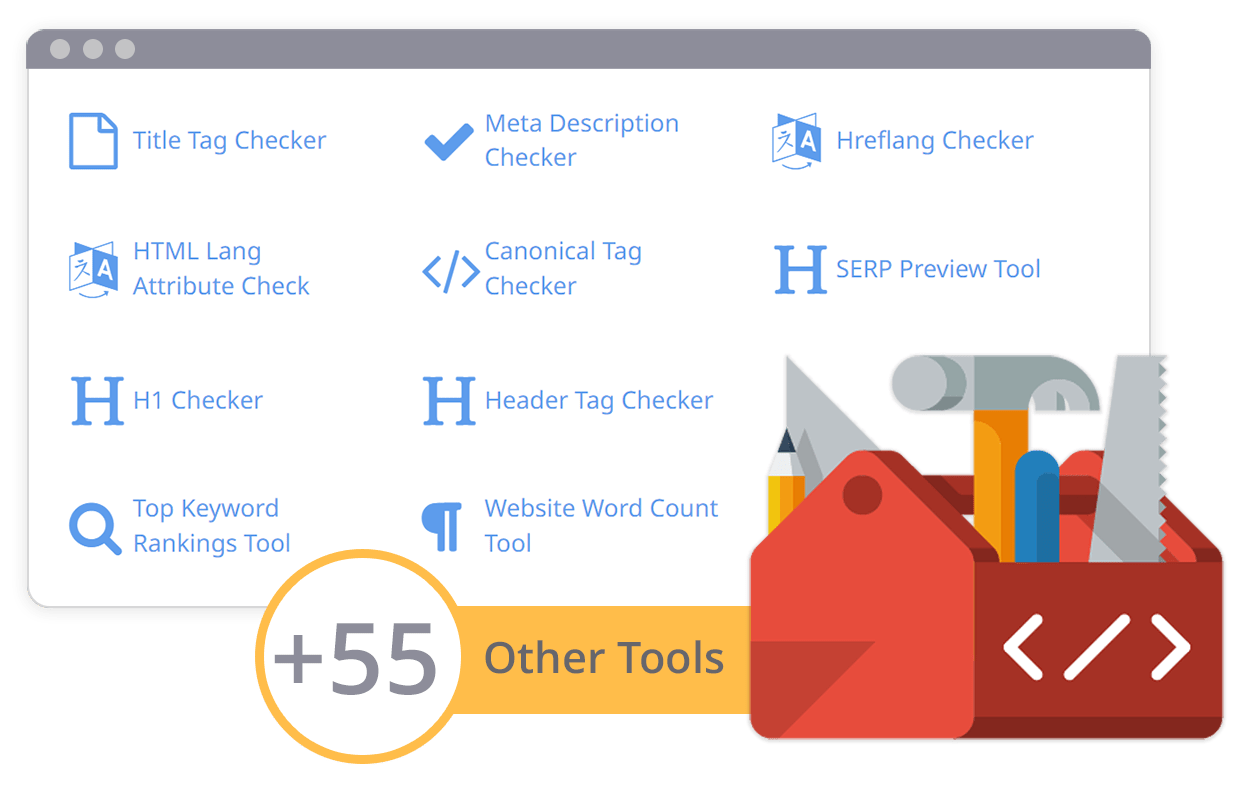
Comprehensive SEO Toolbox with over 55 Tools

Check Titles, Meta Descriptions, Headings, Schema, Core Web Vitals, SSL and Robots.txt. Generate Meta Tags, Sitemaps and .htaccess Rules, minify CSS, JS and HTML, and draft copy with our AI Writing Tools - instantly and for free.

Further Reading

Meer Zien
Wat is LLMs.txt en Zal het Uw AI Vermeldingen Helpen?
Belangrijkste [punten]: LLMs.txt is een voorgestelde nieuwe webstandaard die grote taalmodellen helpt om de meest waardevolle inho...
LLM Optimization: How to Get Cited in AI Answers
LLM optimization can help increase the chances of your website being mentioned or cited in answers generated by ChatGPT, Gemini, Claude, and...
LLM SEO: Hoe geciteerd te worden door ChatGPT, Gemini en Claude
Belangrijkste punten LLM SEO heeft als doel om jouw merk de bron te maken die AI gebruikt om vragen te beantwoorden. AI kan alleen c...
How to Structure Content to Get Cited in AI Answers
How to Structure Content for AI Citations   Put the main point at the top of each section. Make headings describe the exact quest...
Google AI Overviews: A Deep Dive into How Search is Changing
Google AI Overviews is one of the latest announcements and product updates from the search engine giant this year.   Google held its a...