Googlebot-simulator – Se en side, som Googlebot ser den
Se enhver side, som Googlebot ser den. SEOptimers gratis Googlebot-simulator fjerner designet og viser den titel, overskrifter, læsbare tekst og links, som en crawler står tilbage med.
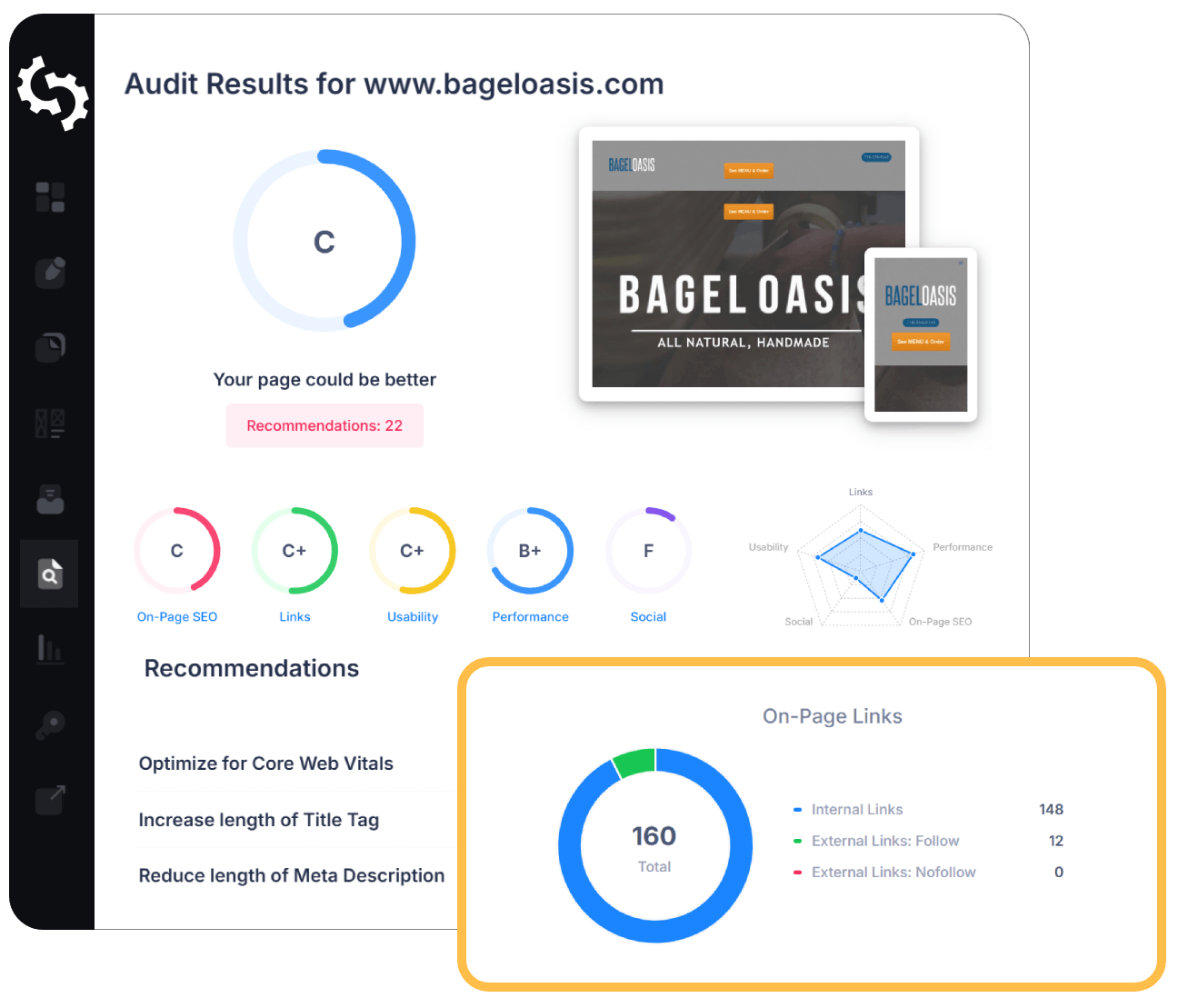
SEO-audit af ethvert website på få sekunder
+ Omfattende SEO-/GEO-værktøjer til alle funktioner
Kør over 100 kontroller af dit website inden for on-page SEO, brugervenlighed, ydeevne, sociale medier og links. Nu med GEO i alle rapporter. SEOptimer tilbyder også søgeordsanalyse, rangsporing, backlinkanalyse og en komplet webcrawler.

Om Googlebots crawling
Hvad ser Googlebot egentlig?
Googlebot er det program, der henter sider, så Google kan indeksere dem. Det oplever ikke en side på samme måde som en besøgende – der er intet layout, ingen farver, ingen typografi og intet, der kun sker, når nogen ruller eller klikker.
Det, den beholder, er teksten og strukturen omkring den: titlen, beskrivelsen, overskrifterne, de læsbare ord og de links, den kan følge. Alt andet er stillads, som den kasserer på vejen dertil.
Det er netop det, en Googlebot-simulator er beregnet til. Din side kan se færdig ud og stadig være næsten tom, når designet fjernes, og det er umuligt at opdage ved blot at se på den.
Rendering, og hvorfor det er vigtigt her
Googlebot har ikke været en almindelig teksthenter i årevis. Den indlæser siden i en ægte browsermotor først, så indhold, der bygges med JavaScript, bliver som regel set – den moderne fejl er mere subtil end “botten kan ikke læse JavaScript”.
Dette værktøj gengiver siden på samme måde, før det udtrækker noget, så det, du ser nedenfor, er siden, efter at dens scripts er kørt. Hvis der mangler noget her, skyldes det ikke en forsinkelse i gengivelsen – det findes reelt ikke i dokumentet.
Det, der stadig forsvinder, er værd at være opmærksom på: indhold bag et klik, tekst, der er indlejret i billeder, alt, der kun indlæses, når et element ruller ind i visningen, samt alt, som et samtykkebanner blokerer, indtil det afvises.
Sådan læser du outputtet
Der er fem ting, som det er værd at kontrollere i panelerne nedenfor:
- Om titlen og beskrivelsen er dem, du havde til hensigt at bruge, i stedet for en standardskabelon.
- Om overskriftsstrukturen i sig selv fungerer som et meningsfuldt resumé af siden.
- Om brødteksten indeholder dit egentlige budskab eller primært består af navigation og standardtekst.
- Om de hyppigst forekommende ord handler om sidens emne – eller om ordene i din menu.
- Om ordantallet cirka svarer til det, du ville forvente ud fra et kig på siden.
Den fjerde snyder folk mere end nogen af de andre. På en side med sparsomt indhold er navigationen ofte den tekst, der gentages mest på siden, og det er præcis det, en crawler tillægger vægt.
Hvorfor denne visning er vigtig i 2026
Alt, hvad der følger efter indekseringen, bygger på denne visning. Placeringer, uddrag og de kilder, som AI-assistenter trækker på, starter alle med den tekst, en crawler formåede at udtrække, så alt, der mangler her, mangler i dem alle.
AI-svar har skærpet kravene, fordi de i højere grad end tidligere bygger på maskinlæsbar struktur frem for en rangeret liste. En tydelig oversigtsstruktur med overskrifter og selvstændige afsnit er nemmere at citere end det samme indhold spredt ud over et interaktivt layout.
Det betyder ikke, at man bør vælge simple sider. Det betyder, at man skal sikre, at den version, en maskine læser, stadig indeholder substansen, uanset hvordan den version, en person læser, præsenteres.
Hvad dette værktøj kontrollerer
Indtast en URL, så henter og gengiver værktøjet siden og rapporterer, hvad en crawler står tilbage med: titlen, metabeskrivelsen, den kanoniske URL og det angivne sprog; overskriftsstrukturen; den læsbare tekst; de hyppigst forekommende ord; samt antallet af interne og eksterne links, den fandt.
Tekstpanelet afkortes på meget lange sider, og dette gælder én URL i stedet for en gennemgang af hele webstedet. Det er en simulering af, hvad Googlebot udtrækker, ikke en registrering af, hvad Google faktisk har indekseret.
Hvad kan du gøre som det næste
At kunne se siden er den ene halvdel; at have tilladelse til at se den er den anden. Bekræft med testen crawlbarhed, at intet blokerer en crawler, se hvor meget af siden der overlever rendering med renderet indhold-kontrollen, og sørg for, at title-tag gør sit arbejde.
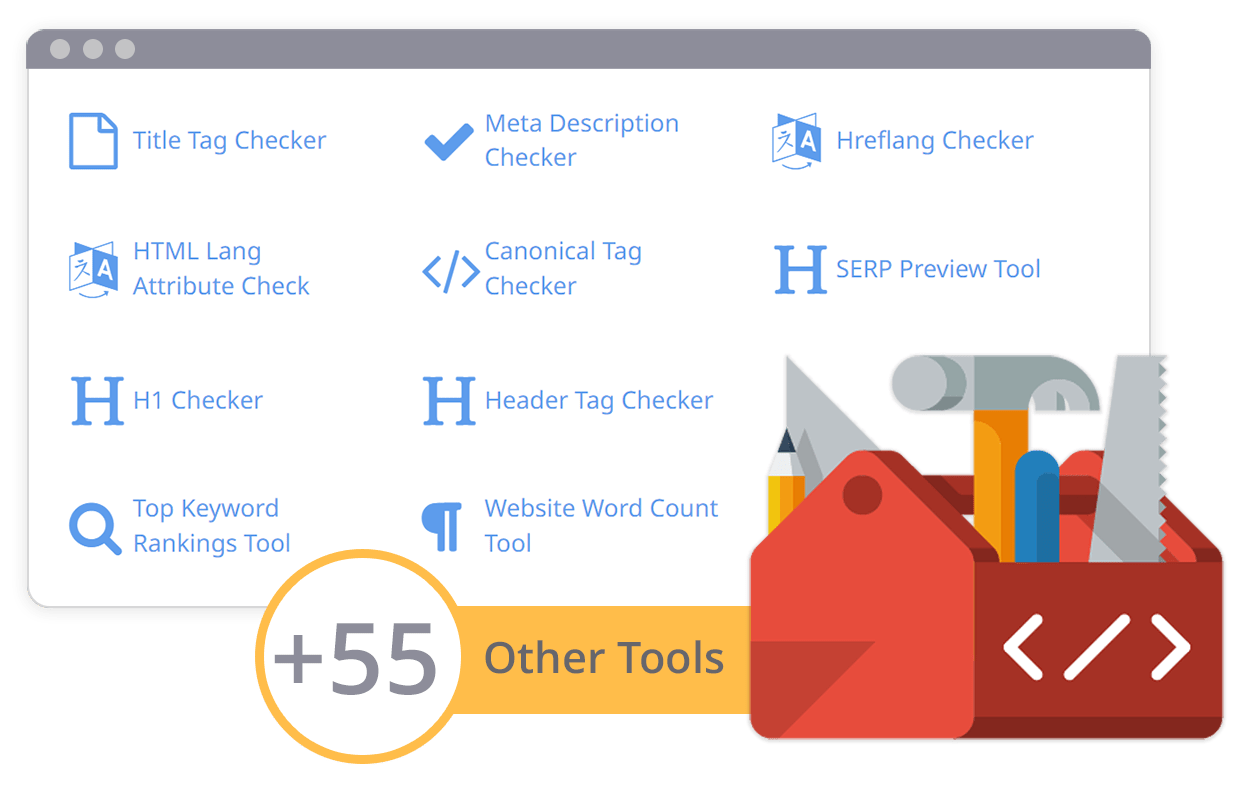
Omfattende SEO-værktøjskasse med over 55 værktøjer
Tjek sidetitler, metabeskrivelser, overskrifter, Schema, Core Web Vitals, SSL og robots.txt. Generér metatags, sitemaps og .htaccess-regler, minificér CSS, JS og HTML, og udarbejd tekster med vores AI-skriveværktøjer – øjeblikkeligt og gratis.
Yderligere læsning
Se Mere
What is a Google Crawler?
You know when you use Google to search for a service, or find information? And once the page loads there is always one website at the very t...
What is Rendered Content and How it Affects AI Crawlers?
Key Takeaway
Rendered content refers to the version of a webpage that a browser displays after executing HTML, CSS, and JavaScript....

AI Crawlability: Should You Let AI Bots Access Your Site and How Can You Check?
As more people use ChatGPT, Claude, Perplexity, and Google’s AI search features, AI crawlability is becoming increasingly important for webs...
How to Structure Content to Get Cited in AI Answers
How to Structure Content for AI Citations
Put the main point at the top of each section.
Make headings describe the exact quest...
On-Page SEO: Komplet Guide + Tjekliste for 2026
Hvad er On-Page SEO?
On-page SEO er processen med at optimere indholdet og elementerne på en webside, så søgemaskiner bedre kan forstå, h...
Crawl Depth in SEO: What is It & How to Improve It?
Crawl depth influences how efficiently Google can index your content.
Googlebot has limited time and server resources. Therefore, th...