Simulador do Googlebot — Veja uma página como o Googlebot
Veja qualquer página da forma como o Googlebot a vê. O simulador gratuito do Googlebot da SEOptimer remove o design e mostra o título, os cabeçalhos, o texto legível e os links que ficam disponíveis para um crawler.
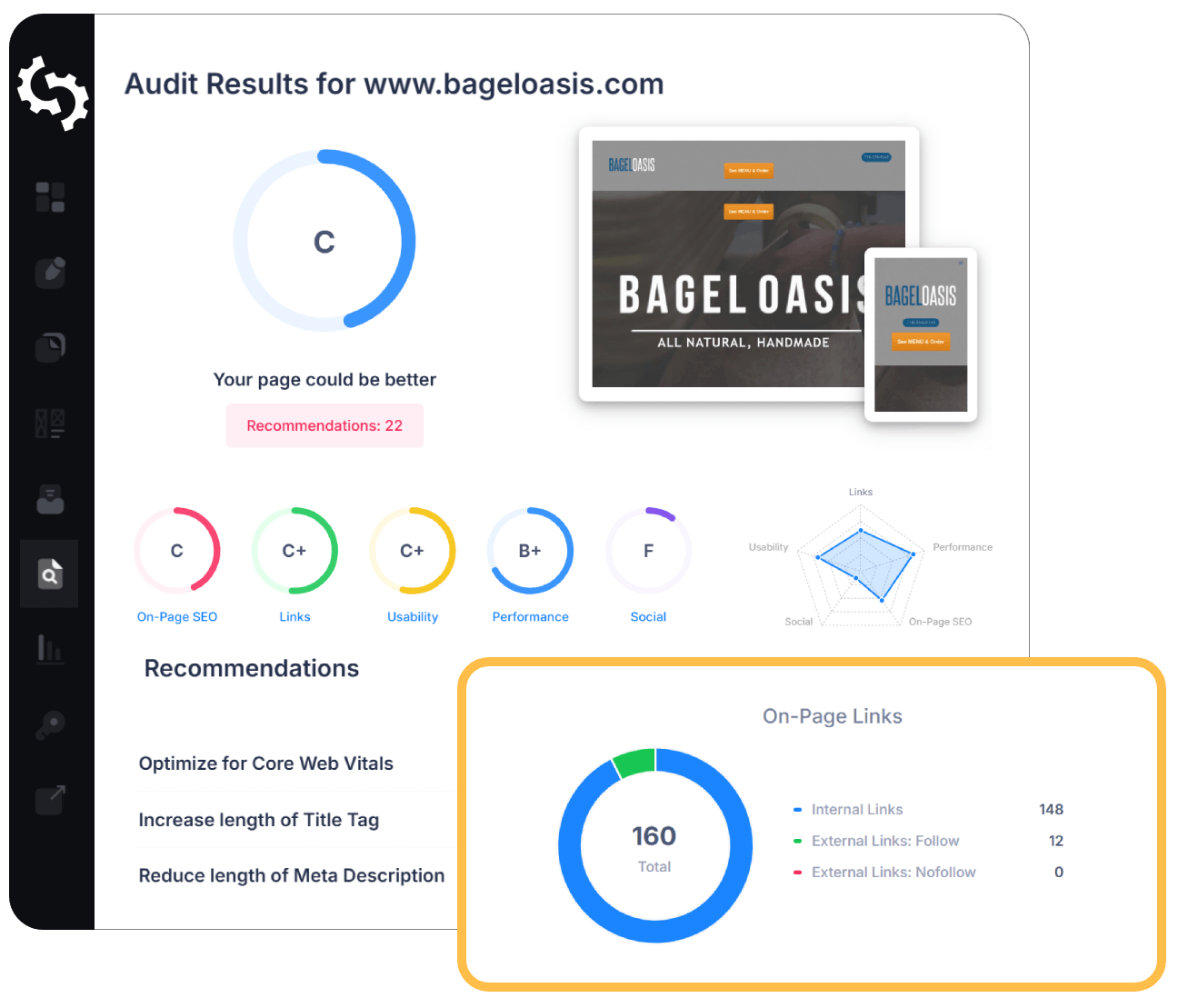
Audite qualquer site em segundos
+ Ferramentas abrangentes de SEO / GEO para todas as funções
Execute mais de 100 verificações no seu site em SEO On-Page, Usabilidade, Desempenho, Redes sociais e Ligações. Agora com GEO em todos os relatórios. O SEOptimer também oferece pesquisa de palavras-chave, monitorização de posições, backlinks e um crawler completo do site.

Sobre o rastreio do Googlebot
O que vê realmente o Googlebot?
O Googlebot é o programa que obtém páginas para que o Google as possa indexar. Não experiencia uma página da mesma forma que um visitante — não há layout, cores, tipografia, nem nada que só aconteça quando alguém percorre a página ou clica.
O que conserva é o texto e a estrutura que o envolve: o título, a descrição, os cabeçalhos, as palavras legíveis e as ligações que pode seguir. Tudo o resto é estrutura de suporte que descarta pelo caminho até esses elementos.
É precisamente para colmatar essa lacuna que serve um simulador do Googlebot. A sua página pode parecer concluída e, ainda assim, estar praticamente vazia quando o design é retirado, e não há forma de perceber isso apenas ao observá-la.
Renderização e a sua importância neste contexto
O Googlebot deixou de ser um simples recetor de texto há anos. Primeiro, executa a página num motor de navegador real, pelo que o conteúdo criado com JavaScript é geralmente detetado — o problema moderno é mais subtil do que «o bot não consegue ler JavaScript».
Esta ferramenta apresenta a página da mesma forma antes de extrair qualquer conteúdo, pelo que o que vê abaixo é a página depois de os respetivos scripts terem sido executados. Se faltar alguma coisa aqui, não se trata de um atraso na apresentação — é algo que realmente não está no documento.
Os elementos que continuam a desaparecer são importantes: conteúdo oculto atrás de um clique, texto incorporado em imagens, qualquer conteúdo carregado apenas quando um elemento entra no campo de visão e qualquer conteúdo que um banner de consentimento bloqueie até ser dispensado.
Como ler o resultado
Há cinco aspetos que vale a pena verificar nos painéis abaixo:
- Se o título e a descrição são os que pretendia, em vez dos predefinidos pelo modelo.
- Se a estrutura dos cabeçalhos constitui, por si só, um resumo coerente da página.
- Se o texto simples contém o seu argumento propriamente dito ou é composto sobretudo por navegação e texto padrão.
- Se as palavras mais frequentes dizem respeito ao tema da página — ou são as palavras do seu menu.
- Se o número de palavras corresponde aproximadamente ao que esperaria ao olhar para a página.
Essa quarta situação apanha as pessoas desprevenidas mais do que qualquer uma das outras. Numa página com pouco conteúdo, a navegação é muitas vezes o texto mais repetido, e é precisamente a esse texto que um crawler atribui peso.
Porque é que esta perspetiva é importante em 2026
Tudo o que acontece depois da indexação assenta nesta perspetiva. As classificações, os snippets e as fontes utilizadas pelos assistentes de IA começam todos pelo texto que um crawler conseguiu extrair, pelo que tudo o que estiver ausente aqui estará ausente de todos eles.
As respostas de IA elevaram a fasquia, porque dependem mais fortemente de uma estrutura legível por máquinas do que alguma vez uma lista classificada dependeu. Uma hierarquia clara de títulos e parágrafos autónomos são mais fáceis de citar do que o mesmo conteúdo distribuído por um layout interativo.
Nada disso é um argumento a favor de páginas simples. É um argumento para garantir que a versão lida por uma máquina ainda contém a substância, independentemente da forma como é apresentada a versão lida por uma pessoa.
O que esta ferramenta verifica
Introduza um URL e a ferramenta obtém e apresenta a página, relatando depois aquilo que um rastreador consegue extrair: o título, a meta descrição, o URL canónico e o idioma declarado; a estrutura de cabeçalhos; o texto legível; as palavras mais frequentes; e o número de ligações internas e externas encontradas.
O painel de texto é truncado em páginas muito longas, e isto diz respeito a um único URL, não a um rastreio do site. Trata-se de uma simulação do que o Googlebot extrai, não de um registo daquilo que o Google indexou efetivamente.
Próximos passos
Ver a página é uma coisa; ter autorização para a ver é outra. Confirme que nada bloqueia um crawler com o teste de capacidade de rastreamento, verifique quanto da página permanece após a renderização com o verificador de conteúdo renderizado e certifique-se de que o tag de título está a cumprir a sua função.
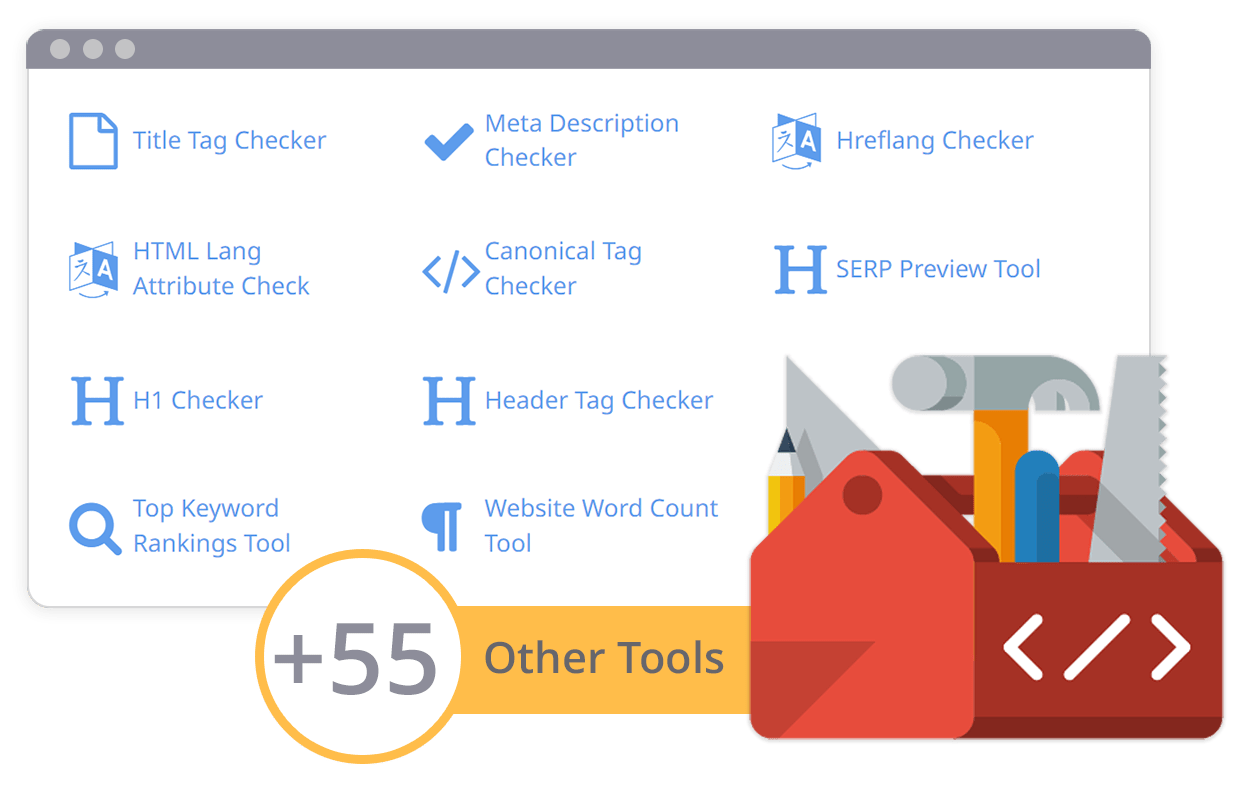
Caixa de ferramentas abrangente de SEO com mais de 55 ferramentas
Verifique Títulos, Meta descrições, Cabeçalhos, Schema, Core Web Vitals, SSL e Robots.txt. Gere Meta tags, Sitemaps e regras .htaccess, minimize CSS, JS e HTML e crie textos com as nossas ferramentas de escrita com IA — instantaneamente e de forma gratuita.
Leituras adicionais
Ver Mais
What is a Google Crawler?
You know when you use Google to search for a service, or find information? And once the page loads there is always one website at the very t...

What is Rendered Content and How it Affects AI Crawlers?
Key Takeaway
Rendered content refers to the version of a webpage that a browser displays after executing HTML, CSS, and JavaScript....

AI Crawlability: Should You Let AI Bots Access Your Site and How Can You Check?
As more people use ChatGPT, Claude, Perplexity, and Google’s AI search features, AI crawlability is becoming increasingly important for webs...
How to Structure Content to Get Cited in AI Answers
How to Structure Content for AI Citations
Put the main point at the top of each section.
Make headings describe the exact quest...

On-Page SEO: Complete Guide + Checklist for 2026
What is On-Page SEO?
On-page SEO is the process of optimizing the content and elements on a webpage so that search engines can bette...
Crawl Depth in SEO: What is It & How to Improve It?
Crawl depth influences how efficiently Google can index your content.
Googlebot has limited time and server resources. Therefore, th...