Webpage Javascript Error Checking Tool
SEOptimer’s Webpage Javascript Error Checking Tool scans your webpage for JavaScript errors caused by coding issues, version mismatches, or loading problems.

SEO Audit Any Site in Seconds
+ Comprehensive SEO / GEO Tools for Every Function
Run over 100 checks on your website across On-Page SEO, Usability, Performance, Social and Links. Now with GEO in every report. SEOptimer also offers keyword research, rank tracking, backlinks and a full site crawler.

About JavaScript Errors
What is a JavaScript error?
A JavaScript error is a script failing while the page runs. The browser reports it to the console and, crucially, stops executing that script, so everything after the point of failure never happens.
Nothing is announced to the visitor. A form that will not submit, a menu that will not open, a filter that does nothing, or content that never appears frequently looks like a design choice rather than a fault.
That silence is why a JavaScript error checker is worth running deliberately. Errors do not appear in analytics, do not trigger alerts, and are invisible unless someone opens the console.
Do JavaScript errors still matter in 2026?
They matter more as sites depend more heavily on scripts. When navigation, search, filtering or checkout are script-driven, a single error makes a page not merely degraded but unusable.
They are also frequently environmental, which is what makes them so persistent. A third-party script that fails only for visitors with an ad blocker, only on one browser, or only when a consent banner is declined will never fail during testing.
A meaningful share of visitors run an ad blocker, so an error triggered by a blocked script is not an edge case. It is a segment.
How JavaScript errors relate to AI search
If your content is rendered by JavaScript, an error means the content does not exist for anything reading the page. The crawler receives the shell and nothing inside it.
Not every crawler executes JavaScript, and those that do give up quickly. Serving meaningful content in the initial HTML is the reliable answer; a script error then degrades an experience rather than erasing a page.
That is the difference worth engineering for. With content in the HTML, a broken script costs you a feature. Without it, a broken script costs you the page.
Where errors usually come from
- Third-party scripts blocked by an ad blocker or a consent tool.
- Code assuming an element exists on every page when it only exists on some.
- Race conditions where a script runs before what it depends on has loaded.
- Browser differences, particularly on older mobile devices.
- Broken or moved API endpoints that the page still calls.
- Minification with name mangling applied to code that references names dynamically.
JavaScript best practices
- Serve the important content in the HTML rather than assembling it client-side.
- Monitor errors from real visitors, not just your own browser.
- Fail gracefully when a third-party script is blocked or unavailable.
- Test with an ad blocker enabled and with consent declined.
- Publish source maps so production errors are readable.
- Treat console errors as bugs rather than background noise.
What this tool checks
The tool loads the page in a real browser and counts JavaScript errors reported to the console, passing on zero.
It captures errors during the initial load, so faults triggered by interaction afterwards, such as submitting a form or opening a menu, will not appear here. A clean result is a good sign rather than a guarantee.
Where to go next
Script problems usually travel with script weight. Check how much JavaScript the page loads with the webpage file size and page request tools, and if you are shipping unminified code, the JavaScript minifier is a reasonable place to start.
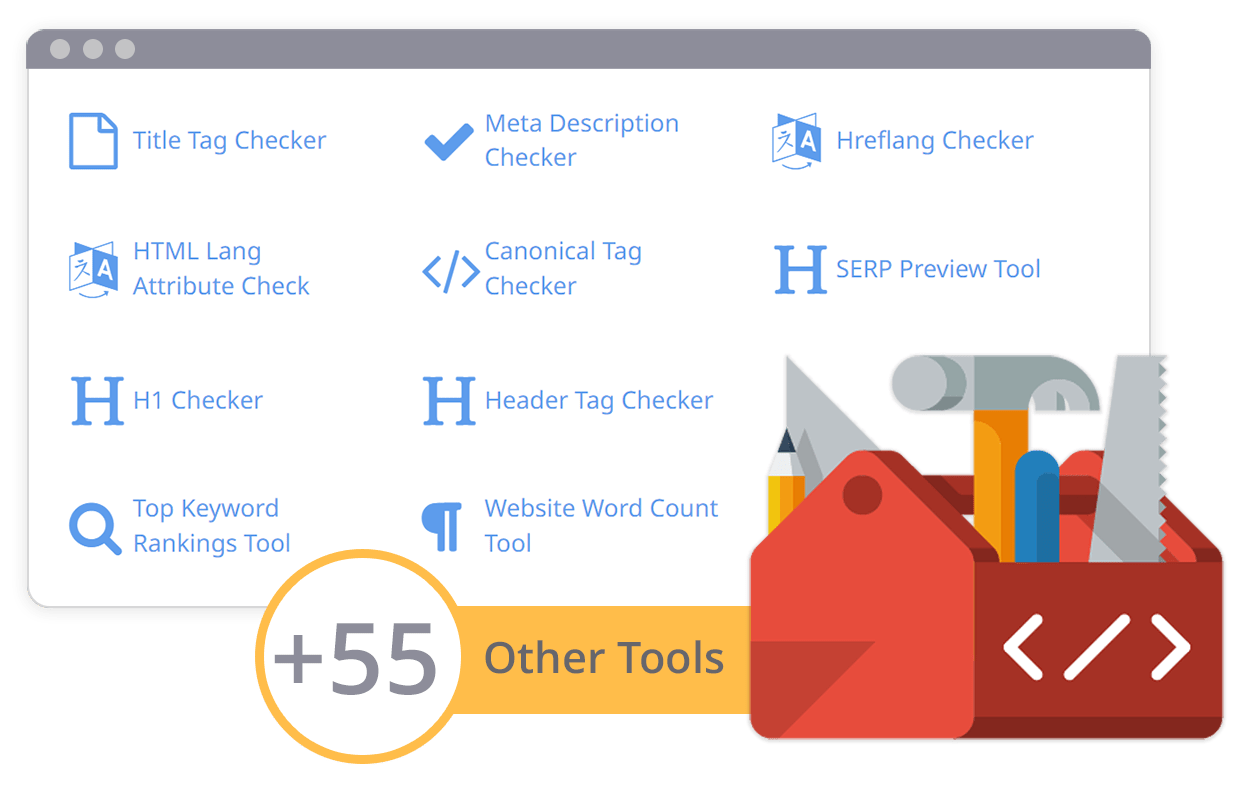
Comprehensive SEO Toolbox with over 55 Tools
Check Titles, Meta Descriptions, Headings, Schema, Core Web Vitals, SSL and Robots.txt. Generate Meta Tags, Sitemaps and .htaccess Rules, minify CSS, JS and HTML, and draft copy with our AI Writing Tools - instantly and for free.
Further Reading
See More
What is Rendered Content and How it Affects AI Crawlers?
Key Takeaway
Rendered content refers to the version of a webpage that a browser displays after executing HTML, CSS, and JavaScript....