AI Topic Generator
Struggling to come up with content ideas? Our AI Topic Generator creates fresh, relevant topics for blogs, videos, and more based on your brand, business, or website description.
Input
Output
Generated content:
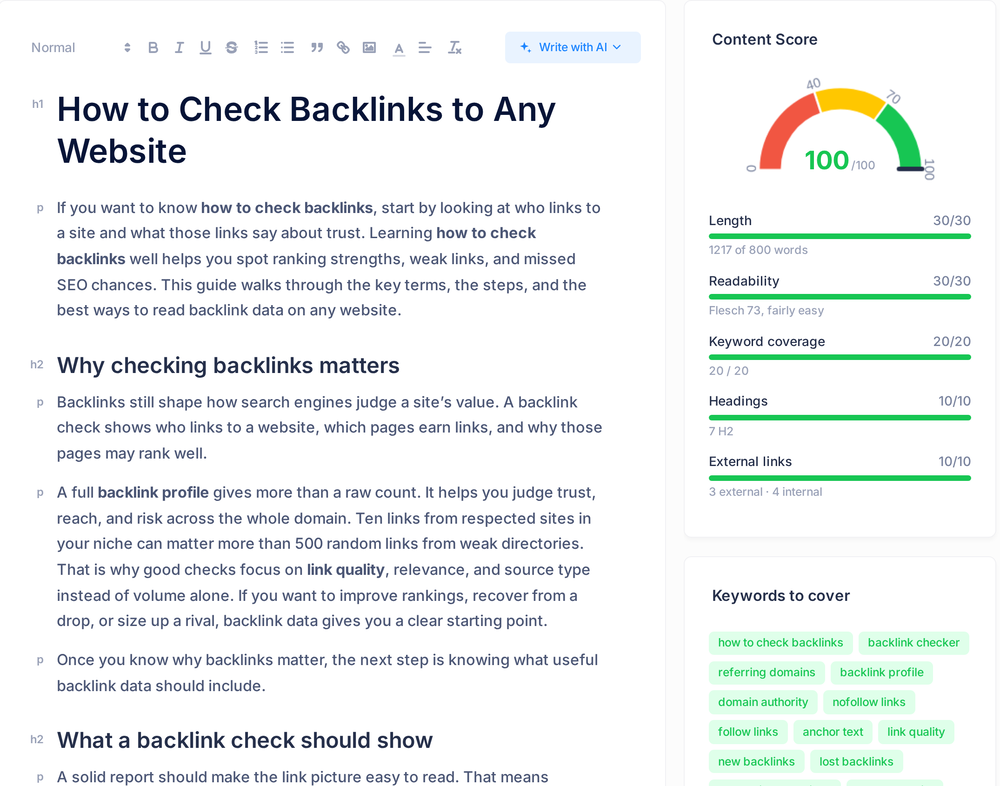
Write SEO Optimized Articles Instantly with AI Writer
AI Writer researches the pages ranking for your target keyword, instantly writes a full article and scores it for keywords, readability, links and length. Create the best content possible with the highest ranking potential with our proprietary algorithms.

About Choosing Content Topics
What makes a good content topic?
A good topic sits where three things overlap: something people are actually looking for, something you know more about than most, and something connected to what you sell. Miss any one and the piece struggles.
Topics that fail the first test get written and never read. Topics that fail the second produce the average article on the subject. Topics that fail the third attract an audience with no reason to become customers.
Most content plans over-index on the first, because search volume is the only one of the three that comes with a number attached.
Generic topics are also the ones most completely absorbed by AI answers. A question answerable in three sentences from common knowledge will be answered that way, and the page that took eight hundred words to do the same gets no visit. What survives is content carrying original data, first-hand experience or a genuinely contested position, which makes the question not only what people search for but what people search for that you can answer better than a summary.
Where good topics come from
- Questions customers ask repeatedly, which are proven demand rather than estimated demand.
- Things you have learned the hard way, which nobody else can write.
- Gaps in what already ranks, where the existing answers are thin or outdated.
- Your own data, which is the most defensible content anyone can publish.
- Adjacent problems your customers have before they need you.
- Subjects where you disagree with the consensus and can say why.
Common mistakes
- Choosing by search volume alone, which reliably produces the hardest topics to win.
- Writing the same article everyone else has, because the keyword tool suggested it.
- Topics with no connection to what you sell, generating traffic that never converts.
- Filling a publishing schedule rather than answering a question.
- Ignoring what you already rank for, where the cheapest gains usually sit.
Where an AI topic generator helps, and where it does not
It is good at breaking a blank plan into options. An AI topic generator will produce more angles on your subject than you would list unaided, which is useful when a content calendar has stalled.
What it cannot assess is any of the three tests above. It does not know your expertise, your customers, or what already ranks, so every suggestion needs judging against those before it enters a plan.
Expect the list to skew conventional. The interesting topics are usually the ones you add after reading it, prompted by noticing what is missing.
Using the AI topic generator
Describe what your business, blog or brand is about and the tool proposes topics. The more specific the description, including who you serve and what you sell, the less generic the output.
Then filter ruthlessly. Keep only the topics you can answer better than the existing results, and for each one note what you will include that nobody else can.
Where to go next
A topic becomes a plan, then a draft. Structure it with the AI outline generator generator, write it with the AI blog post generator tool, and check what your site already ranks for with the top organic keyword rankings check before committing to anything new.
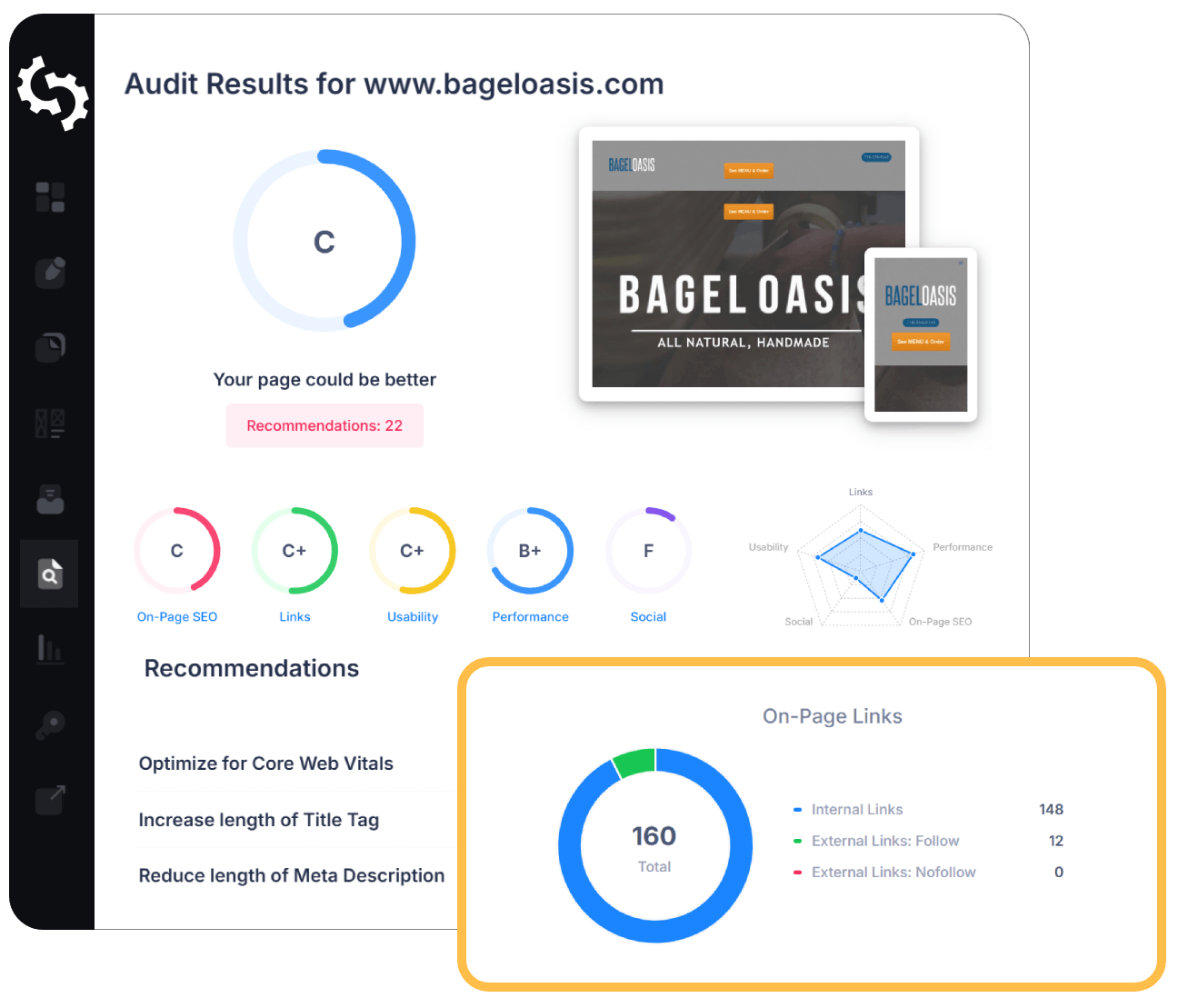
SEO Audit Any Site in Seconds
+ Comprehensive SEO / GEO Tools for Every Function
Run over 100 checks on your website across On-Page SEO, Usability, Performance, Social and Links. Now with GEO in every report. SEOptimer also offers keyword research, rank tracking, backlinks and a full site crawler.
Further Reading
See More
SEO Copywriting Checklist for Higher Ranking Content
Following an SEO copywriting checklist is quite important if you want to improve your website’s search engine visibility and outrank your co...

9 Proven Ways to Find SEO Content Ideas for Any Website
Are you struggling to come up with fresh and effective SEO content ideas to boost your website's rankings?
Finding the right topics...

How to Do Content Research for SEO (with Tips from Marketers)
In a world where information is abundant and attention spans are short, it's crucial to master the art of effective content research. Whethe...

How to Create Great Content Briefs [with Example & Template]
Key Takeaways
Content briefs guide writers with clear instructions on objectives, keywords, and structure.
Standardized brief...

5 Key Reasons Why Keyword Research is Important for SEO
Is keyword research still important for SEO? The answer to that question is a resounding yes!
Keyword research is the foundation o...