AI Outline Generator
Generate a complete blog post outline in seconds with our AI Outline Generator. Just enter your topic and target keywords to get a structured, SEO-friendly outline tailored to your tone and audience.
Input
Output
Generated content:
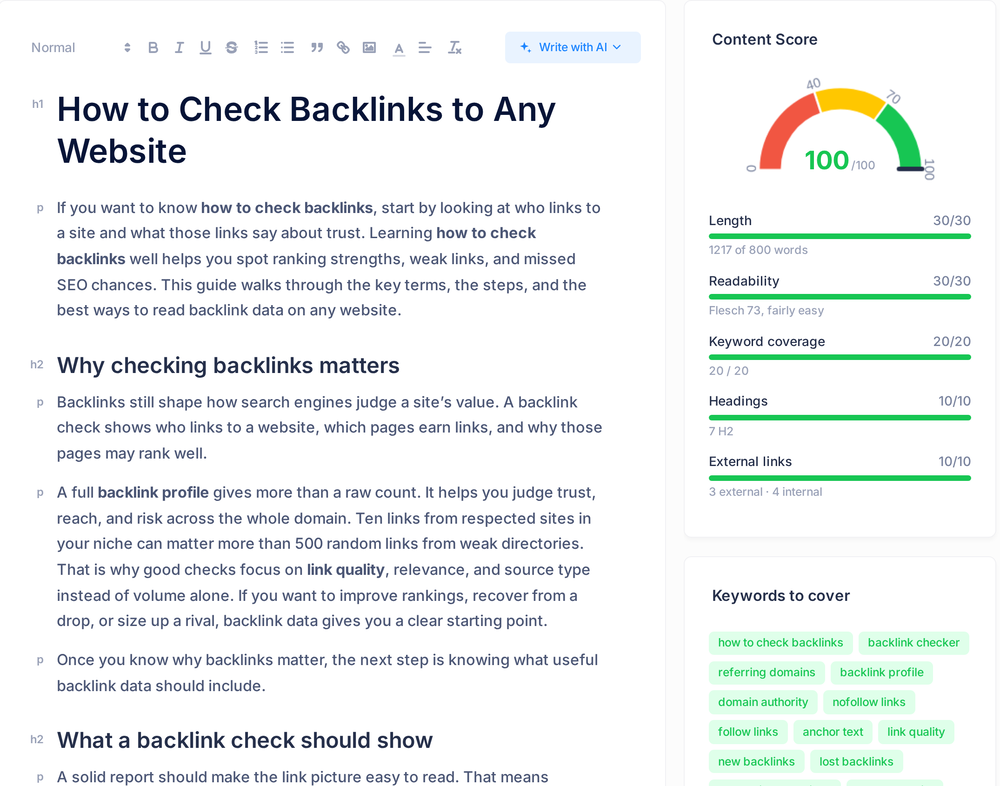
Write SEO Optimized Articles Instantly with AI Writer
AI Writer researches the pages ranking for your target keyword, instantly writes a full article and scores it for keywords, readability, links and length. Create the best content possible with the highest ranking potential with our proprietary algorithms.

About Content Outlines
What makes a good outline?
A good outline is an argument in order, not a list of topics. Each heading should advance something, and reading the headings in sequence should tell you what the finished piece will say.
That is the test worth applying before writing a word. If the outline reads as a set of subject areas rather than a progression, the piece will read the same way, and no amount of good prose fixes a structure that goes nowhere.
Outlining is also where the expensive mistakes get caught cheaply. Reordering a heading takes seconds; reordering three thousand written words takes an afternoon and usually does not happen.
Sections standing on their own are also the ones that can be quoted or linked to directly, and that is decided here rather than later. An outline copied from the current top result guarantees the finished piece adds nothing to what already exists.
What to include in an outline
- The question the piece answers, written down before anything else.
- Headings phrased as claims or questions rather than topic labels.
- A note under each of what evidence or example it needs.
- The order, chosen deliberately rather than inherited from how you researched.
- What you are leaving out, so scope does not creep while writing.
- Where the piece links out, internally and externally.
Common mistakes
- Outlining the subject rather than the argument, producing an encyclopaedia entry.
- Copying the heading structure of whatever currently ranks, which guarantees sameness.
- Too many sections, each too thin to justify a heading.
- No conclusion planned, so the piece stops rather than ends.
- Skipping the outline entirely on the grounds that the topic is simple.
Where an AI outline generator helps, and where it does not
It is genuinely useful for coverage. An AI outline generator will list the angles a topic conventionally includes, which is a reasonable checklist to work against and a fast way to spot what you were about to omit.
Conventional is also its limit. Because it produces the standard shape of a topic, following it exactly produces the standard piece, which is the one nobody needs another of.
The productive use is to generate the conventional outline, then deliberately depart from it wherever you have something the convention does not cover.
Using the AI outline generator
Enter your topic and the tool proposes a structure. Giving it an angle rather than a subject produces something closer to an argument and further from a table of contents.
Then edit hard: cut sections you have nothing original to say about, reorder so the piece builds, and add the one section only you could write. That section is usually the reason the piece is worth publishing.
Where to go next
An outline is the plan for a draft. Write it with the AI blog post generator tool, find the angle first with the AI topic generator, and check the finished structure with the header tags check.
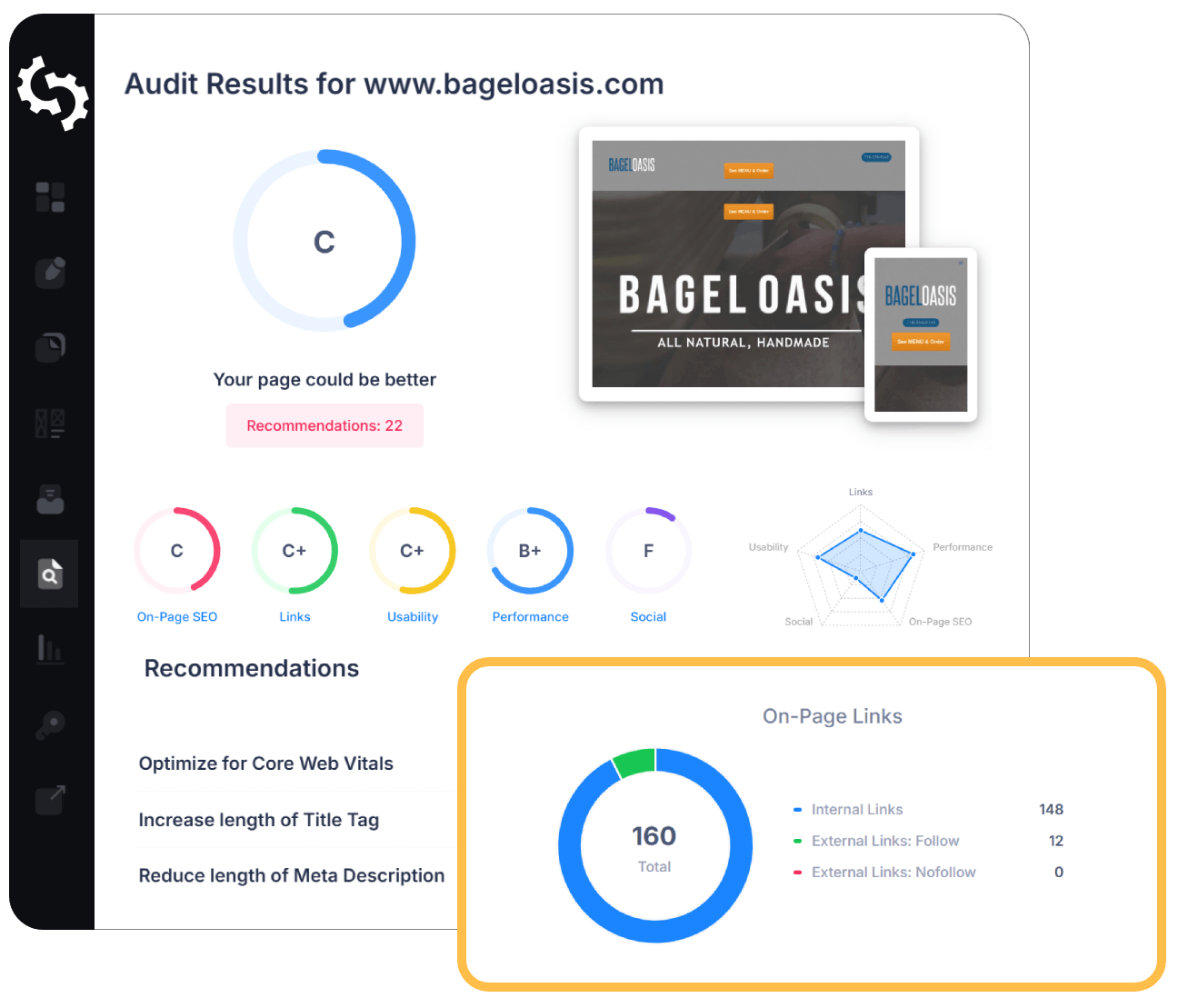
SEO Audit Any Site in Seconds
+ Comprehensive SEO / GEO Tools for Every Function
Run over 100 checks on your website across On-Page SEO, Usability, Performance, Social and Links. Now with GEO in every report. SEOptimer also offers keyword research, rank tracking, backlinks and a full site crawler.
Further Reading
See More
SEO Copywriting Checklist for Higher Ranking Content
Following an SEO copywriting checklist is quite important if you want to improve your website’s search engine visibility and outrank your co...

6 Elements of an Effective Content Production Process
Content production is the cornerstone of a solid online marketing strategy.
As the saying goes, “content is king,” and without en...

How to Write a Blog Outline with Tips from Pro Bloggers & Marketers
A well-structured blog outline not only guides your writing process but also enhances the reading experience of your posts.
A blog o...

How to Create Great Content Briefs [with Example & Template]
Key Takeaways
Content briefs guide writers with clear instructions on objectives, keywords, and structure.
Standardized brief...

How to Do Content Research for SEO (with Tips from Marketers)
In a world where information is abundant and attention spans are short, it's crucial to master the art of effective content research. Whethe...