Website Word Count Tool
SEOptimer’s Website Word Count Tool counts the total word count of your webpage, providing insights into content length and helping you optimize for SEO, readability, and audience engagement.
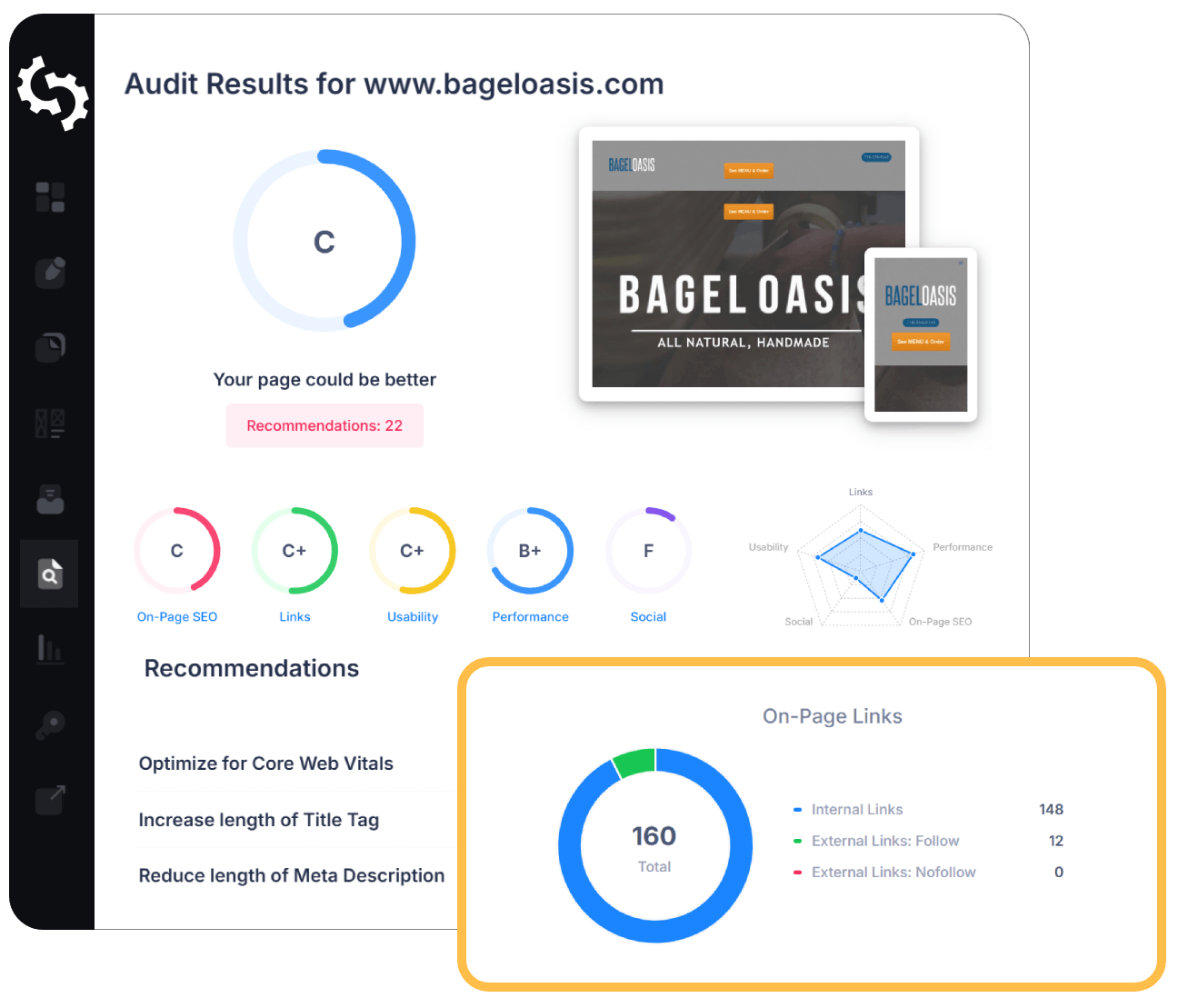
SEO Audit Any Site in Seconds
+ Comprehensive SEO / GEO Tools for Every Function
Run over 100 checks on your website across On-Page SEO, Usability, Performance, Social and Links. Now with GEO in every report. SEOptimer also offers keyword research, rank tracking, backlinks and a full site crawler.

About Website Word Count
What is a website word count?
A website word count is simply the number of words in the body content of a page, excluding navigation, footers and boilerplate. It is one of the bluntest measurements in SEO, and one of the most quickly informative.
It is a proxy rather than a goal. Nobody ranks because a page is long. But a page with very little text usually cannot answer a question fully, and thin pages are the most common symptom of content published to fill a gap in a site map rather than to help anyone.
Running a website word count is therefore most useful as a triage step. It will not tell you a page is good, but it reliably identifies the pages that cannot be.
Does word count still matter in 2026?
Length as a target has lost most of its relevance, and padding is increasingly easy to detect. What matters is coverage: whether the page answers the question and the obvious follow-ups a reader will have.
The measurement still earns its place because coverage and length correlate, even though neither causes the other. A subject that genuinely requires explanation takes words to explain, and a page that dispatches it in eighty is usually not being concise so much as incomplete.
With AI-generated text now cheap and abundant, a long page saying nothing new is a liability rather than an asset. Depth, originality and first-hand detail are what separate useful pages from filler, and none of those are measured by a word count.
How content length relates to AI search
Models quote passages, so a page needs enough substance to contain a quotable, self-contained answer. A page of two thin paragraphs rarely does, which is one of the clearest ways short content loses out.
The reverse is also true. An enormous page that buries its answer in preamble is harder to extract from than a focused one, so length past the point of usefulness works against you rather than for you.
What helps is specificity, clear structure, and information that is not already on a hundred other pages. A well-organised 800 word page frequently outperforms an unstructured 3,000 word one.
Content best practices
- Let the question determine the length rather than a target figure.
- Answer the obvious follow-up questions on the same page.
- Include something only you can offer: original data, real examples, direct experience.
- Break long pages into clearly headed sections so they can be scanned.
- Consolidate several thin pages on one topic into a single strong one.
- Treat a low count as a prompt to ask what the page is missing, not to add words.
What this tool checks
The tool counts the words in the page body and passes at 900 or more. That threshold is a rule of thumb for a substantial page rather than a requirement: a concise reference page can be genuinely complete at 300 words, and a padded one can fail to say anything at 2,000.
Read a website word count below the threshold as a question rather than a verdict. Sometimes the honest answer is that the page is fine as it is; more often it is that a reader arriving with a question would leave without an answer.
Where to go next
Length only helps when the content is organised and on topic. Check the header tags that give a long page its structure, confirm the body agrees with its tags using the keyword density and consistency tool, and make sure the title tag promises what the page delivers.
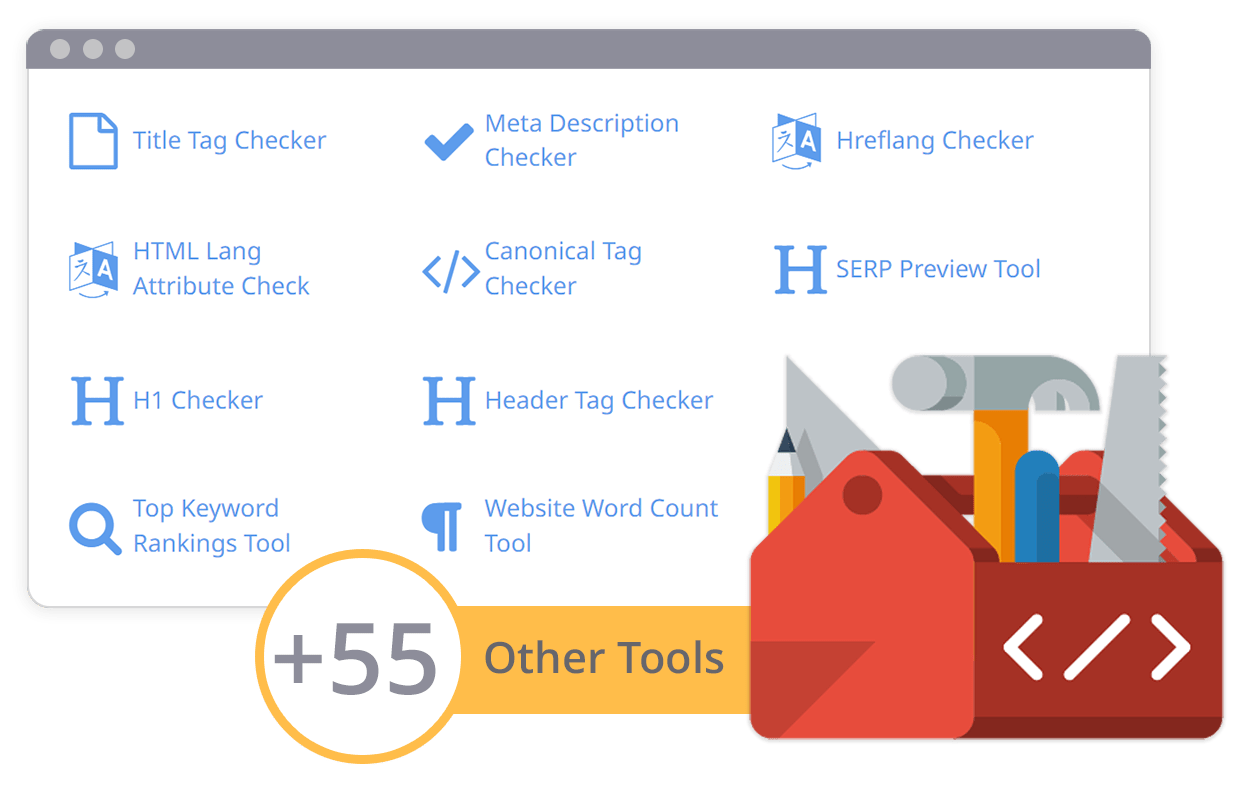
Comprehensive SEO Toolbox with over 55 Tools
Check Titles, Meta Descriptions, Headings, Schema, Core Web Vitals, SSL and Robots.txt. Generate Meta Tags, Sitemaps and .htaccess Rules, minify CSS, JS and HTML, and draft copy with our AI Writing Tools - instantly and for free.
Further Reading
See More
SEO Content Length: How Long Should a Blog Be?
What is the best content length for blogs and SEO? While there’s no concrete answer to this question, the evidence strongly suggests that...

Long Form vs Short Form Content: Which Should You Create?
One of the questions that many business owners, marketers and SEOs often wonder about is whether they should focus on long form content vs s...

The Best Long Form Content: Your How-to Guide for Writing Long Form Content (with Examples)
“Content is king” is a common refrain for marketers for a reason.
But really, when it comes to search engine optimization the quote...

6 Elements of an Effective Content Production Process
Content production is the cornerstone of a solid online marketing strategy.
As the saying goes, “content is king,” and without en...

12 Content Marketing Secrets to Make You Extraordinary
When it comes to content marketing, it seems like there are no secrets left.
No mystery unsolved. No stone left unturned.
But, belie...