Topic Sentence Generator
Write strong, clear topic sentences in seconds with our Topic Sentence Generator. Just enter your main idea, preferred language, and writing tone to generate a sentence that sets the perfect foundation for your paragraph.
Input
Output
Generated content:
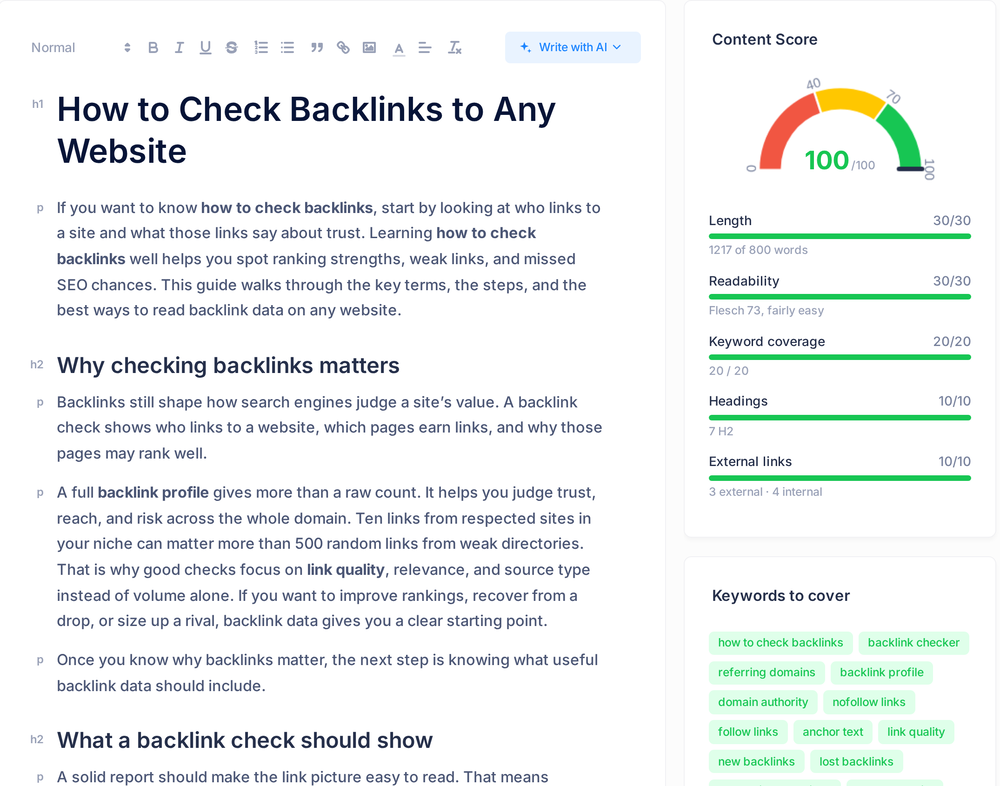
Write SEO Optimized Articles Instantly with AI Writer
AI Writer researches the pages ranking for your target keyword, instantly writes a full article and scores it for keywords, readability, links and length. Create the best content possible with the highest ranking potential with our proprietary algorithms.

About Writing Good Topic Sentences
What is a topic sentence?
A topic sentence is the sentence that tells a reader what a paragraph is about, usually the first one. It makes a claim the rest of the paragraph then supports, explains or qualifies.
Its real function is navigational. Read the topic sentences of a well-written piece in sequence and you get the argument in miniature, which is exactly what a reader scanning the page is doing whether they realise it or not.
That is why weak topic sentences are so costly. A paragraph beginning "There are several things to consider here" has told the scanner nothing, and the scanner is most of your audience.
What makes a topic sentence work
- It makes a claim rather than announcing a subject. "Redirect chains cost crawl budget" beats "Now let us look at redirect chains".
- It is specific enough to be disagreed with, which is a reliable test of whether it says anything.
- It covers the whole paragraph, not just the first half of it.
- It connects to the one before, so the paragraphs read as a sequence rather than a list.
- It stands alone, making sense to someone who has read nothing else.
A paragraph opening with its claim can also be lifted out and still make sense, which matters whenever a passage gets quoted somewhere other than your page. It is the same discipline that makes writing scannable, so there is no trade-off to manage.
Common mistakes
- Announcing the topic instead of asserting something about it.
- Opening with a transition word and no content, such as "Additionally" or "Moreover".
- Writing a paragraph that drifts away from the sentence that opened it.
- Making the claim in the last sentence, so the reader has to finish before knowing why they were reading.
- Using a question as a topic sentence when a statement would do the work.
Where a topic sentence generator helps, and where it does not
It is useful when you know what a paragraph should say but cannot find the opening line, which is a common and disproportionately frustrating stall. A topic sentence generator turns a vague intention into a concrete claim you can accept or reject.
It cannot know whether the claim is true of your paragraph, because it has only your description to work from. A generated sentence that overstates what follows is worse than a dull one.
Read each suggestion against what the paragraph actually argues, and change the weaker of the two.
Using the topic sentence generator
Enter the main idea of your paragraph and the tool proposes sentences that could open it. Stating the idea as a claim rather than a subject produces markedly better suggestions.
Then check the fit. If the paragraph does not support the sentence, either sharpen the paragraph or pick a suggestion that describes what you actually wrote.
Where to go next
Topic sentences hold a piece together at paragraph level. Draft the whole thing with the AI blog post generator tool, open it with an introduction paragraph, and check the header tags that do the same navigational job at section level.
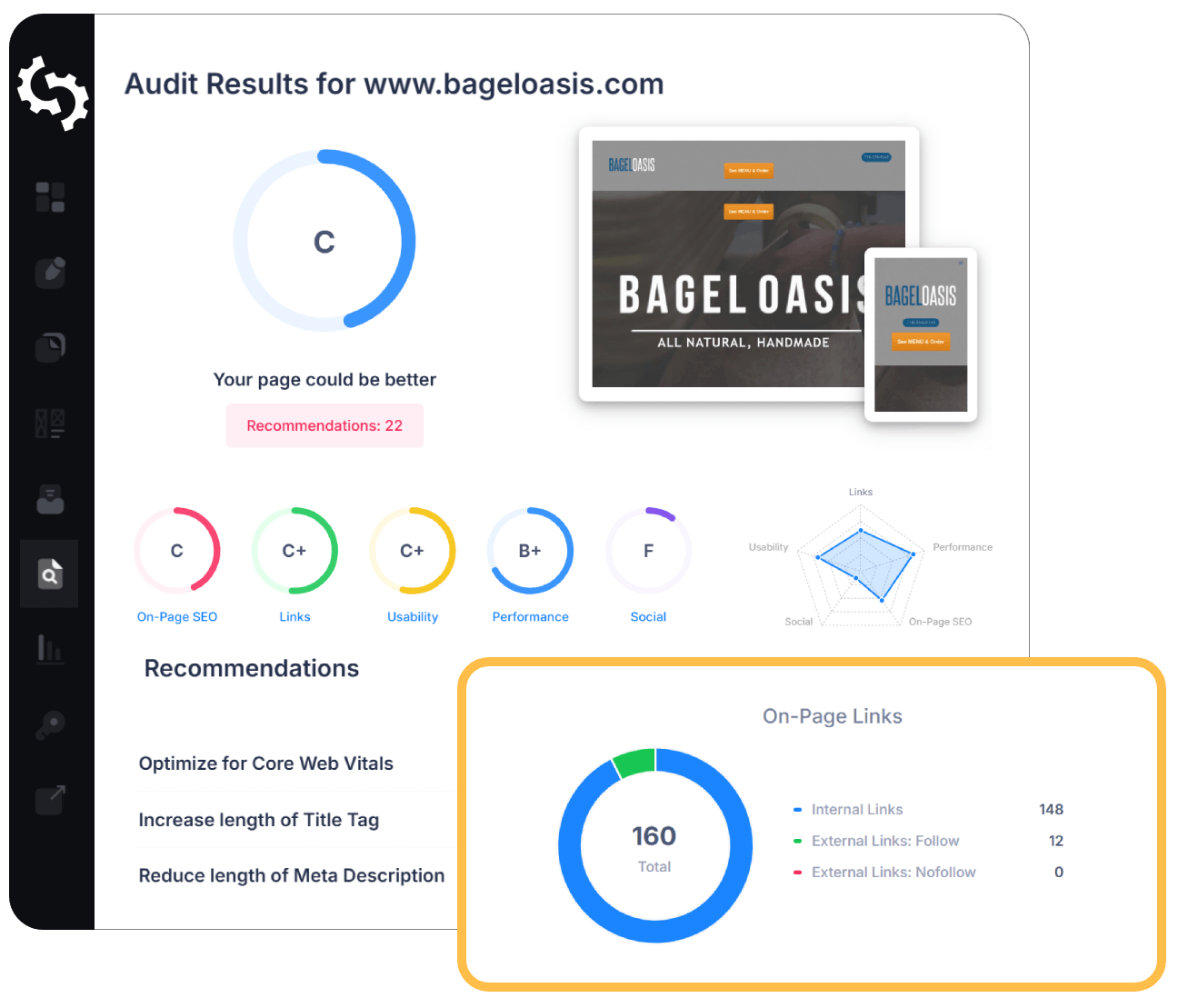
SEO Audit Any Site in Seconds
+ Comprehensive SEO / GEO Tools for Every Function
Run over 100 checks on your website across On-Page SEO, Usability, Performance, Social and Links. Now with GEO in every report. SEOptimer also offers keyword research, rank tracking, backlinks and a full site crawler.
Further Reading
See More
SEO Copywriting Checklist for Higher Ranking Content
Following an SEO copywriting checklist is quite important if you want to improve your website’s search engine visibility and outrank your co...