Product Description Generator
Create compelling product descriptions in seconds with our Product Description Generator. Simply input your product name, specs, and key information, and choose your desired writing tone for a perfectly tailored description.
Input
Output
Generated content:
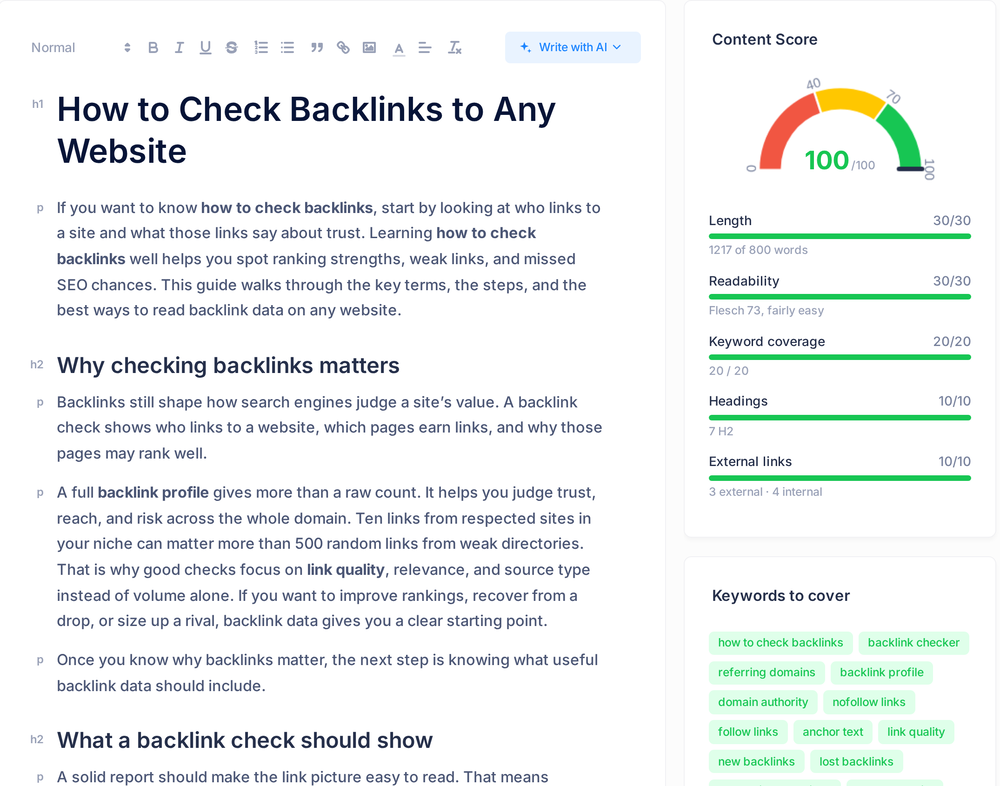
Write SEO Optimized Articles Instantly with AI Writer
AI Writer researches the pages ranking for your target keyword, instantly writes a full article and scores it for keywords, readability, links and length. Create the best content possible with the highest ranking potential with our proprietary algorithms.

About Product Descriptions
What is a product description for?
A product description has to close the gap between what a photograph shows and what a buyer needs to know before parting with money. Everything it contains should reduce a specific doubt.
The doubts are predictable: will it fit, will it work with what I already own, how long will it last, what happens if it is wrong. A product description answering those outsells one describing how innovative the product is.
It is also the part of a store most often left to the manufacturer, which is why so many product pages are identical to a hundred others and rank for none of them.
What belongs in a product description
- The specifications, complete and in a scannable form.
- What the product is for, and who it is not for.
- Materials, dimensions and compatibility, since these drive returns.
- The benefit each notable feature actually delivers.
- What is in the box, which buyers check more often than sellers expect.
Structure matters as much as content here. Buyers scan for the one detail they came for, so a description that hides the dimensions in the third paragraph is functionally missing them.
Common mistakes
- Publishing the manufacturer text unchanged, on the same page as every competitor.
- Adjectives in place of specifications: premium, high-quality, durable.
- Omitting the awkward details, which surface later as returns and reviews.
- One long paragraph where a specification table would answer faster.
- The same description across variants, so none of them can rank individually.
Product descriptions and AI shopping in 2026
Assistants now answer product questions directly, comparing options and citing the attributes they can find. What they can find is limited to what is written as text on the page.
A product description carrying complete, specific attributes can be represented accurately in those answers. One built on adjectives cannot be compared to anything, so it tends to be left out of the comparison entirely.
Structured data helps here too, but it reinforces the same lesson: the more concretely a product is described, the more contexts it can appear in.
Where the generator helps, and where it does not
Volume is the real problem in ecommerce. Writing three hundred original descriptions by hand does not happen, and a generated first draft per product is a far better position than duplicated supplier text.
It cannot know your specifications, so anything it states that you did not supply is invented. Feed it the real spec sheet and check the output against it, particularly on measurements and compatibility.
Using the product description generator
Enter your product details, features and specifications, choose a tone, and the tool returns several product description options to pick from and edit.
The more complete the input, the less the tool has to guess. A pasted spec sheet produces a usable draft; a product name alone produces plausible fiction.
Where to go next
The description is one part of the product page. Name the thing well with the product name generator, write the surrounding page with the AI website copy generator, and check how the page appears in results with the SERP preview preview.
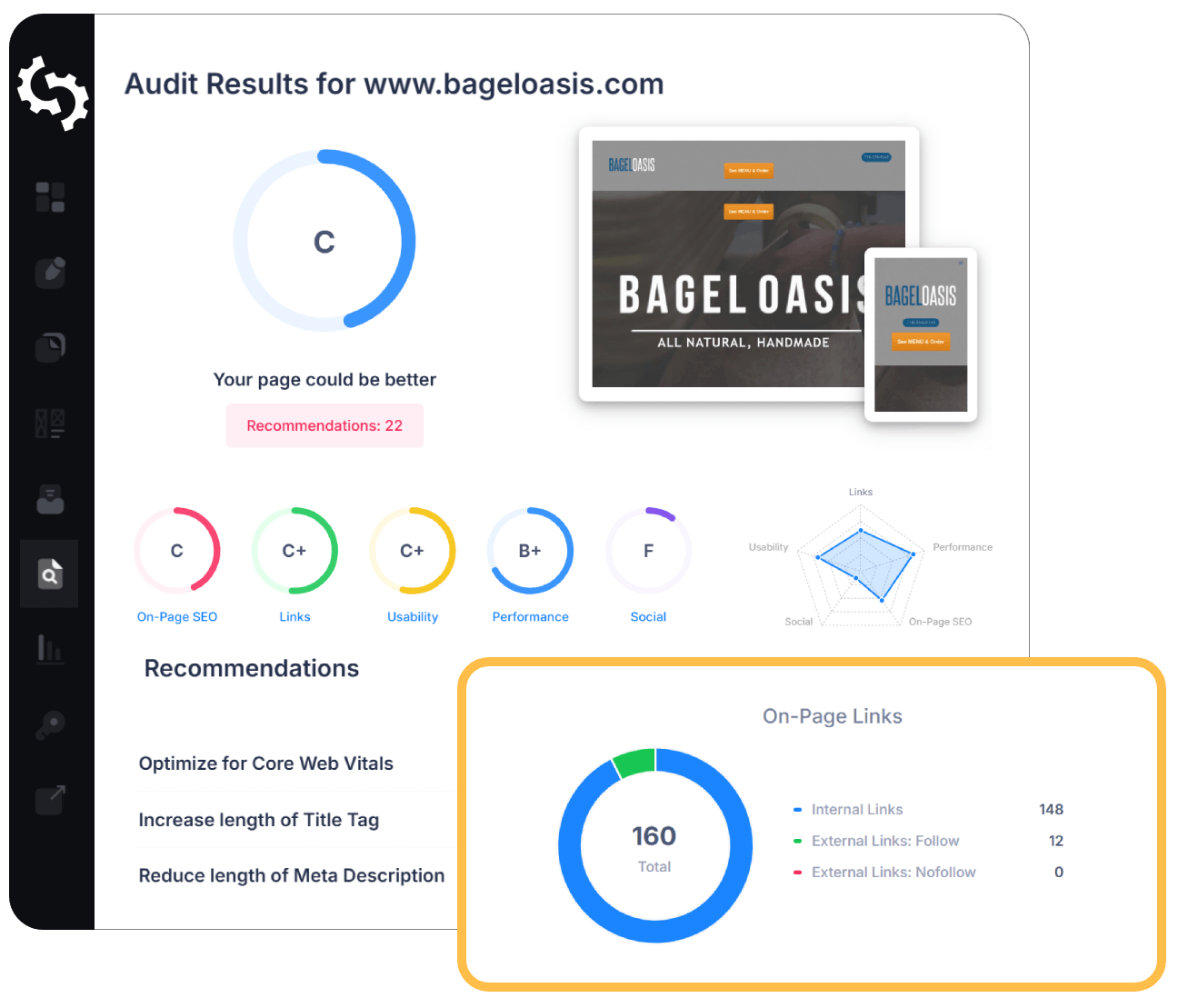
SEO Audit Any Site in Seconds
+ Comprehensive SEO / GEO Tools for Every Function
Run over 100 checks on your website across On-Page SEO, Usability, Performance, Social and Links. Now with GEO in every report. SEOptimer also offers keyword research, rank tracking, backlinks and a full site crawler.
Further Reading
See More
SEO for Product Descriptions: 10 Tips Every eCommerce Marketer Needs
As an eCommerce store owner or marketer, your product descriptions do more than just inform; they compel, persuade, and most importantly, bo...

E-commerce SEO: 16 Steps to Optimize Your E-commerce Site
Imagine living in a world where you could drive sales on autopilot.
No costly Facebook ads (which can quickly turn into a money pit)....

SEO Copywriting Checklist for Higher Ranking Content
Following an SEO copywriting checklist is quite important if you want to improve your website’s search engine visibility and outrank your co...