Paragraph Expander
Expand your content effortlessly with our AI Paragraph Expander. Simply input your text, and watch it transform into a longer, more detailed paragraph.
Input
Output
Generated content:
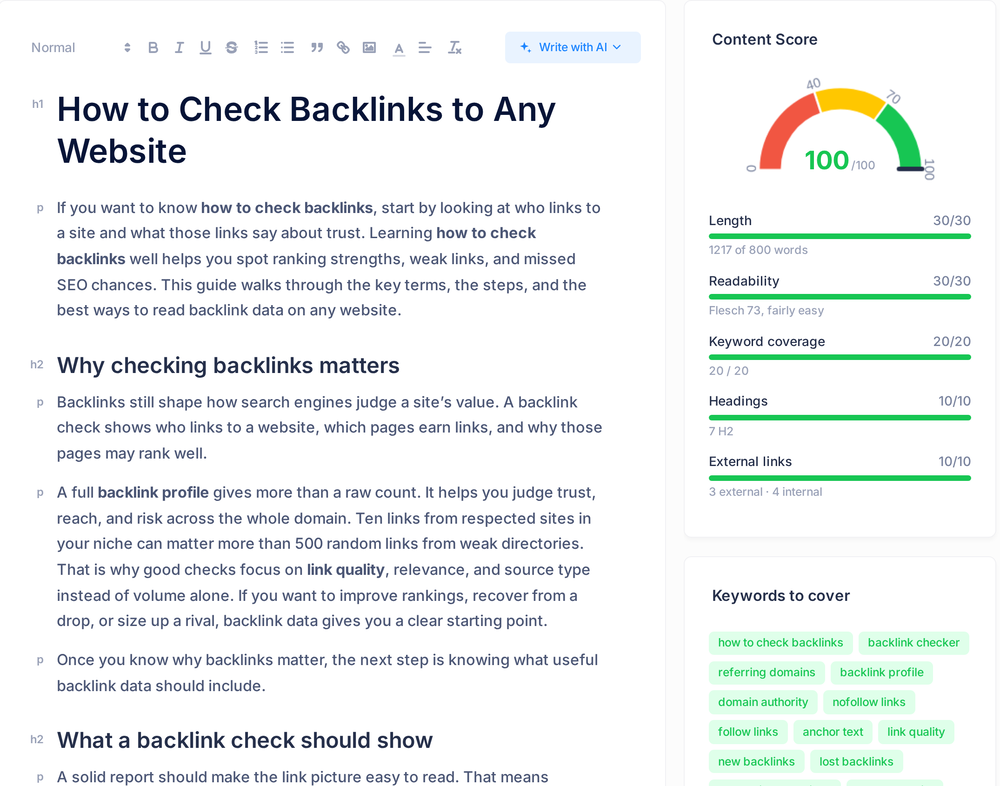
Write SEO Optimized Articles Instantly with AI Writer
AI Writer researches the pages ranking for your target keyword, instantly writes a full article and scores it for keywords, readability, links and length. Create the best content possible with the highest ranking potential with our proprietary algorithms.

About Expanding Paragraphs
When does a paragraph need expanding?
A paragraph needs expanding when it makes a claim and moves on. The reader is left with a question the piece never answers, usually "why" or "how do you know".
It does not need expanding because a page feels short. That is the distinction worth holding onto, because the two situations feel identical when you are staring at a draft and one of them has no honest remedy.
A paragraph expander is useful for the first and actively harmful for the second. Padding is easy to detect, tiring to read, and increasingly costly now that generated filler is abundant.
What a thin paragraph is usually missing
- Evidence: the data, source or observation the claim rests on.
- An example, ideally a specific one from real experience.
- The mechanism, explaining why the claim is true rather than only that it is.
- The exception, describing when it does not hold.
- The consequence, connecting it to something the reader cares about.
- The objection, and why it does not change the conclusion.
Common mistakes
- Restating the claim in different words and calling it development.
- Adding background the reader did not need.
- Expanding to hit a word count, which is the most common misuse.
- Turning one clear paragraph into three vague ones.
- Accepting invented supporting detail because it reads plausibly.
How this relates to AI search
Depth is genuinely rewarded, but depth means covering the question and its follow-ups rather than occupying more space. Those are different things and only one of them helps.
Padded content is the clearest signal of low value available, and it is abundant enough now that systems and readers both discount it quickly.
A paragraph that gains a real example becomes more quotable; a paragraph that gains three sentences of restatement becomes less so.
Where a paragraph expander helps, and where it does not
It is good at showing you what a fuller version of your paragraph would cover, which surfaces the gaps you had stopped noticing.
It cannot supply evidence, because it does not have any. Anything factual in the expansion is generated, and generated support attached to your claim is worse than no support at all.
Read the output as a list of what is missing, then fill those gaps from what you actually know.
Using the paragraph expander
Enter your text and the tool returns a longer version. One paragraph at a time keeps the result usable.
Then check every added claim against something real, cut anything that only restates, and be willing to conclude the paragraph was already complete.
Where to go next
Length is rarely the real problem. Check the word count of the finished page for context, fix structure with the paragraph rewriter, and plan properly with the AI outline generator generator so thin sections do not appear in the first place.
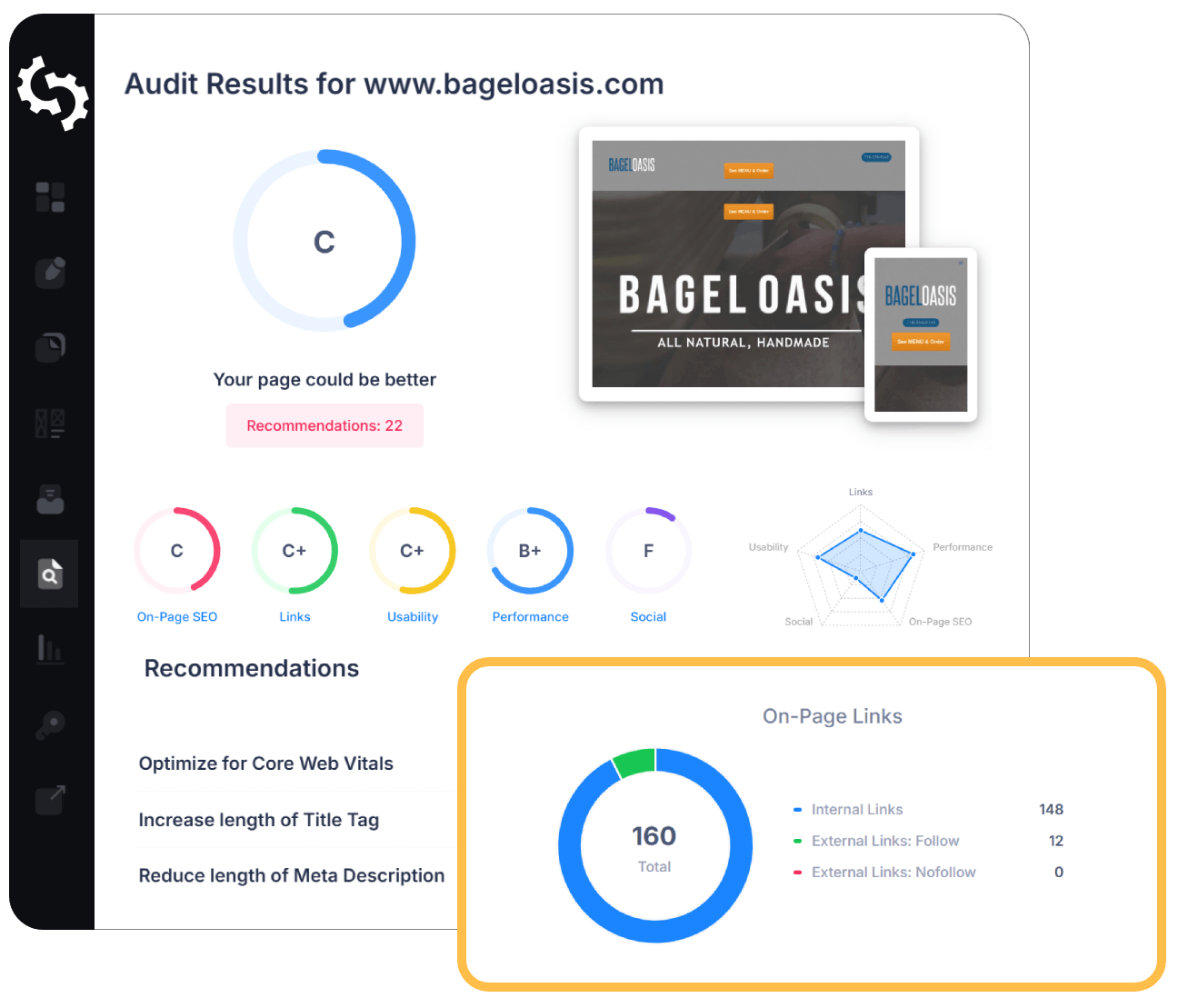
SEO Audit Any Site in Seconds
+ Comprehensive SEO / GEO Tools for Every Function
Run over 100 checks on your website across On-Page SEO, Usability, Performance, Social and Links. Now with GEO in every report. SEOptimer also offers keyword research, rank tracking, backlinks and a full site crawler.
Further Reading
See More
SEO Copywriting Checklist for Higher Ranking Content
Following an SEO copywriting checklist is quite important if you want to improve your website’s search engine visibility and outrank your co...
How to Create Great Content Briefs [with Example & Template]
Key Takeaways
Content briefs guide writers with clear instructions on objectives, keywords, and structure.
Standardized brief...

SEO Content Length: How Long Should a Blog Be?
What is the best content length for blogs and SEO? While there’s no concrete answer to this question, the evidence strongly suggests that...