Over zoekwoordmoeilijkheid
Wat is zoekwoordmoeilijkheid?
De zoekwoordmoeilijkheid schat in hoe moeilijk het zou zijn om voor een term de eerste pagina met resultaten te bereiken, op een schaal van 0 tot 100. De score beschrijft de concurrentie die deze posities al inneemt, en zegt niets over de woordgroep zelf.
Het getal is gebaseerd op de kracht van de pagina’s die momenteel ranken, voornamelijk de omvang en kwaliteit van hun linkprofielen. Een term is moeilijk omdat goed gevestigde pagina’s deze positie innemen, niet omdat de woorden ongebruikelijk zijn of het onderwerp technisch is.
Een controle van de zoekwoordmoeilijkheid is daarom eerder een concurrentieanalyse dan een oordeel over het zoekwoord. De controle laat zien wat u in de weg staat en zegt helemaal niets over de vraag of het de moeite waard is om op die zoekterm te mikken.
Zo leest u de score
De categorieën zijn conventies en geen vaste drempelwaarden. In grote lijnen staan zoektermen in het lage bereik open voor een goede pagina, vraagt het middelste bereik om echte autoriteit erachter en is het hogere bereik eerder een campagne dan een artikel.
Lees de score in verhouding tot je eigen website, in plaats van als een abstract cijfer. Een 40 is een gebruikelijk doel voor een gevestigd domein, maar onrealistisch voor een website die vorige maand is gepubliceerd; hetzelfde cijfer betekent voor beide iets anders.
Een hoog zoekvolume in combinatie met een lage moeilijkheidsgraad verdient eerder wantrouwen dan een feestje. Meestal betekent dit dat de term dubbelzinnig of seizoensgebonden is, of dat de zoekresultaten een antwoord bieden zonder dat er wordt doorgeklikt. De gemiddelde backlinkgegevens onder de score zijn de snelste manier om te zien welke van deze situaties van toepassing is.
Is zoekwoordmoeilijkheid nog steeds relevant in 2026?
Het is belangrijk als manier om werk te ordenen. De meeste sites hebben veel meer kandidaatzoekwoorden dan capaciteit, en de moeilijkheidsgraad is de eenvoudigste manier om een lange lijst te sorteren in wat nu haalbaar is en wat een project voor later is.
Het is goed om te bedenken hoeveel informatie één cijfer samenvat. Twee zoekwoorden met een score van 45 kunnen totaal verschillend werk vereisen: voor het ene is een sterkere pagina nodig, terwijl voor het andere juist een heel ander type pagina nodig is. De score kan dat verschil niet laten zien.
De score beschrijft ook de situatie van vandaag. Het is een momentopname van wie er momenteel rankt, dus de score verandert wanneer de eerste pagina verschuift. Een zoekterm die een jaar geleden onhaalbaar leek, is daarom opnieuw het controleren waard in plaats van dat je daar zonder meer van uitgaat.
Hoe zoekwoordmoeilijkheid zich verhoudt tot AI-zoekopdrachten
AI-antwoorden worden meestal samengesteld uit pagina’s die al goed ranken, dus de moeilijkheidsgraad blijft een redelijke indicator van de inspanning die nodig is om te worden geciteerd. Een plek op de eerste pagina bemachtigen en een plek in een antwoord bemachtigen komt grotendeels neer op hetzelfde werk.
Waar de score het beeld onderschat, is bij specifieke, als vraag geformuleerde zoektermen. Deze hebben vaak juist een lage moeilijkheidsgraad omdat ze gemakkelijk te beantwoorden zijn. Daarom beantwoordt een AI-samenvatting ze vaak direct en krijgt de pagina met zoekresultaten minder bezoeken dan de positie doet vermoeden.
De praktische aanpak is om moeilijkheidsgraad naast zoekintentie te beoordelen in plaats van op zichzelf. Een gemakkelijke zoekterm die de zoekopdracht elders beëindigt, is minder waard dan een moeilijkere zoekterm die iemand naar jou doorstuurt en klaar is om actie te ondernemen.
Beste werkwijzen voor zoekwoordmoeilijkheid
- Vergelijk de moeilijkheidsgraad binnen één onderwerp, niet tussen niet-gerelateerde onderwerpen.
- Bekijk deze naast het volume, de zoekintentie en de kosten per klik; op zichzelf zegt de score niets over de ranking.
- Weeg de score af tegen de autoriteit van je eigen website, in plaats van deze als absoluut te beschouwen.
- Bekijk de gemiddelden voor backlinks achter het getal, in plaats van alleen op het getal zelf te vertrouwen.
- Beschouw een lage moeilijkheidsscore voor een zoekterm met een hoog volume als een reden om verder te kijken, niet als een gemakkelijke overwinning.
- Controleer dit regelmatig opnieuw, omdat de eerste pagina verandert en de score daarin meegaat.
Wat deze tool controleert
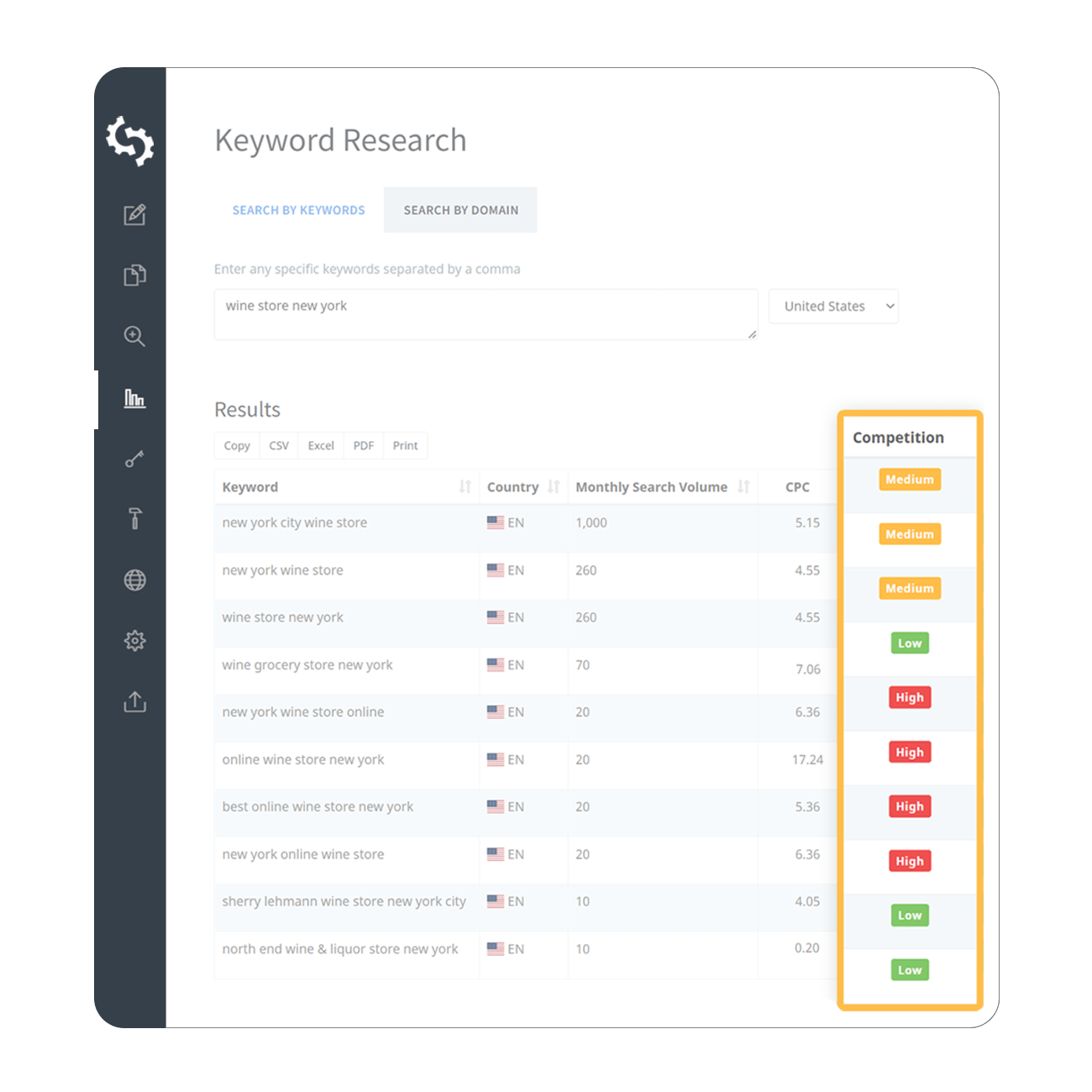
De checker voor zoekwoordmoeilijkheid zoekt de term op in onze index en rapporteert de moeilijkheidsscore, samen met de cijfers die deze score in context plaatsen: het maandelijkse zoekvolume en de recente trend daarvan, de kosten per klik en de concurrentie tussen adverteerders, de voor de term geregistreerde zoekintentie en het gemiddelde aantal backlinks en verwijzende domeinen van de pagina’s die momenteel in de zoekresultaten staan.
In tegenstelling tot tools voor zoekwoordmoeilijkheid die daarnaast een volledige resultatenpagina weergeven, beperkt deze tool zich bewust tot de statistieken. Het overzicht staat op zichzelf en een live resultatenpagina is een afzonderlijke vraag die onze SERP-tools al beantwoorden.
Cijfers zijn afkomstig uit onze index en niet uit een live zoekopdracht. Ze geven dus het beeld weer dat we voor die zoekterm en locatie hebben, en niet wat een browser je op dit moment zou laten zien. Dat is geschikt voor planning, maar niet het juiste instrument om een wijziging die je gisteren hebt aangebracht te bevestigen.
Waar je nu verder kunt gaan
Moeilijkheid geeft aan wat een zoekterm kost; de rest van de beslissing moet je elders nemen. Stel een langere lijst met kandidaten samen met
zoekwoordgenerator, ontdek via onderzoek met
zoekwoord van concurrent welke daarvan al door een concurrent worden gebruikt en controleer met de
SERP-rangcontrole hoe de eerste pagina er daadwerkelijk uitziet.