Keyword Search Intent Tool
SEOptimer’s Keyword Search Intent Tool identifies what searchers are actually after when they use a keyword - informational, commercial, transactional or navigational - alongside its volume, cost per click and difficulty.
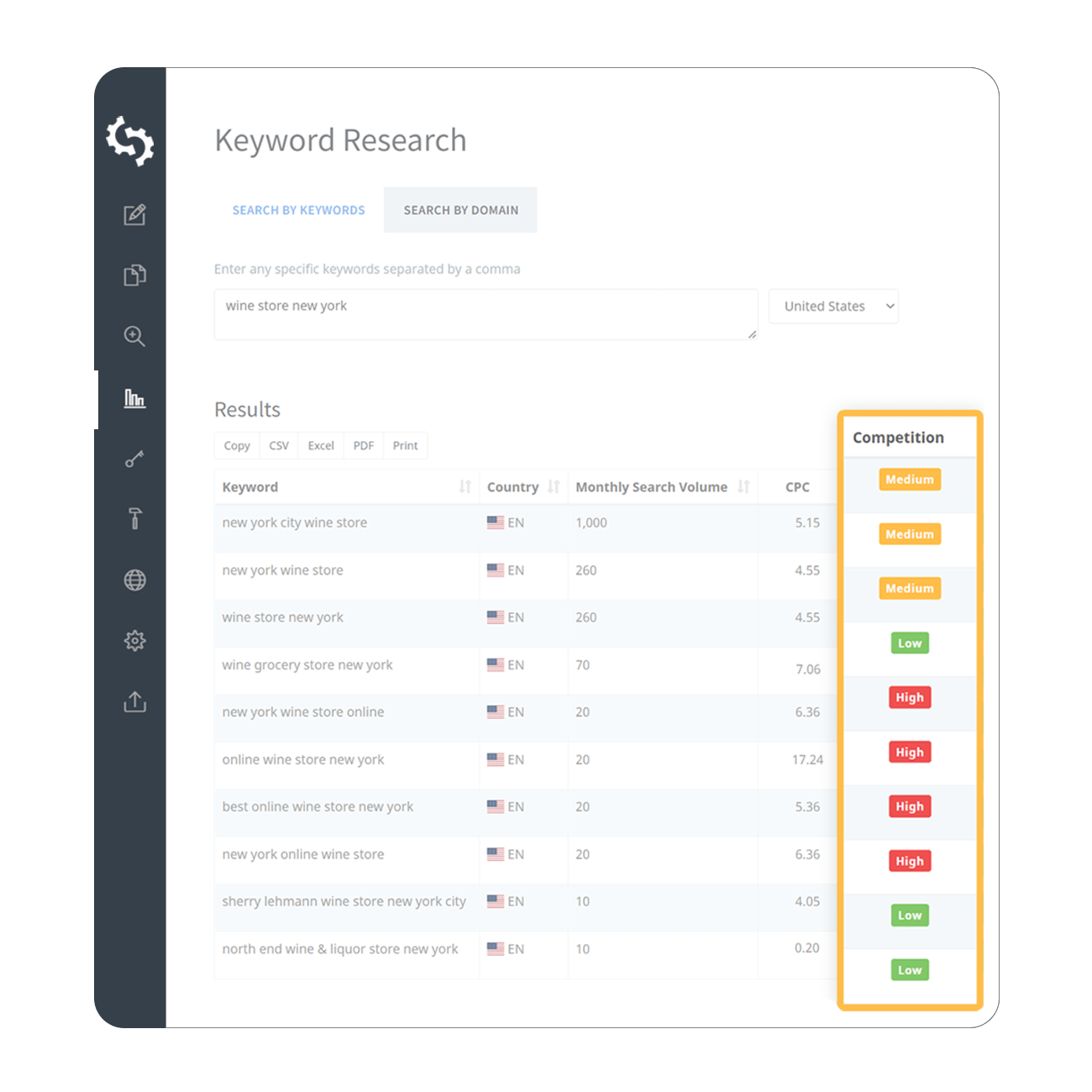
Find the Keywords Worth Ranking For, Then Watch Them Move
Real search volume, CPC and competition data for any market, so you know which phrases are worth the work before you start. Then track your positions daily on Google and Bing, on desktop and mobile, and down to the city for local search - with scheduled reports that show clients exactly what changed.

About Keyword Search Intent
What is search intent?
Search intent is what somebody is actually trying to do when they type a phrase. Two people can search the same words wanting entirely different things, and the page that satisfies one will disappoint the other.
It is the single most useful thing to know about a keyword before writing for it, because it decides the kind of page rather than the wording. Getting it wrong cannot be recovered by better prose - a guide will not rank where a product page is wanted, however well written it is.
A keyword search intent check reads the intent recorded for a term rather than guessing at it from the words, which matters because the phrasing is frequently misleading.
The four kinds of intent
Search intent is conventionally sorted into four types, and each asks for a different page:
- Informational - someone wants to understand something. Guides, explainers and definitions.
- Navigational - someone is looking for a particular site or brand and simply wants to arrive.
- Commercial - someone is comparing before deciding. Reviews, comparisons and best-of lists.
- Transactional - someone is ready to act. Product, pricing, signup and booking pages.
The two in the middle are where most misjudgements happen. Commercial and transactional terms look similar and behave very differently, because one is still choosing and the other has already chosen.
Reading a keyword with mixed intent
Most terms carry one dominant intent and one or two weaker ones, and the weaker ones are genuine signal rather than noise. A brand name usually reads navigational first, with commercial and informational close behind, because people arrive at it from several different starting points.
Where a term is strongly one thing, the page is easy to plan. Where it is split, the sensible response is usually to lead with the dominant intent and answer the secondary one further down, rather than to build two pages competing with each other.
A split also explains results that seem inconsistent. If the first page mixes guides with product listings, the term is genuinely doing both jobs, and the mix is telling you which one has room left.
Does search intent still matter in 2026?
It matters more than it did, because the cost of getting it wrong has risen. Search engines are considerably better at recognising what a query wants than they were, so a page aimed at the wrong intent no longer ranks poorly - it frequently does not rank at all.
The compensation is that matching intent well is one of the few advantages still available to a smaller site. Authority is hard to acquire quickly; being the page that actually answers the question is not.
Intent has also become the better way to prioritise a keyword list. Volume tells you how many people search; intent tells you what would have to be true for any of them to be worth having.
How search intent relates to AI search
AI answers take the informational end of the spectrum first, because those are the searches that were always going to end without a click. A definition answered in place is a search satisfied, and the page that would have received the visit does not.
Commercial and transactional intent behaves differently. Someone comparing options or ready to buy still needs to arrive somewhere to do it, so those terms keep their visits even when an AI summary sits above them.
The practical consequence is that intent now predicts whether a ranking converts into a visit at all. It is worth checking before volume rather than after it.
Search intent best practices
- Decide the page type from the intent before writing a word of it.
- Treat commercial and transactional as genuinely different; one compares, the other buys.
- Lead with the dominant intent and handle secondary ones further down the same page.
- Avoid targeting one term with two pages, which splits the signal and helps neither.
- Weigh intent before volume, since informational terms increasingly end without a click.
- Check the intent of terms you already rank for, not only the ones you are planning.
What this tool checks
The keyword search intent tool looks the term up in our index and reports the dominant intent recorded for it, any secondary intents alongside it, and the figures that give those a size: monthly search volume and its trend, cost per click and advertiser competition, the difficulty score, and the backlink profile of the pages currently ranking.
It reports the same figures as our keyword statistics tool and keyword difficulty checker, arranged to put intent first. Use whichever ordering matches the decision in front of you; the underlying lookup is identical.
Figures come from our index rather than a live search, so they describe the picture held for that term and location rather than what a browser would show you this second.
Where to go next
Intent tells you what to build; the rest tells you whether to bother. Generate more terms to classify with the keyword generator, see which of them a rival already serves through competitor keyword research, and check how your listing reads to a searcher with the SERP preview tool.
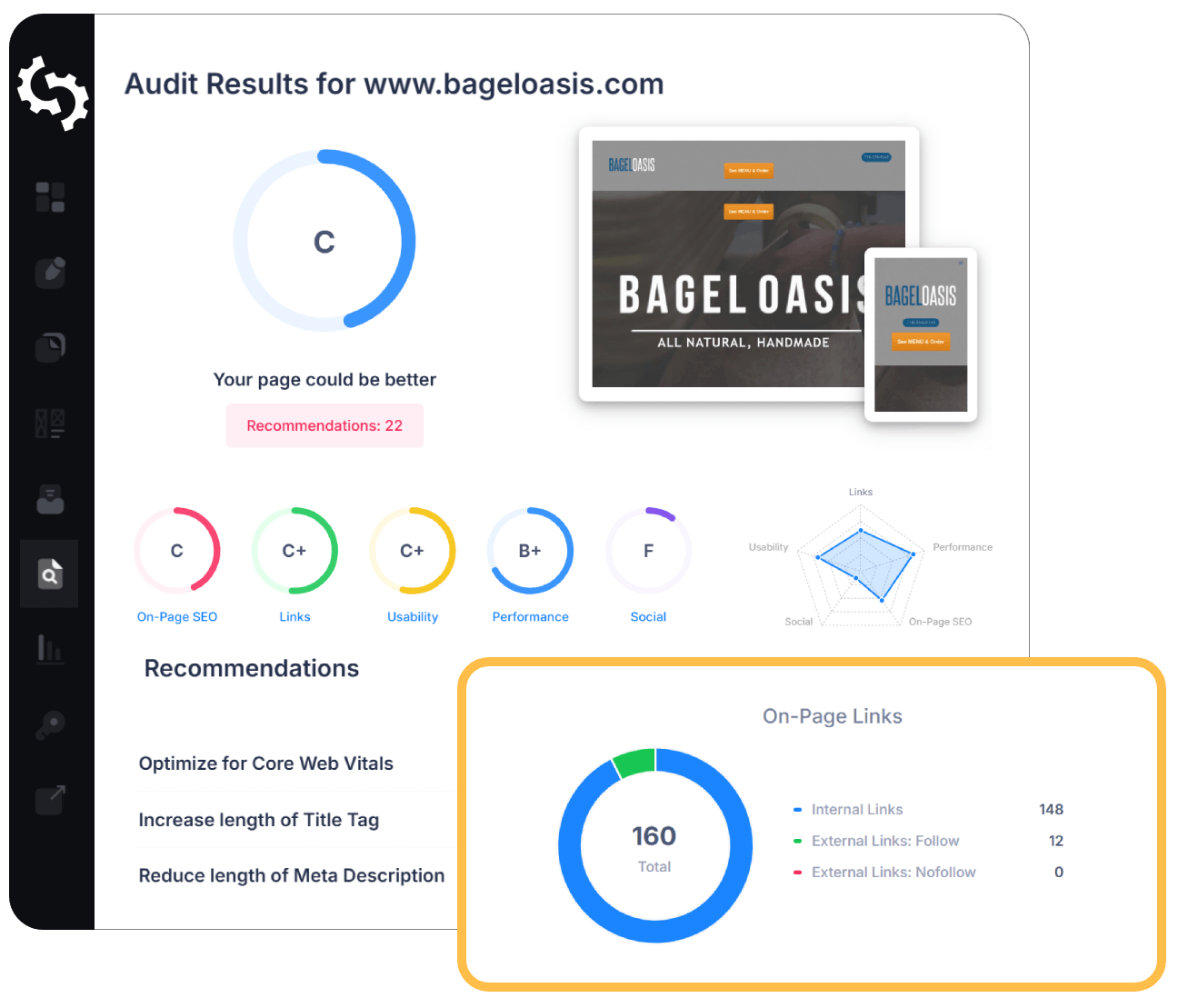
SEO Audit Any Site in Seconds
+ Comprehensive SEO / GEO Tools for Every Function
Run over 100 checks on your website across On-Page SEO, Usability, Performance, Social and Links. Now with GEO in every report. SEOptimer also offers keyword research, rank tracking, backlinks and a full site crawler.
Further Reading
See More
What are High Intent Keywords & How to Use Them in SEO
Understanding and leveraging high intent keywords is paramount to driving targeted traffic and increasing conversions. These keywords are th...

9 Popular Types of Keywords in SEO (and How to Use Each)
If you want to optimize your website for search engines, understanding the different types of keywords in SEO is quite important.
Us...

5 Key Reasons Why Keyword Research is Important for SEO
Is keyword research still important for SEO? The answer to that question is a resounding yes!
Keyword research is the foundation o...

Long Tail vs Short Tail Keywords: What’s the Main Difference?
Many SEOs and marketers wonder what's the difference between long tail vs short tail keywords. Understanding the difference between these tw...

How to Find Low Hanging Fruit Keywords for SEO
Do you feel like climbing the SEO ranks is an impossible uphill battle with big competitors hogging the top spots? The secret to getting ahe...

How to Drive Up Your CTR and SEO
What Is CTR?
CTR stands for Click Through Rate, and is defined as the percentage of people who click a search result after seeing it.
To see...