H1 Checker
Analyzing Website - 5% Complete
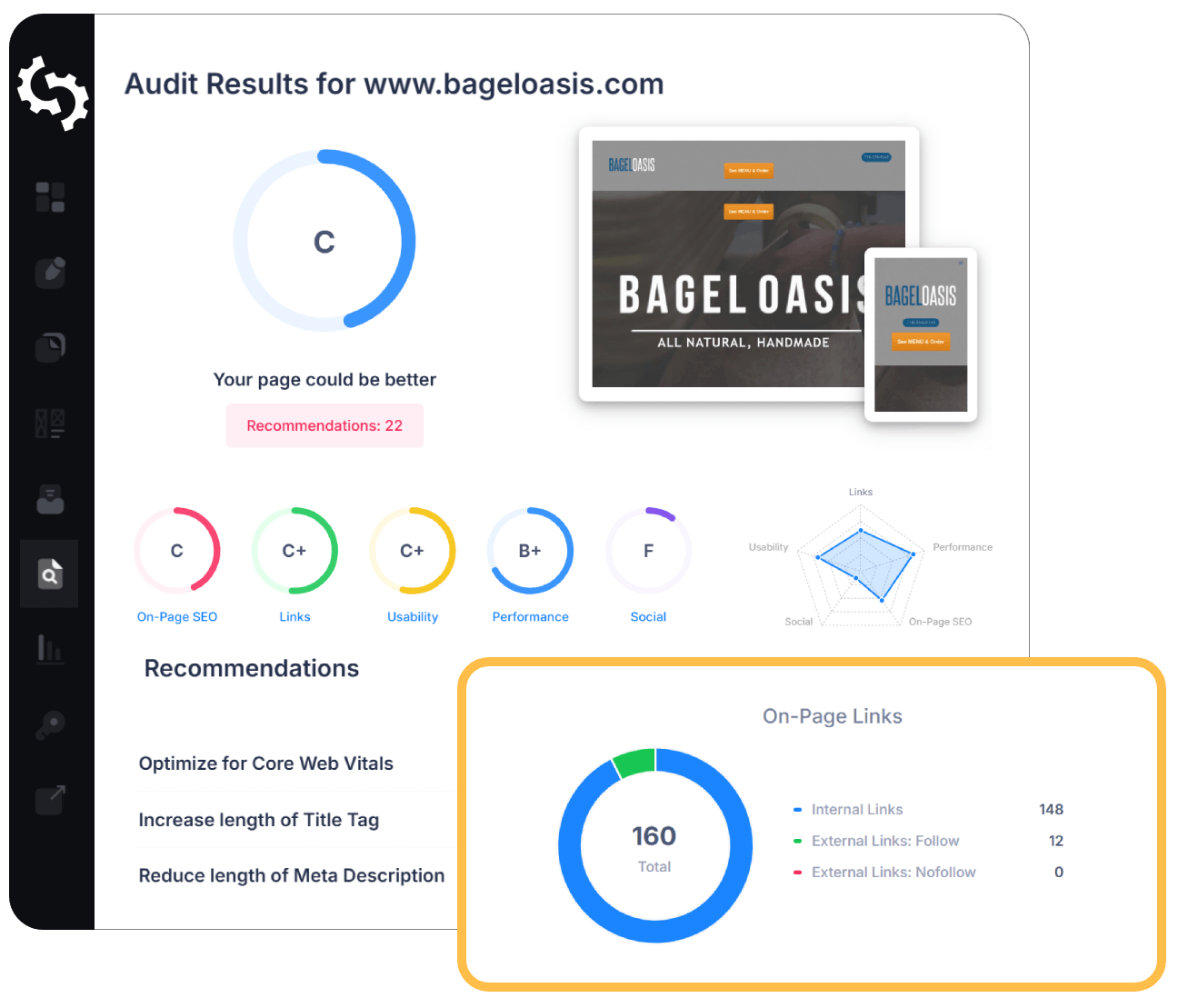
SEO Audit Any Site in Seconds
+ Comprehensive SEO / GEO Tools for Every Function
Run over 100 checks on your website across On-Page SEO, Usability, Performance, Social and Links. Now with GEO in every report. SEOptimer also offers keyword research, rank tracking, backlinks and a full site crawler.

About H1 Heading Tags
What is an H1 tag?
The H1 is the main heading of a page: the line a reader sees first once the page has loaded. Unlike the title tag, which lives in the head and appears in search results, the H1 is part of the visible content and introduces the page to someone who has already arrived.
It is a structural element rather than a decorative one. Screen readers use it to announce what a page is, browser reader modes use it to find where the article starts, and parsers treat it as the top of the document outline. Styling ordinary text to look like a heading achieves none of that, which is why an H1 checker looks at the markup rather than at what appears large on screen.
The distinction from the title tag confuses people constantly. One is written for a stranger scanning a results page; the other is written for someone who has already committed to the page. They should agree on the subject without being identical.
Do H1 tags still matter in 2026?
Not as a ranking lever in their own right, and anyone promising otherwise is selling something. Their value is that they make a page legible to everything that reads structure rather than layout.
That list has grown: search crawlers, screen readers, reader modes, translation tools, and the systems that extract passages to quote. A page with a meaningful heading structure is usable by all of them; a page styled to look organised is usable only by people looking at it.
There is also a correlation worth taking seriously. Pages with clear headings tend to be pages someone thought about, and that quality is what search engines are ultimately trying to measure.
How H1 tags relate to AI search
Models answering questions from web content work in passages rather than whole documents. Headings are the most reliable way of telling them where one passage ends and the next begins, and the H1 establishes the subject those passages sit under.
When a page is cited, the quoted passage is usually the section that most directly answers the prompt. Clear headings make it far likelier that the right section is found, and that it is read in the context the H1 sets rather than in isolation.
A page with no H1 forces that context to be inferred from the surrounding text, which is slower, less reliable, and more likely to produce a citation that misrepresents what the page says.
How many H1 tags should a page have?
One. The HTML5 specification technically permits several when each sits inside its own sectioning element, and search engines have said repeatedly that multiple H1s will not harm rankings.
Neither point makes it a good idea. A page with three H1s is making three claims about what it is about, and the reader, the screen reader and the parser all have to guess which one is the real subject.
In practice multiple H1s are almost never deliberate. They come from a template applying H1 to the logo, from a plugin adding one to a widget, or from content pasted with its own heading intact.
H1 best practices
- Use one H1 per page, describing what the whole page is about.
- Keep it close in meaning to the title tag without duplicating it word for word.
- Put it near the top, before the main body content.
- Use real heading markup rather than a styled div, so assistive technology can see it.
- Do not apply H1 to a logo or site name in the template.
- Reserve H2 and below for the sections underneath, in order, without skipping levels for visual effect.
What this tool checks
The H1 checker counts the H1 tags on the page and reports one of three outcomes:
- No H1 found, which leaves the page without a stated subject in its content.
- Exactly one H1, which passes.
- More than one H1, which makes the page subject ambiguous.
The H1 checker counts tags rather than reading them, so it will not tell you whether the wording is any good. A page passes with a single, entirely unhelpful heading.
Where to go next
The H1 is the top of a structure rather than a standalone element. It is worth checking the H2 to H6 headings beneath it, comparing it against the title tag that does the equivalent job in search results, and reading the heading versus title guide if the difference between the two is not yet clear.
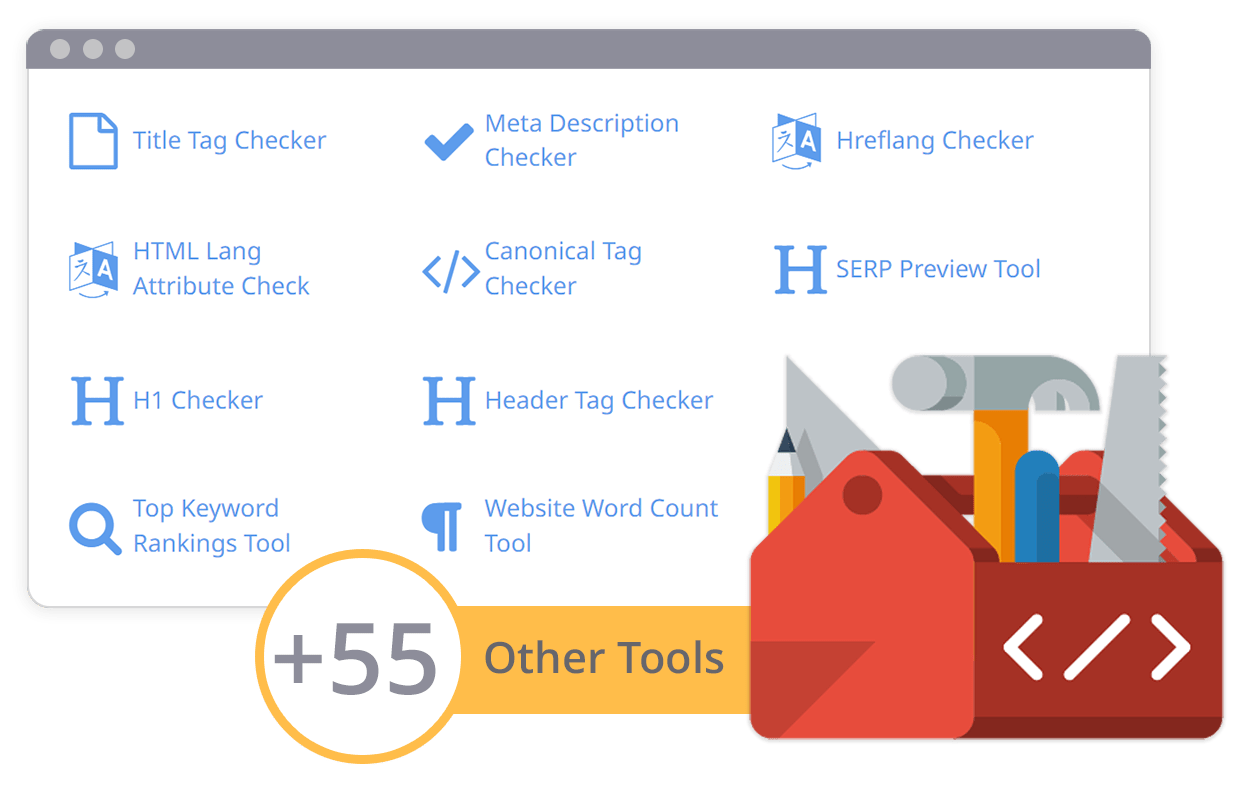
Comprehensive SEO Toolbox with over 55 Tools
Check Titles, Meta Descriptions, Headings, Schema, Core Web Vitals, SSL and Robots.txt. Generate Meta Tags, Sitemaps and .htaccess Rules, minify CSS, JS and HTML, and draft copy with our AI Writing Tools - instantly and for free.
Further Reading
See More
H1 HTML Tag: What Is It? How to Create One and Best Practices
H1 tags are a critical part of your website. Search engines use H1 tags to learn the primary content of a web page.
H1 was always...

SEOptimer's Guide to Header Tags
What are Header Tags?
HTML header tags are used to differentiate different levels of headings and sub-headings within a page.
...

Heading vs Title Tags: What are the Differences & How to Create Them?
Wondering what are the differences between heading and title tags?
Since both heading and title tags are used to tell the readers...

On-Page SEO: Complete Guide + Checklist for 2026
What is On-Page SEO?
On-page SEO is the process of optimizing the content and elements on a webpage so that search engines can bette...