Favicon Checker
SEOptimer’s Favicon Checker verifies if your website has a properly configured favicon.
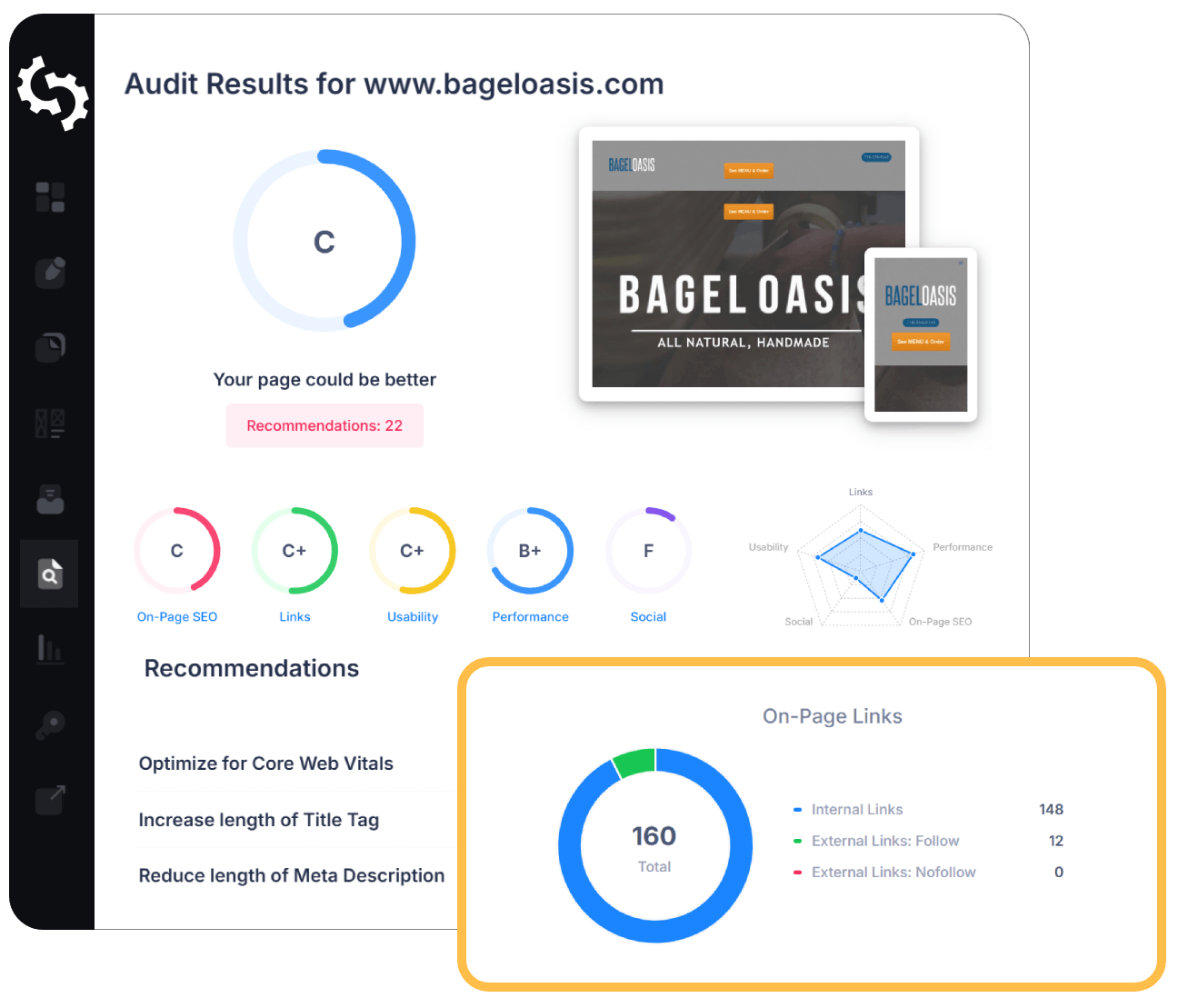
SEO Audit Any Site in Seconds
+ Comprehensive SEO / GEO Tools for Every Function
Run over 100 checks on your website across On-Page SEO, Usability, Performance, Social and Links. Now with GEO in every report. SEOptimer also offers keyword research, rank tracking, backlinks and a full site crawler.

About Favicons
What is a favicon?
A favicon is the small icon representing a site in browser tabs, bookmarks, history and phone home screens. It is tiny, it takes minutes to add, and it appears in more places every year.
It is the smallest piece of branding a site has and often the most frequently seen. Someone with your tab open all day looks at your favicon considerably more than they look at your logo.
A favicon checker is worth running because the failure is easy to miss locally. Browsers cache icons aggressively, so a favicon that stopped working months ago will often still appear on the machine of the person who added it.
Do favicons still matter in 2026?
They matter for recognition. People navigate a dozen open tabs by icon rather than by title, and a site showing the browser default is effectively invisible in that row.
Google also shows favicons beside mobile search results, so the icon now competes for attention on the results page itself rather than only after a click.
The requirements have quietly grown too. Home screen icons, dark mode variants and high-density displays all want different assets, and a single legacy icon file no longer covers the ground it used to.
How favicons relate to AI search
Interfaces that cite sources increasingly show a small icon beside each one, exactly as search results do. That icon is your favicon.
It carries no meaning a machine reads, but it is one of very few visual signals a reader gets when choosing between several cited sources, and the default placeholder reads as less established than a real mark.
It is a small thing that costs almost nothing and appears in an increasing number of places.
Favicon best practices
- Provide several sizes; browser tabs and home screen icons have different requirements.
- Keep the design simple. Detail disappears entirely at 16 pixels.
- Use a mark rather than a full wordmark, which is unreadable at that size.
- Include an SVG version where supported so it stays sharp on any display.
- Check it renders against both light and dark browser themes.
- Verify in a private window, since a cached icon will mask a broken one.
What this tool checks
The favicon checker looks for a favicon declared by the page or present at the conventional location, and reports whether one was found.
It confirms existence rather than quality or completeness, so it will not tell you whether the icon is legible at small sizes or whether you have supplied every variant modern devices expect.
Where to go next
A favicon is part of how a listing looks rather than how it ranks. See how the rest of your search result reads with the SERP preview tool, and check the title tag checker that sits beside the icon in both search results and browser tabs.
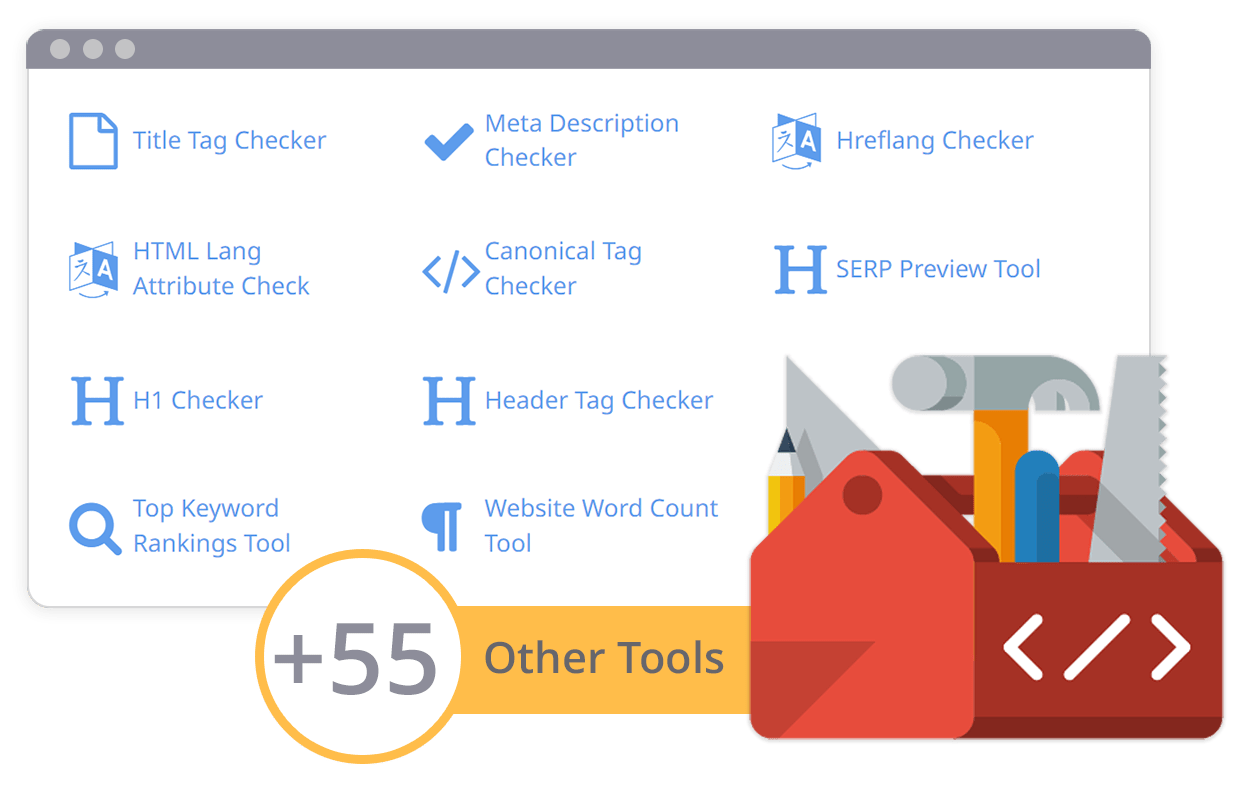
Comprehensive SEO Toolbox with over 55 Tools
Check Titles, Meta Descriptions, Headings, Schema, Core Web Vitals, SSL and Robots.txt. Generate Meta Tags, Sitemaps and .htaccess Rules, minify CSS, JS and HTML, and draft copy with our AI Writing Tools - instantly and for free.
Further Reading
See More
What is a Favicon, Why is it Important, and How do I Add One?
What is a Favicon?
A favicon is a small 16×16 pixel icon that serves as branding for your website. Its main purpose is to help vis...
Favicon Not Showing Up - How to Fix In Chrome, Wordpress & Shopify
What is a Favicon
Favicons make it easier for users to identify your site when they have many tabs on the web browser open. Favico...
What Is the Best Logo Size for Your Website? (and Social, Print etc)
Your site’s logo is part of your business’ brand. It is what people use to easily identify your business. It is part of what makes your bu...