Attention Getter Generator
Grab your audience's attention instantly with our Attention Getter Generator. Simply enter your idea or topic, and get creative, attention-grabbing ideas for your content in seconds.
Input
Output
Generated content:
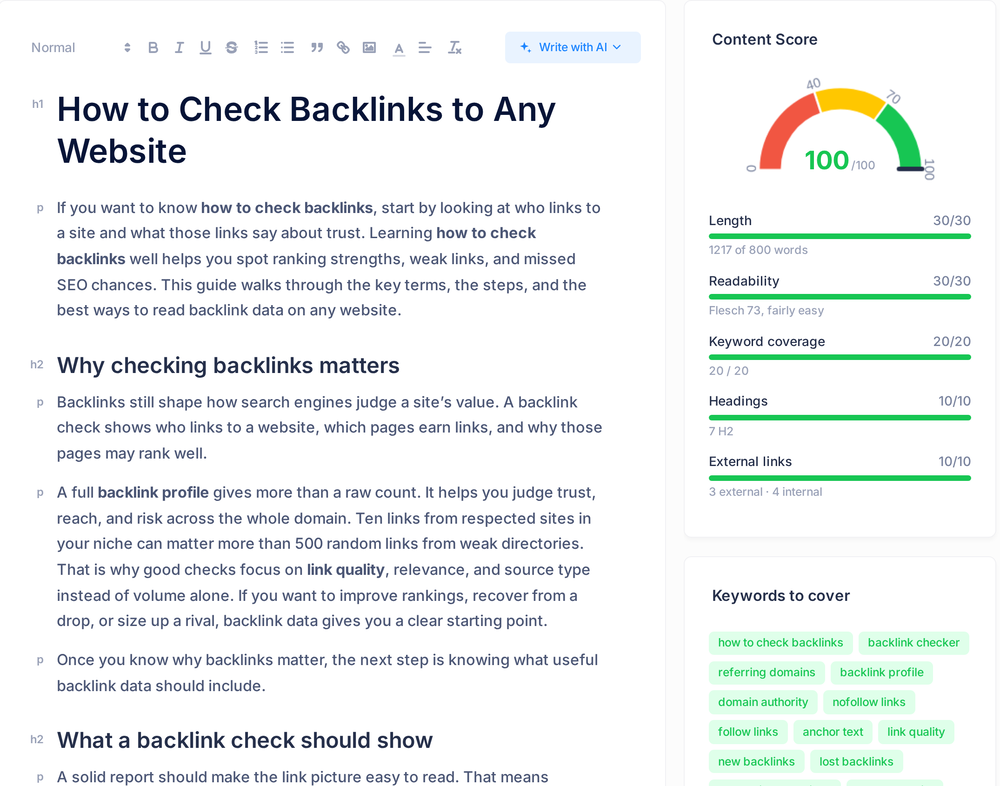
Write SEO Optimized Articles Instantly with AI Writer
AI Writer researches the pages ranking for your target keyword, instantly writes a full article and scores it for keywords, readability, links and length. Create the best content possible with the highest ranking potential with our proprietary algorithms.

About Attention Getters
What is an attention getter?
An attention getter is the opening move of a piece: the line, question, statistic or story that earns the first few seconds. The term comes from speechwriting, where the problem is at its most acute because the audience cannot skim ahead.
It overlaps with a hook without being identical. A hook is usually one sharp line optimised for a feed or a headline; an attention getter can be a short anecdote or a scenario, and it is more often the opening of a talk, an essay or a presentation.
What both share is a job: create enough interest that the next part gets attention, then hand over to substance quickly.
Types that actually work
- A surprising statistic, provided it is real and sourced.
- A specific, short story, which is memorable in a way abstractions are not.
- A question the audience genuinely cannot answer, rather than a rhetorical one.
- A contradiction of something the audience believes.
- A concrete scenario that puts the listener inside the problem.
- A direct statement of stakes: what this costs, or what it is worth.
Common mistakes
- A dictionary definition, which signals that the opening was an afterthought.
- A quotation with no connection to the argument beyond sounding impressive.
- A rhetorical question with an obvious answer, which reads as filler.
- An anecdote that runs long enough to become the piece.
- Manufactured urgency the content cannot justify.
Where an attention getter generator helps, and where it does not
Openings benefit from volume, and generating options is exactly what this is good at. The tenth idea is usually better than the first, and an attention getter generator removes the cost of getting to the tenth.
It cannot verify a statistic, and it will produce plausible-sounding numbers without hesitation. Any figure it offers needs checking against a real source before it is used, particularly in a talk where nobody can check it in the moment.
It also cannot judge your audience, and audience is most of what decides whether an opening lands.
Using the attention getter generator
Describe your topic and the tool proposes openings to choose from. Generate a few rounds and pick the one that fits your audience rather than the one that reads best in isolation.
Then verify anything factual, cut it to the shortest version that still works, and make sure the sentence after it does the real work.
Where to go next
An opening leads somewhere. Sharpen the first line with the hook generator, build the paragraph around it with the introduction paragraph generator, and draft the piece itself with the AI blog post generator tool.
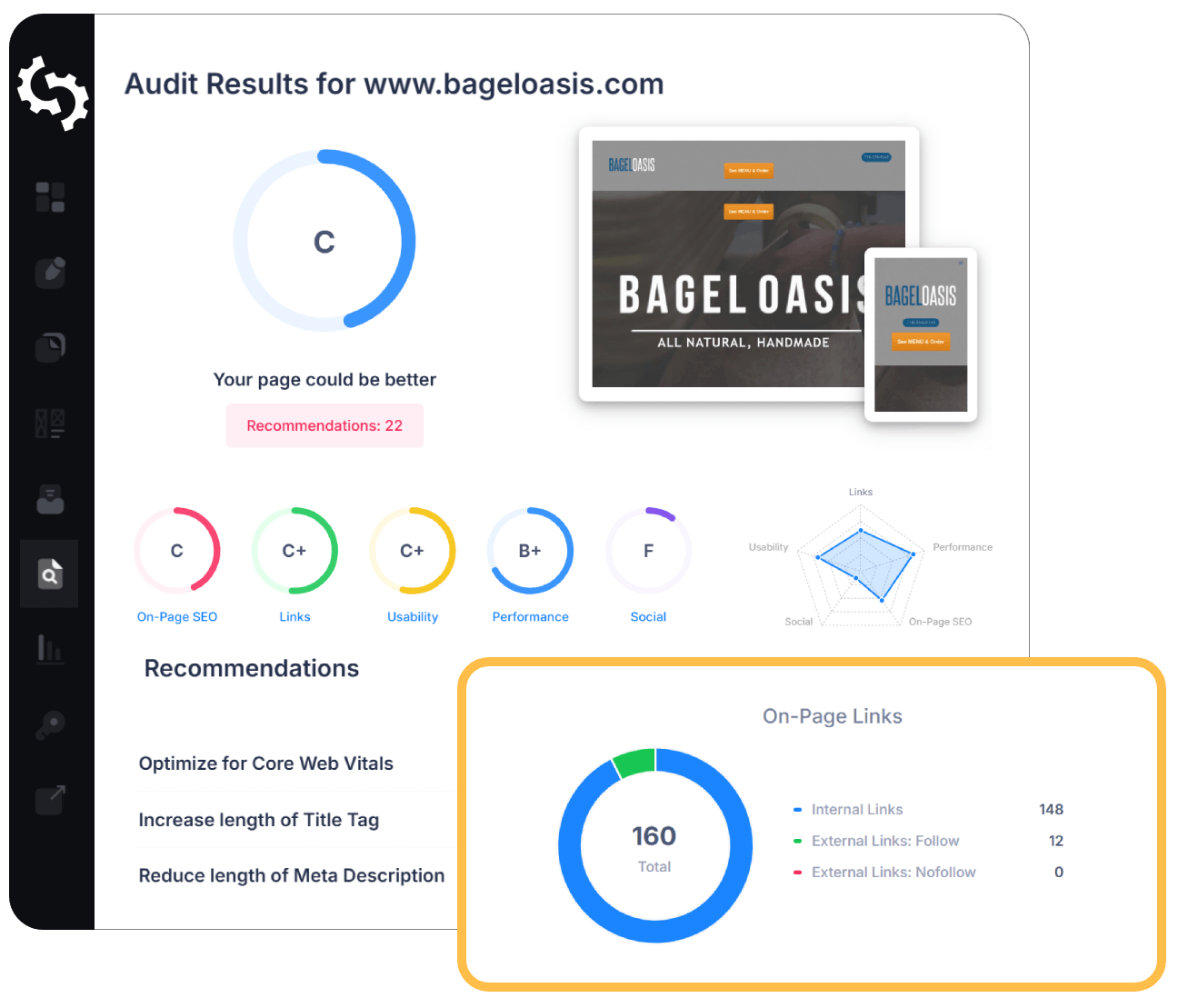
SEO Audit Any Site in Seconds
+ Comprehensive SEO / GEO Tools for Every Function
Run over 100 checks on your website across On-Page SEO, Usability, Performance, Social and Links. Now with GEO in every report. SEOptimer also offers keyword research, rank tracking, backlinks and a full site crawler.
Further Reading
See More
SEO Copywriting Checklist for Higher Ranking Content
Following an SEO copywriting checklist is quite important if you want to improve your website’s search engine visibility and outrank your co...

How to Drive Up Your CTR and SEO
What Is CTR?
CTR stands for Click Through Rate, and is defined as the percentage of people who click a search result after seeing it.
To see...

12 Content Marketing Secrets to Make You Extraordinary
When it comes to content marketing, it seems like there are no secrets left.
No mystery unsolved. No stone left unturned.
But, belie...