AI Business Description Generator
Generate a unique, professional business description with ease using our AI Business Description Generator. Provide your business name, industry, key products, and value proposition to create a description that reflects your brand's identity.
Input
Output
Generated content:
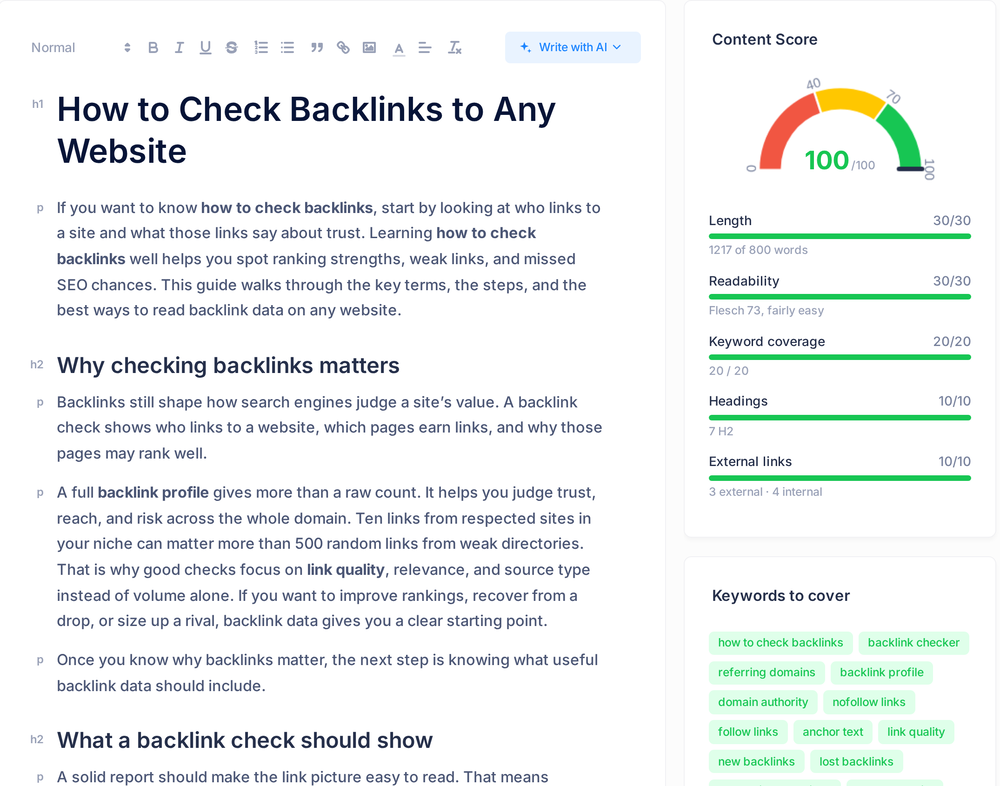
Write SEO Optimized Articles Instantly with AI Writer
AI Writer researches the pages ranking for your target keyword, instantly writes a full article and scores it for keywords, readability, links and length. Create the best content possible with the highest ranking potential with our proprietary algorithms.

About Business Descriptions
Where a business description actually appears
A business description is written once and then used everywhere: the about page, the Google Business Profile, directory listings, partner pages, social bios, press boilerplate and the back of the deck.
That is worth knowing before writing, because the constraints come from the smallest box it has to fit rather than the largest. Most businesses need a short version and a long one, drawn from the same material.
It is also the description competitors, journalists and prospective hires will read first, so vagueness costs more here than almost anywhere else on the site.
What a business description should cover
- What the business does, in the words a customer would use.
- Who it is for, since a description without an audience reads as a description of nobody.
- What makes it different, stated concretely enough to be checked.
- Where it operates, when location is part of how people find you.
- Proof: years in business, clients served, a number that anchors the claim.
Common mistakes
- Opening with the founding date instead of what the business does.
- Industry language that a customer would never say out loud.
- Listing values in place of services, which tells a reader nothing.
- Different descriptions on every platform, so nothing accumulates.
- Writing it once at launch and never updating it as the business changes.
Why consistency matters in 2026
Search and answer engines assemble what they know about a company from many sources at once. When your description is worded consistently across your site, your profiles and the directories that list you, those sources agree and the picture is coherent.
When each listing says something different, they do not, and the version that surfaces in an AI answer is whichever one the system happened to weigh most heavily. Consistency is the cheapest control you have over that.
Name, category and location wording deserve particular care, since those are the details most likely to be repeated verbatim.
Where the generator helps, and where it does not
Businesses are famously bad at describing themselves, and a generated draft is a useful mirror: it shows you what your own description sounds like from outside.
It will also produce confident detail you never supplied. Check every fact, every number and every claim before it goes anywhere public, since a business description is quoted more often than most copy.
Using the AI business description generator
Give the tool your business name, industry, key products and what makes you different, then pick a tone. The more specific the input, the less generic the business description that comes back.
Produce one version and then cut it down for the shorter boxes rather than writing each separately. That is how the wording stays consistent.
Where to go next
The description usually sits alongside a line and a page. Try the AI tagline generator for the short form, the AI website copy generator for the pages around it, and the meta description checker to see how your site describes itself in search results today.
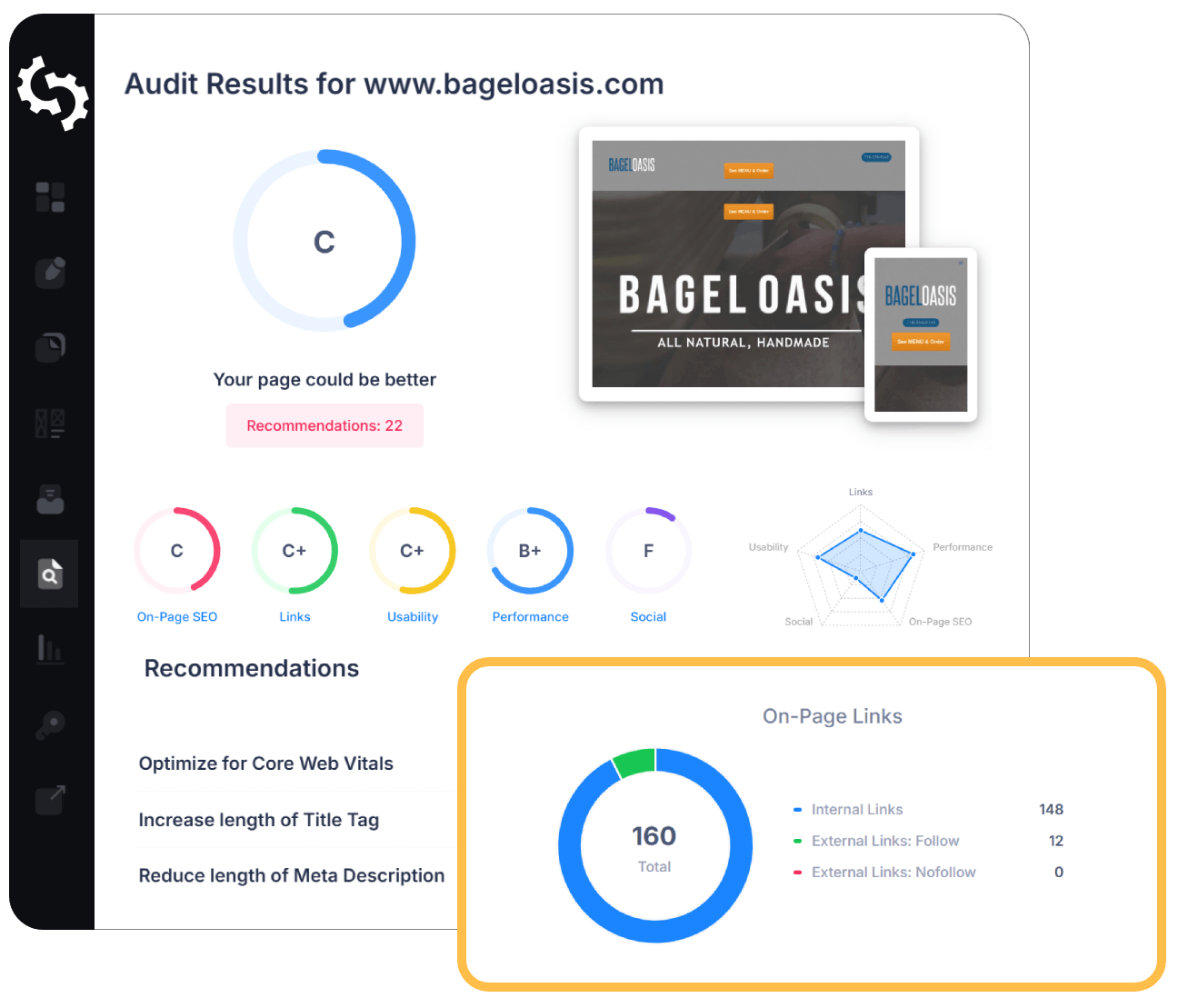
SEO Audit Any Site in Seconds
+ Comprehensive SEO / GEO Tools for Every Function
Run over 100 checks on your website across On-Page SEO, Usability, Performance, Social and Links. Now with GEO in every report. SEOptimer also offers keyword research, rank tracking, backlinks and a full site crawler.
Further Reading
See More
SEO Copywriting Checklist for Higher Ranking Content
Following an SEO copywriting checklist is quite important if you want to improve your website’s search engine visibility and outrank your co...

How to do a Brand Audit with Template & Examples
Today’s business landscape is filled with competition, from new startups to already established companies trying to outwit each other. In...

Homepage SEO Guide: How to Optimize Your Website’s Home
Homepage SEO makes your site authoritative in the eyes of Google.
Your homepage is the most important page of your website. It is li...

How to Start a Digital Marketing Agency with Tips from Successful Founders
Starting a marketing agency is one of the most rewarding and exciting business ventures you can embark on.
But it's also highly co...