AI Tagline Generator
Create a valuable tagline with our AI Tagline Generator. Just enter your brand description, tone, and language to generate a unique tagline that defines your brand in seconds.
Input
Output
Generated content:
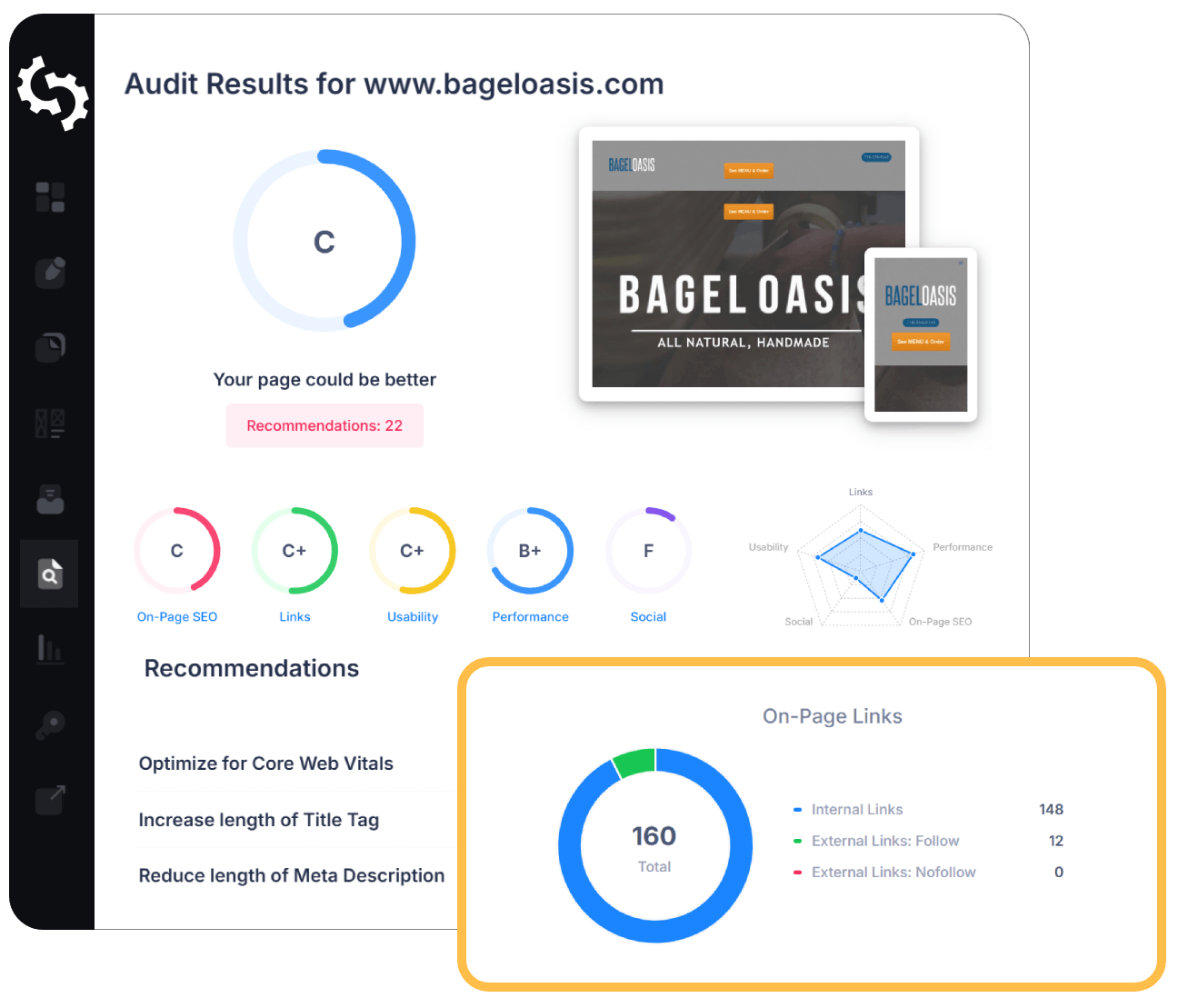
SEO Audit Any Site in Seconds
+ Comprehensive SEO / GEO Tools for Every Function
Run over 100 checks on your website across On-Page SEO, Usability, Performance, Social and Links. Now with GEO in every report. SEOptimer also offers keyword research, rank tracking, backlinks and a full site crawler.

About Taglines
What is a tagline for?
A tagline sits beside the name, permanently, and answers the question the name cannot: what is this, and why should I care. It is the line that appears on the site header, the business card and the deck, unchanged, for years.
Because it is permanent it has to be true at a level that survives changes in product and market. Anything tied to a current feature will age badly and be quietly dropped.
That permanence is the whole difference from a slogan, and it is why taglines are harder to write despite being shorter.
What a good tagline does
- Clarifies the category for someone who has never heard of you.
- States the benefit or the stance, not the feature list.
- Reads naturally directly after your name, since that is where it lives.
- Stays true if you launch a second product next year.
- Says something a competitor would not put on their own site.
The last test is the most useful one. If your closest rival could adopt the tagline unchanged, it is describing the category rather than the company.
Common mistakes
- Abstraction so high it fits any industry: empowering people, driving results.
- A tagline written for investors rather than customers.
- Naming a feature that will be standard in two years.
- Length, since a tagline needing a comma is usually a sentence in disguise.
- Leaving the tagline out of the homepage entirely, which is where it earns its keep.
Where the tagline shows up in 2026
A tagline is often the first line of your homepage and, if written well, ends up in your title tag, your meta description, your social previews and your directory listings. That repetition is what makes it worth getting right.
It also does quiet work for answer engines, which build their picture of a company from consistent descriptions across many sources. A tagline used identically everywhere reinforces one clear statement of what you do.
Where it hurts is when the tagline is pure abstraction and it becomes the only description of you anywhere. Say the category somewhere on the page even if the tagline stays poetic.
Where the generator helps, and where it does not
Seeing a dozen taglines built from your own description is a fast way to find which angle resonates, and even the weak ones show you the framings you had not considered.
It cannot know your positioning, so it will produce category descriptions unless your input already contains a point of view. The better your description, the less generic the tagline.
Using the AI tagline generator
Enter a brand description and a tone, and the tool returns several tagline options. Write the description as if explaining the business to someone smart who has never heard of it.
Then test the shortlist by placing each directly after your company name and reading it aloud. Most fall apart immediately, which is the point of the test.
Where to go next
A tagline is one line of a larger story. Use the AI slogan generator for campaign lines, the AI website copy generator for the page it sits on, and check how the finished homepage reads to search engines with the title tag checker.
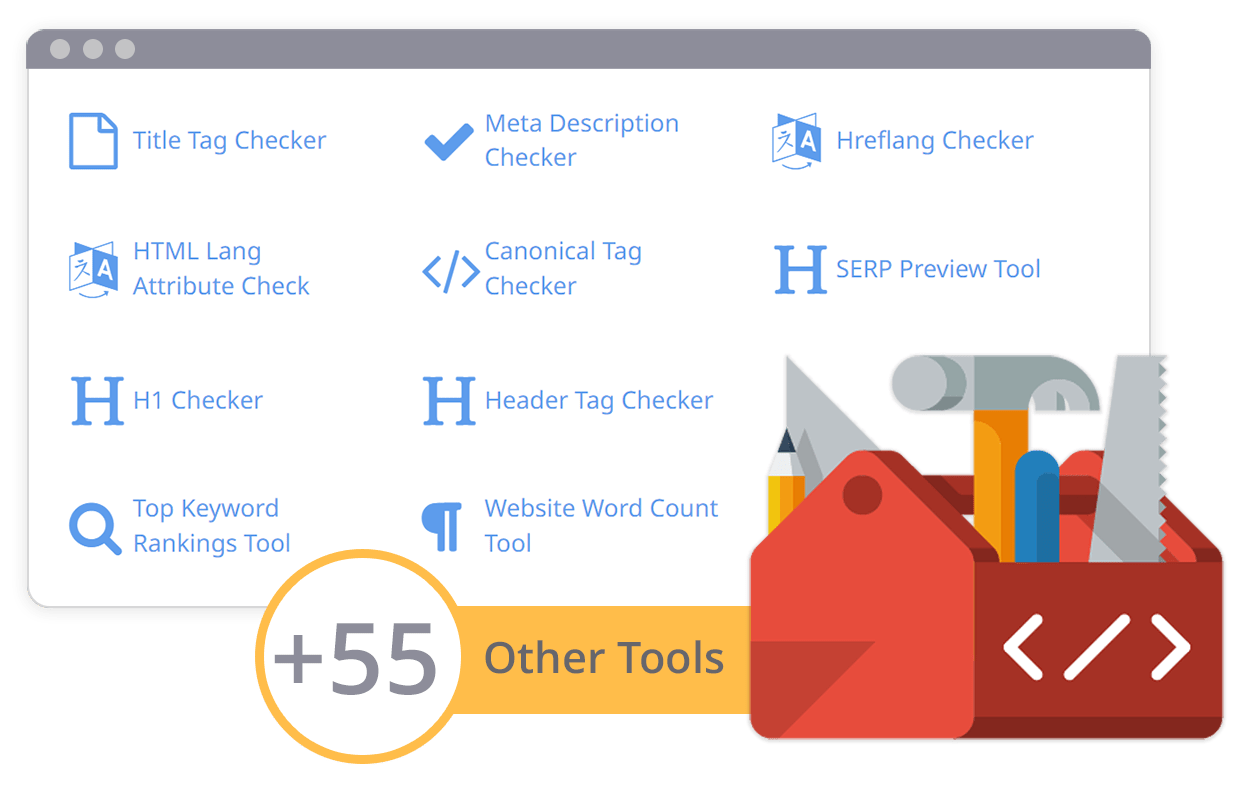
Comprehensive SEO Toolbox with over 55 Tools
Check Titles, Meta Descriptions, Headings, Schema, Core Web Vitals, SSL and Robots.txt. Generate Meta Tags, Sitemaps and .htaccess Rules, minify CSS, JS and HTML, and draft copy with our AI Writing Tools - instantly and for free.
Further Reading
See More
How the Art of Storytelling Can Help Marketers With Brand Positioning
Creating a strong brand positioning strategy is not an easy task in today’s highly saturated markets. People’s attention spans are shorter t...
How to do a Brand Audit with Template & Examples
Today’s business landscape is filled with competition, from new startups to already established companies trying to outwit each other. In...