Find the Technology a Website is Built With Tool
Detects the technologies and frameworks used to build a website.
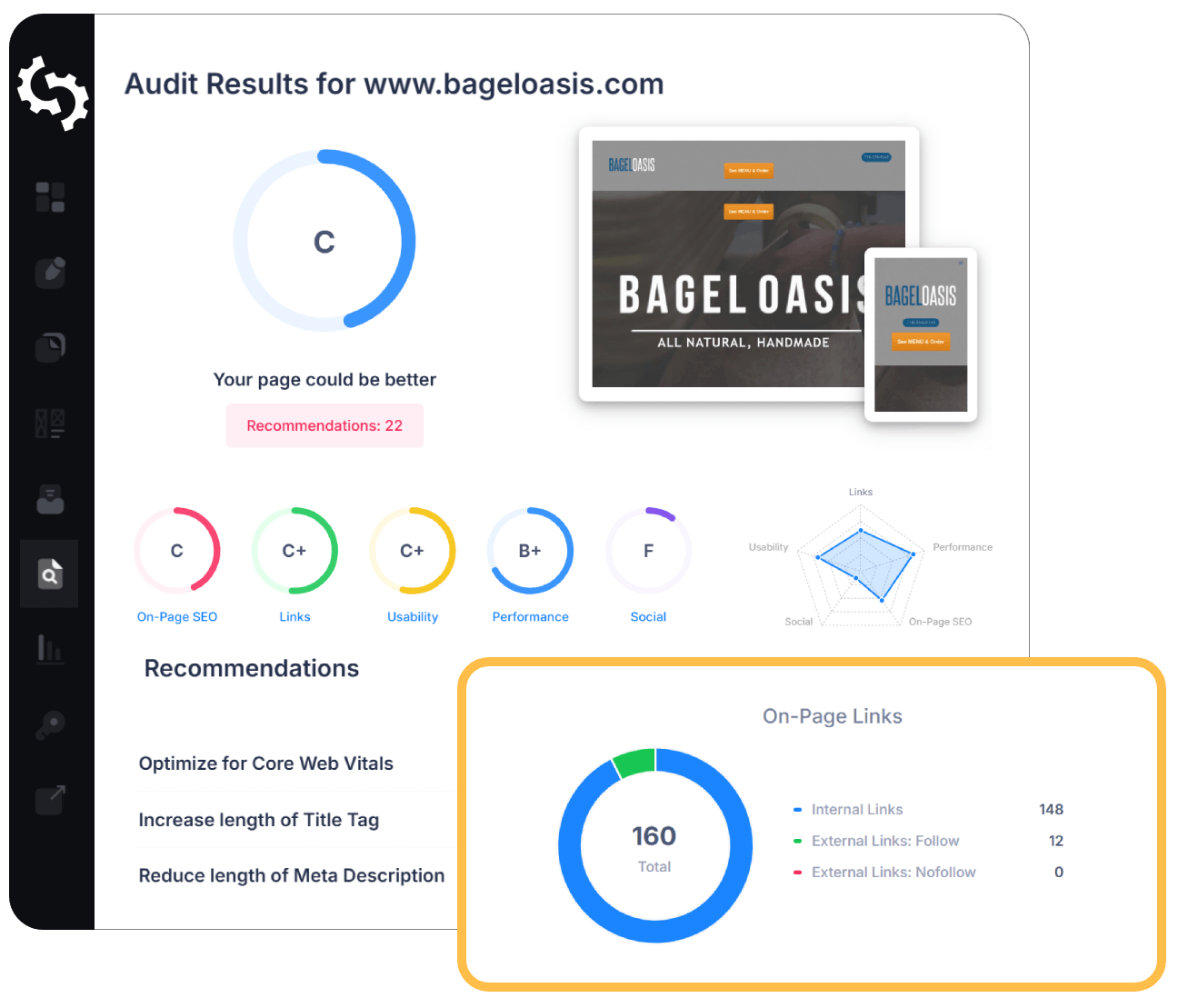
SEO Audit Any Site in Seconds
+ Comprehensive SEO / GEO Tools for Every Function
Run over 100 checks on your website across On-Page SEO, Usability, Performance, Social and Links. Now with GEO in every report. SEOptimer also offers keyword research, rank tracking, backlinks and a full site crawler.

About Website Technologies
What does this detect?
Technology detection identifies what a site is built with by reading fingerprints it leaves in the page: the content management system, frameworks, analytics, hosting, CDN, payment tools and marketing scripts.
None of this is hidden. It is inferred from markup patterns, file paths, response headers and script sources that are visible to anyone who views the page, which is why the same technique powers competitor research.
Detection is inference rather than certainty. It can miss things that have been renamed or proxied, and occasionally misidentify one tool as another that shares a fingerprint.
Does the tech stack still matter in 2026?
No platform ranks better than another by virtue of what it is, and anyone claiming otherwise is selling a migration. What differs is what each makes easy or difficult, and how much work is needed to reach a good technical baseline.
The more useful signal is what a stack reveals about maintenance: unmaintained plugins, abandoned analytics, half-completed migrations, and layers of tooling nobody currently owns.
Duplicate analytics is the finding that repays attention most often, because it silently doubles every number a business reports on.
How the tech stack relates to AI search
What matters is whether content is present in the HTML or assembled by JavaScript afterwards, and that is a consequence of how a stack is configured rather than which stack it is.
A heavily client-rendered framework can be read perfectly well if it renders on the server; a simple site can be invisible if it does not. The platform name tells you very little on its own.
Knowing the stack does help you predict where to look. Certain combinations have characteristic failure modes, and recognising the platform shortens the diagnosis considerably.
Using this information
- Check for tools you no longer use and remove their scripts.
- Look for duplicate analytics, which distorts every number you report.
- Note anything outdated enough to be a security concern.
- When auditing someone else, use it to gauge what changes are realistic.
- Compare against competitors to see what is standard in your sector.
- Remember detection is inference; verify before acting on a surprising result.
What this tool checks
The tool inspects the page for known technology fingerprints and lists what it recognises.
It is informational: there is no correct answer, only a picture of what the site is running. What that picture is worth depends entirely on what you were expecting to see.
Where to go next
A stack list is most useful when checked against what it should be producing. Confirm you are not running duplicate analytics, see what all those scripts weigh with the webpage file size tool, and check the web server answering for the domain.
Comprehensive SEO Toolbox with over 55 Tools
Check Titles, Meta Descriptions, Headings, Schema, Core Web Vitals, SSL and Robots.txt. Generate Meta Tags, Sitemaps and .htaccess Rules, minify CSS, JS and HTML, and draft copy with our AI Writing Tools - instantly and for free.
Further Reading
See More
Website Redesign SEO Checklist: How to Redesign a Site without Losing Rankings
Website Redesign SEO Checklist
If you are in a rush, here is the essential checklist on how to redesign a website without losing SEO...