À propos des mots-clés à faible concurrence
Qu’est-ce qui rend un mot-clé peu concurrentiel ?
Un mot-clé est peu concurrentiel lorsque les pages qui se classent déjà pour celui-ci sont suffisamment faibles pour être détrônées. Cela décrit les sites actuellement en place plutôt que l’expression elle-même, ce qui explique pourquoi deux termes d’apparence similaire peuvent se trouver aux extrémités opposées de l’échelle.
La difficulté est évaluée de 0 à 100 en fonction de la solidité de ces pages, principalement de la taille et de la qualité de leurs profils de liens. Un score inférieur à 20 signifie généralement qu’une page bien conçue a de réelles chances de se classer sans campagne de netlinking.
Cet outil pose uniquement cette question. Il n’applique absolument aucun seuil minimal de volume : un terme recherché quelques fois par mois apparaît aux côtés d’un autre recherché des milliers de fois, à condition que les deux soient à votre portée.
Pourquoi aucun seuil minimal de volume ici
L’absence de volume est précisément le but de cette version. De nombreux mots-clés réellement intéressants affichent un volume faible, voire nul — nouvelle terminologie, noms de produits de niche, questions spécifiques — et un seuil masquerait précisément ces mots-clés.
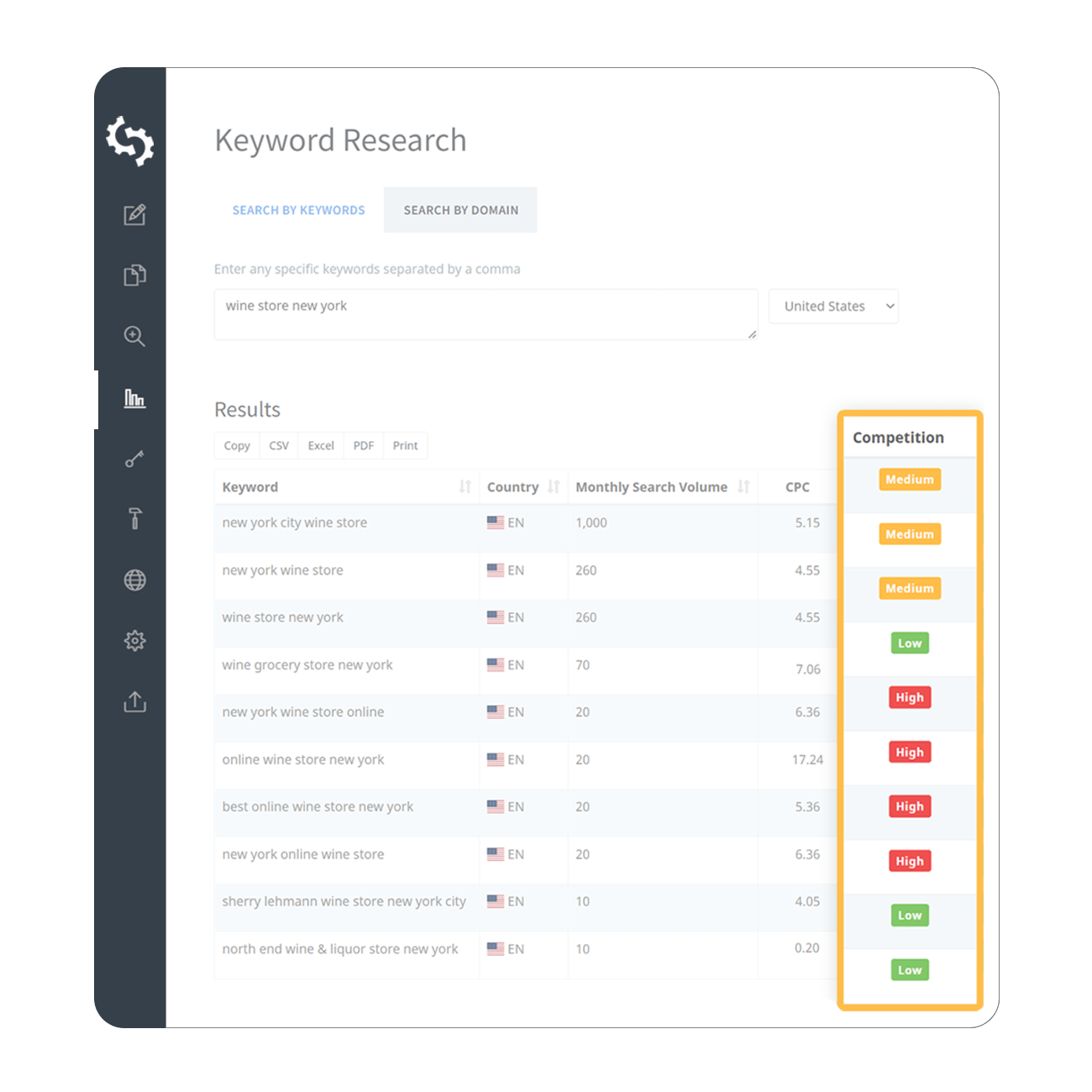
Les résultats sont toujours classés par volume de recherche : les éléments les plus importants apparaissent donc en premier, suivis par la longue traîne. Vous voyez l’ensemble des possibilités et pouvez décider vous-même, au lieu que la décision soit prise avant même que vous ne les voyiez.
Le piège d’une liste comme celle-ci
La plupart des mots-clés ont une faible difficulté pour une raison peu réjouissante. Personne ne se positionne dessus, car il n’y a rien à gagner : la demande est minime, l’intention de recherche est faible ou la réponse est directement affichée sur la page de résultats, sans clic.
Considérez un score faible comme une invitation à examiner la situation plutôt que comme un verdict. Les mots-clés qui valent la peine d’être ciblés sont faciles à atteindre et mènent encore quelque part, mais seule la première moitié de cette réalité est visible dans la colonne de difficulté.
Le coût par clic est le moyen le plus rapide de vérifier la pertinence. Si des annonceurs paient pour un terme, quelqu’un a établi que la visite a une valeur monétaire ; si personne n’enchérît jamais, soyez honnête quant à ce que vous rapporterait un bon classement.
Choisir un niveau maximal de difficulté
La valeur par défaut de 20 est volontairement prudente. Il s’agit d’un point de départ plutôt que d’une recommandation, et le nombre approprié dépend bien davantage de votre site que du mot-clé.
- Environ 10 pour un site récent disposant de peu de liens, pour lequel 20 peut encore être optimiste.
- Environ 20 à 30 pour un site établi bénéficiant déjà d’une certaine autorité.
- Plus de 40 uniquement si vous êtes prêt à créer des liens pour vous positionner sur ce mot-clé.
- Réduisez encore cette valeur si la liste obtenue est longue et peu différenciée.
Un résultat vide est une information plutôt qu’un problème. Cela signifie généralement que le mot-clé initial se situe lui-même dans un secteur concurrentiel : c’est donc le mot-clé initial qu’il faut modifier.
Les mots-clés à faible concurrence sont-ils toujours efficaces en 2026 ?
Ils restent la méthode la plus fiable pour un site dépourvu d’autorité, car l’alternative — se battre pour les requêtes que tout le monde convoite — dépend en grande partie des liens et de l’ancienneté, et aucun des deux ne s’acquiert rapidement.
Ce qui a changé, c’est le plafond. Les résumés générés par l’IA répondent aux recherches informationnelles les plus simples, qui regroupent une grande partie des mots-clés peu concurrentiels. Les mots-clés les plus faciles à positionner sont donc aussi les plus susceptibles d’obtenir une réponse sans visite sur un site.
Cela oriente la valeur vers des termes spécifiques et pratiques : comparaisons, décisions, tâches avec un résultat concret. Ils sont plus difficiles à résumer et sont généralement ceux associés à un coût par clic.
Ce que cet outil vérifie
L’outil prend un mot-clé de départ, interroge notre index pour trouver des mots-clés associés et ne conserve que ceux dont la difficulté est inférieure ou égale au maximum que vous avez défini. Les résultats sont classés par volume de recherche, de sorte que la plus grande opportunité retenue apparaît en premier.
Le seuil est appliqué lors de la création de la liste, et non à une liste déjà récupérée. Classée uniquement par volume, la tête d’une liste non filtrée est presque entièrement composée de mots-clés bien trop concurrentiels pour mériter votre temps.
Les chiffres proviennent de notre index et non d’une recherche en direct. Ils décrivent donc la situation enregistrée pour ces mots-clés et cet emplacement, plutôt que les résultats tels qu’ils se présentent à cet instant.
Pour aller plus loin