Acerca del coste de las palabras clave
¿Cuánto cuesta una palabra clave?
Una palabra clave no tiene un precio propio. Lo que tiene es un mercado: anunciantes que pujan unos contra otros en una subasta de PPC por el espacio situado encima de los resultados orgánicos, y las cifras que aparecen aquí describen cómo son actualmente esas pujas.
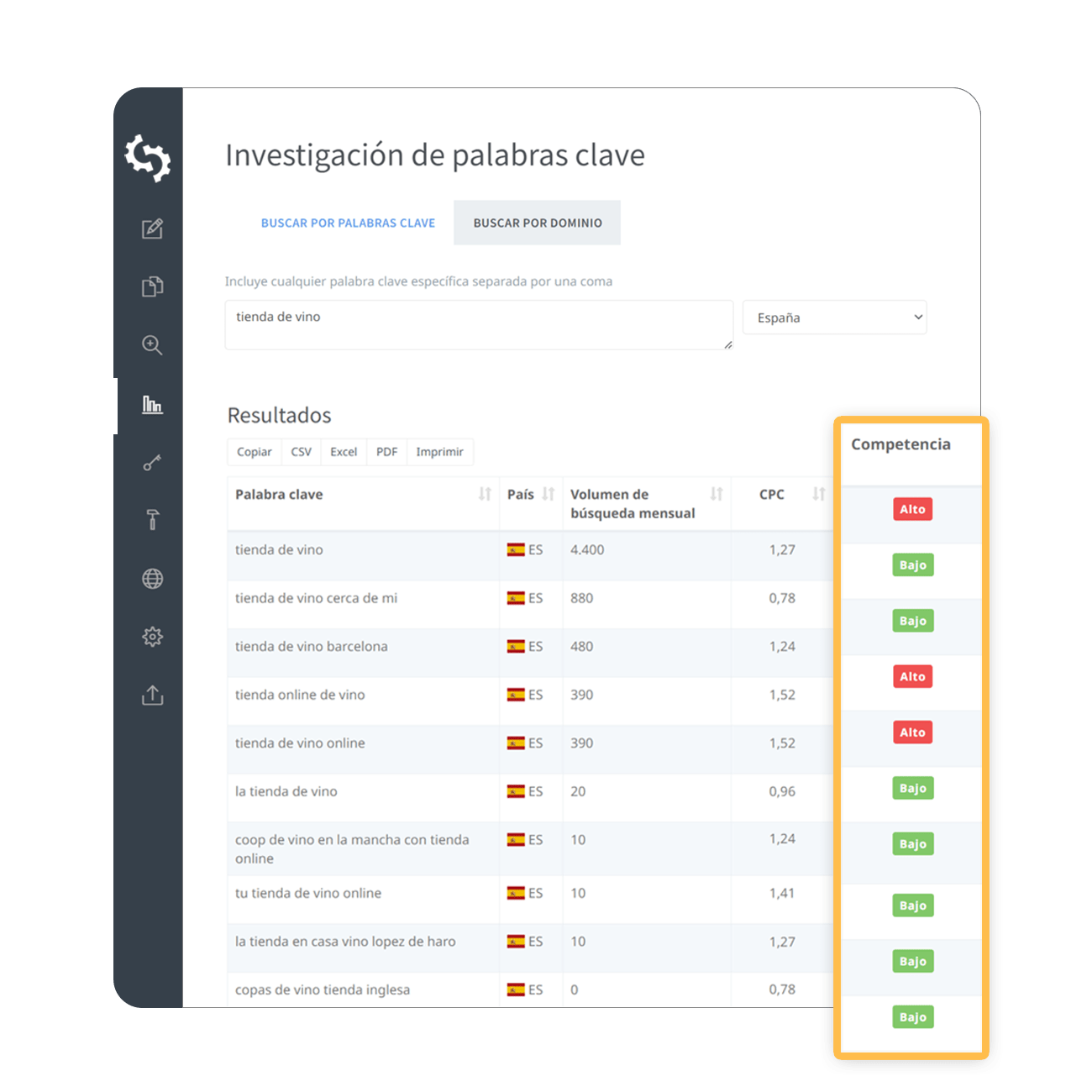
El coste por clic es la cantidad media que paga un anunciante cuando alguien hace clic en su anuncio para ese término. La puja para la parte superior de la página indica cuánto hay que pagar para aparecer en la parte superior, en lugar de simplemente en algún punto de la página, y la competencia describe lo reñida que está la subasta.
Vale la pena analizar estos tres datos conjuntamente. Un promedio moderado con una puja alta para la parte superior de la página describe un término en el que las posiciones económicas son baratas por alguna razón, y en el que lograr visibilidad cuesta considerablemente más que simplemente estar presente.
Por qué importa el coste aunque nunca publiques anuncios
El coste por clic es la valoración más sincera de una palabra clave disponible en cualquier lugar, y es la única cifra de la investigación de palabras clave que alguien ha pagado para establecer. Los anunciantes pujan lo que un visitante realmente vale para ellos y dejan de hacerlo cuando deja de resultar rentable.
Esto lo convierte en una mejor guía del valor comercial que el volumen de búsquedas. Un término con un volumen moderado y una puja alta es uno por el que la gente compra; un término popular por el que nadie puja suele ser uno que la gente consulta y abandona.
Si se interpreta al revés, el coste también pone precio a la alternativa. Un término para el que podrías posicionarte orgánicamente, con un coste por clic elevado y un volumen real detrás, permite cuantificar cuánto valdría ese posicionamiento si tuvieras que alquilarlo.
Cómo interpretar el coste en relación con el volumen y la intención
Un coste elevado con un volumen bajo es habitual en términos que se encuentran en las fases finales de una decisión de compra. Parecen poco destacables en una lista de palabras clave y con frecuencia convierten mejor que cualquier otro término situado por encima de ellos en ella.
Un coste bajo con un volumen alto suele significar que el término es informativo: hay mucho interés, poca urgencia comercial y pocos anunciantes dispuestos a pagar por la visita. Esos términos generan atención en lugar de ingresos, lo cual es un objetivo legítimo siempre que sea el que pretendías.
Un nivel alto en ambos indica un mercado competitivo con dinero real. Espera que los resultados orgánicos estén tan disputados como la subasta; aquí es donde la puntuación de dificultad y las medias de backlinks que aparecen a continuación se convierten en las cifras relevantes.
¿Sigue siendo importante el coste de las palabras clave en 2026?
Importa más a medida que la página de resultados se vuelve más concurrida. Los emplazamientos de pago, los módulos de Shopping y los resúmenes de IA aparecen por encima de los resultados orgánicos, por lo que el precio de saltarse la cola es una cuestión más práctica que antes.
Las cifras son promedios calculados durante un periodo, no precios de subasta en tiempo real, así que considérelas una forma de comparar términos, no un presupuesto. Lo que Google Ads, todavía conocido ampliamente como AdWords, cobra realmente varía según el momento, el dispositivo, la ubicación, el nivel de calidad y quién más esté pujando esa semana.
Como medida relativa, funcionan bien. Si un término cuesta tres veces más que otro, esa relación resulta informativa, aunque ninguna de las dos cifras absolutas coincida exactamente con una campaña activa.
Cómo se relaciona el coste de las palabras clave con las búsquedas mediante IA
Las respuestas de IA absorben primero el extremo de menor valor del espectro. Las definiciones y los datos breves nunca tuvieron mucho valor para los anunciantes, precisamente por eso tienen pujas bajas, y son las búsquedas con más probabilidades de recibir una respuesta sin hacer clic.
Los términos caros son aquellos en los que alguien todavía tiene que llegar a algún sitio para comprar, reservar o registrarse. Estos mantienen su valor, y un coste por clic elevado es una señal razonable de que un término es duradero, en lugar de estar a punto de quedar resumido.
Utilizado de este modo, el coste es menos una cifra presupuestaria que un filtro para determinar qué términos siguen mereciendo la pena posicionar.
Buenas prácticas sobre el coste de las palabras clave
- Analiza conjuntamente el coste por clic, la puja para la parte superior de la página y la competencia; nunca por separado.
- Considera el coste de PPC como una prueba del valor comercial, aunque no tengas intención de anunciarte.
- Compara los costes dentro de un tema; las pujas varían enormemente entre sectores.
- Espera una puja alta para aparecer en las primeras posiciones de la página en términos cuyas posiciones económicas atraen poca atención.
- Usa el coste para estimar cuánto valdría un posicionamiento orgánico si tuvieras que comprar el mismo tráfico.
- Considera las cifras como promedios para realizar comparaciones, no como un presupuesto para una campaña.
Qué comprueba esta herramienta
La herramienta de coste de palabras clave busca el término en nuestro índice y comienza con las métricas de PPC —coste por clic, puja por la parte superior de la página y competencia entre anunciantes—, seguido de un resumen general de la dificultad, el volumen y la intención; después, muestra el volumen de búsquedas y su tendencia y, por último, el perfil de backlinks de las páginas que actualmente están posicionadas.
Calcula el coste de una sola palabra clave. Es una cuestión diferente de la que aborda nuestro
Comprobador de PPC, que recibe un dominio e informa de las palabras clave de pago por las que está pujando; conviene saberlo, ya que los dos nombres se parecen lo suficiente como para confundirse.
Las cifras proceden de nuestro índice, no de una subasta en tiempo real, por lo que describen la situación registrada para ese término y ubicación, en lugar de lo que una cuenta de AdWords te mostraría en este momento.
Qué hacer a continuación