Domain Age Checker
SEOptimer’s Domain Age Checker tells you the age of any domain, showing its registration date.
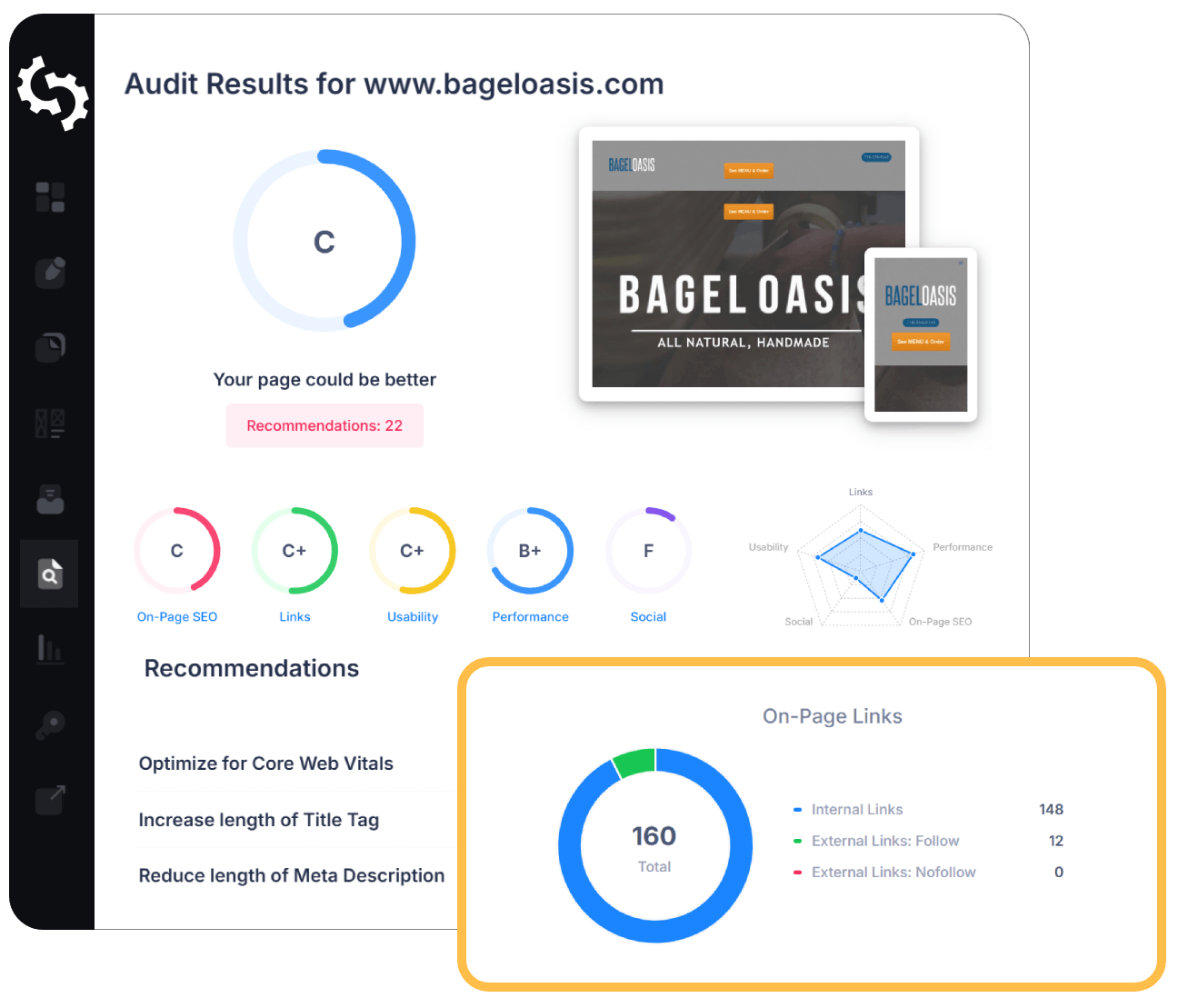
SEO Audit Any Site in Seconds
+ Comprehensive SEO / GEO Tools for Every Function
Run over 100 checks on your website across On-Page SEO, Usability, Performance, Social and Links. Now with GEO in every report. SEOptimer also offers keyword research, rank tracking, backlinks and a full site crawler.

About Domain Age
What is domain age?
Domain age is how long a domain has been registered, measured from its original registration date rather than from when the current owner acquired it or when a site first appeared on it.
The information comes from public registration records, which also carry the last update and the expiry date. A domain age checker reads those records and presents them, which is why results vary in completeness: some registries publish full detail, others redact almost everything.
Registration date and site history are different things. A domain registered in 2004 and parked until last year has an old registration and no history at all, and only one of those is worth anything.
Does domain age still matter in 2026?
Not as a ranking factor in its own right, and it is worth saying so plainly. Google has stated repeatedly that age alone confers no advantage, and a well-executed new site can outrank an old one comfortably.
What correlates with age is everything that accumulates over time: links, coverage, brand recognition and a track record of publishing. Those are genuinely valuable, and they are what people are really observing when they credit an old domain with an advantage.
The useful reframing is that age is a proxy rather than a cause. A domain with fifteen years of registration and nothing else has none of the benefits attributed to it.
When domain age is worth checking
Buying a domain is the main case. An expired or aftermarket domain with a long registration history may carry existing links worth inheriting, or it may carry a penalty and a spam history that transfers with it. Age is the first question, not the last.
Competitive research is the second. Knowing whether a rival has been established for a decade or launched last spring changes how you read their rankings and how realistic catching them is.
The third is your own domain hygiene. The expiry date shown alongside the age is worth noting, because a lapsed renewal is one of the few mistakes that can lose a business its domain outright.
How domain age relates to AI search
Age itself is not a signal. What systems assessing source credibility respond to is track record, and a long publishing history is one way that gets established.
A domain with years of consistent, referenced content behind it is easier to treat as reliable than one with no history, which is the same observation as the ranking one and has the same caveat: the history does the work, not the registration date.
A newer domain closes that gap by publishing genuinely useful material and earning references, not by waiting.
Using this information
- Check age before buying a domain, then check what it was actually used for.
- Treat a long registration with no history as neutral rather than valuable.
- Note the expiry date on domains you own, and enable auto-renewal.
- Use it in competitive research to calibrate how established a rival really is.
- Do not buy an aged domain expecting a ranking shortcut; there is not one.
- Remember records are often redacted, so gaps are normal rather than suspicious.
What this tool checks
The domain age checker looks up the public registration record for the domain and reports its age, along with the registration, last updated and expiry dates where the registry publishes them.
Values shown as unavailable usually mean the registry does not publish that field rather than that something is wrong. The tool reports registration history only, and cannot tell you what the domain was used for during that time.
Where to go next
Registration history says nothing about what the domain has earned. Check its backlink profile to see who references it, review the DNS configuration, and confirm the SSL certificate is valid if you are evaluating a domain to buy.
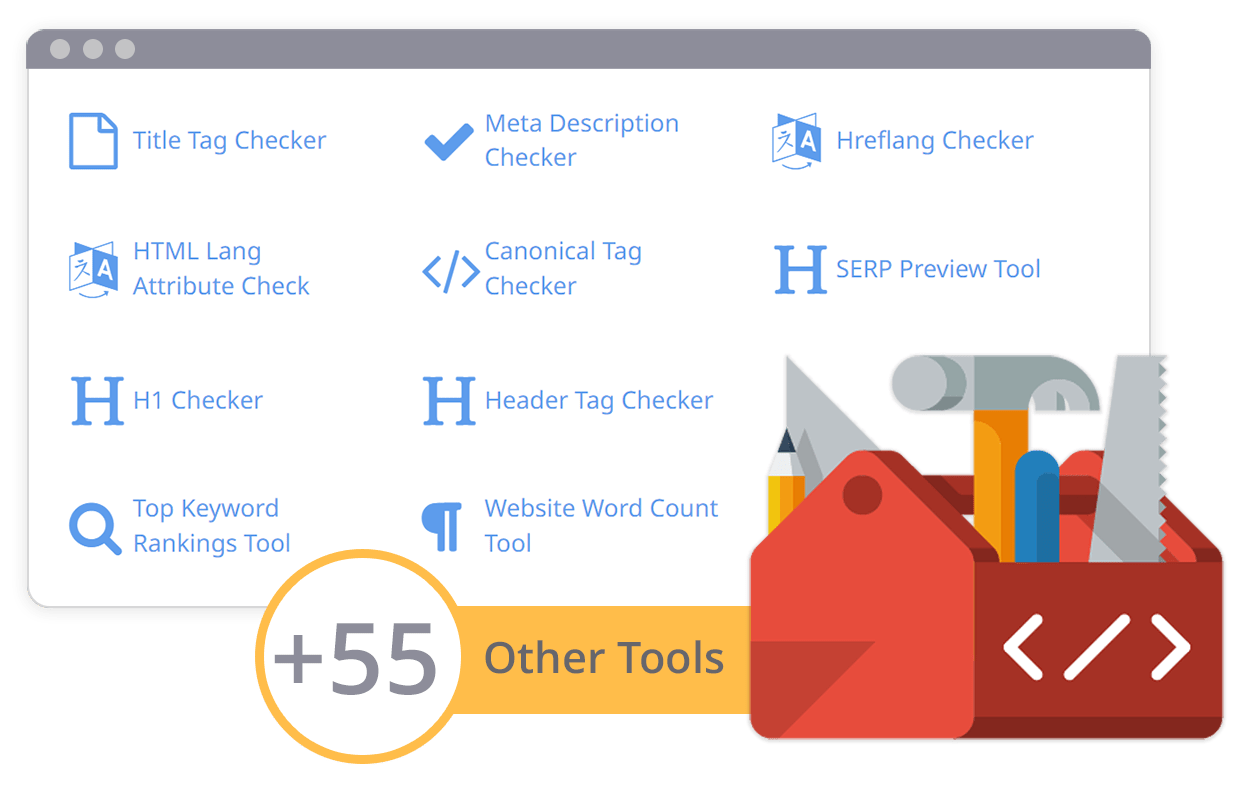
Comprehensive SEO Toolbox with over 55 Tools
Check Titles, Meta Descriptions, Headings, Schema, Core Web Vitals, SSL and Robots.txt. Generate Meta Tags, Sitemaps and .htaccess Rules, minify CSS, JS and HTML, and draft copy with our AI Writing Tools - instantly and for free.
Further Reading
See More
Domain Change SEO: How to Minimize Rankings & Traffic Loss
If done incorrectly, changing your domain can lead to a complete loss of SEO rankings. I have seen websites reduce their traffic by as much...

What Domain Extension (TLD) Is Best for SEO?
Did you know that there are about 628.5 million registered domains as of July, 2023?
Nowadays, choosing a domain name is much trickier than...

Should You Use Hyphens in Domain Names?
What your domain should include or not include has been an ongoing discussion among brands, webmasters and marketers. Should a domain incl...

When to use Localized Domains, and their SEO Impacts
Does Domain Localization Help My SEO?
Over the last few years, we have seen the rise of local SEO. Here are local SEO stats by Soc...