Anchor Text Checker
SEOptimer’s free anchor text checker shows the words other sites use when they link to you, and how many backlinks carry each one.
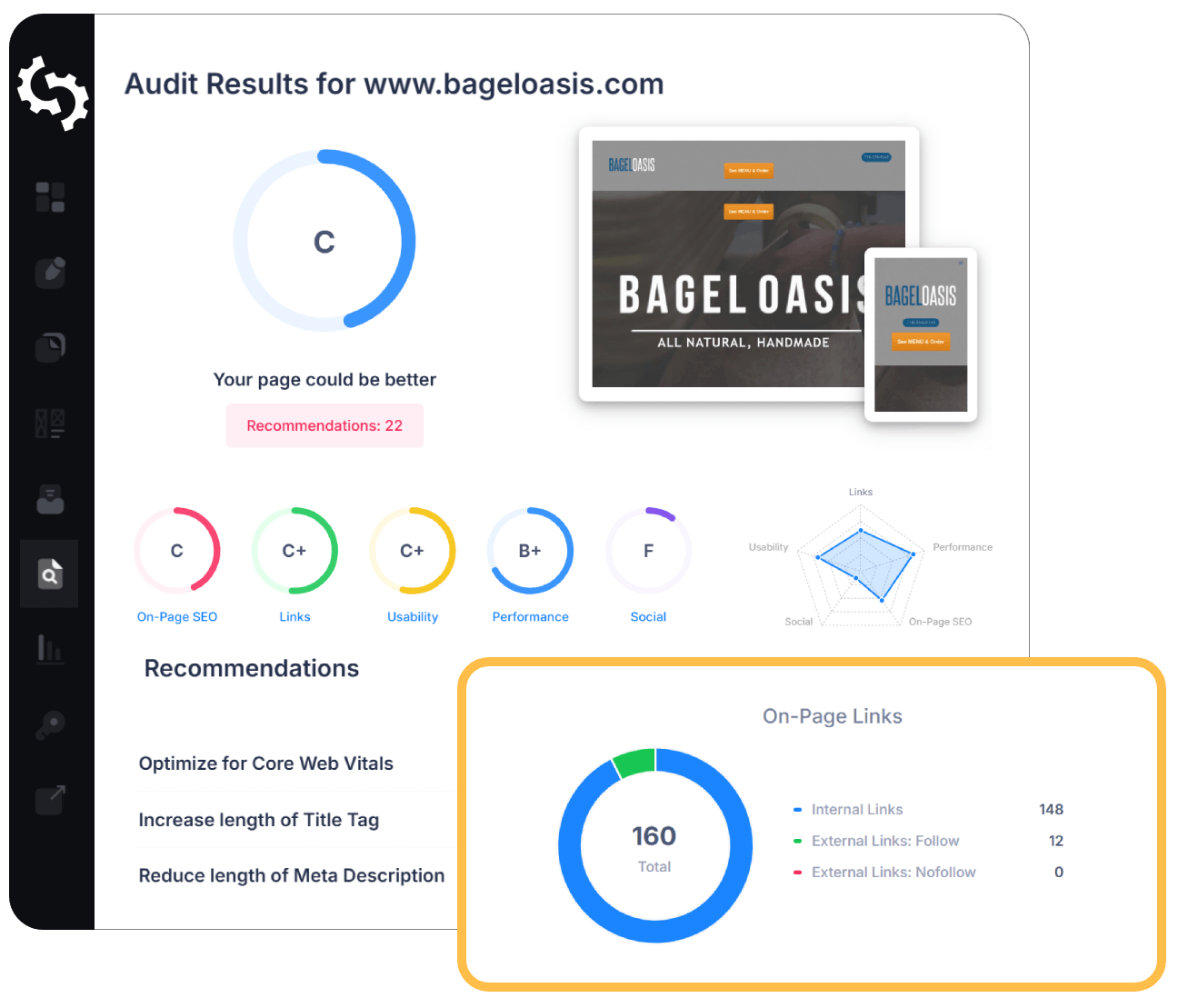
SEO Audit Any Site in Seconds
+ Comprehensive SEO / GEO Tools for Every Function
Run over 100 checks on your website across On-Page SEO, Usability, Performance, Social and Links. Now with GEO in every report. SEOptimer also offers keyword research, rank tracking, backlinks and a full site crawler.

Understanding Anchor Text
What is anchor text?
Anchor text is the visible, clickable wording of a link - the words somebody actually reads and clicks, as opposed to the URL underneath them. When another site links to you, whatever they chose to write is your anchor text for that link.
It is worth checking because you do not choose it. Every other site decides for itself how to describe you, and the collected result is a fairly honest account of what the web thinks your site is about.
An anchor text checker gathers those words across a whole backlink profile and shows which ones come up most, which is not always what you would have guessed.
Why anchor text matters
Search engines have always used the wording of a link as a clue to what the target page is about. A page linked to repeatedly as "hiking boots review" is being told, by hundreds of independent parties, what it is for.
That makes it useful in both directions. Where your anchors match the terms you want to rank for, the profile is reinforcing your positioning; where they do not, you are being described as something other than what you sell.
It also tends to be honest in a way your own copy is not. Nobody links to you using your internal product names or your marketing language - they use whatever phrase makes sense to their readers.
What a healthy anchor profile looks like
Variety is the short answer, and the shape is fairly consistent across sites that have earned their links rather than bought them:
- A large share of brand anchors - your company or domain name.
- A good number of generic anchors: "here", "this article", "read more".
- Naked URLs, where somebody has simply pasted the address.
- Some descriptive phrases that happen to include your keywords.
- Very few exact commercial keyword matches repeated over and over.
That last point is the one that catches people out. A profile stuffed with the exact phrase somebody wants to rank for does not look like something the web produced on its own, and it is one of the older signals of manipulation there is.
How to read your results
Start with the proportions rather than any single row. If your brand name is not near the top, either the site is young or its links came from somewhere other than genuine coverage.
Then look for anything you did not expect. Anchors in another language, or describing products you do not sell, usually mean links you did not earn - occasionally harmless syndication, occasionally something worth disavowing.
Finally, compare the descriptive anchors against what you actually want to be known for. A gap there is a content and outreach brief: it tells you what the web currently thinks you do, and how far that is from what you would like it to think.
Anchor text and AI search in 2026
Anchor text has always been a way of describing an entity in somebody else's words, and that is close to how models build a sense of what a brand is. Consistent phrasing across many independent sites is exactly the kind of corroboration they lean on.
That makes the descriptive anchors more interesting than they used to be. Being linked to repeatedly as "project management software for architects" is a description accumulating across the open web, whatever any single search engine does with it.
The advice does not change, though. Anchors worth having come from coverage worth having, and the way to influence them is to be worth describing that way in the first place.
What this tool checks
Enter a domain and the anchor text checker returns the wording used most often in links pointing at it, with the number of backlinks carrying each phrase.
It shows the top anchors rather than every one, and comes from the backlink data we hold rather than a live crawl - so read it as the shape of a profile rather than a complete list.
Where to go next
Anchors are one view of a backlink profile. See which sites link to you in the first place, get the totals and dofollow split from the backlink checker, and confirm the pages those links point at still return a healthy status code.
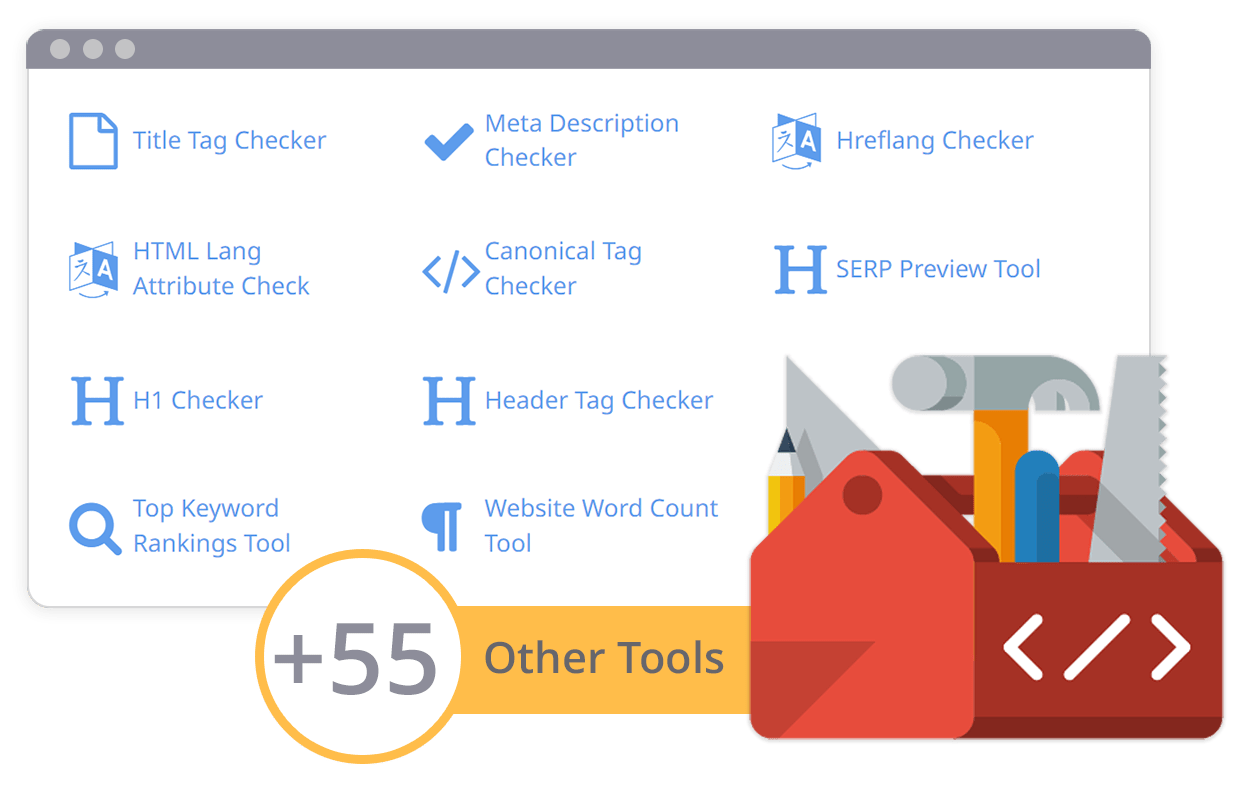
Comprehensive SEO Toolbox with over 55 Tools
Check Titles, Meta Descriptions, Headings, Schema, Core Web Vitals, SSL and Robots.txt. Generate Meta Tags, Sitemaps and .htaccess Rules, minify CSS, JS and HTML, and draft copy with our AI Writing Tools - instantly and for free.
Further Reading
See More
How to Write SEO-Friendly Backlink Anchor Texts
With the release of Google's Penguin update a few years ago, webmasters need to consider their approach to creating backlink anchor texts....
What are Backlinks and How Do You Get Them?
Want to optimize your website’s SEO, in the hopes of ranking on the first page of Google? Then you’ve got to work on your backlinking stra...

5 Types of Google Link Penalties to Avoid at All Costs
Penalties are never good.
No matter how you end up with one.
Whether it's a red card, a hefty fine or a link penalty from Google, no...
Backlinks vs Referring Domains: Which is Most Important?
When it comes to search engine optimization (SEO), there are countless factors that influence a website's visibility and ranking.
Am...

6 Advanced Link Building Strategies to Crush Your Competition
Imagine looking at your website a few years from now. If you’re hustling like crazy, you’re hoping to see more search engine traffic, an i...

What is Backlink Management: Tips, Tools, and Tactics for SEOs
Professional search engine marketers should know how to manage backlinks because a well-designed SEO backlink management strategy helps to k...