Url Status Code Checker
SEOptimer’s URL Status Code Checker verifies if a URL returns a '200 OK' status or detects other status codes like redirects or errors.
Please enter your website URL for us to evaluate the Status Code on page.
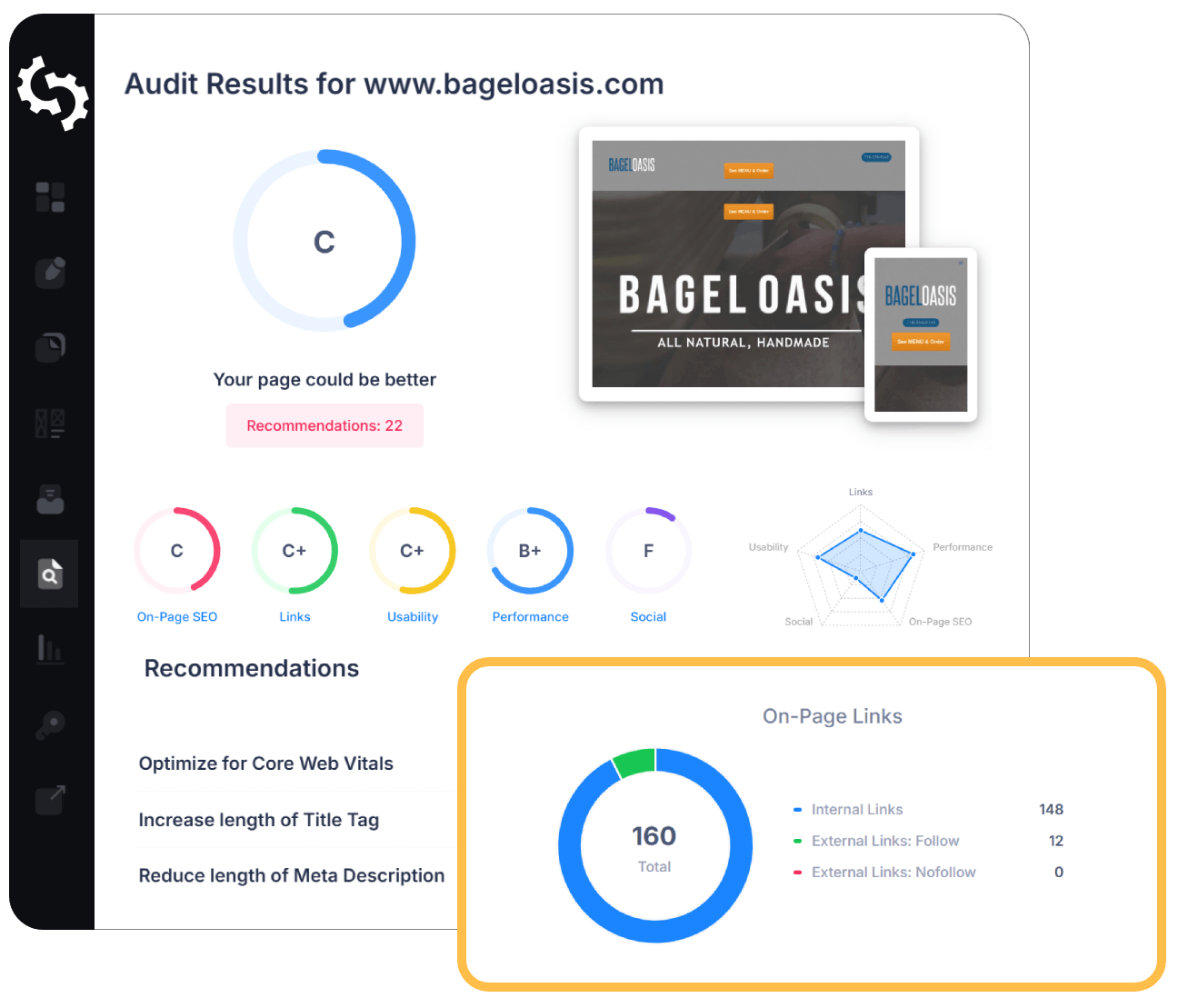
SEO Audit Any Site in Seconds
+ Comprehensive SEO / GEO Tools for Every Function
Run over 100 checks on your website across On-Page SEO, Usability, Performance, Social and Links. Now with GEO in every report. SEOptimer also offers keyword research, rank tracking, backlinks and a full site crawler.

About URL Status Codes
What is a URL status code?
Every request for a URL returns a three digit code describing what happened. These are formally HTTP status codes, and the two names are used interchangeably: 200 means the page was served, 301 and 302 mean it moved, 404 means it does not exist, 500 means the server failed trying.
The code is returned before any content, and it determines how every automated visitor treats the response regardless of what the page then displays. A page can look perfect and still be reported as missing.
A URL status code checker is worth running precisely because the code and the appearance can disagree. What a browser shows you and what a crawler is told are two different things.
Do status codes still matter in 2026?
They are the foundation everything else rests on. A page with excellent content that answers with a 404 will not rank, will not be cited, and will not be crawled again with much enthusiasm.
The most damaging variant is the soft 404: a page that displays an error message while returning 200. Crawlers believe the code rather than the message, so the site quietly accumulates apparently valid pages containing nothing useful.
Redirects deserve equal attention. Crawlers give up after a few hops, so a page reachable only through several chained redirects may never be read at all.
How status codes relate to AI search
A cited source that later returns an error breaks the answer for the reader and undermines the credibility of the citation. Systems that revisit sources to confirm they still exist will quietly stop trusting a domain that returns errors.
Permanence matters more than it used to. A URL that is quoted rather than merely visited needs to keep working, because the citation may outlive several redesigns of your site.
That makes a proper 301 after a move considerably more valuable than deleting a page and hoping the traffic finds its way.
What the common codes mean
- 200: the page exists and was served normally.
- 301: moved permanently. Signals transfer to the new URL.
- 302: moved temporarily. Signals stay with the original.
- 404: not found. Correct for a page that genuinely does not exist.
- 410: gone. A stronger statement than 404, for content deliberately removed.
- 500: a server error. Almost always a fault rather than an intention.
Status code best practices
- Serve a 200 for pages that exist and a genuine 404 for pages that do not.
- Use 301 for permanent moves so signals transfer; reserve 302 for genuinely temporary ones.
- Point redirects straight at the final destination rather than chaining them.
- Redirect a removed page to the closest relevant replacement, not blanket to the homepage.
- Watch for soft 404s, where an error page returns a success code.
- Monitor for new 500 errors, which usually indicate something broke rather than something moved.
What this tool checks
The URL status code checker requests the URL and reports the code it receives, passing on anything in the 200 or 300 range and failing on 400 and 500 errors.
Because a redirect passes, a successful result does not by itself confirm the URL you entered is the one finally served. If a redirect is involved, it is worth following where it actually leads.
Where to go next
A working status code is the start rather than the end. Confirm the canonical tag names the URL you want indexed, check the SEO friendly URL checker reads well since it is displayed in results, and make sure your XML sitemap generator lists only URLs that return a 200.
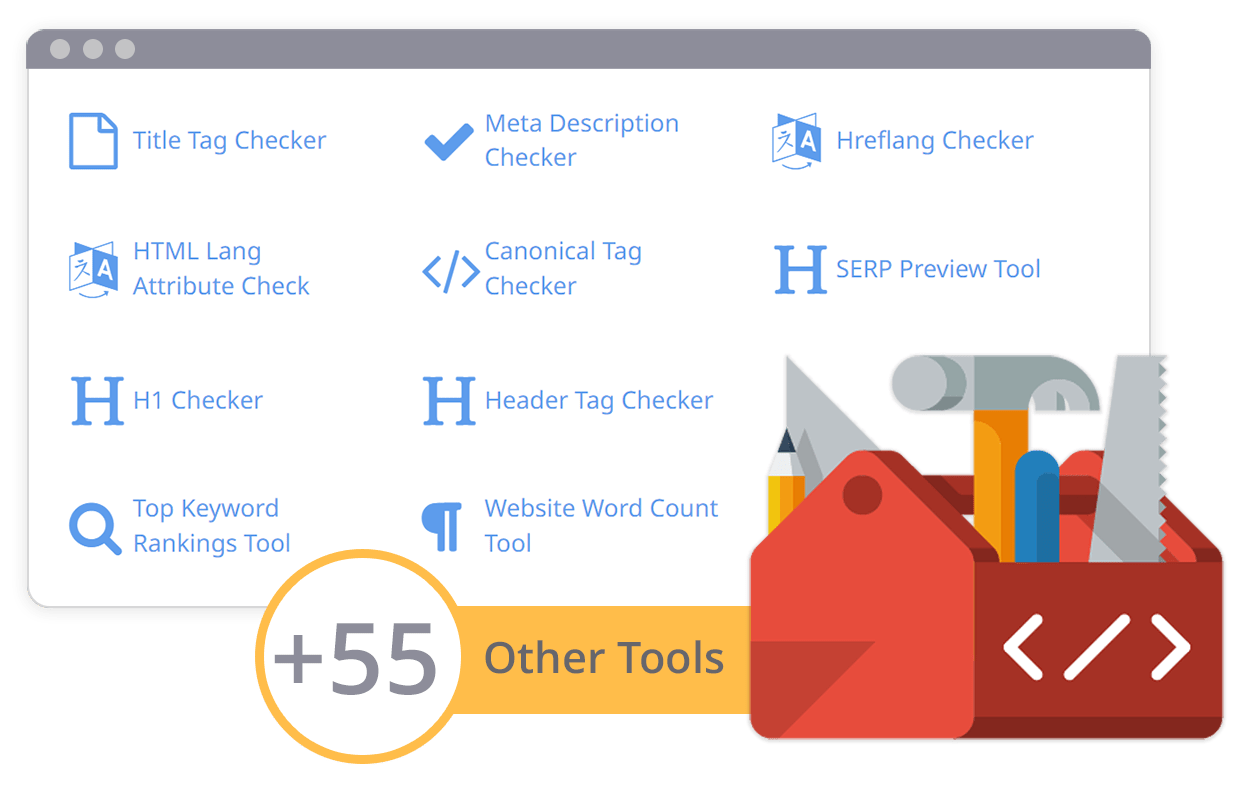
Comprehensive SEO Toolbox with over 55 Tools
Check Titles, Meta Descriptions, Headings, Schema, Core Web Vitals, SSL and Robots.txt. Generate Meta Tags, Sitemaps and .htaccess Rules, minify CSS, JS and HTML, and draft copy with our AI Writing Tools - instantly and for free.
Further Reading
See More
3xx Redirects: What are They & How They Impact SEO
Understanding 3xx redirects is important for anyone involved in digital marketing and SEO. These redirects tell browsers that the requested...

404 Redirection: How to Implement it & SEO Impact
Should 404 errors be every webmaster’s nightmare? What are 404 errors? What impact do they have on SEO? Is there a correct way to implemen...

What are Redirect Chains & How To Fix Them?
A redirect is necessary because it leads users to the new version of a landing page. However, when implemented incorrectly, these permanent...
Avoid Landing Page Redirects (and How to Fix Them)
Have you ever used a tool like PageSpeed Insights or GTMetrix to check the performance of your site? When the analysis is complete, you m...

Wildcard Redirect: What It Is, Why Use It & Examples
From time to time, you may need to move your site. This could be due to a redesign, rebranding, landing page A/B testing for the purpose o...
What are Broken Links? And How Do You Find and Fix Them?
What are Broken Links?
A broken link is a web-page that can't be found or accessed by a user, for various reasons. Web servers wil...