AI Bio Generator
Create the perfect social profile bio with our AI Bio Generator. Just enter a description of your business, brand, or profile, and get a tailored bio that showcases your unique identity.
Input
Output
Generated content:
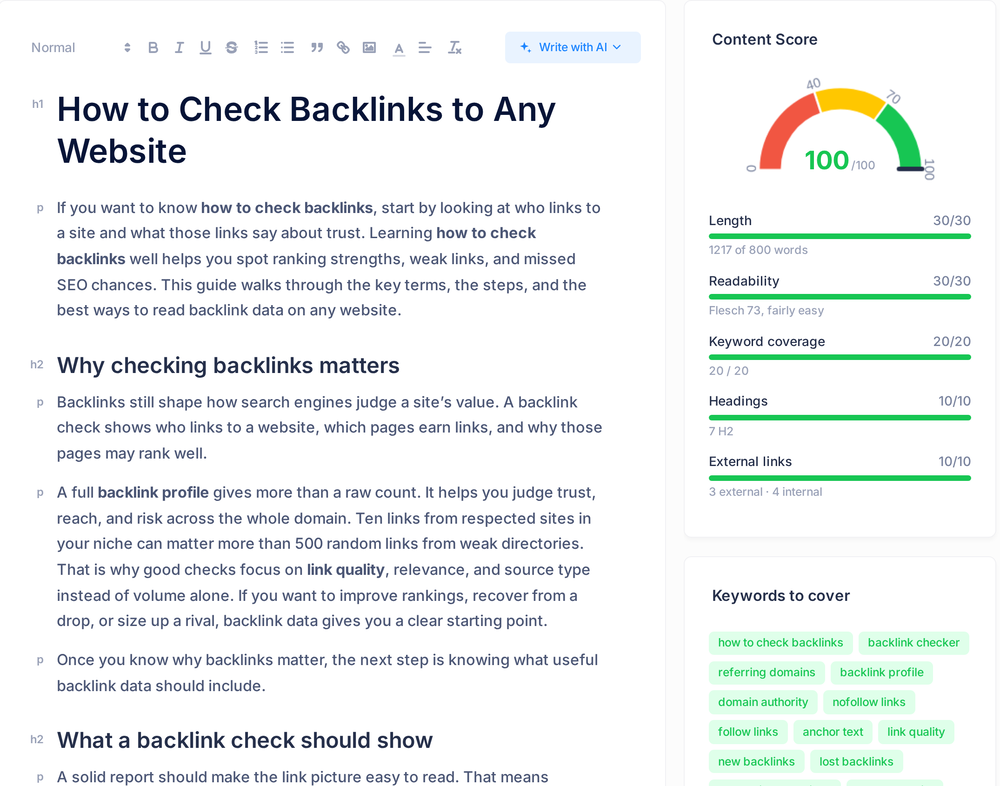
Write SEO Optimized Articles Instantly with AI Writer
AI Writer researches the pages ranking for your target keyword, instantly writes a full article and scores it for keywords, readability, links and length. Create the best content possible with the highest ranking potential with our proprietary algorithms.

About Writing a Bio
What a bio has to do in very little space
A social bio is read in about two seconds by someone deciding whether to follow, hire or ignore you. It has room for one identity, one proof and one direction, and most bios spend all three on adjectives.
The version that works usually states what you do, one thing that makes the claim credible, and where to go next. Everything else is decoration competing for characters you do not have.
The same discipline applies whether the bio sits on a social profile, a conference programme or an author box.
What to include
- What you do, in the words someone outside your field would use.
- Who you do it for, when that narrows things usefully.
- One piece of proof: a number, a named client, a recognisable credential.
- One human detail, which is what makes a bio memorable rather than corporate.
- A next step, since a profile with nowhere to go wastes the attention it earned.
Common mistakes
- Stacking self-descriptions: strategist, thinker, storyteller, coffee lover.
- Job titles that mean nothing outside the company that invented them.
- Third person on a personal profile, which reads as borrowed from a press release.
- The same bio everywhere, ignoring that each platform has a different audience.
- Writing a bio once and leaving it accurate to a job you left years ago.
Bios, authority and AI in 2026
Search engines and answer engines both try to work out who is behind a piece of content, and they assemble that picture from bios, author boxes and profiles across the web.
A bio worded consistently, naming the same specialism and the same organisation everywhere, makes that picture coherent. A different description on each platform makes it noise.
This is the practical form of expertise signals: not a badge you claim, but the same credible description of you appearing in enough places to be believed.
Where the generator helps, and where it does not
Almost nobody writes well about themselves, and a generated draft breaks the paralysis by giving you something to react against. Rejecting a version teaches you what you did not want to say.
It cannot know your achievements, so it will supply confident, generic ones. Replace every claim with something true and specific before the bio goes anywhere public.
Using the AI bio generator
Describe yourself, your business or your brand, choose a tone, and the tool returns a short bio tailored to that description.
Generate a long version and cut it down for the shorter fields rather than writing each from scratch, which is how the wording stays consistent across profiles.
Where to go next
A bio usually sits alongside a longer description and a link. Try the AI business description generator for the fuller version, the LinkedIn headline generator for the professional headline above it, and the call to action generator for the link itself.
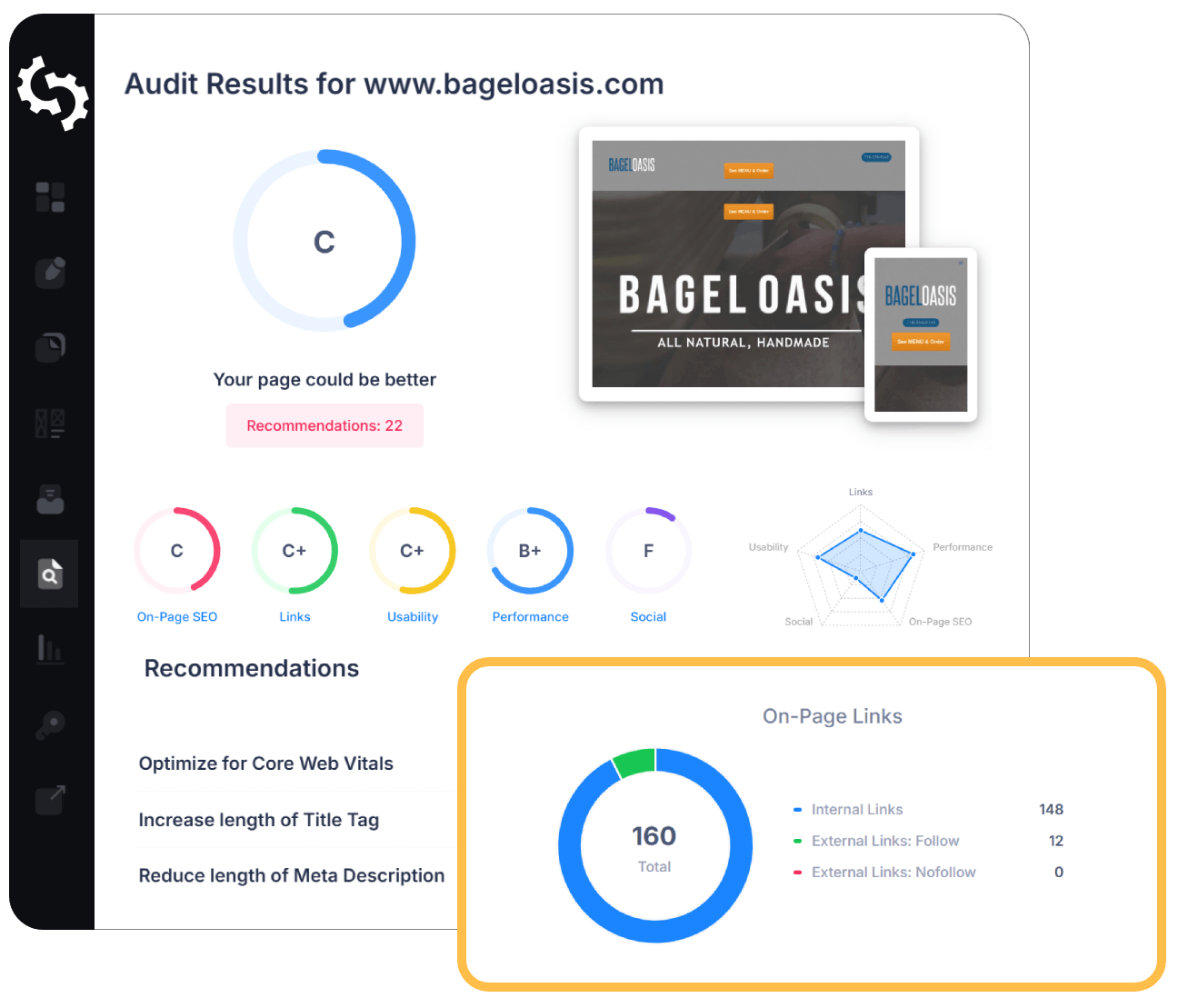
SEO Audit Any Site in Seconds
+ Comprehensive SEO / GEO Tools for Every Function
Run over 100 checks on your website across On-Page SEO, Usability, Performance, Social and Links. Now with GEO in every report. SEOptimer also offers keyword research, rank tracking, backlinks and a full site crawler.
Further Reading
See More
SEO Copywriting Checklist for Higher Ranking Content
Following an SEO copywriting checklist is quite important if you want to improve your website’s search engine visibility and outrank your co...