Readability Checker
Check how easy your text is to read. Paste your copy to get the Flesch Reading Ease score, the Flesch-Kincaid grade level, sentence and word statistics, and plain advice on what to change.
Input
The formulas are calibrated for English; other languages get an approximate score.
Results
Flesch Reading Ease
–
Flesch-Kincaid Grade Level
–
| Words | |
| Sentences | |
| Syllables | |
| Average words per sentence | |
| Average syllables per word |
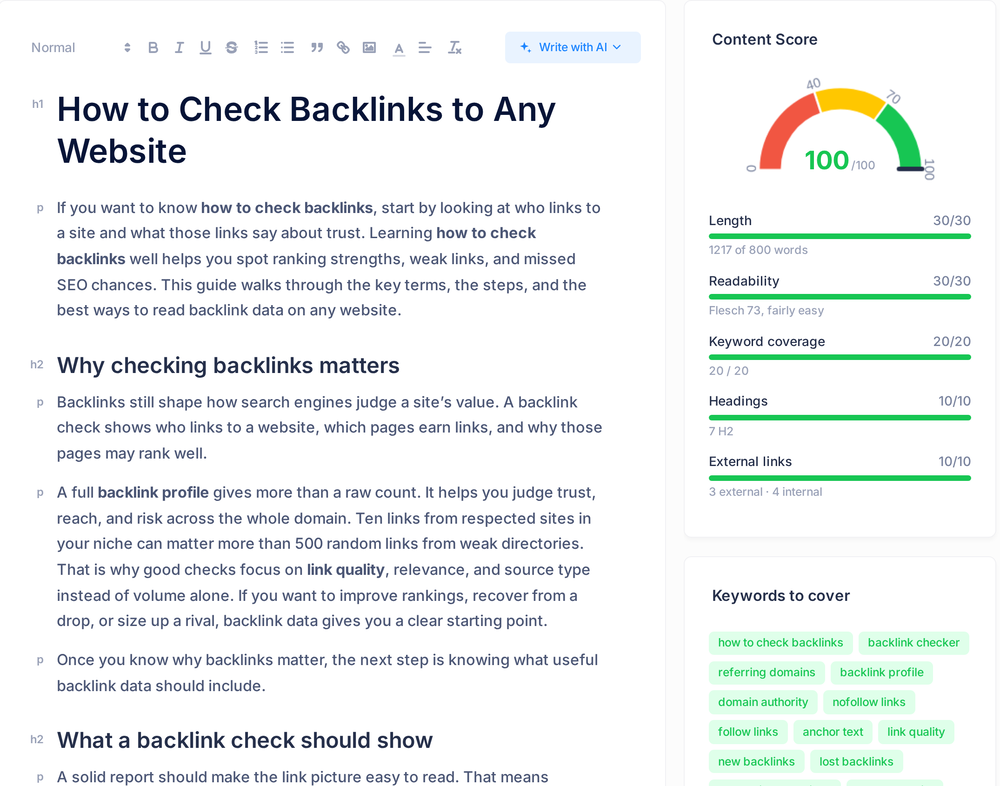
Write SEO Optimized Articles Instantly with AI Writer
AI Writer researches the pages ranking for your target keyword, instantly writes a full article and scores it for keywords, readability, links and length. Create the best content possible with the highest ranking potential with our proprietary algorithms.

About Readability
What readability scores measure
Readability formulas estimate how much effort a piece of text demands from a reader, using two things that are easy to count: how long the sentences are and how long the words are. Long sentences hold more clauses to keep in mind; long words are, on average, rarer and more abstract. Neither measure understands meaning, which is why a clear technical paragraph can score badly and a rambling one can score well.
The Flesch Reading Ease score runs from 0 to 100, higher being easier. Most web copy sits comfortably between 60 and 70. Below 50 the text starts to read like an academic paper; above 80 it reads like a children's book, which is rarely the aim.
How to read the numbers
- 90 to 100: very easy. Short sentences, everyday words.
- 60 to 70: plain English, the range most published web writing lands in.
- 30 to 50: difficult, typical of academic and legal text.
- Below 30: very difficult, usually a sign of long sentences packed with long words.
How to improve a low score
Split sentences that carry more than one idea. Prefer the short word where it means the same thing. Cut qualifiers that add length without adding precision. Then read the passage aloud: if you run out of breath, the reader runs out of patience.
Do not chase the score past the point where the writing serves the reader. Some subjects need long words, and some sentences need to be long to be accurate. The score is a warning light, not a target.
Does readability affect SEO?
Not directly. Google does not rank pages by Flesch score. It matters indirectly: text that is easy to read is read further, shared more and cited more, and those are the signals that do move rankings. It also matters for AI search, where a passage that states its point plainly is far easier to quote.
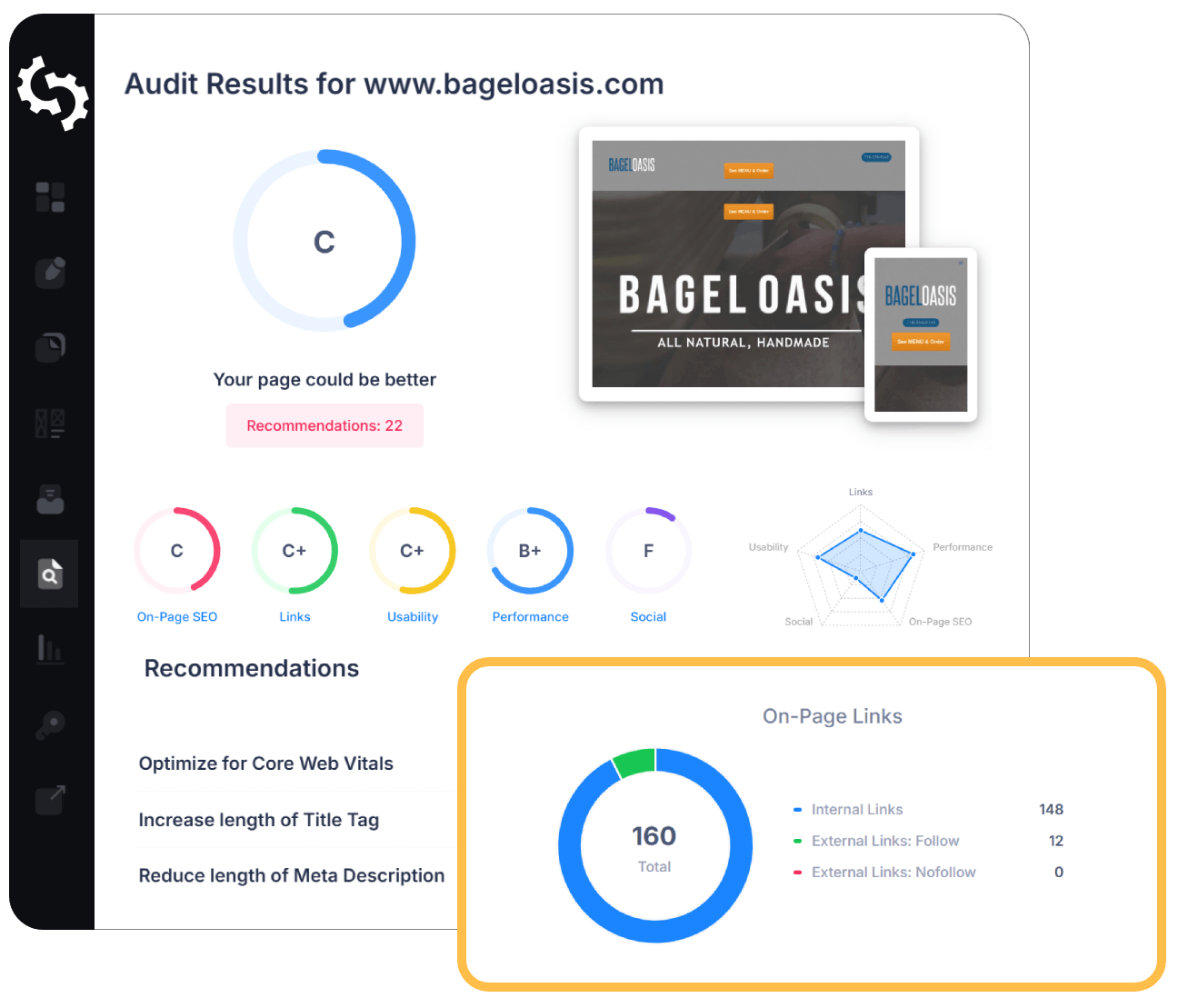
SEO Audit Any Site in Seconds
+ Comprehensive SEO / GEO Tools for Every Function
Run over 100 checks on your website across On-Page SEO, Usability, Performance, Social and Links. Now with GEO in every report. SEOptimer also offers keyword research, rank tracking, backlinks and a full site crawler.
Further Reading
See More
SEO Copywriting Checklist for Higher Ranking Content
Following an SEO copywriting checklist is quite important if you want to improve your website’s search engine visibility and outrank your co...
How Long Should a Blog Post Be?
Though there’s no magic word count or length for a blog post, us bloggers, SEO-ers, and content marketers of the world still want to know: h...