Gratis generator voor schemamarkup
Maak geldige JSON-LD-schemamarkup voor je organisatie, lokaal bedrijf, artikel, product, FAQ of kruimelpad en plak deze vervolgens rechtstreeks in je pagina.
Schema-opmaak geeft de feiten op je pagina weer in een vorm die is ontworpen om door machines te worden gelezen, in plaats van dat ze uit je lay-out moeten worden afgeleid. Kies een type, vul de relevante gegevens in en plak het resultaat in de pagina waarop het betrekking heeft — bij voorkeur in de head, hoewel elke plek in het document werkt.
Uitvoer
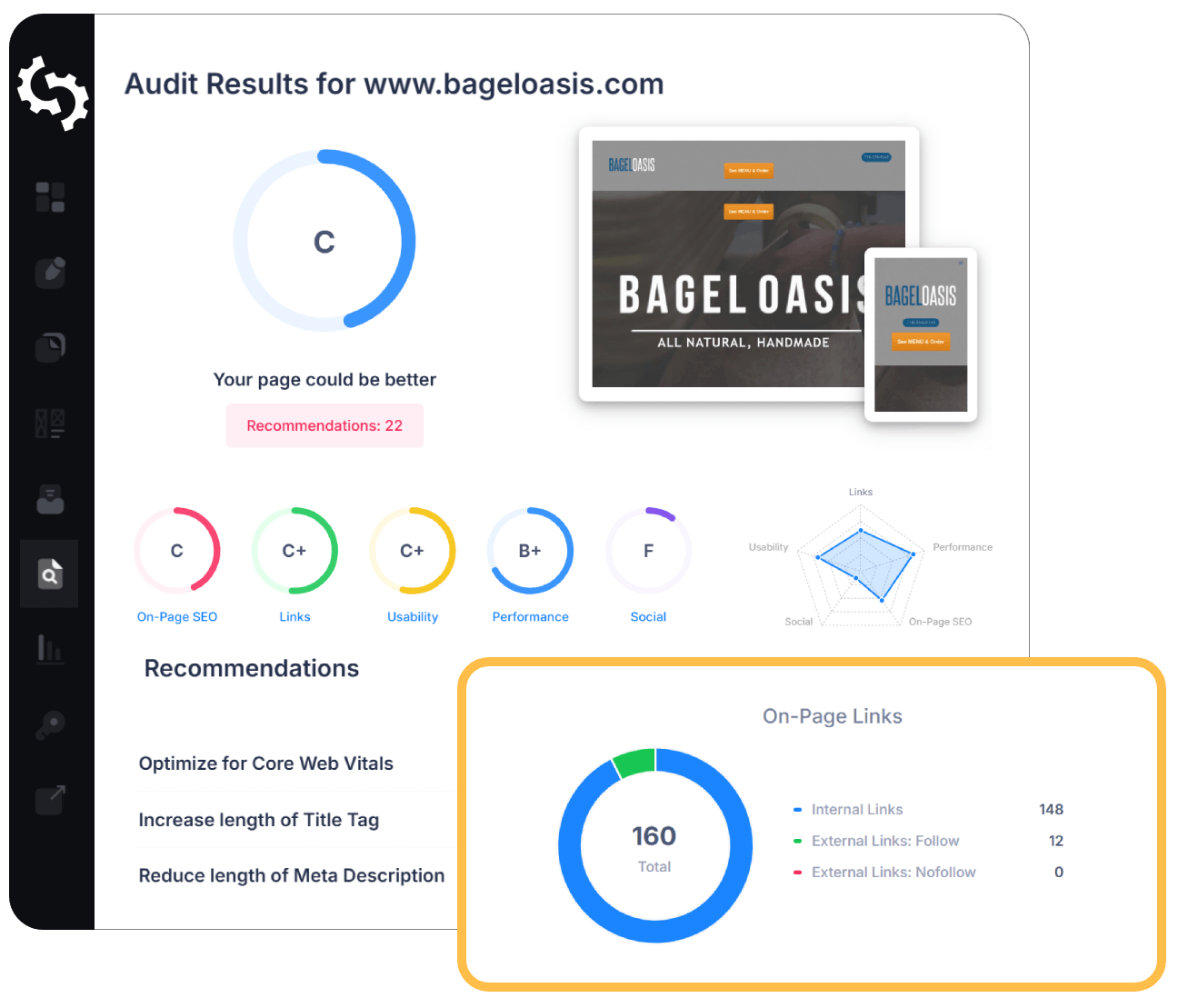
Voer in enkele seconden een SEO-audit uit voor elke website
+ Uitgebreide SEO-/GEO-tools voor elke functie
Voer meer dan 100 controles uit op je website op het gebied van On-Page SEO, gebruiksvriendelijkheid, prestaties, social media en links. Nu met GEO in elk rapport. SEOptimer biedt ook zoekwoordonderzoek, ranktracking, backlinkanalyse en een volledige sitecrawler.

Over schema markup
Wat schema markup doet
Welk type moet je gebruiken?
- Organization of Person voor degene die de site publiceert — de moeite waard om op elke site te gebruiken.
- LocalBusiness wanneer er een adres is dat klanten bezoeken of een servicegebied is.
- Article voor redactionele content, inclusief auteur en datums.
- Product wanneer je iets verkoopt, met prijs en beschikbaarheid.
- FAQPage voor echte vragen en antwoorden die al zichtbaar op de pagina staan.
- BreadcrumbList om aan te geven waar de pagina zich binnen de site bevindt.
Veelgemaakte fouten
- Inhoud markeren die niet op de pagina staat; dat is de snelste route naar een handmatige maatregel.
- FAQ-markeringen op een pagina zonder zichtbare FAQ.
- Details in de markup die niet overeenkomen met dezelfde details in de tekst.
- Het één keer toevoegen en vervolgens nooit bijwerken wanneer prijzen of openingstijden veranderen.
- Ervan uitgaande dat markup een uitgebreid zoekresultaat oplevert. Het maakt er één mogelijk, meer niet.
Waarom dit belangrijker is in 2026
De generator voor schemamarkeringen gebruiken
Waar je nu verder kunt gaan
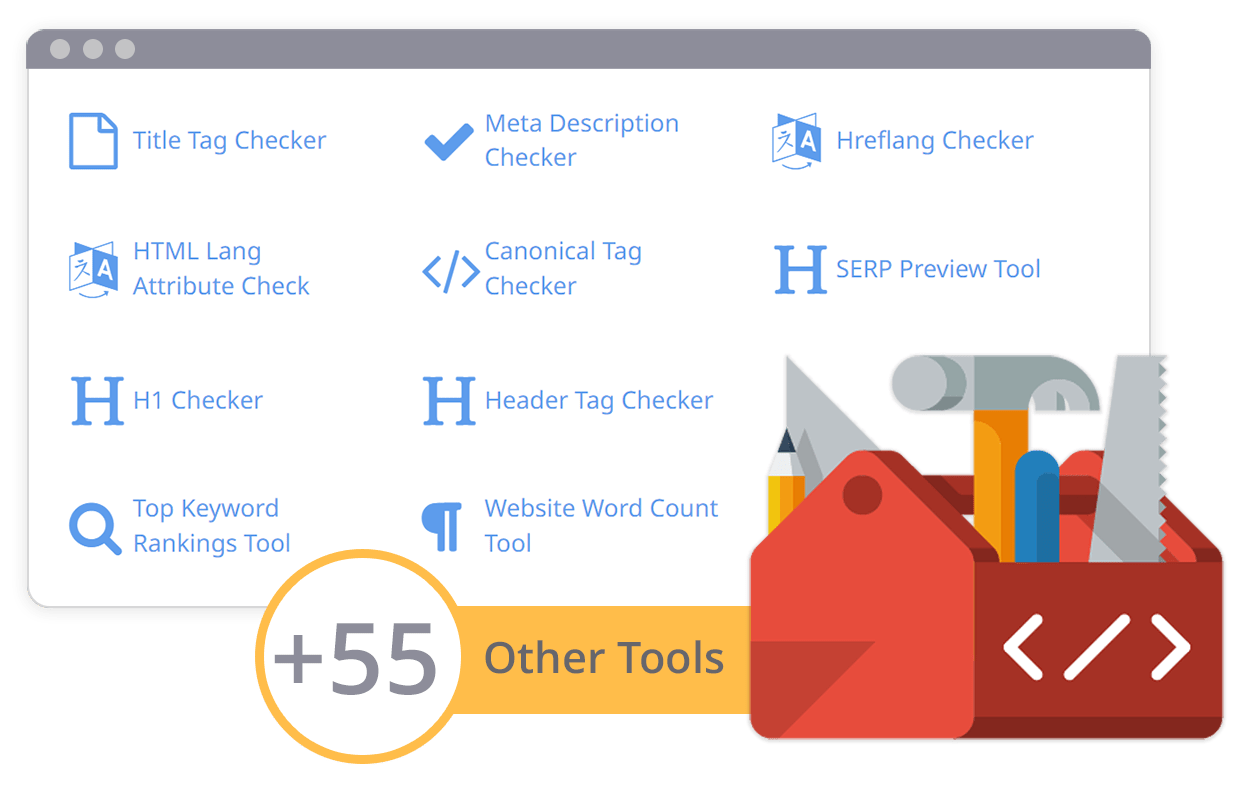
Uitgebreide SEO-toolbox met meer dan 55 tools
Controleer titels, metabeschrijvingen, koppen, Schema, Core Web Vitals, SSL en Robots.txt. Genereer metatags, sitemaps en .htaccess-regels, verklein CSS, JavaScript en HTML, en maak content met onze AI-schrijftools — direct en gratis.
Verder lezen
Meer Zien