Validador de llms.txt
El validador de llms.txt de SEOptimer obtiene tu archivo llms.txt y lo comprueba según el formato, señalando qué elementos lo incumplen y cuáles lo harían más útil.
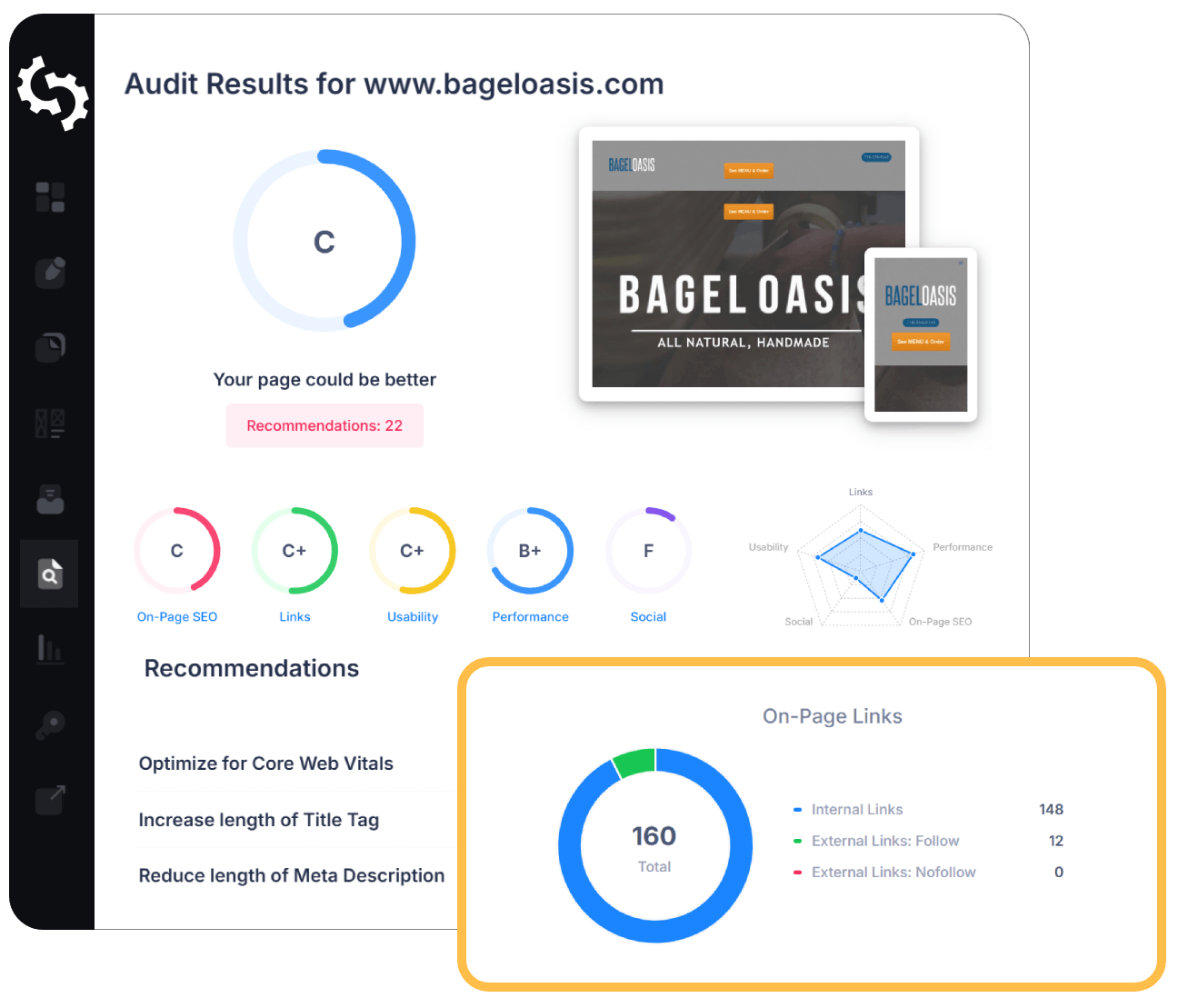
Audita cualquier sitio web con SEO en cuestión de segundos
+ Herramientas SEO / GEO completas para cada función
Realiza más de 100 comprobaciones en tu sitio web de SEO On-Page, usabilidad, rendimiento, redes sociales y enlaces. Ahora con GEO en todos los informes. SEOptimer también ofrece investigación de palabras clave, seguimiento de posiciones, análisis de backlinks y un rastreador web completo.

Acerca de la validación de llms.txt
Qué se valida
Qué rompe el formato
- No hay ningún encabezado H1, que es la única línea realmente obligatoria.
- Hay más de un H1, lo que hace ambiguo el nombre del sitio.
- Hay elementos de lista que no son enlaces Markdown.
- Hay enlaces sin texto entre los corchetes.
- Rutas relativas, que resultan ambiguas cuando el archivo se lee fuera de tu sitio.
Lo que hace que merezca la pena tenerlo
- Una línea de resumen, para que el lector sepa qué es el sitio antes de leer los enlaces.
- Encabezados de sección, para que cada enlace pertenezca a una parte del sitio.
- Una descripción en cada enlace que indique qué hay en la página, en lugar de repetir su nombre.
- Moderación. Un archivo con cientos de enlaces es un mapa del sitio, y el objetivo era seleccionar los enlaces.
Qué comprueba esta herramienta
Qué hacer a continuación

Caja de herramientas SEO completa con más de 55 herramientas
Comprueba los títulos, las meta descripciones, los encabezados, los datos estructurados, las Core Web Vitals, el SSL y el archivo robots.txt. Genera metaetiquetas, mapas del sitio y reglas .htaccess, minimiza el CSS, el JS y el HTML, y redacta textos con nuestras herramientas de redacción con IA, al instante y gratis.
Más información
Más información