Generatore gratuito di tag canonici
Genera un tag canonico che punti alla versione della pagina che vuoi venga indicizzata, così gli URL duplicati non competono tra loro.
Output
Il tuo tag canonical:
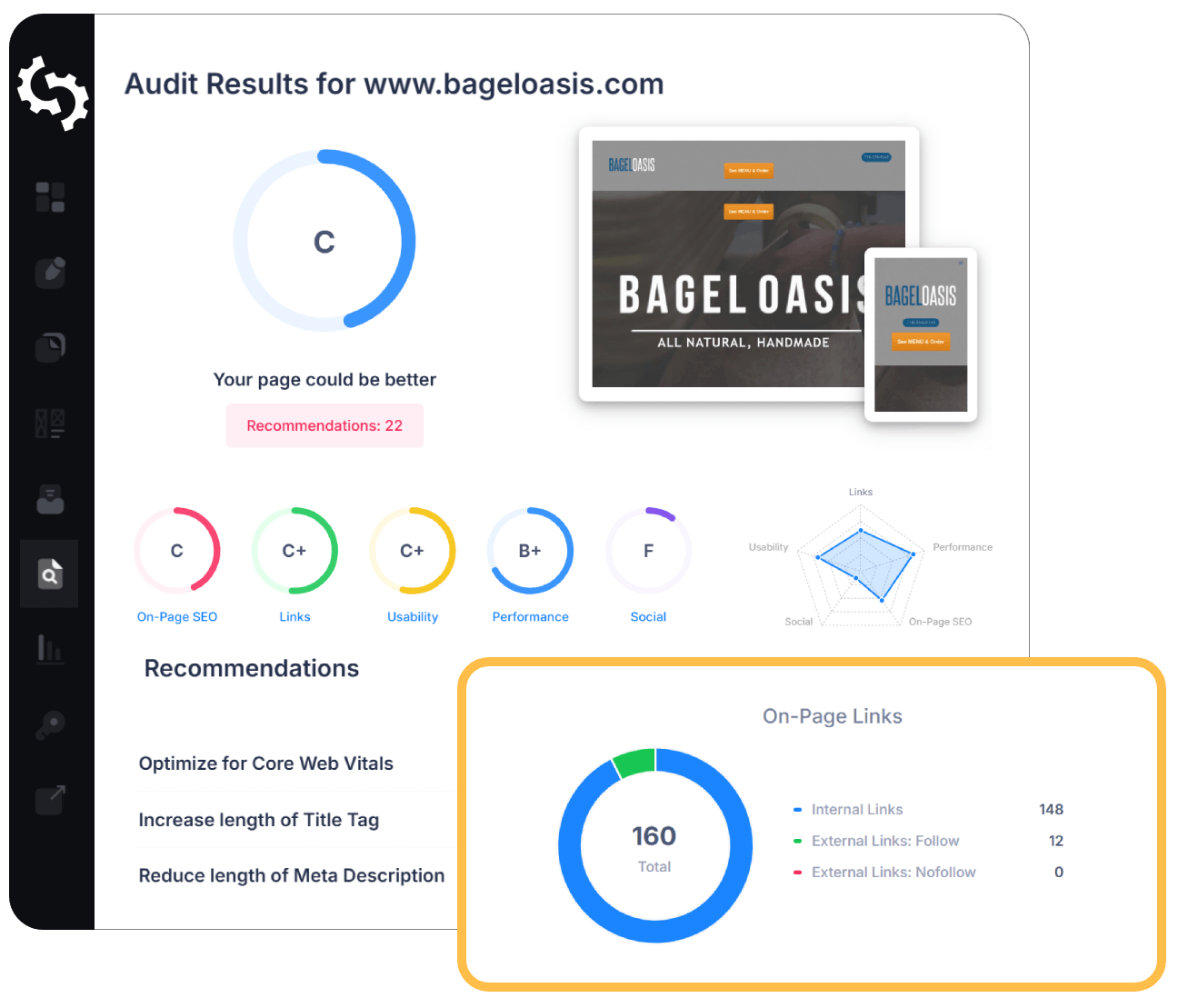
Esegui un audit SEO su qualsiasi sito in pochi secondi
+ Strumenti SEO / GEO completi per ogni esigenza
Esegui oltre 100 controlli sul tuo sito web per SEO On-Page, usabilità, prestazioni, social e link. Ora con GEO incluso in ogni report. SEOptimer offre anche ricerca di parole chiave, monitoraggio del posizionamento, analisi dei backlink e un crawler completo del sito.

Informazioni sui tag canonical
A cosa serve un tag canonical
Un tag canonical indica la versione di una pagina che vuoi venga indicizzata quando lo stesso contenuto è raggiungibile da più di un indirizzo. È un’indicazione di preferenza che i motori di ricerca generalmente rispettano.
I duplicati compaiono senza che nessuno li crei: uno slash finale, http e https, www e la versione senza www, un parametro di tracciamento, una versione ottimizzata per la stampa, un prodotto raggiungibile tramite due categorie.
Lasciate irrisolte, queste versioni competono tra loro e frammentano i segnali che dovrebbero accumularsi su un’unica pagina.
Come procedere correttamente
- Utilizza un URL assoluto, incluso il protocollo.
- Indica una pagina che restituisca un codice 200, non un reindirizzamento o un errore 404.
- Assegna a ogni pagina un canonical autoreferenziale, inclusa quella preferita.
- Mantienilo coerente con la sitemap e i link interni.
- Un solo canonical per pagina. Due equivalgono a nessuno.
Errori comuni
- Tutte le pagine canonicalizzate verso la homepage, rimuovendo l’intero sito dai risultati.
- Il canonical punta in una direzione e il reindirizzamento nell’altra.
- URL relativi, che vengono risolti in modo imprevedibile.
- Impostare come canoniche le pagine impaginate verso la prima pagina, nascondendo tutto ciò che viene dopo.
- Trattarlo come una direttiva. È un suggerimento e una pagina il cui contenuto è diverso verrà comunque indicizzata.
URL canonici e contenuti duplicati
Non esiste una penalizzazione per i contenuti duplicati nel senso in cui le persone intendono solitamente il termine. Ciò che accade è più discreto: i segnali si dividono, si posiziona la versione sbagliata e nessuna delle due ottiene risultati pari a quelli che avrebbe ottenuto un’unica pagina consolidata.
È questo il problema che risolve un URL canonico, ed è anche il motivo per cui conviene procedere con criterio invece di aggiungerne uno ovunque tramite un template, sperando che basti.
Utilizzo del generatore di tag canonical
Inserisci l’URL che vuoi indicizzare e incolla il tag nell’head di ogni pagina che deve fare riferimento a quello, inclusa la pagina stessa.
Fallo corrispondere esattamente al modo in cui la pagina viene effettivamente pubblicata, poiché una barra finale o l’assenza di www rendono l’URL diverso.
Cosa fare dopo
Controlla il tag una volta che è attivo con il verificatore canonical, verifica che l’URL a cui rimanda restituisca uno codice di stato pari a 200 e controlla che il tuo Sitemap XML elenchi la stessa versione.
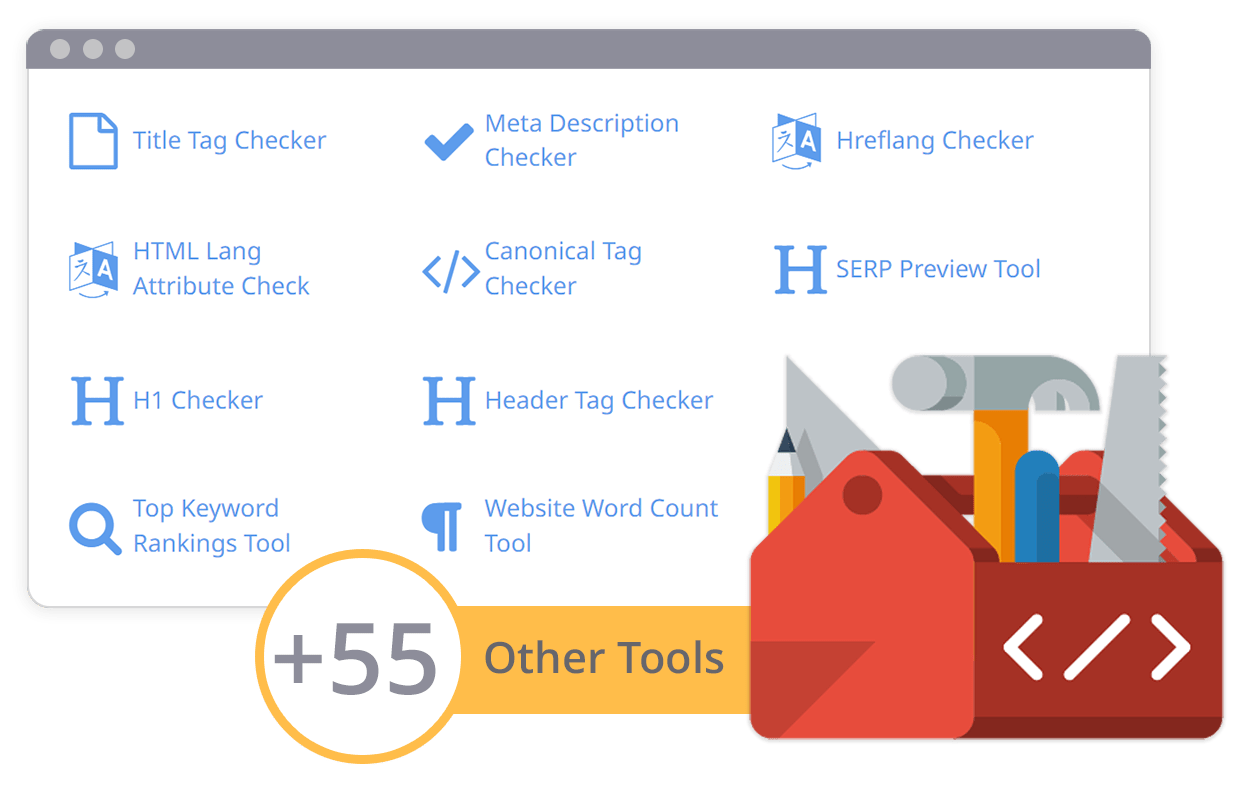
Strumento SEO completo con oltre 55 strumenti
Controlla titoli, meta description, intestazioni, dati strutturati, Core Web Vitals, SSL e robots.txt. Genera meta tag, sitemap e regole .htaccess, minimizza CSS, JS e HTML e crea contenuti con i nostri strumenti di scrittura basati sull’IA, istantaneamente e gratuitamente.
Approfondimenti
Vedi di più
Canonical URLs: Why They Are Important & How to Use Them
Canonical URLs help webmasters solve the problem of duplicate content issues.
Knowing how to implement them correctly is essentia...

Canonical Tag Issues: How to Find and Fix Errors
Canonical issues occur when search engines find duplicate or very similar pages on your website and are not given a clear preferred URL to i...
How to Create Properly Optimized URLs for SEO
URLs are important in the digital marketing industry, especially in the field of SEO. URLs are the address of our online home – our website,...

3xx Redirects: What are They & How They Impact SEO
Understanding 3xx redirects is important for anyone involved in digital marketing and SEO. These redirects tell browsers that the requested...